
Industrial Pipe Insulation Materials: A Pro Selection Guide
All five industrial insulation families compared by temperature band, form factor, fire class and lifetime cost, with a five-step selection method and links to every product page.
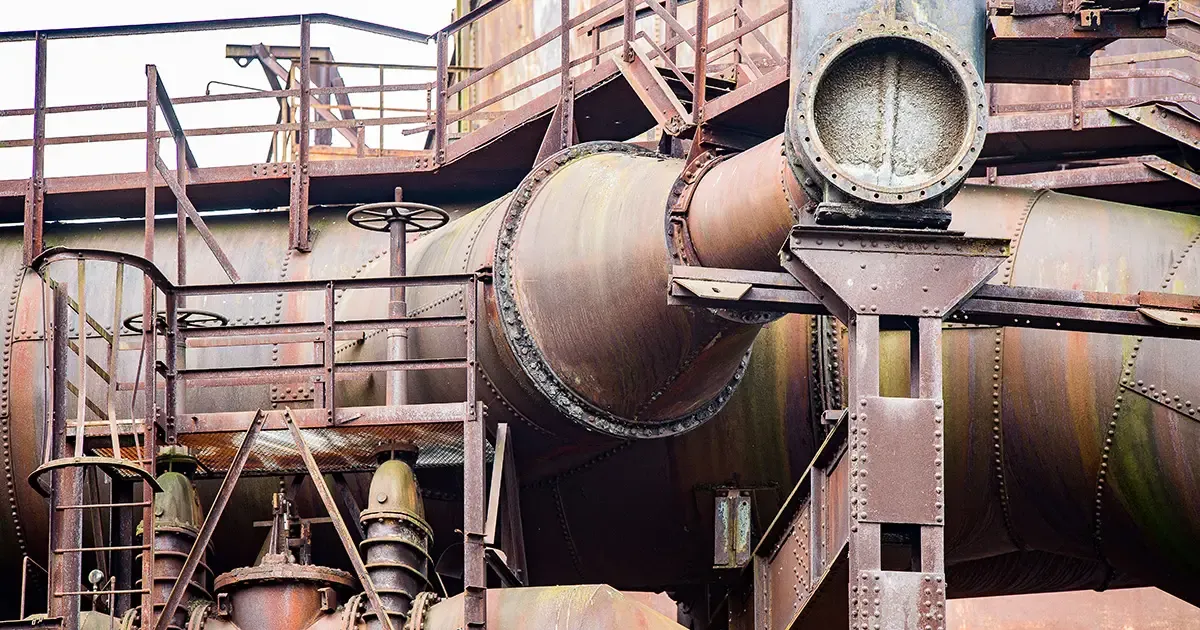
Industrial pipe insulation is a decisive factor in energy efficiency, equipment safety, and service life across petrochemical, power, chemical, and district-heating operations. Specifiers have to weigh operating temperature, fire rating, mechanical strength, water resistance, form factor, and total installed cost — and those six variables rarely point at the same answer.
This page is the hub for that decision. It covers all five industrial insulation material families used on process pipework — glass wool, rock wool, calcium silicate, ceramic fibre and nano aerogel — then routes you to the temperature band, the form factor, and finally the specific product page that matches. If you already know your service temperature, skip straight to the temperature-band table.
The Five Material Families at a Glance
Every industrial pipe insulation material in common use falls into one of five families. The table below is the shortlist; everything after it is refinement.
| Family | Continuous service temp | Short-term peak | Thermal conductivity (W/m·K) | Fire class | Density (kg/m³) | Compressive strength | Hydrophobicity | Where it wins | Where it loses |
|---|---|---|---|---|---|---|---|---|---|
| Glass wool | -120 °C to +400 °C | 500 °C | 0.030–0.042 | A1 non-combustible | 10–120 | low (non-load-bearing) | > 95 % | Lowest k-value per unit cost, lightest to handle, best value below 250 °C | Low temperature ceiling, dusts at sustained high temperature, weak mechanical strength |
| Rock wool | -260 °C to +650 °C | 800 °C | 0.030–0.047 | A1 non-combustible | 80–200 | 0.2–0.35 MPa (board) | > 98 % | Widest usable band, high strength, A1 fire safety, low cost | Higher water uptake than closed-cell alternatives, can dust under sustained vibration |
| Calcium silicate | +650 °C to +1000 °C | 1100 °C | 0.040–0.060 | A1 non-combustible | 170–280 | 0.35–0.53 MPa | > 98 % (through-section, not surface-only) | Dimensional stability, moisture and corrosion resistance, load-bearing | Heavy, higher conductivity than wool at low temperature, brittle at edges |
| Ceramic fibre | +800 °C to +1400 °C | 1600 °C | 0.05–0.15 (rising with temperature) | A1 non-combustible | 64–200 | low (needs composite or reinforcement) | > 95 % | Only practical choice above 1000 °C, light, removable and reusable | Highest cost per m³, low mechanical strength, dusty if mishandled |
| Nano aerogel | -200 °C to +650 °C | 800 °C | 0.014–0.024 | A1 (blanket form) | 160–240 | moderate | hydrophobic through-section | Thinnest solution for a given heat loss, roughly 5× service life, ideal where clearance is tight | Highest material cost, needs care at compression points |
Read the conductivity column with a caveat: the figures are mean-temperature values, not room-temperature datasheet numbers. Ceramic fibre in particular degrades noticeably as mean temperature rises, which is why its range is so wide. Always size thickness from the curve, never from a single number.
What Each Family Is Actually Like to Work With
The table ranks materials by property; the notes below rank them by what happens on site.
Glass wool is the easiest material on the list to handle and the fastest to cut, which makes it the default on long low-temperature runs where labour dominates the installed cost. Its limitation is structural rather than thermal — it has almost no compressive strength, so it needs mechanical protection anywhere it can be struck, and it will not survive sustained vibration without settlement.
Rock wool is the generalist. It carries enough compressive strength to be used behind cladding on its own, tolerates vibration far better than glass wool, and holds A1 classification across its whole temperature range. It is denser and slightly heavier to handle, and it absorbs more water than closed-cell materials — which is a specification issue rather than a defect, since it is solved with a vapour barrier and correct jacketing.
Calcium silicate is the structural material. It is the only family here that is routinely specified for buried service and for lines that have to carry load, and its moisture resistance runs through the section rather than sitting on the surface. It is heavy, it is brittle at cut edges, and it costs more per metre than wool — which is justified on high-temperature or wet duty and wasted at 200 °C.
Ceramic fibre is the high-temperature specialist and, in blanket form, the most forgiving material to fit around irregular geometry. It has almost no mechanical strength on its own, so it is either reinforced, faced, or used in a composite build-up. It is also the material most often mis-specified at low temperature, where its cost is unjustifiable against wool.
Nano aerogel solves a different problem from all four. It is not chosen because the temperature demands it but because the space does — where clearance is tight, where weight matters, or where re-insulating later would cost far more than the material. Judged on cost per unit of thermal performance it is expensive; judged on cost per year of service at a fixed heat loss on a congested line, it frequently wins.
Temperature-Band Navigation
Temperature is the first filter, and it usually eliminates three of the five families immediately. Start here.
| Band | Range | First choice | Alternative | Go to product |
|---|---|---|---|---|
| Cryogenic | -200 °C to -50 °C | Nano aerogel blanket | Cellular glass, elastomeric foam | nano aerogel insulation blanket |
| Low | -50 °C to +250 °C | Glass wool | Rock wool where mechanical strength matters | glass wool blanket · glass wool board |
| Medium | +250 °C to +650 °C | Rock wool | Calcium silicate in wet or buried service | rock wool pipe · rock wool board |
| High | +650 °C to +1000 °C | Calcium silicate | Ceramic fibre for complex geometry or weight limits | calcium silicate board · calcium silicate pipe |
| Ultra-high | +1000 °C to +1400 °C | Ceramic fibre | Polycrystalline mullite board above 1300 °C | ceramic fibre blanket · ceramic fibre board |
| Extreme | +1400 °C to +1600 °C | Polycrystalline mullite fibreboard | Ceramic fibre modules | polycrystalline mullite fibreboard |
Two rules that override the table. First, always specify against the peak, not the normal operating point — a 600 °C line with 800 °C upsets belongs in the ceramic-fibre row, not the rock-wool row. Second, thermal cycling matters as much as absolute temperature: a line that swings 400 °C twice a day will fatigue a rigid calcium-silicate system long before it reaches its temperature limit.
For cryogenic work the physics changes again — moisture drive is inward rather than outward, and the vapour barrier becomes the critical component rather than the insulation. That is a separate discipline, covered in our cryogenic pipe insulation guide.
Form Factor Matrix
Once the family is chosen, the form factor decides install speed, joint count, and long-term maintenance cost. This is where most specifications are either over- or under-engineered.
| Form | Typical use | Advantages | Limits |
|---|---|---|---|
| Pipe section (preformed shell) | Standard pipe diameters, long straight runs | Fastest install, fewest joints, consistent thickness | Standard diameters only; specials cost more |
| Blanket / roll | Large diameters, vessels, irregular geometry | Universal, easy to layer, forgiving on site | Needs banding, more joints, labour-intensive |
| Board / slab | Flat walls, equipment casings, load-bearing surfaces | High strength, dimensionally stable | Must be cut and mitred for curved surfaces |
| Paper / felt | Thin layers, gaskets, expansion joints | Very thin, easy to cut | Minimal strength, not a standalone thermal layer |
| Cloth / tape / rope | Valve and flange covers, removable jackets, sealing | Flexible, removable, reusable across shutdowns | Limited thickness, not for primary insulation |
| Module / special shape | Furnace linings, complex geometries | Pre-engineered, fast install, consistent density | Custom order, longer lead time |
For a single-material deep dive on rock wool pipe sections — spec table, five-step production line, four-dimension supplier qualification and installation notes — see our pre-formed rock wool pipe insulation guide.
For a step-by-step view of how those pipe sections are actually produced — melt, fibre, three-dimensional forming, curing and the lot certificate — see our rock wool pipe production walkthrough.
The pattern worth remembering: pipe sections for straight runs, blankets for everything that is not a straight run, and removable textile jackets for anything you will have to open again. Mixing two forms on one line is normal and usually correct — a rock-wool pipe section on the run with a removable ceramic fibre cloth jacket at every valve and flange is a typical industrial specification.
Our ceramic fibre rope and ceramic fibre tape pages cover the sealing end of that matrix in detail.
Application Scenarios
Petrochemical
High-temperature lines — cracking furnace outlets, reformers and reactor effluent above 800 °C — belong to ceramic fibre, which is stable to 1000–1300 °C and forms readily into board, pipe or blanket for complex geometry. Where waterproofing matters alongside temperature, such as buried runs or humid coastal sites, calcium silicate is the safer call.
Low-to-mid temperature lines — crude transfer, cooling water, instrument air, roughly -40 °C to +120 °C — are rock wool territory: A1 fire safety plus mechanical strength at low cost. Glass wool performs better than its price suggests on chilled-water and instrument lines because of its low conductivity at low mean temperature.
Valves, flanges and removable items are where ceramic fibre removable blankets pay for themselves fastest — reusable across repeated shutdowns, which converts a recurring cost into a one-off.
Power generation
Boilers and main steam lines run 400–650 °C with peaks above 800 °C. Ceramic fibre blanket is the standard choice where heat retention is the goal; documented retrofits show surface temperature dropping from around 90 °C to below 30 °C, frequently retiring electric heat tracing entirely. Calcium silicate serves long high-temperature mains where dimensional stability and moisture resistance matter more than minimum thickness.
Combined-cycle plant adds a wrinkle: frequent cycling between operating and standby favours materials that tolerate thermal movement. Our combined cycle power plant insulation guide treats that case specifically.
District heating and cooling
Buried long-distance mains are the strongest case for calcium silicate — its through-section moisture resistance holds thermal performance where a fibrous material would slowly wet out. Retrofit cases commonly show 30–40 % heat-loss reduction simply from replacing degraded insulation. Rigid polyurethane foam is cheaper and widely used but is fire-limited and needs a separate protective layer.
Above-ground mains are usually rock wool (A1, strong, economical) or glass wool (light, lowest conductivity) depending on whether mechanical protection or thermal performance is the binding constraint.
General industrial and HVAC
Plant HVAC, process water, and compressed-air headers below 250 °C are the volume end of the market. Glass wool wins on cost per unit of thermal performance; rock wool wins where the line can be struck, walked on, or exposed. Neither needs the high-temperature families, and over-specifying here is the single most common source of wasted insulation budget.
The Five-Step Selection Method
Work through these in order. Skipping step 1 is what produces most failed specifications.
- Fix the temperature envelope. Continuous operating temperature, peak or upset temperature, and cycling frequency. This selects the family — use the temperature-band table above.
- Fix the fire requirement. Process plants and power stations generally require A1 non-combustible material. All five families here qualify in their inorganic forms; organic foams do not, which is why they need a separate fire layer.
- Fix the mechanical and environmental duty. Vibration, load-bearing, burial, ambient humidity, and chemical exposure. Vibration argues against brittle rigid systems; burial argues strongly for calcium silicate; chloride or sulphur environments argue against certain binder systems.
- Fix the form factor and thickness. Pipe sections on straight runs, blankets elsewhere, removable jackets at maintenance points. Size thickness from the economic-thickness calculation, not from a rule of thumb — see below.
- Fix the lifetime cost. Compare installed cost per metre against service life, maintenance frequency and energy saved. Aerogel looks expensive per cubic metre and is often cheapest per year of service at a given heat loss.
Thickness, Heat Loss and Surface Temperature
Three separate calculations govern thickness, and the governing one changes with the service.
Economic thickness balances the marginal cost of insulation against the marginal value of the heat saved. Above roughly 300 °C on a continuously operating line, the optimum thickness almost always exceeds what a rule-of-thumb table suggests.
Surface temperature for personnel protection caps at around 60 °C for surfaces within reach. This is a hard safety limit, not an optimisation.
Condensation control applies to chilled and cold service, where the constraint is keeping the outer surface above the local dew point. The calculation uses dew point rather than a fire or economic criterion, and ships and offshore platforms have their own version of it — our marine insulation thermal and acoustic specifications guide works through the method.
For pipe-specific thickness by diameter and temperature, the dedicated pyrogel insulation thickness guide carries the full tables. This hub deliberately stops at method rather than duplicating them.
For the unit-by-unit view — how those material choices change between distillation columns, cracking furnaces, storage tanks and heat-traced lines — our petrochemical plant insulation selection by process unit works through each process area.
Corrosion Under Insulation: The Failure Mode That Costs the Most
Insulation does not fail thermally as often as it fails by destroying the pipe underneath it. Corrosion under insulation (CUI) is the largest single cause of unplanned pipework replacement in process plant, and it is almost always a specification and detailing problem rather than a material defect.
The mechanism is simple. Water gets in — through a failed joint, a damaged jacket, a missing seal at a protrusion, or simply by condensation during a shutdown — and the insulation holds it against the steel. The pipe stays wet at a temperature that happens to be ideal for corrosion, out of sight, indefinitely.
Three design decisions control the risk:
Material selection. Closed-cell and through-section hydrophobic materials — calcium silicate and aerogel blanket — hold far less water than fibrous materials. Where a fibrous material is chosen for other reasons, a vapour barrier is not optional.
Jacketing and sealing. The metal or non-metallic jacket is the actual waterproofing layer, not the insulation. Every joint, termination, valve, and support penetration is a potential entry point, and the specification should detail them individually rather than leaving them to site practice. Our industrial pipe insulation types: fittings, valves and supports guide breaks those points down one by one — elbows, tees, valve bodies and support shoes — because that is where the heat loss concentrates.
Operating temperature. CUI risk peaks roughly between 50 °C and 150 °C for carbon steel — warm enough to drive corrosion, cool enough that water does not flash off. Lines that cycle through that band are higher risk than lines that sit permanently above or below it.
Worth noting for specification: drain holes, vents, and inspection plugs are cheap to include at design stage and effectively impossible to retrofit later. Most CUI mitigation is decided in the detailing, not in the material schedule.
Installation Details That Decide Real-World Performance
Two identical material specifications can produce installations with very different service lives. The differences are almost always in the details.
Joints and seams. On multi-layer work, stagger the joints between layers — aligned joints are a direct thermal bridge and a direct water path. Butt joints tightly rather than leaving gaps; a 5 mm gap in a fibrous layer costs more heat than 10 mm of additional thickness gains.
Compression. Every material has a practical compression limit, and over-tightening banding to "make it fit" is a common site error. Compressing a blanket beyond its design point raises its conductivity measurably and can crush a closed-cell structure permanently.
Support and hanger details. Insulation is routinely compromised at pipe supports, where the load path cuts through the thermal layer. Pre-formed inserts or high-density calcium silicate board at support points prevent both crushing and the thermal short that would otherwise form.
Weatherproofing continuity. The jacket must be continuous across the whole run, including bends, tees, and terminations. Most moisture ingress starts at a termination rather than in the middle of a run, which is why termination detailing deserves as much attention as the insulation itself.
Removable items. Every valve, flange, and instrument that will need access should have a removable jacket from the start. Retrofitting them later costs several times more than specifying them initially, and the maintenance savings begin on the first shutdown.
Standards and Compliance
Specifications should name the standard, not just the property. The common references:
- ASTM C547 — mineral fibre pipe insulation (rock wool and glass wool preformed sections)
- ASTM C533 — calcium silicate block and pipe insulation
- ASTM C892 — high-temperature ceramic fibre blanket
- ASTM E84 / EN 13501-1 — surface burning characteristics and Euroclass fire classification; A1 is the non-combustible grade
- EN 14303 / EN 14306 — factory-made mineral wool and calcium silicate products for building equipment and industrial installations
- ISO 9229 — thermal insulation vocabulary, useful for getting unambiguous tender documents
Naming the standard in the procurement document is what makes a rejected delivery enforceable. A datasheet alone is not a specification.
Product Directory by Family
Rock wool — blanket · board · pipe sections · strips · wired blanket · glass-mesh faced blanket · acoustic panels
Glass wool — blanket · board · spec & selection guide
Ceramic fibre — blanket · board · board alternative · plus blanket · bulk · paper · cloth · tape · rope · modules · special shapes
Calcium silicate — insulation board · pipe sections · high-density board
Nano and high-performance — nano aerogel blanket · nano insulation board · polycrystalline mullite fibreboard
Composite — composite silicate plate
Future Trends
Aerogel adoption continues to grow wherever space or weight is constrained. Ultra-low conductivity and long service life offset high material cost on lines that are expensive to re-insulate, and the material is moving from niche retrofit into standard specification on offshore and compact plant.
Composite systems — ceramic fibre backed with calcium silicate, or foil-faced glass wool — combine thermal and moisture performance in one build-up, and are increasingly pre-engineered rather than assembled on site.
Removable and instrumented insulation is the visible trend on maintenance-heavy plant: textile jackets that can be opened and refitted in minutes, increasingly with embedded temperature sensors that turn insulation inspection into a monitoring task rather than a shutdown task.
Tighter energy-efficiency regulation keeps raising the bar on allowable heat loss, which favours inorganic, durable materials with stable long-term conductivity over cheaper materials that degrade.
Conclusion
No universal industrial insulation material exists, and any supplier claiming otherwise is selling rather than specifying. The sequence that works: fix the temperature envelope, choose the family, choose the form factor, size the thickness from the governing criterion, then compare lifetime cost rather than purchase price.
Ceramic fibre for refining high-temperature lines. Calcium silicate where moisture or load is the constraint. Rock wool across the broad medium band. Glass wool wherever the temperature stays below 250 °C. Aerogel where clearance is tight or re-insulation is expensive. Validate with testing, specify against a named standard, and the installation will outlast the plant's next turnaround.
Related Reading
- industrial pipe insulation types
- cryogenic pipe insulation guide
- pyrogel insulation thickness chart
- calcium silicate buyer's guide
- high temperature insulation wool ratings
- petrochemical pipe insulation
- power plant piping insulation
- cryogenic insulation systems
Explore flexible aerogel and microporous insulation options in our aerogel insulation guide.
Frequently asked
Which pipe insulation material is best above 800 °C? +
Ceramic fibre is the practical choice above 800 °C and remains stable to 1400 °C in continuous service, with a short-term peak around 1600 °C. Calcium silicate is an alternative up to roughly 1000 °C where moisture resistance or dimensional stability matters more than weight. Above about 1300 °C, polycrystalline mullite fibreboard is the usual step up.
Why is calcium silicate preferred for buried heating mains? +
Because its moisture resistance runs through the section rather than sitting on the surface. A buried line is permanently exposed to groundwater drive, and fibrous materials that rely on a surface treatment will eventually wet out and lose most of their thermal performance. Calcium silicate keeps its shape and its conductivity in that environment, which is why retrofit projects commonly report 30–40 % heat-loss reduction after replacing degraded insulation.
What is the most cost-effective pipe insulation for low-to-mid temperatures? +
Glass wool below 250 °C and rock wool from 250 °C to 650 °C. Glass wool has the lowest conductivity per unit cost in the low band and is the lightest to handle; rock wool adds mechanical strength and a higher temperature ceiling for a modest cost increase. Calcium silicate and ceramic fibre are both over-specified in this range unless moisture or fire duty demands them.
How do I choose between glass wool and rock wool for the same pipe? +
Temperature first: glass wool tops out around 400 °C, rock wool reaches 650 °C. If both are within range, decide on mechanical duty — rock wool is stronger and better under vibration or where the line can be struck, while glass wool is lighter, has marginally lower conductivity at low mean temperature, and is cheaper. Our comparison of the two covers the seven differences that actually decide the spec.
Is aerogel worth the extra cost for pipe insulation? +
It is worth it where clearance is tight, where weight matters, or where re-insulating the line later would be expensive — offshore platforms, congested pipe racks, and retrofit work on live plant are the classic cases. Aerogel achieves the same heat loss at roughly a third to a half of the thickness of mineral wool, and has a service life several times longer. On a simple, accessible, low-temperature line with no space constraint, mineral wool remains the better value.
What thickness of pipe insulation should I specify? +
Whichever of three criteria governs: economic thickness on hot continuously-running lines, a surface temperature cap around 60 °C for personnel protection, or dew-point control on chilled and cold service. Calculate all three and take the largest. Rules of thumb systematically under-insulate hot lines, because the economic optimum is usually thicker than intuition suggests.
Do I need a vapour barrier on pipe insulation? +
On cold and cryogenic service, yes — without one, moisture drives inward, condenses within the insulation, and destroys thermal performance while corroding the pipe underneath. On hot service the requirement depends on whether the insulation can get wet; calcium silicate generally does not need one, while rock and glass wool do in outdoor, buried or wash-down locations.
What fire classification should industrial pipe insulation meet? +
A1 non-combustible to EN 13501-1 is the standard requirement for process plant and power generation. All five inorganic families in this guide — glass wool, rock wool, calcium silicate, ceramic fibre and aerogel blanket — are available in A1 grades. Organic foams such as polyurethane are not, and require a separate fire-protective layer where a fire rating applies.
Can different insulation materials be combined on the same pipe run? +
Yes, and it is often the right answer. A common build-up is a preformed pipe section along the straight run, blanket on bends and irregular geometry, and removable textile jackets at valves and flanges. Multi-layer systems also work well — a high-temperature inner layer with a lower-cost outer layer — provided the layers are chemically compatible and mechanically secured.
Which standards should a pipe insulation specification name? +
ASTM C547 for mineral fibre pipe sections, ASTM C533 for calcium silicate, ASTM C892 for high-temperature ceramic fibre blanket, and EN 13501-1 or ASTM E84 for fire classification. Naming the standard in the procurement document is what makes a rejected delivery enforceable; a supplier datasheet alone is not a specification.
Request a quote
Interested in our insulation solutions? Send us your requirements and our team responds within one business day.