
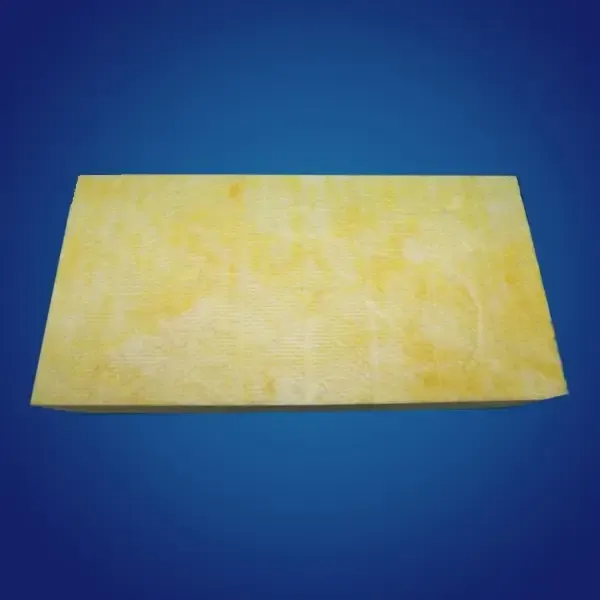
Glass Wool
Glass Wool Board
Rigid glass wool insulation board for building, HVAC, and industrial thermal and acoustic applications.
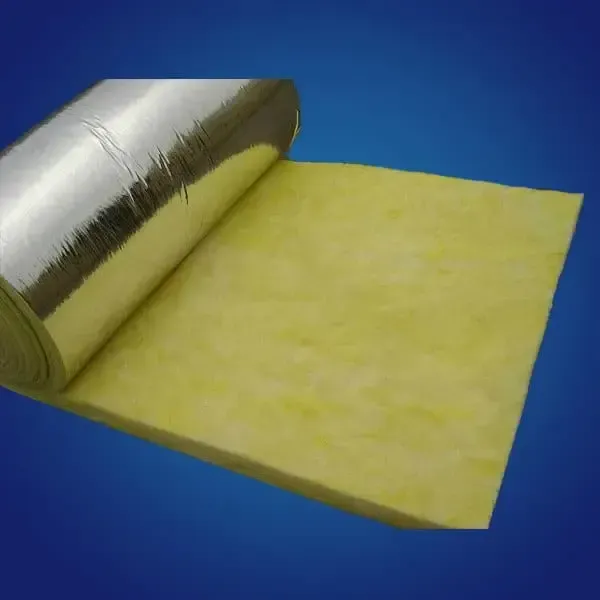
Centrifugal glass wool blanket for large-scale thermal and acoustic insulation with excellent shock absorption. Temperature: -120℃ ~ 400℃.
Centrifugal glass wool felt designed for large-scale laying. Features thermal insulation and excellent shock absorption and sound absorption, especially for low and medium frequency vibration noise. Aluminum foil faced option available for enhanced heat radiation resistance.
Glass wool blanket is a lightweight, flexible mat of fine glass fibres that delivers efficient thermal and acoustic insulation across a broad temperature span, from cryogenic service up to moderate process heat.
| Property | Value |
|---|---|
| Maximum service temperature | −120°C to 400°C |
| Density | 10–48 kg/m³ (blanket/roll) |
| Thermal conductivity | 0.030–0.044 W/(m·K) at 25°C mean |
| Standard thickness | 25–200 mm |
| Standard dimensions | rolls/pads 600 / 1200 mm wide |
| Fire classification | A1 (non-combustible, EN 13501-1) |
| Composition | glass melted and spun into fine glass fibres with a thermosetting binder |
| Standards | ASTM C553, EN 13162 |
Lay with butt joints tightly closed and secure with pins, bands or adhesive; compress slightly at seams. Jacket outdoor or buried installations to keep the mat dry.
Manufactured to ASTM C553, EN 13162 and controlled under a documented quality system. Supplied by a manufacturer holding ISO 9001, CE and SGS certifications, exporting high-temperature insulation to 60+ countries since 1982.
Combines stable high-temperature performance with straightforward on-site fabrication. The material is asbestos-free, chemically stable in neutral and oxidising atmospheres, and supplied with full technical data sheets to support specification and inspection. Supplied by a manufacturer holding ISO 9001, CE and SGS certifications, exporting high-temperature insulation to 60+ countries since 1982.
Rosetexwool is a glass wool blanket manufacturer and supplier serving more than 60 countries since 1982. Every glass wool blanket is produced under a documented quality system certified to ISO 9001, CE and SGS, with batch-level traceability from raw material to finished product.
What our manufacturing capability covers:
For quotations, lead times or technical data sheets, contact our team with your specification and target service temperature. Explore the glass wool insulation hub for the full range, or read the glass wool insulation buying guide for selection support.
glass wool board — Semi-rigid board for building envelopes, HVAC casings and acoustic panels, light enough to handle in large sheets and easy to cut on site.
microporous insulation board — Used as backup insulation in cement rotary kilns and industrial furnaces where every millimetre saved adds usable internal volume.
ceramic fiber furnace modules — Anchored directly to the furnace shell, they shorten installation time and make liner replacement a local repair rather than a full rebuild.
For the full glass wool range, temperature limits and density options, see our glass wool insulation guide.
For adjacent material options across temperature and application ranges, explore our rock wool insulation hub.
For a deeper dive into forms, temperature ratings, and application guides, see our ceramic fiber insulation hub.
Part of the Glass Wool product family.
Last updated: September 30, 2026
It is glass wool made by centrifugal spinning — molten glass is thrown into fine fibers, then collected, needled, and bonded into a flexible blanket. The process gives a light, resilient mat with low thermal conductivity and good acoustic absorption, rated here from −120°C to 400°C.
Continuous service typically runs from −120°C to about 400°C, with some grades to 538°C short-term. The glass fiber itself only softens well above 600°C, but the organic binder chars between 300–500°C, so sustained high-temperature duty should use rock wool or ceramic fiber.
Yes for fire propagation: glass wool is A1 non-combustible — it will not ignite or spread flame. It does not provide a fire barrier above its temperature limit, however; the binder degrades around 300–500°C, so for hot-face fire zones use rock wool or ceramic fiber.
It is the standard lightweight insulation for HVAC ducts, building walls and roofs, acoustic panels and studio damping, and lagging on chilled or low-temperature pipes and equipment where both thermal and acoustic performance are needed.
Still deciding? Send your specs — we'll quote within 24 hours.
Get pricing
Fill out the form below with your requirements — our team responds within one business day.