
Rock Wool Pipe Insulation: Specs, Production & Selection
Rock wool pipe insulation: spec, production and supplier qualification for industrial pipework up to 750 °C, Class A1 non-combustible, with hydrophobic options for wet service.
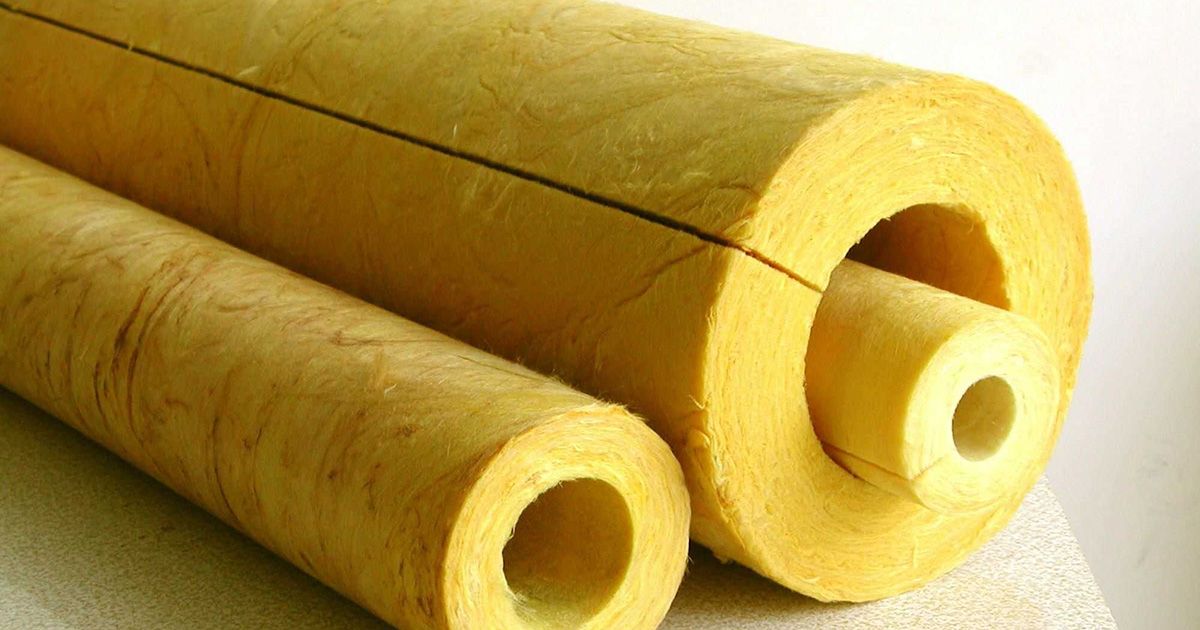
Rock wool pipe insulation is the pre-formed, half-rigid pipe section that lines industrial and HVAC piping when Class A1 fire rating, long-term temperature resistance to 750 °C, and a stable, predictable shell temperature matter more than the thinnest possible wall. Compared with multi-material composite systems (rock wool + aluminium + GRP), it is one single part to specify, one part to install, and one part to inspect. This guide walks through the spec, the five-step production line, how to qualify a supplier, and what to check on site.
If you are scoping a project from the broader pipe-insulation material angle, see our industrial pipe insulation materials guide for the side-by-side of rock wool, calcium silicate, aerogel, PIR, and elastomeric options, and the industrial pipe insulation types comparison for the quick decision table. The product page for our own pre-formed rock wool pipe sections is the practical entry point for samples and quotation.
Specification: What the Datasheet Should Show
A datasheet you can trust contains the following items. Anything missing is a question to ask before signing the PO.
| Property | Typical range | Why it matters |
|---|---|---|
| Density | 80–200 kg/m³; 100–150 kg/m³ for general service | Higher density raises compressive strength and λ slightly; lower density is easier to wrap but more fragile in transit |
| Thermal conductivity | ≤0.035 W/(m·K) at 70 °C (ASTM C518) | Drives wall thickness and shell heat loss |
| Long-term service temperature | up to 750 °C (high-temperature binder grade); 650 °C (standard binder) | Above 250 °C you must specify the high-temperature grade, otherwise the binder breaks down |
| Short-term peak | 1000 °C for ≤30 min | Covers start-up, flame duct excursions, and E-stop events |
| Compressive strength | ≥10 kPa for general pipe, ≥15 kPa for high-pressure pipe | Prevents the insulation from going out-of-round on larger-diameter pipes |
| Tensile strength (perpendicular to faces) | ≤0.08 MPa | Holds the section together when the jacket is removed and re-fitted for inspection |
| Linear shrinkage after heat soak | ≤2 % at design temperature | Predicts whether the lining will open joints after a few years |
| Water absorption (hydrophobic grade) | ≤1 % by weight, water repellency ≥98 % | Required for outdoor, marine, and underground wet service |
| Chloride content | ≤0.05 % | Below this, rock wool will not stress-crack stainless-steel pipework |
| Acidity coefficient (SiO₂ + Al₂O₃) / (CaO + MgO) | ≥1.8 | Below the value, the product leaches in humid service and shortens life |
| Fire classification | A1 (EN 13501-1) / Class A (ASTM E84) | Required for offshore, marine, and most commercial buildings |
| Inner diameter range | 18–1500 mm | Confirms the supplier can size to your line, not just DN 50–DN 300 |
| Length | 915 or 1000 mm standard | Standard lengths match standard jacket widths and reduce on-site cutting |
Note that the "long-term service temperature" number depends on the binder, not the fibre. Standard phenolic binder starts to break down around 250 °C; the high-temperature binder grade (often a silica-modified system) is what allows the section to survive to 750 °C. If your line will ever sit above 250 °C, you must specify the high-temperature grade explicitly.
Five Selection Dimensions
Putting a rock wool pipe on order without a checklist is how projects end up with the wrong product. Use these five dimensions in order.
1. Temperature match. High-temperature lines above 400 °C want a high-density, high-temperature-grade section in the 120–200 kg/m³ range. Mid-temperature lines from 100 °C to 400 °C take the standard 100–120 kg/m³ grade. Low-temperature lines below 100 °C can use a lighter 80–100 kg/m³ grade, but you must check the water-vapour drive and the closed-cell requirement.
2. Environment adaptation. Humid, outdoor, underground, and marine service all require the hydrophobic grade with water repellency ≥98 % and water absorption ≤1 %. Corrosive or chloride-rich environments require the low-chloride product (Cl⁻ ≤ 0.05 %) so that rock wool does not initiate stress-corrosion cracking on austenitic stainless pipework.
3. Mechanical strength. Specifying the right density and compressive grade costs almost nothing and prevents the most common field failure: ovalisation of large-diameter pipe sections under their own weight between supports. For high-pressure process lines or lines that will be walked on for inspection, target ≥15 kPa compressive strength and consider external banding.
4. Installation practicality. Pre-cut, pre-scored sections install roughly 30 % faster than field-fabricated wraps. Where elbows, tees, and reducer sizes appear in volume, order matching elbows and bends rather than trying to cut straight sections to fit. For aluminium or glass-cloth facings, decide in the PO whether the facing is factory-laminated or applied on site — factory-laminated facings reduce on-site labour and keep the vapour barrier continuous.
5. Lifecycle economics. Cost per metre is the wrong metric. Use cost per linear metre per unit R-value over the planned service life. A high-density, high-temperature-grade section at a higher unit price often beats a low-cost section over a 20-year horizon because the low-cost section has to be replaced after the first wet cycle.
Production: How Rock Wool Pipe Sections Are Made
The line consists of five steps, and the quality of the finished section is set in two of them.
1. Raw-material preparation. Basalt, dolerite, and dolomite are selected for their SiO₂ + Al₂O₃ ratio; the target acidity coefficient is ≥1.8. The ore is crushed to ≤5 mm, dried to ≤0.5 % moisture, and stored under cover. Reject feed that is the raw material is the first guarantee of a stable product.
2. High-temperature melting. The mix is melted in a cupola or electric furnace at 1450–1600 °C into a homogeneous liquid. Furnace control sets the melt viscosity, which sets the fibre diameter three steps later. Reject melt that is overheating accelerates refractory wear in the furnace and creates shot.
3. Centrifugal fibre formation. The melt stream is fed to a four-roller centrifuge or high-speed centrifugal wheel running at 1400–2000 rpm. Centrifugal force draws the melt into fibres. Target fibre diameter is 4–6 µm; target shot content is ≤12 %, with premium products at ≤7 %. For more on the fibre-forming process, see our centrifugal glass wool manufacturing guide.
4. Binder application and curing. Phenolic resin binder is sprayed onto the fibre stream at 3–5 % of the finished weight; for hydrophobic grades, a silicone-based water-repellent additive is added at the same station. The collected fibre mat is then formed around a mandrel in a press and cured at 150–200 °C for 10–30 min. Curing temperature is the second decisive step — under-cure leaves a soft, dusty section; over-cure embrittles the fibre and reduces spring-back on site.
5. Cutting and finishing. After cure, the continuous tube is cut to standard lengths (typically 915 mm or 1000 mm), the wall thickness is checked against tolerance (single-point density tolerance ±5 %), and any required facing — aluminium foil, glass cloth, PVC — is laminated. Each section is coded with batch number, density, and date for traceability.
A note on what the production line cannot fix: a wrong raw-material mix shows up as excess shot and weak fibre three steps later, and an out-of-tune centrifuge cannot be saved by adding more binder. Buy from a mill that publishes fibre-diameter and shot-content histograms with each batch, not just point values.
Qualifying a Supplier
A reliable supplier qualification looks at four dimensions, in this order. Adjust weights for your project.
1. Quality and certification. Require test reports from an independent laboratory covering thermal conductivity, density tolerance, shot content, water repellency, chloride content, and fire classification. Look for ISO 9001 quality management and ISO 14001 environmental management at the producing mill. Ask whether the mill is itself the producer or a fabricator buying raw board — this changes how quickly they can respond to non-conformance.
2. Production capability and lead time. Confirm the mill can run the density and inner-diameter you need, not just standard DN 50–DN 300 sizes. Confirm batch size and the minimum order quantity. Lead time for stock sizes is often 7–15 days for tier-1 regional mills and 2–3 weeks for international mills; allow longer for special densities or facings.
3. Technical support and traceability. A usable supplier answers technical questions in writing within hours, not days, and can trace any production batch back to the raw-material lot, the shift, and the operator. For larger projects, request that the supplier provide a sample of every delivery for in-house testing on receipt.
4. Commercial terms. Tier-1 international suppliers typically cost more per cubic metre but bring full documentation and predictable performance. Regional tier-2 mills are usually 30–60 % cheaper per cubic metre, with shorter lead times and more flexibility on batch size, but documentation may be thinner. For volume orders above about 2000 m³, tier-2 mills often offer step discounts and can schedule custom runs; for low-volume or specialty orders, tier-1 mills are usually the lower-risk choice.
A practical risk check before signing a PO: ask for a recent third-party test report (issued within the last 12 months) covering the exact density and grade you intend to buy. A supplier that cannot produce one is telling you something important.
Installation Notes
Three details make or break an installed rock wool pipe section.
Joint treatment. Stagger longitudinal joints at least 200 mm between adjacent sections; close circumferential joints with a gap of ≤5 mm. On elbows and bends, factory-cut matching elbows are much faster and tighter than field-cut straight sections.
Vapour barrier. In humid, outdoor, or underground service, apply a continuous vapour barrier — aluminium foil facing on the section plus 50 mm aluminium foil tape at every joint and at every penetration. Breaks in the vapour barrier are where most moisture failures start.
Compensation and expansion. Allow 1.2× the calculated pipe movement at expansion loops; wrap the loop with flexible rock wool blanket rather than rigid sections. On the outer jacket, seal all aluminium or colour-coated steel joints with sealant first and then cover with 50 mm foil tape.
Conclusion
Rock wool pipe insulation is a single-component, factory-controlled insulation system that delivers predictable performance from −240 °C up to 750 °C with the high-temperature binder grade. The specification table is short and well-defined; the production line is well-understood; supplier qualification is straightforward when you ask for batch test reports and traceability. Buy the grade that matches your temperature and environment, demand documentation rather than promises, and most projects run for decades without insulation becoming the failure mode.
For the matching product on our line, see pre-formed rock wool pipe sections, or send your line list — pipe size, operating temperature, environment — and our engineers will return a sample plan and a quotation within two working days.
Manufacturer & Supplier of Rock Wool Pipe Sections
Qualifying a rock wool pipe insulation manufacturer comes down to one question: does the mill produce the stone wool, or buy board and fabricate? A producer controls the 650 °C continuous-use chemistry, the binder system and the dimensional tolerances of every DN size.
What a rock wool pipe supplier should demonstrate
- Mill-direct production of stone wool with documented density and shot-content control
- ISO 9001 and CE certification, A1 non-combustible classification on the quoted line
- Ability to run non-standard inner diameters and wall thicknesses, not just DN 50–DN 300
- Batch traceability and written technical response within hours
Our rock wool pipe products
- Rock Wool Pipe — pre-formed sections for heating, steam and process piping
- Rock Wool Insulation hub for grades, densities and project data
For mineral wool pipe insulation manufacturers enquiries, Rosewool runs the fibre line in-house and has supplied pipe sections to power, petrochemical and marine projects since 1982. Contact our engineering team for density selection, DN sizing and project specifications.
For more detail, see our guide on industrial pipe insulation types.
Frequently asked
What is rock wool pipe insulation? +
It is a pre-formed, half-rigid pipe section made from basalt-based mineral wool fibre, factory-cured with phenolic binder. It is shaped as a hollow cylinder, slit along one side, and supplied in standard 915 mm or 1000 mm lengths. Compared with field-wrapped blanket, it installs faster and gives more consistent thermal performance across the pipe.
What is the maximum service temperature of rock wool pipe insulation? +
With the standard phenolic binder, the long-term service limit is about 250 °C. With the high-temperature binder grade, the limit extends to 750 °C for continuous service. Short-term peaks to 1000 °C are tolerated for up to 30 minutes, which covers start-up, flame-duct excursions, and emergency shutdowns.
What thermal conductivity can I expect? +
Tested to ASTM C518 at a mean temperature of 70 °C, typical rock wool pipe insulation is at or below 0.035 W/(m·K). λ rises with mean temperature and with density, so design calculations at higher mean temperature should use the manufacturer's published curve rather than the 70 °C point.
What density should I specify? +
For most industrial pipe at moderate temperature, 100–120 kg/m³ balances thermal performance, mechanical strength, and weight. For high-temperature process lines above 400 °C, 120–200 kg/m³ gives better compressive strength and lower shrinkage. For HVAC and domestic service below 100 °C, 80–100 kg/m³ is usually sufficient if the vapour barrier is intact.
Is rock wool pipe insulation waterproof? +
Standard rock wool is not waterproof. The hydrophobic grade, made by adding a silicone-based water repellent during binder application, delivers water repellency ≥98 % and water absorption ≤1 % by weight. Hydrophobic grade is required for outdoor, marine, underground, and other wet service. The facing on the section is the vapour barrier; joints and penetrations must be taped.
What is the standard length and diameter range? +
Standard lengths are 915 mm and 1000 mm. Inner diameters typically cover DN 18 to DN 1500, with custom sizes available from most mills for volume orders. Wall thickness ranges from 25 mm to 200 mm depending on the required thermal resistance and pipe size.
What fire rating does rock wool pipe insulation carry? +
Quality rock wool pipe sections are non-combustible and classified A1 under EN 13501-1 and Class A under ASTM E84. The classification is for the section itself, including the standard facing. Aluminium foil facings do not reduce the fire rating; PVC facings require separate evaluation.
How is rock wool pipe insulation made? +
The production line has five steps: raw-material preparation (basalt/dolerite/dolomite crushed and dried), melting in a cupola or electric furnace at 1450–1600 °C, centrifugal fibre formation at 1400–2000 rpm with target fibre diameter 4–6 µm, binder application plus curing at 150–200 °C for 10–30 min, and cutting to length plus optional facing lamination. Two steps set the quality: melt control, which determines fibre diameter and shot content, and curing control, which determines mechanical strength and surface finish.
What certifications should a mill have? +
For most industrial and commercial projects, the producing mill should hold ISO 9001 (quality management) and the product should carry a third-party test report (within the last 12 months) covering thermal conductivity, density tolerance, fire classification, water repellency (for hydrophobic grade), and chloride content. ISO 14001 is a useful plus for projects with environmental specifications. Marine and offshore projects typically require additional class-society salt-spray and fire testing.
What should I check on receipt of a delivery? +
Check the batch label against the PO (density, grade, dimensions), inspect a sample from the for damage in transit, and verify water repellency on hydrophobic grade with a simple surface-water test. For critical service, retain one section per delivery for laboratory re-test at the end of the project, not for current use.
Request a quote
Interested in our insulation solutions? Send us your requirements and our team responds within one business day.