Rosetexwool  Insulation Refractory Co., Ltd.
High-Temperature Rigid Insulation

Calcium Silicate Insulation — Board, Pipe & Panels

Factory-direct calsil board, pipe sections and panels to 1100 °C. Density 170–1000 kg/m³, from 0.050 W/(m·K), load-bearing and asbestos-free. ISO 9001 since 1982.

ISO 9001 Certified
Since 1982 Factory
Fast Global Delivery

Overview

Calcium silicate insulation — known across the industry as calsil — is a rigid, high-temperature thermal insulation made from lime and silica, reinforced with fibre and cured under steam pressure in an autoclave. It combines low thermal conductivity with high compressive strength and dimensional stability, which is why it is the standard choice wherever insulation has to carry a load: pipe supports, furnace back-up linings and hot process equipment.

Calsil is inorganic, non-combustible and completely asbestos-free, and it holds its shape and strength at temperatures that would destroy most rigid insulations.

Rosetexwool manufactures calcium silicate in every commercial form:

Key properties

  • Service temperature: standard grades to 650 °C; high-temperature grades to 1000–1100 °C
  • Thermal conductivity: from about 0.050 W/(m·K) at low mean temperature, rising with temperature
  • Density: 170–1000 kg/m³, graded to the duty
  • Compressive strength: from 0.4 MPa to well over 2 MPa on dense grades — it carries load
  • Fire rating: non-combustible, Class A1; asbestos-free
  • Dimensional stability: linear shrinkage typically ≤2%, and it machines cleanly to size

Key properties

Why engineers specify calsil

Six properties that decide whether calcium silicate is the right call.

Up to 1100 °C

Standard grades to 650 °C; high-temperature grades run to 1000–1100 °C.

Carries Load

Compressive strength from 0.4 to over 2 MPa — the rigid insulation that takes weight.

Low Conductivity

From about 0.050 W/(m·K), and stable across the whole working range.

Dimensionally Stable

Linear shrinkage ≤2%, so it holds thickness and shape for a service life past 20 years.

Machines Cleanly

Cuts with a saw and CNC-machines to profiled shapes — no crumbling edges.

Asbestos Free

Inorganic and non-combustible Class A1, with no asbestos in any grade.

Technical data

Calcium silicate insulation data sheet

Typical values across our standard and high-temperature grades. This is a class summary, not a single lot certificate — we issue a full data sheet with every quotation, and can supply tested values to ASTM C533 on request.

Property Typical value Test method
Service temperature 650 °C standard; 1000–1100 °C high-temperature grades ASTM C533 / EN 14306
Density 170–350 kg/m³ standard; up to 1000 kg/m³ dense grades ASTM C303
Thermal conductivity at 70 °C mean 0.049–0.070 W/(m·K), depending on density ASTM C518 / C177
Thermal conductivity at 200 °C mean 0.056–0.079 W/(m·K) ASTM C518
Thermal conductivity at 371 °C mean 0.092–0.102 W/(m·K) ASTM C518
Compressive strength (5% deformation) 0.4–2.0 MPa, rising with density ASTM C165
Flexural strength 0.25–1.0 MPa ASTM C203
Linear shrinkage after heating ≤2.0% ASTM C356
Water absorption <15% by volume (typical) ASTM C1104
Reaction to fire Non-combustible, Class A1 EN 13501-1
Asbestos content None — asbestos-free —
pH of aqueous extract 8–11 (alkaline) —
Colour Off-white to light grey —

A note on stainless steel. Calsil is alkaline. On austenitic stainless pipework, specify a grade that meets ASTM C795 so that chloride leaching cannot drive stress corrosion cracking under insulation. Tell us the pipe material when you enquire and we will match the grade.

A note on acids. Calcium silicate is alkaline, so it performs poorly in acidic process environments. Where acid exposure is expected, ceramic fiber or perlite is the safer specification.

Thickness

Calcium silicate board thickness: how much do you need?

Thickness is the specification question we get most often, and there is no universal answer — the right thickness depends on your target heat loss or outer surface temperature, the operating temperature, and how much radial space you actually have around the pipe or vessel.

What we can give you is the range we manufacture and the reasoning behind it:

Application Typical thickness
Steam and condensate pipework, ≤300 °C 40–60 mm
High-temperature process pipework, 400–650 °C 60–80 mm
Boiler and furnace back-up lining 50–100 mm
Vessel and tank insulation 75–100 mm
High load points and pipe supports 50–100 mm, on a high-density grade
Cement preheater and kiln ducting 50–100 mm

Standard thickness range is 25–100 mm for both board and pipe section, in increments to suit the build-up. Multi-layer construction is normal above about 75 mm, with staggered joints between layers to break the thermal path.

Three practical points that matter more than the number itself:

  1. Doubling thickness does not halve heat loss. Heat loss falls with thickness, but with sharply diminishing returns. Going from 75 mm to 100 mm rarely pays for itself on energy alone.
  2. Multi-layer beats single thick layer. Two 50 mm layers with staggered joints outperform one 100 mm layer, because the joints are the weak point.
  3. On pipework, thickness is set by the pipe section bore. The section has to fit the pipe, so specify outside diameter first, then thickness.

If you send us the operating temperature, pipe or vessel dimensions and your target surface temperature, we will size the build-up and tell you whether an extra 25 mm is actually worth the money.

Density

Calcium silicate density: choosing the right grade

Density is the single specification that most affects both performance and price. In broad terms, lower density insulates better and weighs less; higher density is stronger and more durable. The right grade is the lightest one that will survive the mechanical duty.

Grade Density Best for
Low density 170–220 kg/m³ Back-up insulation where heat loss is the only concern; building and HVAC systems; weight-critical installations
Medium density 220–280 kg/m³ Steam and hot oil pipework, industrial boilers, general process insulation
High density 280–500 kg/m³ Refinery heaters, process vessels, cement preheaters and kilns, power plant equipment — where vibration and mechanical load are real
Extra-high density 500–1000 kg/m³ Load-bearing pipe supports, fire-rated walls and barriers, molten non-ferrous metal contact, CNC-machined components

How density changes the numbers. As density goes up, compressive and flexural strength rise substantially — a 500 kg/m³ grade can carry several times the load of a 220 kg/m³ grade — while thermal conductivity rises slightly. A denser board is a marginally worse insulator per millimetre but a far better structural component, and that trade is usually worth making at pipe supports and anywhere the insulation will be walked on, clamped or vibrated.

What we recommend most often. Around 220–250 kg/m³ for general pipe and equipment insulation, and 500 kg/m³ or above for pipe supports and load points. Our high density calcium silicate board is the grade specified for load-bearing work.

Tell us the load and the temperature and we will name the grade rather than leaving you to guess.

Thermal conductivity

Thermal conductivity of calcium silicate

The thermal conductivity of calcium silicate is low for a rigid material, and — importantly — it stays low and predictable across its whole working range. That stability is a large part of why calsil is specified for continuous-duty plant.

Thermal conductivity rises with mean temperature, so a value quoted without a temperature is meaningless. Typical figures by mean temperature:

Mean temperature Thermal conductivity
38 °C 0.050–0.059 W/(m·K)
70 °C 0.049–0.070 W/(m·K)
93 °C 0.054–0.065 W/(m·K)
200 °C 0.056–0.079 W/(m·K)
260 °C 0.076–0.087 W/(m·K)
371 °C 0.092–0.102 W/(m·K)
500 °C 0.098–0.127 W/(m·K)

Reading these numbers. The spread at each temperature is mostly density: lighter grades sit at the bottom of the range, dense structural grades at the top. If you are comparing suppliers' data sheets, compare at the same mean temperature and the same density — a 0.050 figure quoted at 38 °C is not better than a 0.065 figure quoted at 93 °C.

What drives the real-world result. Published conductivity assumes dry, correctly installed material. In service, the two things that quietly destroy performance are moisture ingress and poor jointing. Calsil should be stored and installed dry, joints should be staggered and sealed, and the outer cladding must be weather-tight. Do that and the material will hold close to its declared conductivity for a service life that commonly runs past 20 years.

Product forms

Types of calcium silicate insulation: board, pipe section and block

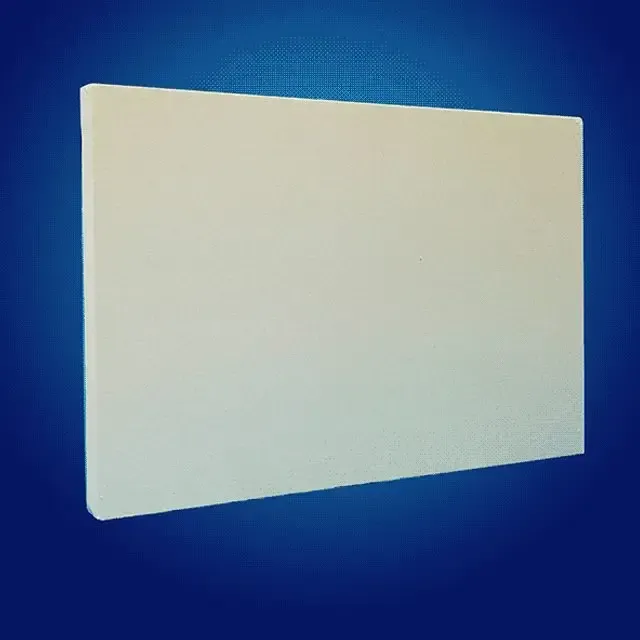
Calcium silicate board

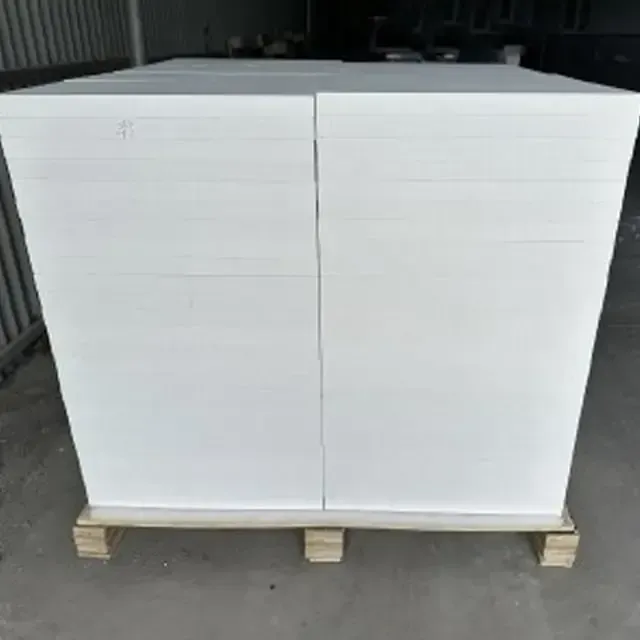
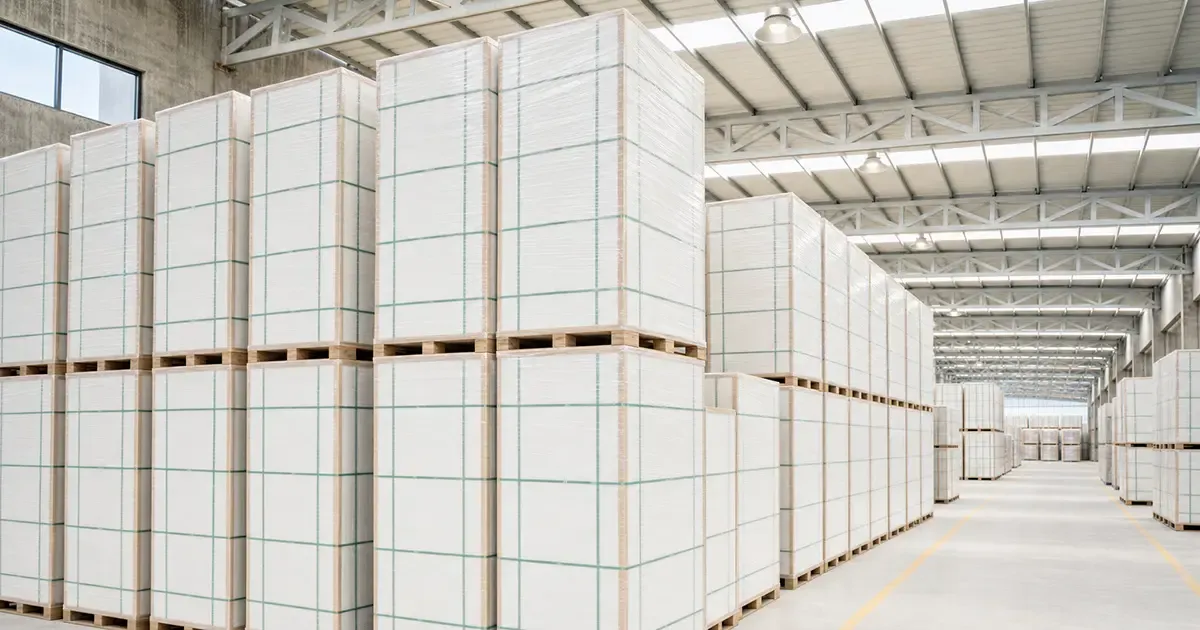
The standard form — flat rigid panels, typically 600 × 300 mm or 1000 × 500 mm, in thicknesses from 25 to 100 mm. Board is used for furnace and boiler back-up linings, vessel and duct insulation, fire-rated barriers, and anywhere a flat rigid panel is easiest to fit. Cut it with a saw; machine it on a CNC router if you need profiled shapes.

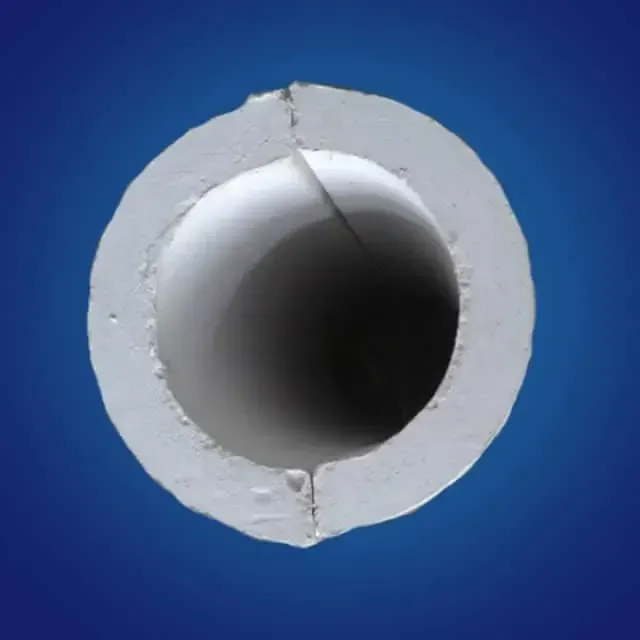
Calcium silicate pipe sections

Pre-formed half-shells, or pipe covering insulation, supplied to match the pipe outside diameter. Section lengths are typically 600 mm, with bores from roughly 25 mm up to very large diameters and wall thicknesses from 25 to 100 mm. On long straight runs, pipe sections are faster and neater than fabricated board, and they hold a uniform thickness around the whole circumference — which is exactly where wrapped or fabricated insulation tends to fail.

Calcium silicate block and lags

Dense blocks and curved lags for large-diameter vessels, valve bodies and irregular equipment. These are normally made to drawing and machined to fit.

Sizes and thickness

Standard board sizes run 600 × 300 mm and 1000 × 500 mm, with thickness from 25 to 100 mm. Larger formats and non-standard thicknesses are available to order. If you need a specific size, send the drawing — custom cutting and machining is a routine part of what we do, not an exception.

Every form is available in standard grades to 650 °C and high-temperature grades to 1000–1100 °C.

Manufacturing

How calcium silicate insulation is made

Understanding the process explains the properties, and it is worth knowing because molded calcium silicate behaves differently from other rigid insulations.

  1. Slurry preparation — siliceous and calcareous raw materials (silica and lime) are mixed with water and reinforcing fibre into a slurry.
  2. Moulding — the slurry is poured or pressed into moulds, which is where molded calcium silicate gets its name and its near-net shape.
  3. Hydrothermal reaction — in the autoclave, under saturated steam pressure and elevated temperature, the lime and silica react to form crystalline calcium silicate hydrate. This reaction, not the drying, is what gives the material its strength.
  4. Drying and finishing — the cured boards are dried, then cut, calibrated and packed.

The result is a rigid, open-celled inorganic solid: strong in compression, dimensionally stable, non-combustible and entirely free of asbestos. Because the strength comes from a crystalline structure rather than an organic binder, calsil does not soften or lose strength as it ages at temperature.

Working with it. Calsil machines and cuts cleanly, but it produces fine dust. Cut in a ventilated area with appropriate respiratory protection, and store it dry — if boards do get wet, dry them out slowly on a controlled heat-up schedule rather than throwing them straight into service.

Comparison

Calcium silicate vs ceramic fiber and mineral wool

All three are high-temperature insulations, but they solve different problems. Choosing between them is mostly about load, temperature and heat storage.

Calcium silicate Ceramic fiber Mineral wool
Form Rigid board, pipe section, block Flexible blanket, board, module Semi-rigid board, blanket
Service temperature 650 °C standard; 1000–1100 °C high-temp 1100–1430 °C Up to 650 °C
Compressive strength High — carries load Low — cannot be loaded Low to moderate
Thermal conductivity Low, and stable with temperature Low Moderate
Heat storage Moderate Very low — fast heat-up Moderate
Thermal shock resistance Moderate Excellent Moderate
Machinability Excellent — cuts and CNC machines Poor Fair
Best for Load-bearing back-up, pipe supports, pipe sections Hot-face linings, rapid cycling, irregular shapes General industrial insulation to 650 °C

Choose calcium silicate when the insulation must carry load — pipe supports, structural back-up behind refractory, walkable or clamped areas — or when you need a rigid section that holds a uniform thickness on pipework.

Choose ceramic fiber when you are lining the hot face, cycling rapidly, or insulating an irregular shape. It stores very little heat and survives thermal shock, but it cannot be loaded.

Choose mineral wool when the duty is at or below 650 °C and you need the lowest cost per square metre.

The common answer is both. Many plants run calsil at load points and pipe supports, ceramic fiber at the hot face or on irregular geometry, and mineral wool on the lower-temperature runs. We manufacture all three, so we will tell you honestly where each belongs — including where a cheaper material will do.

Applications & Supply

Applications

Calcium silicate insulation is specified wherever rigid, load-bearing thermal insulation is required:

  • Steam, condensate and process pipe insulation in power plants, refineries and chemical facilities — as pre-formed pipe sections or fabricated board
  • Boiler, furnace and kiln back-up insulation behind refractory linings
  • Pipe supports and high-load points where compressible insulation would crush — the classic calsil duty
  • Cement, glass, steel and petrochemical plant needing non-combustible, dimensionally stable insulation
  • Fire protection — fire-rated walls, barriers, cable protection and structural fireproofing on dense grades
  • Non-ferrous metal contact — dense grades used where molten aluminium must not wet the surface

Why buy from Rosetexwool

As a calcium silicate manufacturer and supplier with our own factory (since 1982), we serve distributors, contractors and OEMs directly — no trading middlemen:

  • ISO 9001 certified production with full traceability
  • Factory-direct pricing — save up to 30% vs trading companies
  • Custom cutting and machining to your drawings and dimensions
  • Full density and temperature range, with test data to ASTM C533 on request
  • Export to 30+ countries with fast global delivery
  • 24-hour quotation on boards, pipe sections, blocks and panels

Send us your operating temperature, dimensions, load conditions and quantities for a same-day quote.

Calcium silicate at a glance

1100
°C max service, high-temp grade
0.050
W/(m·K) from, at low mean temp
170–1000
kg/m³ density range
20+
Years typical service life

Need a quote for calcium silicate insulation?

Send us your operating temperature, dimensions, load conditions and quantities.

or email us directly

Why choose Rosetexwool?

We deliver industrial-grade thermal solutions trusted by engineers worldwide.

Rated to 1100°C

Calcium silicate board and pipe sections for continuous high-temperature service.

High Compressive Strength

Rigid, load-bearing panels that hold their shape under load — ideal for pipe supports.

Non-Combustible A1

Inorganic, asbestos-free and fire-safe for demanding industrial insulation.

Support

Frequently asked questions

What thickness of calcium silicate board do I need?+

It depends on your operating temperature, your target heat loss or surface temperature, and the space available. As a guide: 40–60 mm for steam and condensate pipework below 300 °C, 60–80 mm for process pipework at 400–650 °C, and 50–100 mm for boiler and furnace back-up linings. Standard thickness range is 25–100 mm. Above about 75 mm, two thinner layers with staggered joints perform better than one thick layer. Send us your conditions and we will size it properly.

What is the density of calcium silicate insulation?+

Calcium silicate is graded by density from about 170 kg/m³ to 1000 kg/m³. Low density (170–220 kg/m³) insulates best and is used for back-up insulation and HVAC. Medium density (220–280 kg/m³) suits steam pipework and boilers. High density (280–500 kg/m³) is used in refineries, cement plants and power generation. Extra-high density (500–1000 kg/m³) is specified for load-bearing pipe supports, fire barriers and contact with molten non-ferrous metals. Higher density means greater strength but slightly higher thermal conductivity.

What is the thermal conductivity of calcium silicate?+

Thermal conductivity rises with mean temperature, so any figure must be quoted at a temperature. Typical values are 0.050–0.059 W/(m·K) at 38 °C mean, 0.056–0.079 W/(m·K) at 200 °C mean, and 0.092–0.102 W/(m·K) at 371 °C mean. Lighter grades sit at the bottom of each range and dense structural grades at the top. We supply tested values to ASTM C533 with every quotation.

What sizes and thickness is calcium silicate board available in?+

Standard board sizes are 600 × 300 mm and 1000 × 500 mm, with thickness from 25 to 100 mm. Pipe sections are typically 600 mm long, with bores from about 25 mm upward and wall thickness from 25 to 100 mm. Larger formats, non-standard thicknesses and CNC-machined shapes are all available to order — send us the drawing.

What is the maximum temperature of calcium silicate insulation?+

Standard grades are rated for continuous service to 650 °C. High-temperature grades, made by a hydrothermal process with quartz sand and lime, run to 1000–1100 °C. Tell us your operating temperature and we will specify the right grade — continuous service above about 1000 °C needs ceramic fiber instead.

What is the difference between calcium silicate board and pipe sections?+

Board is a flat rigid panel used for vessel, duct and furnace insulation, fire barriers and fabricated shapes. Pipe sections are pre-formed half-shells manufactured to match a specific pipe outside diameter, with a uniform wall thickness all the way round. On long straight pipe runs, sections install faster and hold thickness more reliably than fabricated board. On large diameters, valves and irregular equipment, board or machined block is usually the practical answer.

Is calcium silicate insulation waterproof?+

Not inherently. Calcium silicate will absorb water if it is exposed, and wet insulation loses most of its thermal value and can contribute to corrosion under insulation. Water resistance comes from hydrophobic-treated grades plus a correctly sealed weather-tight cladding. Calsil should always be stored and installed dry, and if it does get wet it needs a slow, controlled dry-out rather than immediate service.

Is calcium silicate insulation asbestos free?+

Yes. Modern calcium silicate insulation is completely asbestos-free and is inorganic and non-combustible to Class A1. It does generate fine dust when cut or machined, so cutting should be done in a ventilated area with appropriate respiratory protection, in line with standard workplace dust limits.

What is molded calcium silicate?+

Molded calcium silicate refers to the manufacturing process: a slurry of lime, silica and reinforcing fibre is poured or pressed into moulds, then cured in an autoclave under steam pressure. The hydrothermal reaction forms crystalline calcium silicate hydrate, which is what gives the material its strength. Because that strength is crystalline rather than binder-based, calsil does not soften or lose strength as it ages at temperature.

What is calcium silicate insulation used for?+

Calsil is used for high-temperature pipe insulation, boiler and furnace back-up insulation, and high-load points such as pipe supports. It is rigid and load-bearing, rated to 650 °C on standard grades and 1000–1100 °C on high-temperature grades, so it is specified where compressible insulation would crush. Dense grades are also used for fire-rated walls and barriers and for contact with molten non-ferrous metals.

What is the difference between calcium silicate board and ceramic fiber?+

Calcium silicate board is rigid and load-bearing with high compressive strength, so it suits pipe supports and structural back-up insulation. Ceramic fiber is flexible with very low heat storage, better for lining large furnaces, hot-face applications and rapid heat-up cycles. Many plants use both: calsil for load points, ceramic fiber for linings. Above about 1000 °C continuous, ceramic fiber is the correct choice.

What does calsil mean?+

Calsil is the industry abbreviation for calcium silicate insulation. It refers to the same rigid, high-temperature board, pipe sections and blocks made from lime and silica. You will see it written as calsil board, calsil pipe insulation and calsil block — all describe calcium silicate products.

Request a Quote WhatsApp

Get in touch

Free consultation & tailored quotation

Request a Quote WhatsApp