
Aerogel Insulation Cost and Price 2026: Blanket Guide | Rosetexwool
Aerogel insulation cost in 2026: blanket prices near USD 22/m² market average, USD 20-40/m² for 6-10 mm grades, why the 5-10x premium narrows to 2-4x per R-value, and when aerogel pays back.
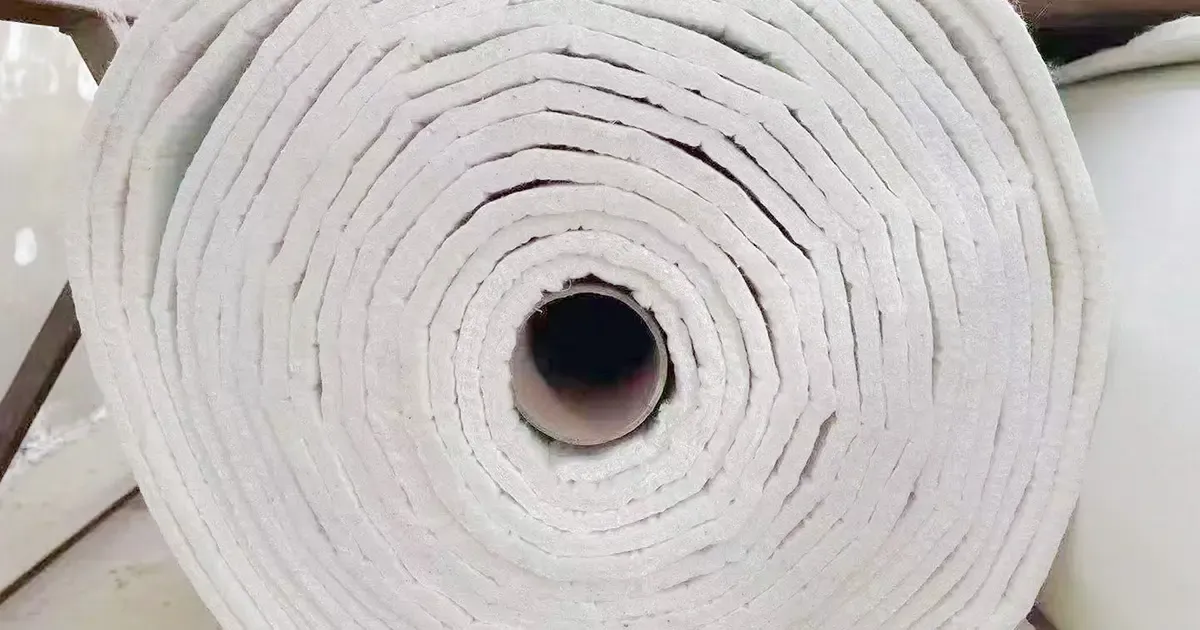
Aerogel insulation has moved from a niche aerospace material to a catalog item in industrial procurement, yet its pricing remains the least transparent of any mainstream thermal insulation. Public quotes for nominally similar blankets range from under USD 20 to well over USD 40 per square meter, and buyers frequently compare incompatible units - per square meter, per cubic meter, per roll, per R-value - before asking the only question that matters: what does the required thermal performance actually cost, installed, over the life of the asset? This guide consolidates 2025-2026 public price evidence, explains the cost structure behind the premium, and shows when aerogel pays back - and when it does not.
Aerogel Insulation Price Benchmarks in 2026
No single global price list exists, so the honest starting point is a set of public reference points rather than one average. Recent market research and distributor pricing cluster as follows:
| Reference point | Indicative price | Source type |
|---|---|---|
| Global aerogel blanket average (2025) | approx. USD 22/m² | Industry market report |
| Standard industrial grades, broader product mix (2025) | USD 9-12/m² | Market research tracker |
| 6 mm silica aerogel blanket, North America distributor quotes (2025) | USD 22-38/m² | Reported distributor quotations |
| Small-quantity online retail cuts | roughly USD 30/m² equivalent | Online catalog pricing |
| Aerogel particles at industrial volumes | from approx. USD 6,000/m³ | Industry reference pricing |
The spread is wide because the samples are not comparable: thickness, density, facing, order volume, and what each quote includes all differ. Treat every figure as a planning screen, not a quote. For context on where aerogel sits versus conventional materials, see our aerogel vs traditional insulation thickness and cost comparison.
One trend is consistent across sources: prices are falling. Market trackers report blanket prices declined roughly 35-40 percent between 2020 and 2025 as ambient-pressure drying capacity scaled up, with roadmaps pointing toward USD 6-8/m² for commodity grades by 2030.
Price per Area vs Price per R-Value: The Only Fair Comparison
Per unit of area at equal thickness, aerogel insulation carries a premium of roughly 5-10x over mineral wool or fiberglass. Per unit of thermal resistance, the gap narrows to roughly 2-4x, because aerogel's thermal conductivity is about half that of the best fibrous materials - or better.
Typical thermal conductivity at a 24 °C mean temperature:
| Material | k (W/m·K) | R-value per inch (imperial) |
|---|---|---|
| Silica aerogel blanket | 0.015-0.021 | approx. R-7 to R-9.5 |
| PIR board | approx. 0.022 | approx. R-6.5 |
| Rock wool board | approx. 0.038 | approx. R-3.8 |
| Glass wool blanket | approx. 0.040 | approx. R-3.6 |
| Calcium silicate board | approx. 0.050 | approx. R-2.9 |
Translated into thickness required for the same target (illustrative R-10, imperial scale) and indicative material cost at the USD 22-30/m² blanket price level:
| Material | Thickness for R-10 | Indicative material cost |
|---|---|---|
| Aerogel blanket | approx. 30-35 mm (3-4 layers of 10 mm) | USD 70-100/m² |
| PIR board | approx. 40 mm | USD 10-20/m² |
| Rock wool board | approx. 65-70 mm | USD 6-14/m² |
| Glass wool blanket | approx. 70-75 mm | USD 4-9/m² |
| Calcium silicate board | approx. 90 mm | USD 15-30/m² |
These are planning screens, not quotations. The takeaway: aerogel almost never wins a material-only cost comparison. It wins when thickness, weight, corrosion risk, or downtime dominates the design - which is exactly what the per-R table hides.
Why Is Aerogel Insulation So Expensive?
The cost structure is physics and process, not marketing. Four factors dominate:
- Drying is the bottleneck. The nanoporous gel structure must be dried without collapsing it. Supercritical drying preserves the structure but requires high-pressure autoclaves, long batch cycles, and heavy energy input. Ambient-pressure drying cuts capital and operating cost substantially, but demands precise surface modification, solvent recovery, and tight process control to hold yield.
- Performance must be engineered in. Fiber reinforcement, hydrophobic treatment, and encapsulation all add materials and process steps - and they are what make the blanket handleable, water-resistant, and durable.
- Quality control is expensive. Thermal conductivity must be verified at temperature, not just at ambient; dust grades, batch consistency, and third-party test reports all add cost that cheaper products skip.
- Capital depreciation and yield still dominate. Even with cheaper ambient-pressure routes, equipment utilization, scrap, and cycle time matter more than raw materials in the final cost.
This is also why a per-square-meter price alone can mislead: a lower quote may simply mean a lower areal density of aerogel, less reinforcement, or a shorter verification chain.
What Changes Your Quote: Seven Cost Drivers
When comparing aerogel insulation prices, lock down these variables first:
- Thickness - 5, 6, and 10 mm are the industrial standards; price scales close to linearly.
- Temperature grade - cryogenic and high-temperature grades command premiums over standard grades.
- Facing - foil-faced and glass-cloth-faced rolls cost more than plain.
- Order volume and width - MOQ, roll width, and frame-agreement terms move unit price significantly.
- Delivery terms - EXW, CIF, and DDP prices for the same product can differ by double-digit percentages once freight, duties, and insurance are counted.
- Documentation - third-party thermal test reports, fire certifications, and batch traceability add cost but de-risk the project.
- Process route - ambient-pressure dried product is structurally cheaper to make; ask what the price assumes about performance verification.
Material Price vs Installed System Cost
Installed cost typically runs two to four times material cost in industrial settings, with labor accounting for 40-60 percent of the installed price. Reported installed aerogel blanket systems (10-20 mm, including cladding) screen around USD 200-400/m² in industrial retrofit contexts - compare that against a complete mineral wool system of three to seven times the thickness, not against the blanket alone.
Aerogel's installation economics come from simplification:
- A 10 mm aerogel wrap can replace 60-80 mm of mineral wool in space-critical retrofits, cutting cladding area, hardware, and install time.
- Lower transported volume reduces freight on international projects.
- Flexible rolls conform to pipes, valves, and irregular geometry with less cutting waste.
- Hydrophobic silica chemistry supports corrosion-under-insulation (CUI) control on piping systems - see our piping insulation application guide.
When Aerogel Pays Back: A Total-Ownership-Cost View
Aerogel justifies its price when at least one of these dominates the project:
- Space-constrained retrofits where thicker systems cannot fit between existing structures or cladding.
- Corrosion-sensitive service where hydrophobic behavior and thin, tight-fitting layers reduce CUI risk.
- Cryogenic and LNG systems, where vapor drive and thermal short-circuits punish conventional materials.
- High-temperature steam and process lines where reduced surface temperature cuts heat loss and protects personnel within a thin profile.
- High downtime cost, where faster installation and fewer future maintenance interventions carry real money.
It rarely pays when space is unconstrained, energy is cheap, downtime is costless, and the system operates near ambient temperatures. For high-temperature alternatives, compare aerogel vs ceramic fiber at high temperature, and for ultra-thin applications see our nano vs aerogel vs microporous comparison. Product-level detail is on the nano aerogel insulation blanket page and in the aerogel insulation hub.
For the payback calculation itself, use the same discipline as any insulation investment: equivalent thermal performance under identical design conditions, then compare full installed cost, energy savings, and maintenance cash flows on a net-present-value basis. Do not accept vendor payback claims without your own operating data.
Aerogel Price Outlook 2026-2030
The baseline expectation is continued, gradual decline: as ambient-pressure drying replaces supercritical capacity and production scales, commodity blanket grades are likely to fall by low-to-mid single-digit percentages per year, with system-level costs falling faster thanks to prefabrication and standardized installation. Specialized grades - cryogenic, high-temperature, low-dust - will hold their premium longer because their cost is dominated by qualification rather than volume.
Buyers can capture the decline by structuring two-year frame agreements with volume tiers, qualifying two suppliers, and requiring thermal performance data at their own design temperatures rather than ambient-temperature datasheet values.
Aerogel Insulation Buying Checklist
Before accepting any aerogel quote, confirm:
- Thermal conductivity curve at your operating temperatures - not just the 25 °C value.
- Maximum continuous service temperature (industrial silica blankets typically serve up to 650 °C; verify against ASTM C1728-classified specifications for flexible aerogel insulation, which span cryogenic to approximately 650 °C service).
- Areal density or aerogel content per square meter, so per-area quotes reflect real product.
- Thickness tolerance and roll width against your takeoff.
- Facing type and vapor-retarder requirements for below-ambient service.
- Water-repellency and dust grade, especially for enclosed or vibration-prone installations.
- What the price includes: packaging, cutting, freight, duties, insurance, validity period.
- Third-party test reports and batch traceability for project acceptance.
Key Takeaways
- Public 2025-2026 evidence puts industrial aerogel blanket material prices around USD 22/m² on average, with a practical distributor range of roughly USD 20-40/m² for 6-10 mm grades.
- Per unit area the premium over mineral wool is 5-10x; per unit of R-value it narrows to roughly 2-4x - and disappears entirely where thickness, corrosion, or downtime costs dominate.
- Prices are on a declining path as ambient-pressure drying scales; lock frame agreements now and require temperature-specific performance data to buy the decline rather than wait for it.
For more pricing guides and application deep-dives, browse the Rosetexwool insulation blog or explore the aerogel insulation hub.
Frequently asked
How much does aerogel insulation cost in 2026? +
Public 2025-2026 references put flexible silica aerogel blanket material prices near USD 22 per square meter on average, with a practical distributor range of roughly USD 20-40/m² for 6-10 mm grades depending on thickness, facing, order volume and delivery terms. Particles and monoliths price differently, so always confirm the unit before comparing quotes.
Why is aerogel insulation more expensive than fiberglass or rock wool? +
The nanoporous structure requires a sol-gel process followed by supercritical or ambient-pressure drying, which needs expensive equipment, long cycles and tight process control. Fiber reinforcement, hydrophobic treatment and thermal testing at temperature add further cost. Per unit area the premium is roughly 5-10x; per unit of R-value it narrows to about 2-4x.
Is aerogel insulation worth the price? +
It pays back where thickness, corrosion risk or downtime dominate: space-constrained retrofits, cryogenic and LNG systems, corrosion-under-insulation-sensitive piping, and high-temperature steam lines. It rarely pays where space is unconstrained, energy is cheap and shutdowns are costless. Judge it on total installed cost and lifecycle energy savings, never on material price alone.
How much aerogel blanket equals a given thickness of mineral wool? +
Aerogel blanket delivers roughly R-7 to R-9.5 per inch versus about R-3.8 for rock wool, so it needs roughly half the thickness for the same thermal resistance. A 10 mm aerogel layer commonly replaces 60-80 mm of mineral wool in space-critical industrial retrofits, which is where much of its system-level value comes from.
Will aerogel prices come down? +
Market trackers report blanket prices fell roughly 35-40 percent between 2020 and 2025 as ambient-pressure drying capacity scaled, and roadmaps point toward USD 6-8/m² for commodity grades by 2030. Specialized cryogenic and high-temperature grades will hold their premium longer. Two-year frame agreements with volume tiers are the practical way to capture the decline.
What should I check before accepting an aerogel quote? +
Confirm the thermal conductivity curve at your operating temperatures, maximum continuous service temperature, areal density or aerogel content, thickness tolerance, facing type, water-repellency and dust grade, what the price includes (freight, duties, cutting, validity), and third-party test reports for project acceptance. A lower quote often means less aerogel content or less verification.
What is the maximum service temperature of aerogel blanket? +
Industrial silica aerogel blankets typically serve continuously up to 650 °C, consistent with flexible aerogel insulation specifications under ASTM C1728, which spans cryogenic service near -196 °C to approximately 650 °C. Always verify the specific grade's rating against your design temperature rather than assuming the class maximum.
Request a quote
Interested in our insulation solutions? Send us your requirements and our team responds within one business day.