
Petrochemical
Rosewool A1 non-combustible rock wool pipe sections, ceramic fiber & calcium silicate for petrochemical plants: 450-650°C piping, furnaces, tanks. CUI-resistant, ASTM/EN-rated.
Overview
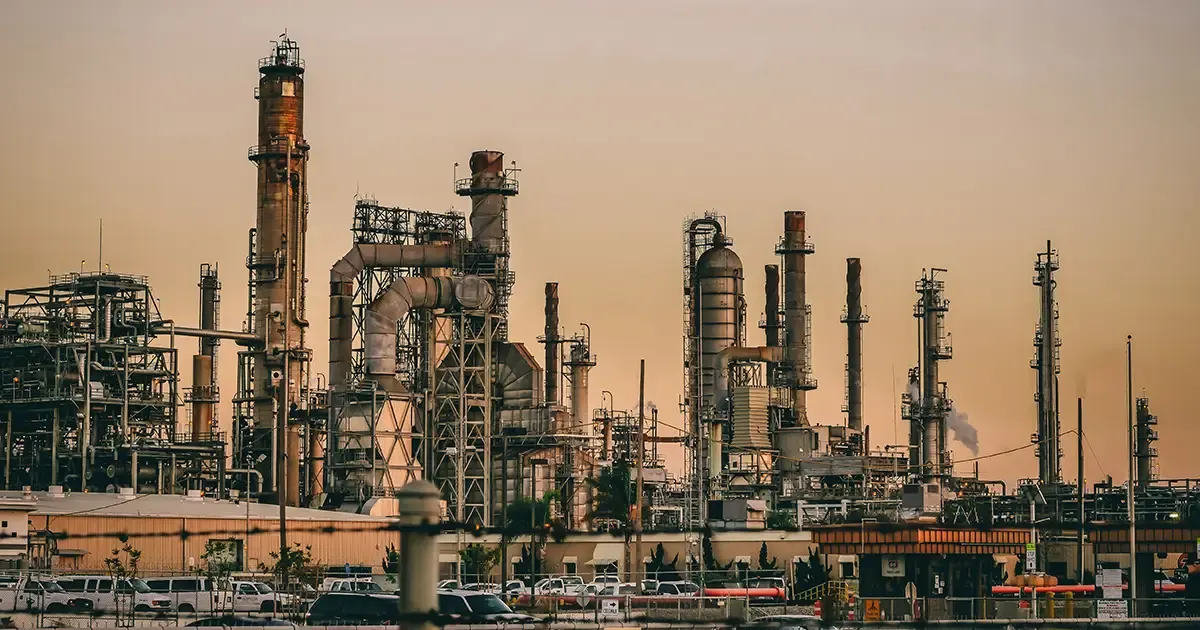
Petrochemical and refinery plants operate across a wide temperature range - from cryogenic LNG service near -162°C to high-temperature process streams of 450-650°C, with short-term excursions to 800°C. Every unit, from crude distillation and catalytic cracking to hydrotreating, reforming, ethylene cracking and sulfur recovery, demands insulation that stays non-combustible and dimensionally stable.
Rosetexwool supplies a complete insulation portfolio engineered for refinery conditions. Rock wool pre-formed pipe sections are the first choice for process and steam piping: non-combustible, hydrophobic (water repellency ≥98%), and rated for continuous service to 650°C (800°C short-term). For large vessels, tanks and irregular equipment we specify rigid rock wool board; for furnace linings and high-temperature reactors we use ceramic fiber modules and blankets, while calcium silicate pipe insulation delivers rigid, durable coverage for high-temperature steam and process piping.
All rock wool used in petrochemical service is A1 non-combustible and conforms to international insulation design standards (ASTM C547, ASTM C533, EN 14303) together with international refinery fire-safety standards (API, NFPA). With thermal conductivity of 0.032-0.040 W/(m·K) and a service life of 15-20 years, our systems cut heat loss by up to 60% - 42% measured in a 30 km steam-network retrofit - and extend turnaround intervals. Hydrophobic grades suppress the moisture ingress that drives corrosion under insulation (CUI).
Combined with proper jacketing, vapor barriers and pre-fabricated removable covers for valves and flanges, our insulation packages protect personnel, reduce unplanned shutdowns and lower lifecycle cost. Contact our engineers for unit-specific specifications.
Material Comparison
Choosing the right insulation means balancing temperature, fire safety and cost. How rock wool compares with the materials specified across petrochemical projects:
| Material | Service temperature | Fire rating | Thermal conductivity | Relative cost | Service life |
|---|---|---|---|---|---|
| Rock wool | -200 to 650°C | A1 non-combustible | 0.032-0.040 W/(m·K) | Low | 15-20 yr |
| Ceramic fiber | to ~1430°C | A1 | ~0.03 (low) | Higher | Long |
| Calcium silicate | up to 1100°C | A1 | ~0.05-0.06 | Medium | 15-20 yr |
| Rigid polyurethane foam | -50 to 150°C | B1/B2 | 0.022-0.027 | Medium | 3-5 yr |
| Foam glass | wide / cryogenic | A1 | 0.06-0.064 | High | 20-30 yr |
| Aerogel | to ~1000°C | A | 0.013-0.018 | 3-5x rock wool | 15-20 yr |
Rock wool leads on all-round value for petrochemical piping: it covers -200 to 650°C, is A1 non-combustible, costs far less than aerogel or foam glass, and outlasts polyurethane by 3-4x. Ceramic fiber and calcium silicate are specified where furnace linings or very high temperatures demand it.
Application Scenarios
Typical Petrochemical Application Scenarios
Across refineries and chemical plants, rock wool, ceramic fiber and calcium silicate are deployed in the following units and structures:
- High-temperature reactor & transfer lines — ceramic fiber blankets and modules insulate FCC slurry lines, catalytic-cracker transfer lines and high-temperature reactor connections.
- Cracker furnace inlet/outlet piping — ceramic fiber pipe insulation wraps cracker furnace high-temperature inlet and outlet lines.
- Tanks & pressurized vessels — calcium silicate and rigid rock wool board provide fire-rated insulation for storage tanks, especially those requiring fire protection.
- Fire isolation belts & pipe racks — rock wool fills fire-isolation zones and pipe-rack fire barriers to stop fire spread along racks.
- Blast walls — rock wool fills blast-wall structures, combining fire and explosion resistance.
- Equipment foundations & equipment-room insulation — insulation on tank and reactor foundations reduces ground-temperature rise; equipment-room insulation cuts heat loss.
- Vent duct linings & cable insulation — rock wool or glass wool lines ventilation ducts and wraps cables to prevent low-temperature embrittlement.
- Molten-salt tanks & high-temperature molten-salt piping — ceramic fiber insulates molten-salt storage tanks and piping in solar-thermal co-located units, with strong corrosion resistance.
Material selection follows service temperature: above 800°C ceramic fiber is preferred; for 300-800°C rock wool offers the best cost-performance with integrated fire safety; in corrosive or damp areas calcium silicate delivers chemical stability. Rosetexwool engineers unit-specific packages combining these materials with proper jacketing and vapor barriers.
Related Articles
Related Applications
Refineries and chemical plants demand continuous-duty, fire-safe insulation. Related process and energy applications:
- Power generation insulation for turbine and boiler insulation
- Iron and steel insulation for high-temperature steelmaking insulation
- Pipe insulation for process and utility piping systems
- Cryogenic insulation for LNG and gas storage tanks
- Dust and emission control for emission and dust control in plants
Why Rosetexwool
Key Benefits
Why Petrochemical operations choose Rosetexwool insulation solutions.
Lower Energy Loss
High-performance ceramic fiber and aerogel reduce heat loss from process equipment by up to 40%, cutting fuel consumption.
Corrosion Under Insulation
Hydrophobic rock wool and proper system design prevent moisture ingress that causes CUI in petrochemical piping.
Reduce Unplanned Shutdowns
Durable refractory linings withstand thermal cycling without spalling, extending campaign lengths.
Personnel Safety
Low shell temperatures protect workers and meet OSHA surface temperature requirements in operating areas.
Support
Frequently asked questions
What insulation is best for high-temperature petrochemical piping? +
Rock wool pre-formed pipe sections are the workhorse for process and steam piping up to 650°C continuous (800°C short-term), rated A1 non-combustible per EN 13501-1. For furnace linings and reactor sections above that range we specify ceramic fiber modules and calcium silicate. All are selected to API/NFPA fire-safety standards.
How do you prevent corrosion under insulation in refineries? +
We use hydrophobic rock wool with integral water repellent (water repellency ≥98%) combined with proper cladding, sealants and vapor barriers. We also recommend periodic inspection and can advise on CUI-resistant coating systems for the substrate.
Do you provide insulation for reformer and cracker furnaces? +
Yes. Our ceramic fiber modules and blankets line reformer and cracker furnaces, with pre-assembled modules and various anchor systems for fast installation and stable performance through rapid thermal cycling.
Which rock wool products are best for refinery piping and vessels? +
For refinery piping we use pre-formed rock wool pipe sections; for vessels, tanks and large equipment, rigid rock wool board; for valves and flanges, rock wool board with removable insulation covers. All are A1 non-combustible and available in hydrophobic grades for CUI-prone service, conforming to ASTM C547 and EN 14303.
Can you insulate cryogenic and LNG storage tanks or flare lines? +
Yes. For LNG and cryogenic tanks (down to -162°C) we design layered systems with rock wool or calcium silicate on the ambient side plus vapor barriers, cutting cold loss 15-20%. Flare headers and relief lines are insulated with rock wool or ceramic fiber matched to the expected temperature and fire scenario.
Do you supply insulation for hydrocracking, delayed coking and FCC units? +
Yes. We provide ceramic fiber modules and blankets for high-temperature reactor and furnace linings in hydrocracking, delayed coking and FCC service, with rock wool pipe sections and calcium silicate for the associated piping and steam systems. Pre-assembled modules shorten furnace downtime during turnarounds.
Ready to start? Tell us your specs — we'll quote within 24 hours.
Get pricing
Request a quote for Petrochemical solutions
Tell us about your petrochemical project requirements — our team responds within one business day.