Rosetexwool  Insulation Refractory Co., Ltd.
High-Temperature Refractory Insulation

Ceramic Fiber Insulation — Blanket, Board, Paper & Rope

Factory-direct ceramic fiber to 1430 °C. Blanket, board, paper, rope, cloth, tape and bulk. Low heat storage, ISO 9001 since 1982.

ISO 9001 Certified
Since 1982 Factory
Fast Global Delivery

Overview

Ceramic fiber insulation — also written ceramic fibre — is a lightweight refractory insulation made from alumina-silica fibres. It is defined by three properties that no mineral wool can match at the same time: it survives continuous service to 1260 °C (and 1430 °C on zirconia grades), it stores very little heat, and it resists thermal shock. That combination is why it is the default lining material for furnaces, kilns, reformers and heat-treatment equipment.

Because it stores so little heat, a ceramic fiber lining heats up and cools down fast — cutting cycle time and energy on intermittently-run plant. And because it is flexible in blanket form, it goes round shapes that would defeat a rigid board.

Rosetexwool manufactures ceramic fiber in every commercial form:

Key properties

  • Classification temperature: 1260 °C standard; 1350 °C high-purity; 1430 °C zirconia
  • Thermal conductivity: about 0.06–0.12 W/(m·K) at low mean temperature, and still low at 800–1000 °C
  • Density: 64–160 kg/m³ for blanket; 250–400 kg/m³ for board
  • Low heat storage: roughly a tenth of the heat held by an equivalent firebrick lining
  • Thermal shock: excellent — it survives rapid cycling that would crack rigid refractories
  • Fire performance: non-combustible, Class A1; inorganic with no organic binder to burn out

Key properties

Why engineers specify ceramic fiber

Six properties that decide whether ceramic fiber is the right call.

1260–1430 °C

Standard to zirconia grades covering continuous service from 1100 °C upward.

Very Low Heat Storage

Roughly a tenth of a firebrick lining — faster cycles and lower fuel per cycle.

Thermal Shock Proof

Survives rapid heating and cooling that cracks rigid refractories.

Every Form Supplied

Blanket, board, paper, rope, cloth, tape, bulk and vacuum-formed shapes.

Lightweight and Fast

Low density, no binder burnout, and installs in a fraction of brick time.

Class A1 Non-Combustible

Inorganic fibre with no organic binder — nothing to burn out on first firing.

Temperature grades

Ceramic fiber temperature grades: which one do you need?

Choosing a grade is not about buying the highest number. It is about matching the grade to your continuous operating temperature, with a sensible margin. Over-specifying zirconia for a 1000 °C duty is wasted money; under-specifying standard grade for a 1300 °C duty will shrink the lining and open gaps.

Grade Classification temperature Typical continuous use Al₂O₃ Best for
Standard 1260 °C Up to about 1100 °C 44–47% General furnace linings, boilers, heat-treatment equipment, back-up insulation
High-purity 1350 °C Up to about 1200 °C 47–52% Forging furnaces, ceramic kilns, chemical reactors, higher-velocity hot faces
High-alumina 1350 °C Up to about 1200 °C 52–55% Reducing atmospheres, higher hot-face velocity
Zirconia 1430 °C Up to about 1300 °C 34–38% + 15–18% ZrO₂ Sintering furnaces, steel ladles, incinerators, severe thermal cycling

A point that catches people out. The classification temperature is a laboratory convention, not a recommendation to run at that number continuously. Linear shrinkage is measured after 24 hours at the classification temperature, and a material held there permanently will shrink, stiffen and eventually crack. Specify the grade one step above your actual continuous operating temperature — if your furnace runs at 1150 °C, buy the 1350 °C grade, not the 1260 °C one.

Also worth knowing. Ceramic fiber is attacked by alkali vapours, which flux the fibres and accelerate shrinkage. In cement kilns, glass furnaces and any alkali-rich atmosphere, tell us — the grade and the hot-face protection both change.

Product forms

Types of ceramic fiber: blanket, board, paper, rope, cloth, tape and bulk

Almost every enquiry we receive names a form before it names a grade, because form is what decides how the material goes in. Here is what each one is actually for.

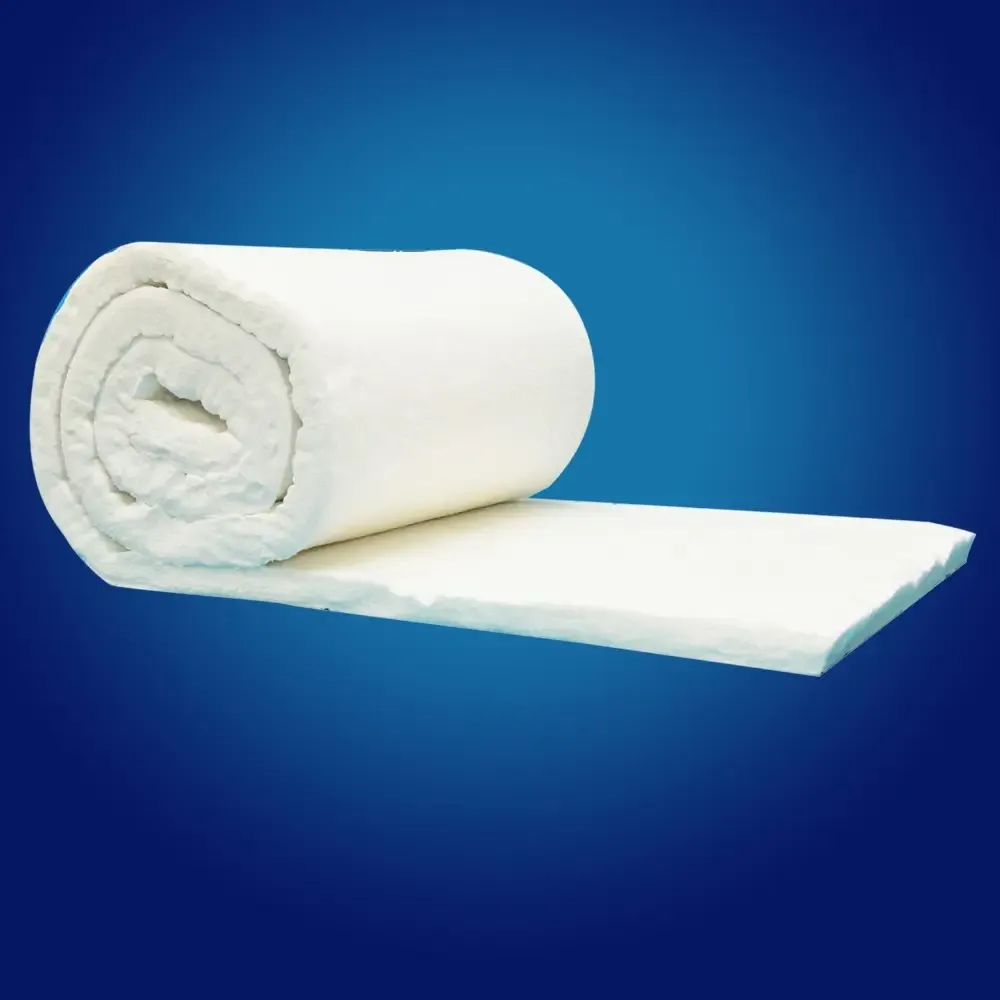
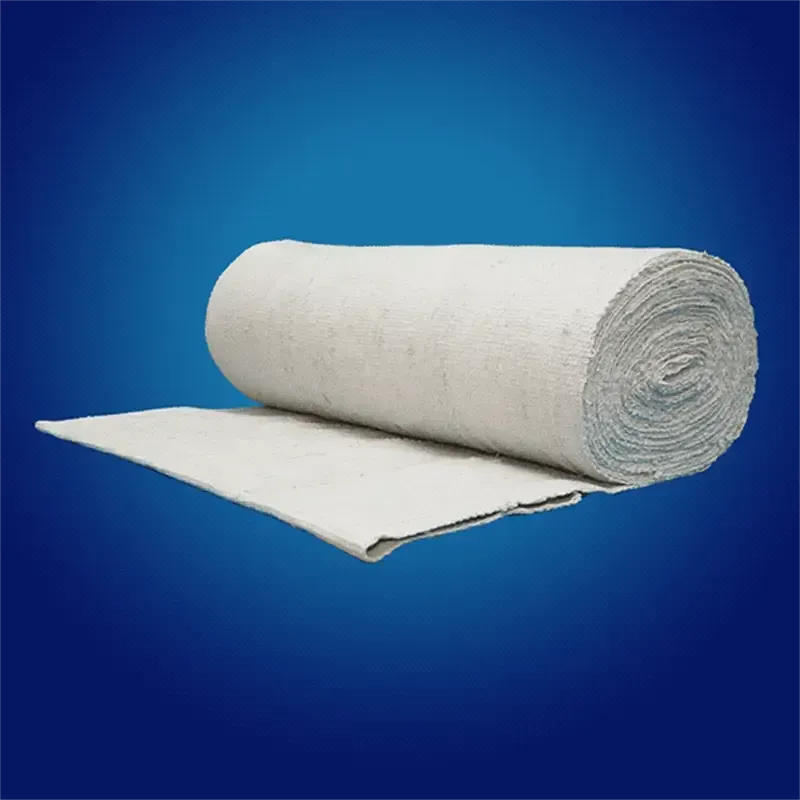
Ceramic fiber blanket

Needled flexible rolls, typically 64–160 kg/m³, in thicknesses from 6 to 50 mm. Ceramic fiber blanket is the workhorse: it wraps, drapes and compresses into place, which is why it is the standard choice for furnace wall linings, kiln car seals, ladle covers, ceramic fiber pipe and duct insulation, and expansion joints. It contains no organic binder, so nothing burns out on first firing.

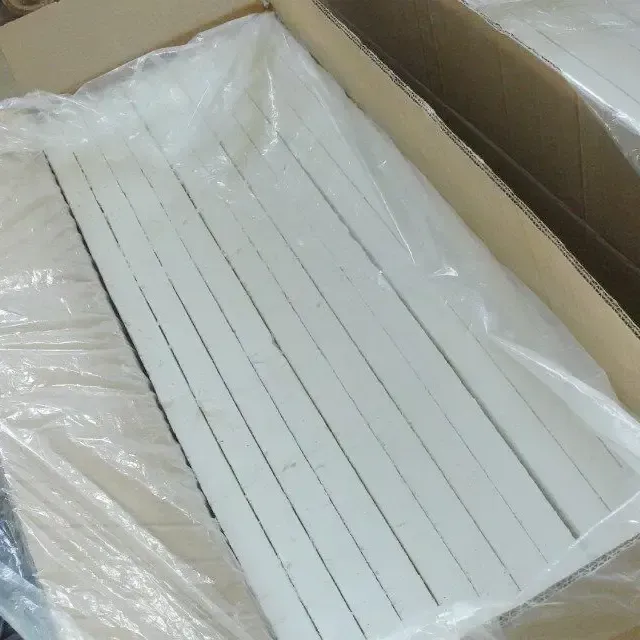
Ceramic fiber board

Rigid vacuum-formed panels, 250–400 kg/m³, with a hard, coatable surface and compressive strength typically 1–4 MPa. Ceramic fiber board is used where the lining has to hold a shape or take mechanical contact: hot-face linings at high gas velocity, burner blocks, furnace doors, baffles, and setters in kiln cars. It cuts cleanly and can be machined.

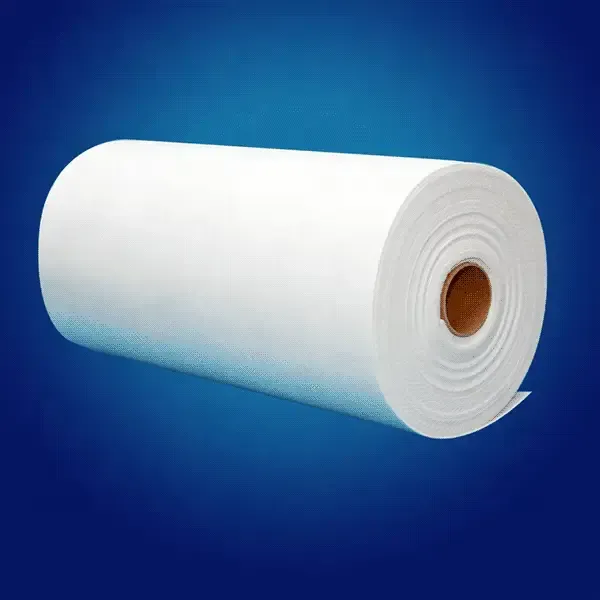
Ceramic fiber paper

Thin, uniform sheets — typically 0.5 to 6 mm — made by a wet process that gives remarkably consistent thickness and density. Ceramic fiber paper is the material for gaskets, parting planes, expansion joints, and anywhere a precise, thin, compressible layer is needed. It is also the form used as a molten-metal contact barrier in some non-ferrous work.

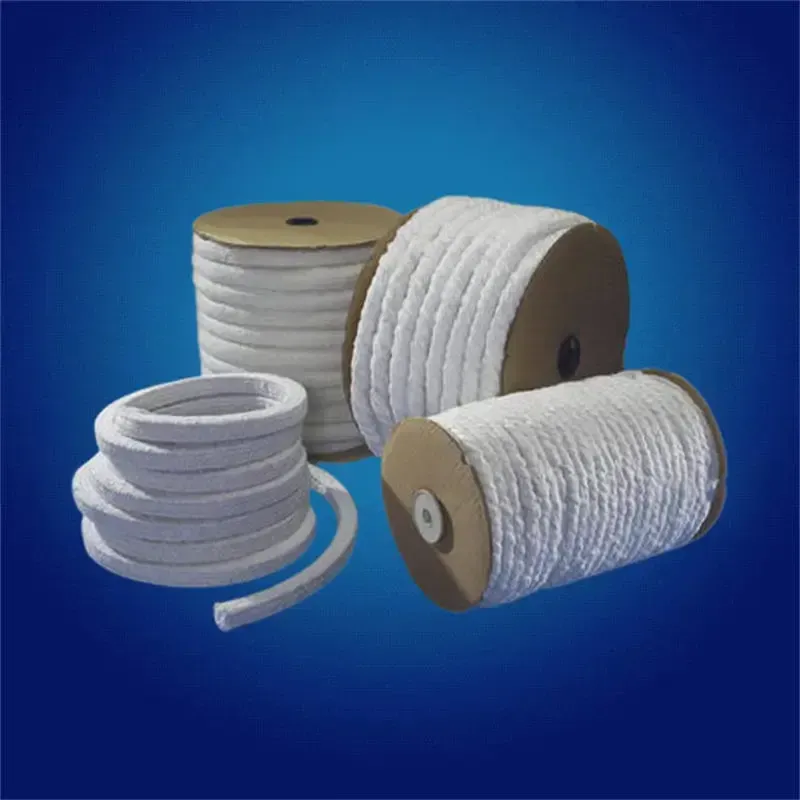
Ceramic fiber rope and gasket

Twisted or braided, round or square section, often with a glass-fibre or stainless-steel wire core for strength. Ceramic fiber rope is the standard seal for furnace doors, hatch covers, manways and flue joints — a ceramic fiber rope gasket compresses into the seating and stays resilient through cycling. Square braid is used where a wider sealing face is needed; round rope where it sits in a groove.

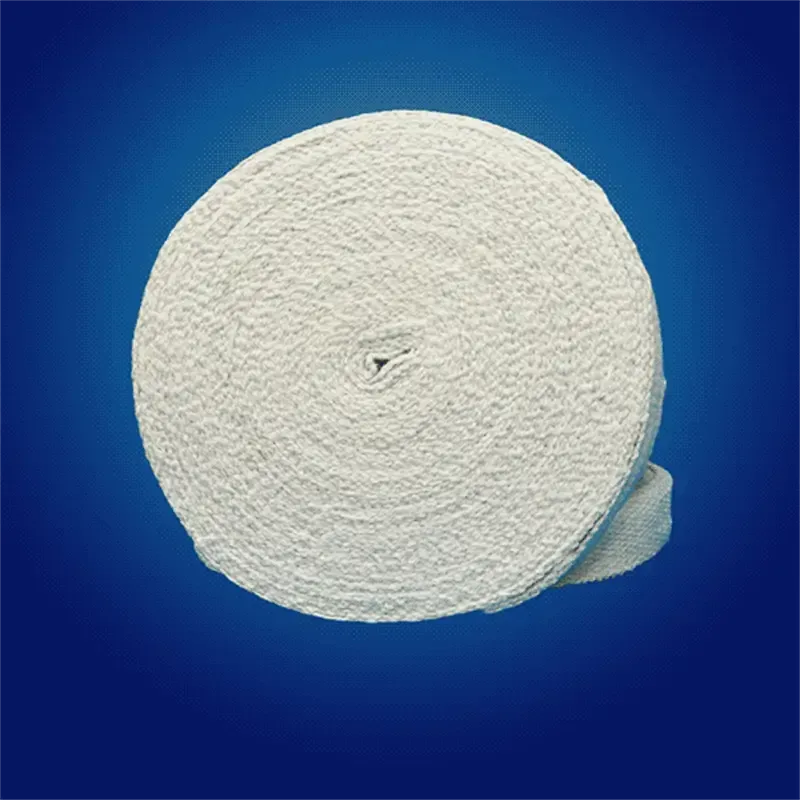
Ceramic fiber cloth and tape

Woven textile, usually reinforced with glass filament or stainless wire, supplied as ceramic fiber cloth, ceramic fiber tape and sleeving. Used for removable insulation covers, cable and hose protection, weld curtains, and wrapping irregular shapes that blanket will not conform to. Ceramic fiber fabric is the same family.

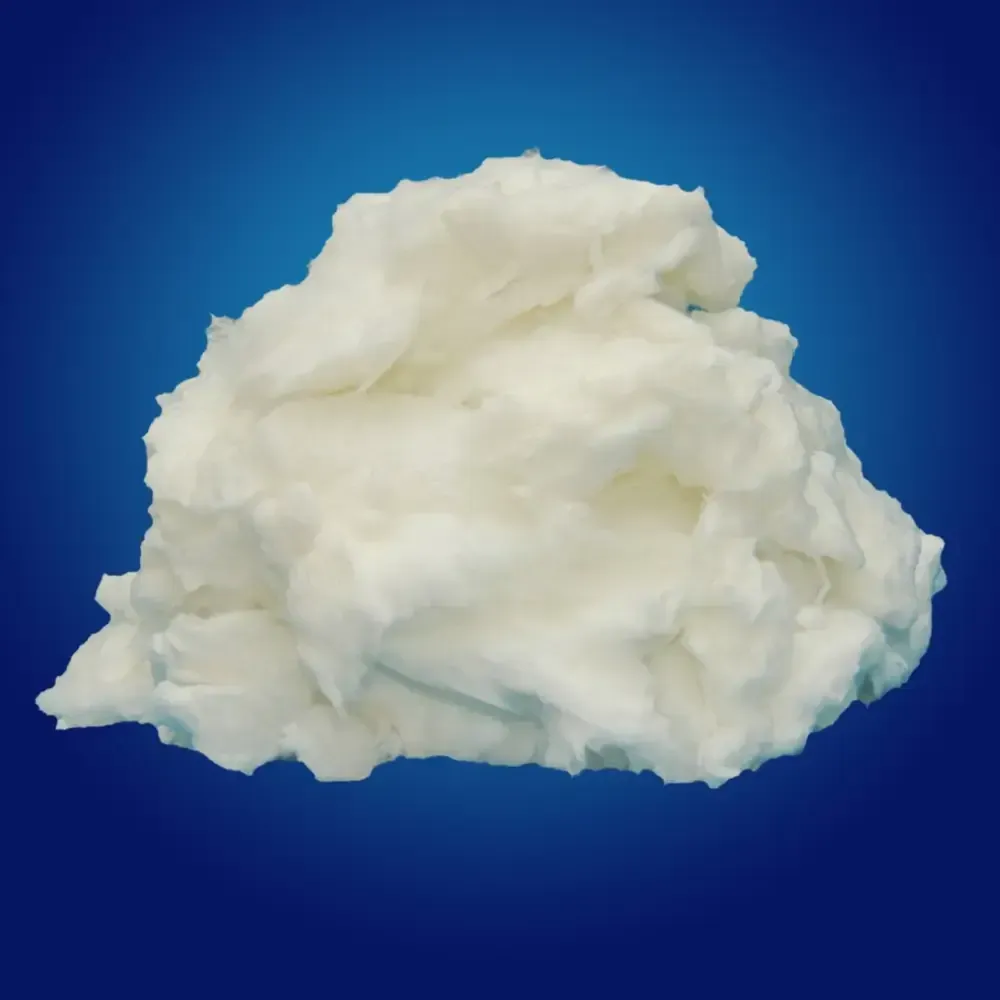
Ceramic fiber bulk

Loose blown fibre, sold by weight. Ceramic fiber bulk is the raw material for gunning and ramming mixes, for vacuum-formed shapes, and for packing irregular voids. It is also what we use to make the other forms.

Pre-formed shapes and modules

Folded or stacked ceramic fiber modules with pre-welded anchors give fast installation on large furnace walls. Vacuum-formed shapes — tubes, cones, ladle lip rings, custom profiles — are made to drawing from bulk and a binder system.

Which form? Blanket for wrapping and general linings, board for rigid hot faces, paper for thin gaskets, rope and cloth for seals and removable covers, bulk for filling and forming. Most furnaces use three or four of them at once. Send us the drawing or the duty and we will specify the combination.

Technical data

Ceramic fiber insulation data sheet

Typical values across our standard, high-purity and zirconia grades. This is a class summary, not a lot certificate — we issue a full data sheet with every quotation, and can supply tested values to ASTM on request.

Property Standard (1260) High-purity (1350) Zirconia (1430) Test method
Classification temperature 1260 °C 1350 °C 1430 °C ASTM C892
Al₂O₃ 44–47% 47–52% 34–38% —
ZrO₂ — — 15–18% —
Density, blanket 64 / 96 / 128 kg/m³ 96 / 128 kg/m³ 96 / 128 kg/m³ ASTM C167
Density, board 250–400 kg/m³ 250–400 kg/m³ 280–400 kg/m³ ASTM C303
Thermal conductivity, 200 °C mean 0.06–0.08 W/(m·K) 0.06–0.07 W/(m·K) 0.06 W/(m·K) ASTM C201
Thermal conductivity, 400 °C mean 0.10–0.12 W/(m·K) 0.10–0.11 W/(m·K) 0.11 W/(m·K) ASTM C201
Thermal conductivity, 600 °C mean 0.15–0.20 W/(m·K) 0.15–0.18 W/(m·K) 0.16–0.18 W/(m·K) ASTM C201
Thermal conductivity, 800 °C mean 0.20–0.30 W/(m·K) 0.20–0.24 W/(m·K) 0.20–0.21 W/(m·K) ASTM C201
Permanent linear shrinkage ≤3% (1000 °C × 24 h) ≤3% (1200 °C × 24 h) ≤3% (1350 °C × 24 h) ASTM C356
Tensile strength, blanket 0.03–0.07 MPa 0.05–0.07 MPa 0.05–0.07 MPa ASTM C1335
Cold crushing strength, board 1.0–4.0 MPa 1.0–4.0 MPa 1.0–4.0 MPa ASTM C165
Modulus of rupture, board 0.3–1.2 MPa 0.3–1.2 MPa 0.3–1.2 MPa ASTM C203
Melting point about 1760 °C about 1760 °C about 1700 °C —
Shot content ≤15% ≤15% ≤12% —
Reaction to fire Non-combustible, Class A1 Non-combustible, Class A1 Non-combustible, Class A1 EN 13501-1

Reading these numbers. Conductivity is quoted at a mean temperature because it rises steeply with temperature — a "0.06" figure means nothing until you know it was measured at 200 °C. Density matters too: a 128 kg/m³ blanket conducts less than a 64 kg/m³ one at high temperature, which is the opposite of what most people assume.

Modulus of rupture matters when board is used structurally — as a shelf, a setter or a hot-face panel spanning supports. If your design loads the board, tell us and we will size it against MOR rather than compressive strength alone.

Furnace lining

Ceramic fiber for furnace lining

This is the application the material was developed for, and it is still the one where the difference shows up most.

Hot face vs back-up

A hot-face lining is exposed directly to the furnace atmosphere and the full gas temperature. Here ceramic fiber board or a module system is used, and the grade must be selected against the real hot-face temperature and gas velocity — high velocity erodes soft blanket, so board is the safe call above about 10 m/s.

A back-up lining sits behind firebrick or castable, insulating the shell and protecting the steelwork. This is where blanket earns its keep: it is cheaper, faster to install, and its low heat storage does not penalise cycle time.

Why ceramic fiber beats firebrick in cycling plant

The decisive property is heat storage, not conductivity. A dense refractory lining absorbs a large share of every kilowatt you put in, and gives that energy back slowly when you shut down. A ceramic fiber lining stores roughly a tenth as much. On a furnace that cycles daily, that shows up as:

  • Faster heat-up and cool-down — shorter cycles, more throughput
  • Lower fuel per cycle
  • A cooler shell, with less structural steel and a safer working environment
  • Lighter lining, so lighter supporting structure

On continuously-run plant at steady state, the fuel argument narrows — but the lower lining weight, faster installation and easier repair still usually favour fiber.

Installation points that decide whether a lining lasts

  1. Anchor correctly. Modules need pre-welded anchors and a correct anchor pattern; blanket needs pins and washers at the right spacing. Most premature lining failures are anchoring failures.
  2. Stagger the joints. Every joint is a thermal shortcut. Two layers with staggered joints always outperform one thick layer.
  3. Allow for shrinkage. Leave compression in the layers so that as the fibre shrinks slightly on first firing, it does not open a gap.
  4. Protect the hot face where gas velocity is high. Specify board, or a coating or veneer, above about 10 m/s.
  5. Watch the atmosphere. Alkali vapour, reducing conditions and molten splash all change the specification — tell us what the lining will actually see.

Tell us furnace type, hot-face temperature, atmosphere and cycle pattern, and we will specify grade, form, thickness and anchoring — not just sell you blanket by the roll.

Comparison

Ceramic fiber vs rock wool: which do you need?

This is the most common comparison we are asked about, and the answer is unusually clean because the two barely overlap.

Ceramic fiber Rock wool
Continuous service temperature 1100–1300 °C depending on grade Up to 650 °C
Classification / softening 1260–1430 °C Softens well below ceramic fiber range
Thermal conductivity at high temperature Low, and stays low Rises steeply above about 300 °C
Heat storage Very low Moderate
Thermal shock resistance Excellent Moderate
Density 64–160 kg/m³ blanket; 250–400 board 40–220 kg/m³
Compressive strength Low on blanket; 1–4 MPa on board Higher on dense boards
Acoustic absorption Moderate Strong
Handling Light, flexible, cuts easily Heavier, rigid slabs
Cost per square metre Higher Lower
Best for Furnace and kiln linings, high-temperature process Building, HVAC, pipework to 650 °C

Choose ceramic fiber when the duty is above roughly 700 °C, the plant cycles, hot-face contact is direct, or low heat storage matters. There is no version of this where rock wool survives a 1200 °C furnace — it will shrink, lose its binder and collapse.

Choose rock wool when the duty is at or below 650 °C, cost per square metre is the binding constraint, or acoustic performance is the point. Rock wool is genuinely better value on building envelopes, HVAC and general industrial pipework, and we will say so rather than upsell you.

Below 650 °C, ceramic fiber is over-specified — and we would rather tell you that than sell it to you.

Material selection

Ceramic fiber vs calcium silicate, aerogel and mineral wool

All four appear on the same projects, usually in different places. Here is where each belongs.

Ceramic fiber Calcium silicate Aerogel / microporous Mineral wool
Form Blanket, board, paper, rope, cloth, bulk Rigid board, pipe section, block Flexible blanket, rigid board Blanket, board, pipe section
Service temperature 1260–1430 °C 650 °C standard; 1000–1100 °C high-temp 650 °C blanket; up to 1000 °C board Up to 650 °C
Compressive strength Low on blanket; 1–4 MPa on board High — 0.4 to over 2 MPa Low to moderate Low to moderate
Heat storage Very low Moderate Very low Moderate
Thermal shock Excellent Moderate Good Moderate
Thickness for a given duty Moderate Moderate Thinnest by far Thickest
Machinability Cuts; board machines Excellent — saw and CNC Cuts with a knife Cuts with a knife
Typical place in a plant Furnace hot face, back-up linings, seals Pipe supports, load-bearing back-up, pipe sections Space-constrained retrofits, cryogenic lines General pipework and building

The short version. Ceramic fiber wins on temperature and thermal shock, calcium silicate on load-bearing strength and machinability, aerogel on thickness, and mineral wool on cost.

How these actually get combined. A typical furnace or process plant uses ceramic fiber at the hot face and in back-up linings, calcium silicate at pipe supports and anywhere the insulation carries weight, aerogel where there is physically no room, and mineral wool on the lower-temperature runs. Almost nobody uses one material throughout.

We manufacture all four, so we will tell you honestly where each belongs — including where a cheaper material is the correct choice.

Manufacturing

How ceramic fiber is made, and what vacuum formed means

From melt to fibre

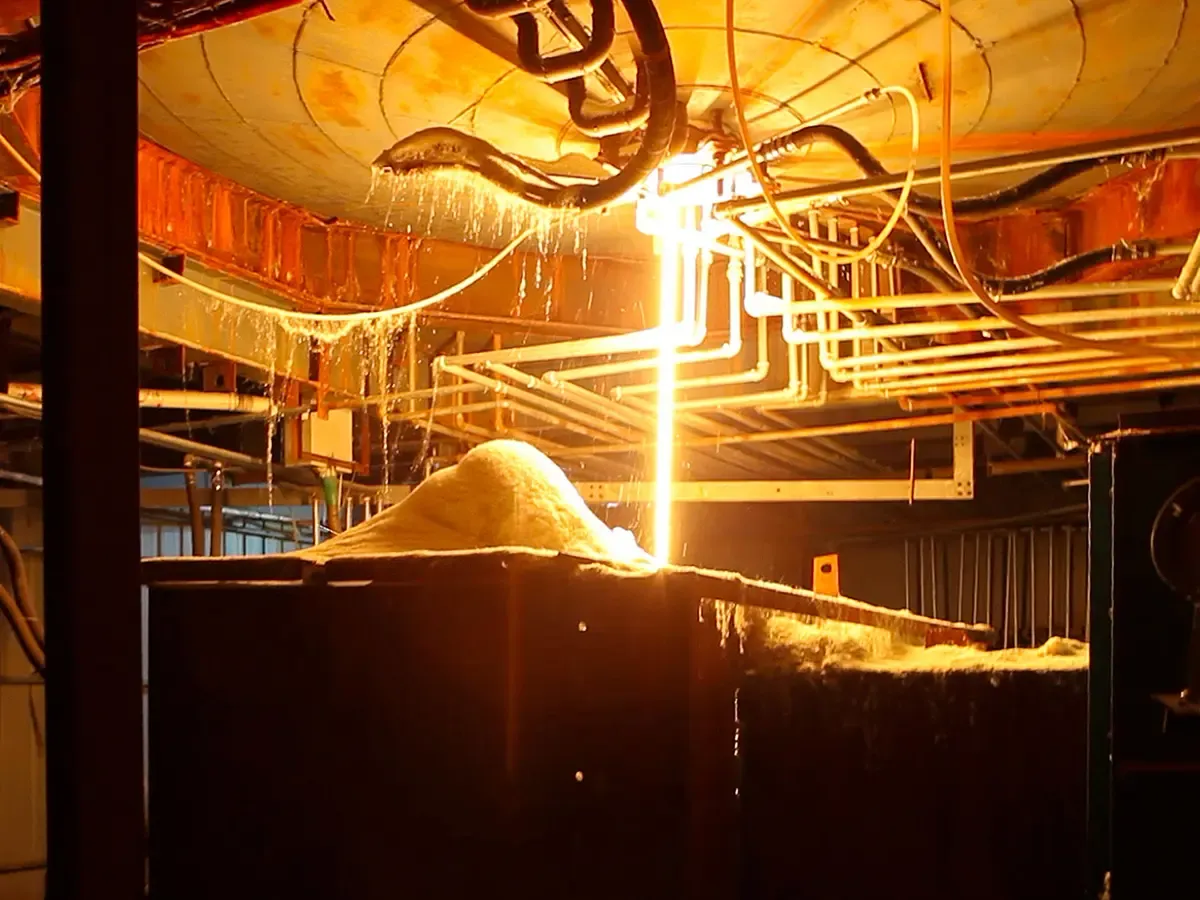
  1. Melting — alumina and silica raw materials are melted in an electric arc or resistance furnace at roughly 2000 °C.
  2. Fiberising — the molten stream is either blown by high-velocity air or spun off a wheel. Spun fibre is longer and stronger; blown fibre is finer. Both are collected as ceramic fiber bulk.
  3. Needling — for blanket, bulk is carded and cross-lapped, then mechanically needled to interlock the fibres. No binder is used, which is why a blanket is stable from cold to its classification temperature.
  4. Forming — board, paper and shapes are made from bulk by wet or vacuum processes.

Vacuum formed ceramic fiber

In vacuum forming, bulk fibre is dispersed in water with a binder, and a perforated mould is lowered into the slurry. Vacuum draws water through the mould, depositing an even layer of fibre on its surface. The result is a vacuum formed ceramic fiber shape with uniform density and good surface finish: boards, tubes, cones, rings and custom profiles made to drawing.

What drives the price. Three things: the grade (zirconia costs more than standard), the density and thickness, and whether a custom mould is needed. Standard board sizes are the cheapest route; a one-off vacuum-formed shape carries tooling cost that only makes sense at volume. If you need a shape, send the drawing — we will tell you whether vacuum forming or machining from board is the cheaper route, because it often is.

Safety

Is ceramic fiber safe to handle?

It is worth being direct about this, because it is the question that gets fudged most often in this industry.

Refractory ceramic fibers (RCF) are classified by the International Agency for Research on Cancer as Group 2B — possibly carcinogenic to humans. That is a classification based on animal evidence with limited human evidence, and it refers to respirable airborne fibre generated during cutting, tearing and removal — not to installed material in service.

What that means in practice:

  • Installed ceramic fiber is not a hazard to building occupants. Once in place behind cladding or inside a furnace, it releases nothing.
  • Handling and removal is where exposure happens. Cutting, machining, tearing out old lining and dry sweeping all generate respirable dust.
  • Control it the normal way: cut in a ventilated area, use local extraction where possible, wet-cut or damp down rather than dry sweeping, wear appropriate respiratory protective equipment, gloves and eye protection, and bag waste rather than leaving it loose.

Bio-soluble alternatives. Where the specification allows, we can supply bio-soluble (low bio-persistence) fiber in blanket, board and paper grades. These fibres are designed to dissolve in body fluid rather than persist in lung tissue, they carry a far more favourable regulatory profile in the EU, and they are commonly specified as soluble ceramic fiber paper and board for appliances, heat-treatment and lower-temperature duties. They typically run to a slightly lower temperature ceiling than RCF, which is the trade-off.

Compliance. Our products are supplied with REACH and RoHS documentation and full safety data sheets, and we provide installation guidance with every order. If your project has a specific regulatory or occupational-exposure requirement, tell us at enquiry stage and we will specify to it.

Applications & Supply

Applications

Ceramic fiber is specified wherever temperature, cycling or weight rules out a conventional insulation:

  • Furnace and kiln linings — hot face and back-up, in forging, heat-treatment, ceramic, glass and sintering plant
  • Boilers and reformers — combustion chambers, tube seals, expansion joints, petrochemical heater linings
  • High-temperature gaskets and seals — ceramic fiber paper and rope gasket for doors, manways, flanges and flue joints
  • Ceramic fiber pipe and duct insulation — high-temperature process piping, turbine and exhaust insulation
  • Ladle and tundish covers — molten-metal handling in steel and foundry plant
  • Removable insulation covers — cloth and tape jackets for valves, turbines and irregular equipment
  • Fire protection — fire curtains, weld blankets, penetration seals and structural protection

Why buy from Rosetexwool

As a refractory ceramic fiber manufacturer and supplier with our own factory (since 1982), we serve distributors, contractors, furnace builders and OEMs directly — no trading middlemen:

  • ISO 9001 certified production with full traceability
  • Factory-direct pricing — save up to 30% vs trading companies
  • Every form and grade — blanket, board, paper, rope, cloth, tape, bulk and vacuum-formed shapes, at 1260 / 1350 / 1430 °C
  • Custom sizes and shapes to your drawings
  • Full technical data sheets, with tested values to ASTM on request
  • Export to 30+ countries with fast global delivery
  • 24-hour quotation on all forms and grades

Send us your operating temperature, atmosphere, dimensions and quantities for a same-day quote. If a cheaper material will do the job, we will tell you.

Ceramic Fiber Forms at a Glance

Every form below is manufactured by Rosetexwool in standard, high-purity and zirconia grades. Use this table to jump straight to the product page, then read the detailed build notes in the section above.

Form Classification temperature Typical use Product page
Ceramic fiber blanket up to 1260 °C (1430 °C zirconia) Furnace & kiln linings, pipe and vessel wrapping, large-area insulation ceramic fiber blanket
Ceramic fiber board up to 1260 °C (1430 °C zirconia) Rigid hot-face linings, doors, baffles, burner blocks ceramic fiber board
Ceramic fiber paper up to 1000–1260 °C by grade Gaskets, expansion joints, parting planes, back-up to dense refractories ceramic fiber paper
Ceramic fiber rope & gasket up to 1260 °C Furnace-door and hatch seals, joint packing, coke-oven door seals ceramic fiber rope
Ceramic fiber cloth & tape up to 1000–1200 °C by grade Wrapping, cable and hose protection, removable covers, welding curtains ceramic fiber cloth
Ceramic fiber bulk fibre up to 1260 °C Gunning, ramming, packing, vacuum-formed shapes ceramic fiber bulk

Pre-formed shapes and vacuum-formed modules are also available where a complex profile or a rapid, repeatable lining build is needed. Tell us the geometry and duty and we will vacuum-form it to spec.

Choosing the Right Ceramic Fiber Grade by Temperature

The data sheet above gives the numbers; this is the rule of thumb for picking a grade before you size the thickness.

  • Below 650 °C — Rock wool insulation is usually cheaper and thick enough. Reach for ceramic fiber only where thinness, low heat storage or fast cycling matter.
  • 650–1000 °C — standard (1260 °C classification) ceramic fiber blanket or board. The default choice for most furnace and kiln linings.
  • 1000–1200 °C — high-purity (1350 °C) grade. Lower shot content and cleaner chemistry suit sensitive or clean-plant linings.
  • 1200–1430 °C — zirconia (1430 °C) grade. Required for sustained hot-face duty near the top of the ceramic fiber envelope.
  • Above 1430 °C — ceramic fiber is at its limit. For rigid, lower-temperature structural layers drop to calcium silicate insulation; for true ultra-high-temperature hot faces, specify a polycrystalline mullite grade through our ceramic fiber board team.

Whichever grade you land on, size the thickness against the mean operating temperature — conductivity climbs steeply with heat, so a blanket that looks adequate at 200 °C will under-perform at 800 °C.

Ceramic fiber at a glance

1430
°C max, zirconia grade
0.06
W/(m·K) from, low mean temp
64–400
kg/m³ density, blanket to board
1/10
Heat storage vs firebrick

Need a quote for ceramic fiber insulation?

Send us your operating temperature, atmosphere, dimensions and quantities.

or email us directly

Why choose Rosetexwool?

We deliver industrial-grade thermal solutions trusted by engineers worldwide.

Up to 1430°C

Zirconia-grade ceramic fiber for continuous service at extreme furnace temperatures.

Thermal Shock Resistant

Low heat storage enables rapid heat-up and cool-down cycles without cracking.

Low Thermal Conductivity

Reduces energy loss and shell temperature for lower fuel costs.

Products

Solutions for your needs

Explore our recommended products tailored to your application requirements.

Support

Frequently asked questions

What is the maximum temperature of ceramic fiber insulation?+

Standard ceramic fiber is classified to 1260 °C, high-purity grades to 1350 °C and zirconia grades to 1430 °C. Continuous operating temperature is lower than the classification figure — typically about 1100 °C, 1200 °C and 1300 °C respectively. We recommend specifying one grade above your actual continuous operating temperature.

What types of ceramic fiber are available?+

The main forms are ceramic fiber blanket (flexible needled rolls, 64–160 kg/m³), ceramic fiber board (rigid vacuum-formed panels, 250–400 kg/m³), ceramic fiber paper (thin uniform sheets, 0.5–6 mm), ceramic fiber rope (twisted or braided seals), ceramic fiber cloth and tape (woven textiles), and ceramic fiber bulk (loose fibre for gunning, packing and vacuum forming). Pre-formed modules and vacuum-formed shapes are also available.

What is a ceramic fiber rope gasket used for?+

A ceramic fiber rope gasket seals furnace doors, hatch covers, manways, flue joints and inspection ports. It is supplied as round rope for seating in a groove, or square braid where a wider sealing face is needed, and can be reinforced with glass filament or stainless steel wire for strength. It compresses into the seating and stays resilient through repeated heating and cooling cycles.

Can ceramic fiber be used for furnace lining?+

Yes — it is the standard lining material for furnaces and kilns. Use ceramic fiber board or modules on the hot face where gas velocity is high, and ceramic fiber blanket for back-up insulation behind firebrick or castable. Ceramic fiber stores roughly a tenth of the heat of a firebrick lining, which gives faster heat-up, shorter cycles and lower fuel use on intermittently-run plant.

What is the difference between ceramic fiber and rock wool?+

Temperature is the dividing line. Ceramic fiber runs to 1260–1430 °C with excellent thermal shock resistance and very low heat storage; rock wool is limited to about 650 °C. Choose ceramic fiber above roughly 700 °C, on cycling plant, or where the insulation is in direct contact with flame or high-velocity gas. Below 650 °C — building envelopes, HVAC and general pipework — rock wool is the better value and we will recommend it.

Is ceramic fiber safe to handle?+

Installed ceramic fiber is not a hazard, but cutting, machining and removal generate respirable airborne fibre. Refractory ceramic fibers are classified by IARC as Group 2B, possibly carcinogenic to humans. Standard controls apply: cut in a ventilated area, damp down rather than dry sweep, wear respiratory protection, gloves and eye protection, and bag waste. We can also supply bio-soluble low bio-persistence grades where the specification allows.

What thickness and density of ceramic fiber blanket do I need?+

Blanket is supplied from 6 to 50 mm thick at 64, 96, 128 or 160 kg/m³. As a guide, 25 mm suits back-up insulation and kiln car seals, 25–50 mm suits furnace wall linings, and two thinner layers with staggered joints outperform one thick layer. Higher density improves resistance to gas velocity and mechanical contact. Send us the hot-face temperature and gas velocity and we will size it properly.

What is the thermal conductivity of ceramic fiber?+

It depends on mean temperature and density. Typical blanket values are 0.06–0.08 W/(m·K) at 200 °C mean, 0.10–0.12 at 400 °C, 0.15–0.20 at 600 °C and 0.20–0.30 at 800 °C. Board at 250–400 kg/m³ runs slightly higher but stays more stable. Always compare data sheets at the same mean temperature and density.

What is vacuum formed ceramic fiber?+

Vacuum formed ceramic fiber is made by dispersing bulk fibre in water with a binder, lowering a perforated mould into the slurry, and drawing water through it under vacuum so an even layer of fibre deposits on the mould. It produces boards, tubes, cones, rings and custom shapes with uniform density and a good surface finish. Price depends on grade, density and whether a custom mould is needed — send the drawing for a quote.

What is the difference between ceramic fiber blanket and board?+

Blanket is flexible, needled and low density (64–160 kg/m³), used for wrapping, general linings and back-up insulation. Board is rigid, vacuum-formed and much denser (250–400 kg/m³) with a hard coatable surface and 1–4 MPa compressive strength, used for hot-face linings at high gas velocity, furnace doors, burner blocks and baffles. Board also machines cleanly; blanket does not.

Is ceramic fiber paper the same as ceramic fiber blanket?+

No. Ceramic fiber paper is made by a wet process that produces thin, uniform sheets, typically 0.5 to 6 mm thick, with tightly controlled thickness and density. It is used for gaskets, parting planes, expansion joints and thin compressible layers. Blanket is a needled, flexible, much thicker product used for linings and wrapping. Paper is also available in a bio-soluble grade.

Do you supply ceramic fiber pipe insulation?+

Yes. Ceramic fiber pipe and duct insulation is supplied as blanket wraps, pre-formed sections and vacuum-formed shapes for high-temperature process piping, turbine and exhaust systems, and expansion joints. Tell us the pipe outside diameter, operating temperature and available radial space and we will recommend the form and thickness.

Request a Quote WhatsApp

Get in touch

Free consultation & tailored quotation

Request a Quote WhatsApp