
High-Temperature Insulation Wool: Temperature Ratings & How to Choose
Choose the right high-temperature insulation wool: glass wool, rock wool, ceramic fiber, or polycrystalline wool. Compare temperature ratings, purity, and environmental suitability.
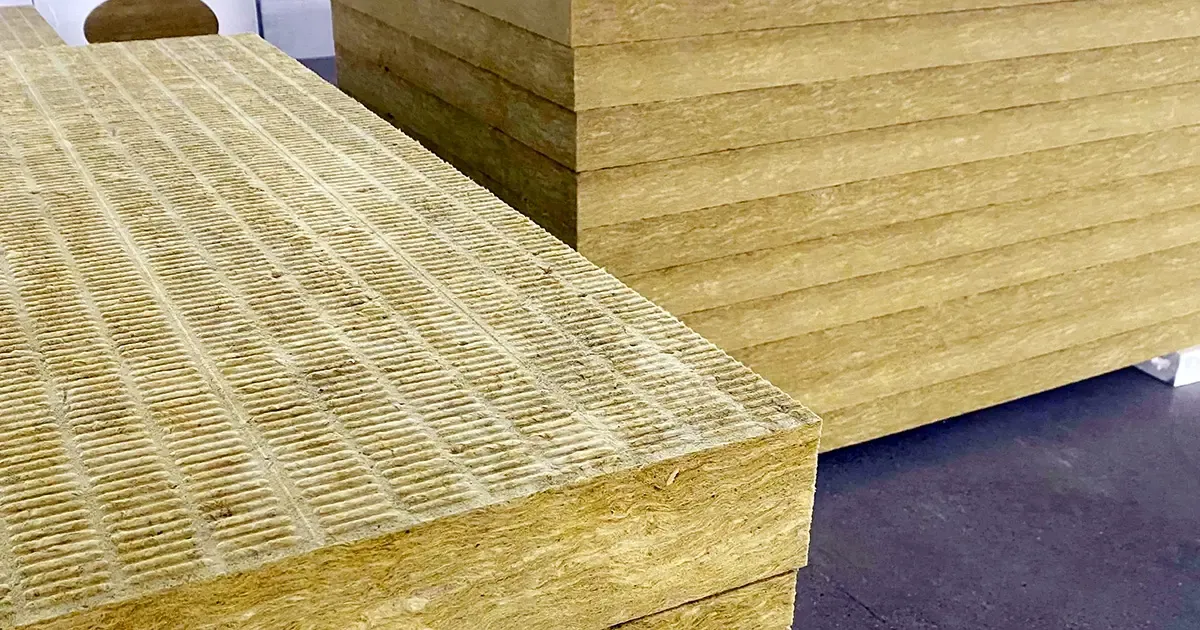
The phrase "high-temperature insulation wool" covers four very different material families. Picking the wrong one for the temperature or environment is one of the most common causes of lining failure, energy loss, and unplanned downtime.
This guide places each wool type on a temperature ladder, explains how purity and impurities affect performance, and gives a practical selection method based on temperature plus operating environment.
The Four Temperature Tiers of Insulation Wool
Industrial insulation wools are grouped by their maximum continuous service temperature and chemistry. The four tiers are:
| Tier | Material | Continuous service temp | Fire classification | Typical form |
|---|---|---|---|---|
| 1 | Glass wool | ≤300–350 °C | A1 non-combustible | Blanket, board, pipe section |
| 2 | Rock wool (stone wool) | ≤650–750 °C | A1 non-combustible | Blanket, board, pipe, loose |
| 3 | Ceramic fiber (aluminosilicate wool) | ≤1000–1300 °C | A1 non-combustible | Blanket, board, module, paper, bulk |
| 4 | Polycrystalline wool | ≤1400–1500 °C | A1 non-combustible | Blanket, board, module |
Each step up the ladder increases temperature capability and usually cost. The goal is to match the material to the actual continuous operating temperature, not to overspecify.
Tier 1 — Glass wool
Glass wool is made from recycled glass and silica sand. It is the lightest and lowest-cost industrial wool, with excellent thermal and acoustic performance at moderate temperatures. It is widely used in HVAC ductwork, building services, and process piping below 300 °C.
Above 350 °C, glass wool begins to soften and lose fibre structure. It is not suitable for furnaces, high-temperature kilns, or fire barriers. If you are specifying a lining rather than a wool, our heat-resistant materials for furnace guide ranks every option by temperature tier. For rock wool temperature limits, see what temperature can rock wool withstand. For the rigid board form of glass wool itself — density classes, lambda at 25 °C and 70 °C, compressive strength and facings — see glass wool insulation board: rigid board selection & spec.
Tier 2 — Rock wool
Rock wool is spun from molten basalt or diabase rock. It handles roughly double the temperature of glass wool and offers higher density and compressive strength. Rock wool is the standard choice for industrial pipe insulation, boiler casings, fire-rated walls, and marine A-60 divisions.
Rosewool supplies rock wool blanket, rock wool board, and rock wool pipe sections for these applications.
Tier 3 — Ceramic fiber
Ceramic fiber — also called aluminosilicate wool or refractory ceramic fiber — is produced by melting alumina and silica and spinning the melt into fine fibres. It is lightweight, flexible, and stable to 1000–1300 °C depending on grade. Standard, high-purity, high-alumina, and zirconia grades cover the range from 1050 °C to 1430 °C classification temperature.
Common products include ceramic fiber blanket and ceramic fiber board. The same fiber is also supplied loose as bulk for cavity fill and joint packing; grade selection, installed density, and conversion routes are set out in our ceramic fiber bulk guide.
Tier 4 — Polycrystalline wool
Polycrystalline wool is made by sol-gel processing and controlled crystallisation. The fibres contain mullite or alpha-alumina crystals rather than a glassy structure. This gives the highest temperature rating and the lowest high-temperature shrinkage. It is used in furnaces, kilns, and processes that run continuously above 1300 °C.
For ultra-high-temperature boards, see polycrystalline mullite fiberboard. Our polycrystalline mullite fiber board guide covers grade selection, shrinkage data at 1500-1600 °C, and where the board outperforms standard ceramic fiber. For the fiber tier above polycrystalline wool — AZS and yttria-stabilized zirconia — see our guide to alumina zirconia ultra-high-temperature fiber.
Why Purity and Impurities Matter
The performance of any high-temperature wool depends heavily on chemical purity. Impurities such as iron oxide, sodium oxide, and potassium oxide form low-melting phases that accelerate shrinkage, raise thermal conductivity, and shorten lining life.
Alumina content drives temperature ceiling
For ceramic fibres, higher alumina content generally means higher temperature capability:
- Standard ceramic fibre: ~43–47 % Al₂O₃, service up to ~1050 °C
- High-alumina ceramic fibre: ~55–60 % Al₂O₃, service up to ~1200 °C
- Zirconia ceramic fibre: ~39 % Al₂O₃ + 15–17 % ZrO₂, service up to ~1300 °C
- Polycrystalline wool: 70–95 % Al₂O₃, service up to ~1400–1500 °C
Impurities to control
| Impurity | Effect at high temperature |
|---|---|
| Fe₂O₃ | Forms conductive phases; increases thermal conductivity and shrinkage |
| Na₂O + K₂O | Creates low-melting glass phases; reduces temperature ceiling |
| CaO + MgO | Can react with sulphur-bearing gases in corrosive environments |
| Cr₂O₃ | Can destabilise alumina grain boundaries in some polycrystalline fibres |
For critical applications, request a chemical analysis and compare it against the supplier's datasheet. A low price is not a bargain if the impurity level shortens the lining life.
Selection Guide: Temperature + Environment
Use the following matrix to narrow the choice.
| Continuous temp | Dry / clean | Moist / corrosive | High mechanical load | Rapid thermal cycling |
|---|---|---|---|---|
| ≤350 °C | Glass wool | Glass wool + facing, or rock wool | Rock wool | Glass wool or rock wool |
| 350–750 °C | Rock wool | Rock wool + facing | Rock wool | Ceramic fiber |
| 750–1100 °C | Ceramic fiber | Ceramic fiber + coating | Dense ceramic fiber board | Ceramic fiber module |
| 1100–1300 °C | High-alumina or zirconia ceramic fiber | Zirconia ceramic fiber | Zirconia or PCW board | Polycrystalline wool |
| 1300–1500 °C | Polycrystalline wool | Polycrystalline wool + barrier | Polycrystalline wool board | Polycrystalline wool |
Temperature is the first filter
Always start with the maximum continuous operating temperature, including upset conditions. The classification temperature printed on the datasheet is not the service temperature. For example, a ceramic fibre classified at 1260 °C is usually suitable for only about 1050–1100 °C continuous use.
Environment is the second filter
- Moisture — glass wool and standard ceramic fibre absorb water; use faced products or choose rock wool / hydrophobic grades.
- Sulphur or acid gases — high CaO/MgO rock wool can degrade; choose low-alkali ceramic fibre or protective coatings.
- High mechanical load — use rigid board rather than blanket; consider rock wool or dense ceramic fibre board.
- Thermal cycling — flexible blankets and modules tolerate expansion better than rigid boards.
- Modules above 1400 °C — standard ceramic-fiber modules soften and shrink at the hot face; switch to polycrystalline fiber modules when the lining must run 1400–1700 °C.
Common Misuse Cases
Using glass wool above its limit
Glass wool is sometimes installed on equipment that reaches 400–500 °C because it is cheap and easy to handle. Above 350 °C the fibres soften and mat together, the thermal conductivity rises sharply, and the insulation layer collapses. The fix is to switch to rock wool or ceramic fibre.
Confusing classification temperature with service temperature
A fibre rated at 1260 °C is not intended for 1260 °C continuous operation. Service temperature is usually 100–200 °C below classification temperature. Running standard ceramic fibre at 1300 °C continuous causes rapid shrinkage and powdering.
Ignoring corrosion in flue gas
In sulphur-bearing flue gases, alkaline impurities in the fibre react to form sulphates. This is why some boiler and heater linings fail prematurely even though the temperature was within range. Specify low-alkali grades or add a protective coating.
Poor installation practice
Even the right material fails if it is compressed too tightly, left exposed to airflow, or fixed with the wrong anchors. Ceramic fibre modules need correct compression and spacing; rock wool pipe sections need proper cladding; and all high-temperature linings need expansion joints.
For a broader view of material options, see our guide to the top 10 high-temperature insulation materials.
Bottom Line
High-temperature insulation wool is not one material. It is a family of materials defined by temperature capability, chemistry, and form. The selection process is simple in principle: define the continuous operating temperature, identify the environmental stresses, choose the lowest tier that safely handles both, and verify purity against the application requirements.
Glass wool wins on cost and acoustics below 350 °C. Rock wool covers the 350–750 °C range with strength and fire resistance. Ceramic fibre handles 750–1300 °C with low mass and flexibility. Polycrystalline wool takes over above 1300 °C where shrinkage and stability become critical.
At Rosewool we supply the full range: glass wool, rock wool, ceramic fiber, and polycrystalline mullite fiberboard. For a graded furnace lining design that places alumina at the hot face and AES in the backup, see Alumina & AES in ultra-high-temperature furnaces. Contact our technical team for grade selection and thickness calculations based on your process conditions.
For a deeper dive into forms, temperature ratings, and application guides, see our ceramic fiber insulation hub.
Frequently asked
What is high-temperature insulation wool? +
High-temperature insulation wool is a group of fibrous insulation materials that includes glass wool, rock wool, ceramic fiber, and polycrystalline wool. They are used at progressively higher temperatures, from about 350 °C up to 1500 °C.
What are the temperature ratings of insulation wool? +
Glass wool is rated up to about 300–350 °C continuous, rock wool up to 650–750 °C, ceramic fiber up to 1000–1300 °C depending on grade, and polycrystalline wool up to about 1400–1500 °C.
Is rock wool or ceramic fiber better for high temperature? +
Rock wool is better for 350–750 °C applications that need strength, load-bearing, or fire barriers. Ceramic fiber is better for 750–1300 °C applications that need low mass, flexibility, and rapid thermal cycling.
Why does purity matter in refractory wool? +
Impurities such as iron oxide, sodium oxide, and potassium oxide form low-melting phases that increase shrinkage and thermal conductivity. Higher-purity fibres, especially high-alumina or polycrystalline wool, last longer at high temperature.
What happens if insulation wool is used above its temperature rating? +
Above its rated temperature, the fibres soften, shrink, sinter, or powder. The insulation layer loses thickness and thermal performance, hot spots form, and the lining must be replaced sooner than planned.
Request a quote
Interested in our insulation solutions? Send us your requirements and our team responds within one business day.