Glass Wool
Glass Wool Blanket
Centrifugal glass wool blanket for large-scale thermal and acoustic insulation with excellent shock absorption. Temperature: -120℃ ~ 400℃.
Factory-direct glass wool insulation rated -120 °C to 400 °C. A1 non-combustible, waterproof facings, formaldehyde-free option and NRC up to 0.95. ISO 9001 manufacturer since 1982.
Overview
Glass wool insulation — also called fiberglass insulation or glass fiber wool — is a lightweight thermal and acoustic insulation made from recycled glass and silica sand spun into fine fibers. It delivers low thermal conductivity, A1 non-combustibility and excellent sound absorption, at a lower cost per square metre than rock wool or ceramic fiber.
Most glass wool today is made by the centrifugal glass wool process, which produces finer, more resilient fibers than older flame-attenuation methods. That finer fibre is why modern glass wool is softer to handle, absorbs sound better, and holds its thermal performance at lower density.
Rosetexwool manufactures glass wool in rigid and flexible forms for building, HVAC and industrial applications:
Key properties
Six properties that decide whether glass wool is the right call.
Does not burn or feed a fire — Euroclass A1 to EN 13501-1, Class A to ASTM E84.
One of the most cost-effective sound absorbers available for walls, ceilings and enclosures.
Hydrophobic treatment plus foil or membrane facing keeps moisture out of the fibre structure.
Formaldehyde-free binder available for schools, hospitals, offices and green building projects.
λ ≈ 0.036 W/(m·K) at 25 °C — low heat loss at low weight.
Lighter than rock wool, cuts with a knife, and compresses for transport.
Fire safety
This is the question we are asked most often, and the short answer is yes: glass wool is a non-combustible insulation. It is classified Euroclass A1 under EN 13501-1 and Class A under ASTM E84, which is the highest reaction-to-fire class in both systems.
What that means in practice:
Where the limit matters. A1 non-combustibility describes how the material behaves in a fire — it does not make glass wool a high-temperature insulation. Its continuous service ceiling is 400 °C. Above that, choose rock wool (up to 650 °C), calcium silicate (up to 1100 °C) or ceramic fiber (up to 1430 °C). If your specification calls for a fire barrier that must stay structurally intact through a prolonged high-temperature fire, rock wool is the safer call.
Product forms
Choosing the right form matters as much as choosing the right material. Each format is built around a different installation reality.
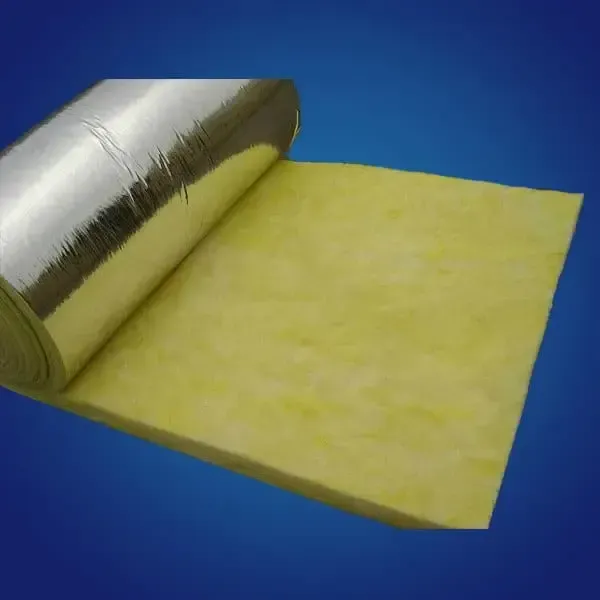
The most widely used form. Supplied compressed in rolls, typically 10–48 kg/m³, in thicknesses from 25 mm to 200 mm. It is light, cuts with a knife, and drapes over irregular surfaces — which is why a glass wool blanket is the default for steel-structure roofs, large wall areas, lofts and HVAC plenums. Faced with aluminium foil it also becomes a vapour barrier and reflects radiant heat.
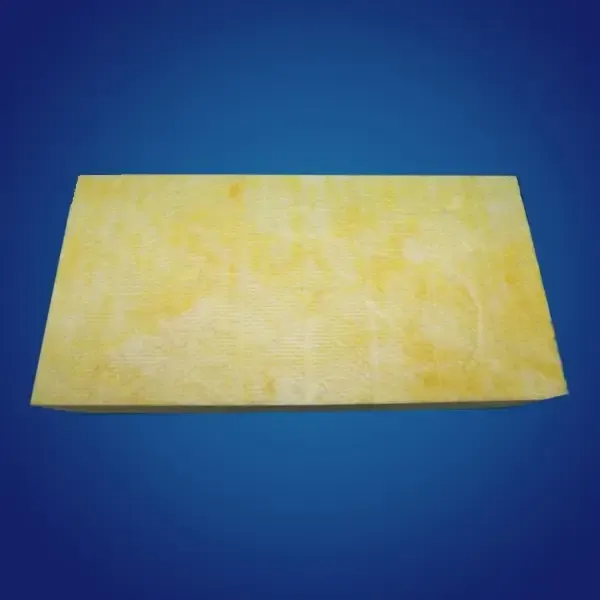
Rigid, dimensionally stable panels, typically 24–100 kg/m³, with far higher compressive strength than blanket. Glass wool board is the right choice where the insulation has to hold a shape or carry load: ductwork linings, wall panels, acoustic ceiling tiles, sandwich panels and equipment lagging. It is also the form normally used for fire rated glass wool board in smoke exhaust and shaft applications.
Pre-formed half-shells for pipework. On long straight runs they are faster and neater than wrapping blanket, and they hold a consistent thickness around the circumference.
Any of the above can be supplied unfaced, or with a facing chosen for the environment:
All forms are normally supplied in the natural brown-to-yellow tone of glass wool, and can be cut to size on request.
Moisture
Standard unfaced glass wool is not waterproof — and it is worth being precise about this, because the distinction decides whether your insulation lasts.
Glass wool fibre itself does not absorb water into the glass. But the air-filled pore structure between the fibres will hold moisture if water can get in, and wet glass wool loses most of its thermal value. A saturated blanket is roughly as good an insulator as no insulation at all.
So "waterproof glass wool" is not a property of the fibre — it is a property of the build-up. Three things deliver it:
Where you need it. Ductwork, cold lines, external walls, roofs, below-grade work, anywhere with high humidity or wash-down. Where you don't. Dry internal partitions and ceiling voids, where an unfaced product is cheaper and performs identically.
Tell us the environment and we will specify the facing — or tell you honestly that you don't need one.
Acoustic
Glass wool is one of the most cost-effective sound absorbers available, and acoustic glass wool is often specified for its noise performance even where thermal insulation is not the point.
The mechanism is simple: sound enters the open fibre structure, and friction converts acoustic energy into a negligible amount of heat. Because the fibres are fine and the pore structure is open, glass wool is especially effective at mid-to-high frequencies — speech, machinery whine, and the reverberant noise that makes large spaces uncomfortable.
Typical performance:
Common acoustic applications: recording studios, cinemas and theatres, open-plan offices, conference rooms, classrooms, acoustic enclosures around generators and compressors, HVAC duct lining and attenuators, and machinery-room wall and ceiling linings.
For purely acoustic duties, a black glass-tissue facing is usually the right finish — it keeps the surface acoustically transparent while containing the fibres. If a space needs both absorption and a vapour barrier, we will tell you where each facing belongs, because putting foil on the wrong side will undo the acoustic performance.
Manufacturing
If you have seen the term centrifugal glass wool and wondered whether it is a different product, it isn't — it is the manufacturing route that produces almost all modern glass wool, and it is worth knowing why it matters.
The process, in brief:
The result is a fibre typically 5–8 µm in diameter, with very low shot content. Finer fibre means better resilience, lower thermal conductivity at a given density, and softer handling — which is why centrifugal glass wool outperforms older coarse-fibre products at the same weight.
The binder is the one part of the process that is organic, and it is where emissions come from. Modern binders are available in formaldehyde-free formulations, with no added formaldehyde, dyes or colours.
We supply formaldehyde free glass wool where indoor air quality is part of the specification — schools, hospitals, offices, residential projects, and any job working to a green building rating. If your project requires formaldehyde-free material, say so when you enquire; it affects the binder we run, not the fibre.
Comparison
Both are non-combustible mineral wool insulations, and both are Class A1 to EN 13501-1. The chemistry is not what separates them — the differences are temperature, weight, strength and price.
| Glass wool | Rock wool | |
|---|---|---|
| Continuous service temperature | Up to 400 °C | Up to 650 °C |
| Softening / melting point | Roughly 500–600 °C | Above 1000 °C |
| Thermal conductivity | About 0.032–0.040 W/(m·K) | About 0.038–0.050 W/(m·K) |
| Typical density | 10–100 kg/m³ | 40–220 kg/m³ |
| Compressive strength | Low to moderate | High, especially on dense boards |
| Water behaviour | Needs a facing; hydrophobic grades available | Inherently hydrophobic, >98% |
| Weight | Lighter — easier handling and lower transport cost | Heavier |
| Acoustic absorption | Excellent, especially mid-to-high frequency | Strong, better at low frequency when dense |
| Cost | Lower per square metre | Higher per square metre |
Choose glass wool when the duty is at or below 400 °C, weight and handling speed matter, the application is dry or correctly faced, and cost per square metre is under pressure. It is the standard choice for building envelopes, HVAC ductwork and acoustic treatment.
Choose rock wool when you need a fire barrier that holds integrity at high temperature, compressive strength, or reliable water resistance without a facing — fire-rated walls and floors, industrial plant, external insulation and high-temperature pipework.
Above 650 °C, neither is the answer: that is calcium silicate (up to 1100 °C) or ceramic fiber (up to 1430 °C) territory.
If you are unsure, send us the operating temperature and the mechanical conditions. We will tell you which one actually fits — including when the cheaper glass wool is the wrong call.
Applications & Supply
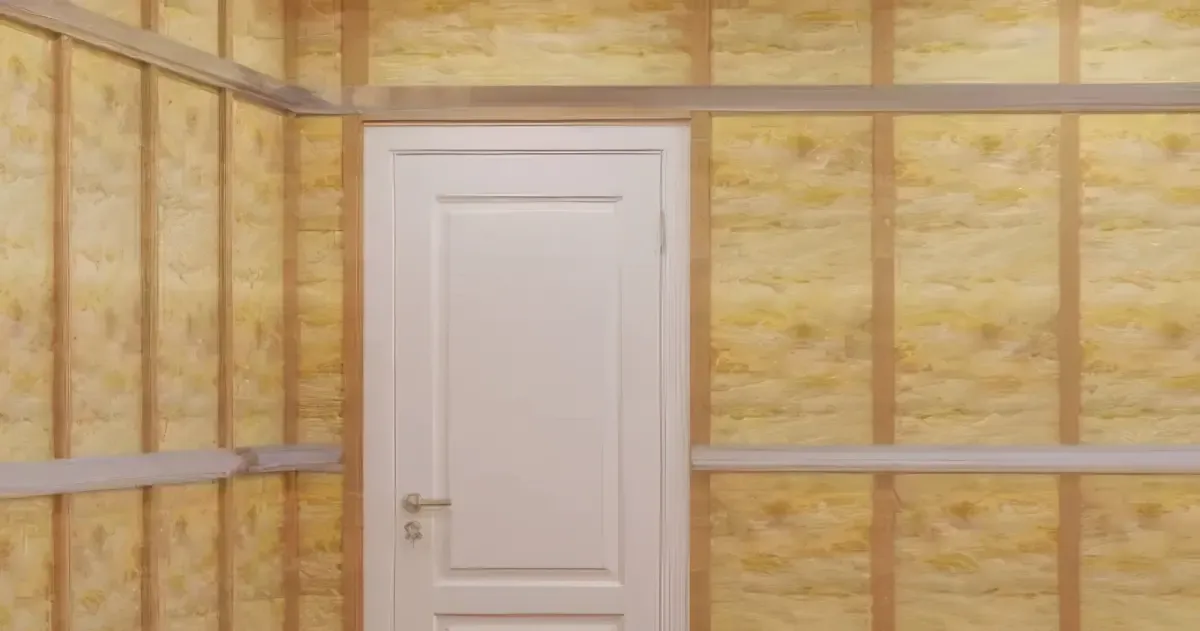
Glass wool is the workhorse of building and HVAC insulation, used for heat insulation and sound insulation alike:
As a glass wool manufacturer and supplier with our own factory (since 1982), we serve distributors, contractors and OEMs directly:
Send us your operating temperature, dimensions and quantities for a same-day quote.
Send us your density, thickness, facing and quantities.
We deliver industrial-grade thermal solutions trusted by engineers worldwide.
High NRC for sound insulation — walls, ceilings, studios and machinery enclosures.
Fire-safe inorganic insulation for building partitions and ducts.
λ ≈ 0.036 W/m·K reduces heat loss and energy cost across -120°C to 400°C.
Explore our recommended products tailored to your application requirements.
No, glass wool does not catch fire. It is an inorganic, non-combustible material classified Euroclass A1 under EN 13501-1 and Class A under ASTM E84. It does not ignite, adds no fuel to a fire and releases no significant smoke. It does begin to soften around 500–600 °C, so it is not a high-temperature insulation — its continuous service limit is 400 °C.
Glass wool is rated for continuous service from -120 °C to 400 °C. It is a low-to-medium temperature insulation — above 400 °C you should use rock wool (up to 650 °C), calcium silicate (up to 1100 °C) or ceramic fiber (up to 1430 °C) instead.
Standard unfaced glass wool is not waterproof — water can enter the air-filled pore structure and destroy most of its thermal value. Waterproof performance comes from the build-up: hydrophobic treatment during manufacture (98%+ water repellency), a facing such as aluminium foil or a waterproof membrane, and correctly sealed joints. Tell us the environment and we will specify the right combination.
The main forms are glass wool blanket (flexible rolls, 10–48 kg/m³, for roofs, walls and large areas), glass wool board (rigid panels, 24–100 kg/m³, for ducts, walls and fire-rated assemblies), and pre-formed pipe sections for pipework. Each can be supplied unfaced or with an aluminium foil, kraft paper, glass tissue or waterproof membrane facing.
Centrifugal glass wool refers to the manufacturing process, not a different material. Molten glass is thrown out of a high-speed centrifuge and stretched into fibres 5–8 µm in diameter by high-velocity hot air. That finer fibre gives better resilience, lower thermal conductivity at a given density and softer handling than older coarse-fibre products.
Modern glass wool can be made with a formaldehyde-free binder, with no added formaldehyde, dyes or colours. We supply formaldehyde free glass wool for projects where indoor air quality matters — schools, hospitals, offices, residential work and green building ratings. Please specify it at enquiry stage, as it affects the binder we run.
Both are Class A1 non-combustible mineral wools. Glass wool is lighter, slightly lower in thermal conductivity (0.032–0.040 vs 0.038–0.050 W/(m·K)) and cheaper per square metre, but is limited to 400 °C and needs a facing for water resistance. Rock wool runs to 650 °C, is inherently hydrophobic, and carries far higher compressive strength — but is heavier and more expensive. Above 650 °C, use calcium silicate or ceramic fiber.
Yes. Acoustic glass wool has a noise reduction coefficient of 0.70–0.95 depending on density and thickness, making it one of the most cost-effective sound absorbers available. It is particularly effective at mid-to-high frequencies, and is used in walls, ceilings, studios, cinemas, offices and machinery enclosures. Adding an air gap behind the insulation improves low-frequency absorption.
No. Glass wool caps at 400 °C, so it is not a high-temperature material. For high-temperature insulation, choose rock wool (up to 650 °C), calcium silicate (up to 1100 °C) or ceramic fiber (up to 1430 °C).
The cost of glass wool depends on density, thickness and facing. Blanket is the cheapest form and board costs more; foil and waterproof facings add to the price. As a factory-direct manufacturer we typically save customers up to 30% vs trading companies — send your specifications for a 24-hour quote.
It depends on the application. As a guide: 16–24 kg/m³ for steel-structure roofs and lofts, 32–64 kg/m³ for acoustic panels and wall insulation, 48–64 kg/m³ for external walls, and 64–110 kg/m³ for pipe insulation and ductwork. Thickness typically runs 25–200 mm. Send us your thermal target and we will size it properly.
Glass wool is used for thermal insulation and acoustic insulation in building walls, roofs and floors, HVAC ducts and smoke exhaust systems, acoustic enclosures and studios, and industrial equipment up to 400 °C. It comes as blanket, mat, board, panel and pipe section.