
Rock Wool
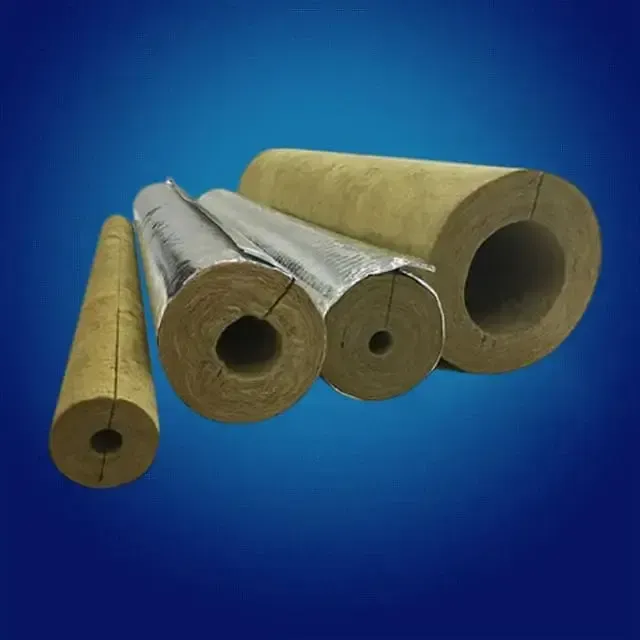
Rockwool Pipe Insulation for Steam Pipes
Pre-formed rockwool pipe insulation sections for steam pipes, HVAC and industrial piping. Rigid pipe insulation material rated for continuous service to 650 °C, Class A1 non-combustible.
A1 non-combustible stone wool for thermal, acoustic and fire protection to 650 °C. Blanket, board, slab and moulded pipe sections in densities 40–200 kg/m³ — factory-direct, ISO 9001 certified, exported to 50+ countries.
Product Deep Dive
Rockwool insulation slabs — also known as stone wool boards or mineral wool panels — are rigid, high-density thermal insulation products manufactured from natural basalt rock and recycled slag. The raw materials are melted at over 1,450°C and spun into fine fibers, then compressed into boards of precise density and thickness.
Unlike flexible blankets or loose-fill insulation, rockwool slabs offer structural rigidity while maintaining exceptional thermal, acoustic, and fire-resistant properties. This makes them the preferred choice for:
Our slabs are available in densities from 40 to 200 kg/m³ and thicknesses from 25mm to 200mm, ensuring a perfect match for every application — from lightweight residential cavity walls to heavy-duty industrial furnace linings.
Product Deep Dive
If you have searched for rockwool insulation, rock wool, stone wool and mineral wool and wondered whether they are four different products, they are not. All four names describe the same family of man-made vitreous silicate fibres spun from molten rock.
In practical terms: if your specification calls for mineral wool board at 650 °C, a basalt stone wool board is the right substitution. If it calls for rock wool blanket, you want the flexible needled mat rather than the rigid board. The rest of this page uses all four names interchangeably, because that is how the market searches for them.
Temperature & Ratings
Short answer: the rockwool max temperature for continuous service is 650 °C, and the melting point is above 1000 °C. Every rockwool temperature rating printed on a data sheet traces back to one of those two numbers.
Temperature is the most mis-specified property of rockwool. Four different numbers circulate, and mixing them up is how insulation ends up over-heated in service.
| Rating | Typical value | What it actually means |
|---|---|---|
| Continuous service temperature | up to 650 °C | The highest temperature the product can hold indefinitely without losing thickness, strength or insulating value. Design against this number. |
| Short-term peak | 650 °C | Rockwool has no meaningful thermal reserve above its continuous rating. Treat 650 °C as the ceiling, not a starting point. |
| Softening point | about 900–1000 °C | Where fibres begin to deform and the mat starts to slump. Not a working temperature. |
| Melting point | above 1000 °C | Where basalt turns back to liquid. Relevant to fire survival, not to insulation design. |
| Binder burn-off | about 200–250 °C | The organic binder and water-repellent oil volatilise. Fibre geometry is unchanged; expect a faint odour on first heat-up and a small one-off weight loss. |
Why you will sometimes see 750 °C quoted. That figure is the furnace temperature in the ASTM E136 vertical-tube test — the procedure used to prove a material is non-combustible. It is a test condition, not a service rating. Sizing rockwool for 750 °C continuous duty is the most common specification error we see; for anything sustained above 650 °C, specify ceramic fiber blanket (1100–1430 °C classification) or calcium silicate insulation instead.
Thermal conductivity rises with temperature, so the 0.036 W/(m·K) printed on a room-temperature data sheet is not the value at 400 °C:
| Mean temperature | Typical thermal conductivity |
|---|---|
| 25 °C | 0.036–0.042 W/(m·K) |
| 100 °C | 0.042–0.050 W/(m·K) |
| 200 °C | 0.055–0.070 W/(m·K) |
| 300 °C | 0.070–0.090 W/(m·K) |
| 400 °C | 0.090–0.120 W/(m·K) |
| 500 °C | 0.120–0.160 W/(m·K) |
That is why a rockwool temperature rating has to be read together with the temperature at which conductivity was measured — never on its own.
Fire Performance
No. Rockwool — like every stone wool and mineral wool product in our range — is non-combustible and not flammable. It carries an A1 classification to EN 13501-1, the highest reaction-to-fire class available in Europe, and it passes ASTM E136 without igniting.
The reason is chemistry: the raw material is already an oxidised rock. Basalt that has been melted at 1500 °C and re-solidified has nothing left to burn. In a fire, rockwool does not ignite, does not spread flame, does not release flaming droplets, and generates no significant smoke. Its melting point above 1000 °C means the fibre mat stays in place as a barrier long after organic insulations have gone.
What that delivers in practice:
If your project documents ask for "fire rated mineral wool", what is normally required is: an A1 classification, a declared melting point above 1000 °C, a density appropriate to the tested assembly (usually 80–150 kg/m³ for fire boards), and a certificate for the specific build-up.
Product Forms
Rockwool blanket — also sold as rock wool roll, felt or wired mat — is a flexible, needled mat of stone wool fibres. It is the form to choose when the surface is curved, irregular or too large to board out: tanks, boilers, large-diameter ducts, kiln backs and roof decks.
See rock wool blanket, wired insulation blanket and glass-mesh faced blanket.
A rockwool board — the same product called a rock wool slab across much of Asia and the Middle East — is a rigid, dimensionally stable panel. It carries compressive load, accepts fixings and renders, and is the form used in building envelopes.
See rock wool board and rock wool strips for cavity and perimeter detailing.
Rockwool pipe insulation is supplied as a moulded pipe section — a pre-formed, split cylindrical shell that clamps around the pipe and is strapped or wired in place. Moulded sections install faster and insulate more evenly than wrapped blanket, and they hold their circular geometry under cladding.
See rock wool pipe insulation for the size range and data sheet.
Technical Data
Typical values for standard grades. Project-specific certificates are issued with every shipment.
| Property | Typical value | Test reference |
|---|---|---|
| Base raw material | Basalt, dolomite, recycled slag | — |
| Continuous service temperature | up to 650 °C | ASTM C547 / C553 / C612 |
| Melting point | above 1000 °C | — |
| Reaction to fire | A1 non-combustible | EN 13501-1 |
| Non-combustibility | Passes, no ignition | ASTM E136 |
| Thermal conductivity @ 25 °C | 0.036–0.042 W/(m·K) | EN 12667 / ASTM C518 |
| Density — blanket | 40–120 kg/m³ | EN 1602 |
| Density — board / slab | 40–200 kg/m³ | EN 1602 |
| Density — pipe section | 80–150 kg/m³ | EN 1602 |
| Thickness | 25–200 mm | EN 823 |
| Standard board size | 1200 × 600 mm (1000 × 600 mm optional) | — |
| Compressive strength @ 10 % deformation | 20–80 kPa, grade dependent | EN 826 |
| Linear shrinkage after 650 °C soak | not more than 2 % | ASTM C356 |
| Shot content (particles above 0.25 mm) | not more than 10 % | — |
| Acidity coefficient (SiO₂+Al₂O₃)/(CaO+MgO) | not less than 1.6 | — |
| Water repellency | not less than 98 % | EN 1609 |
| Short-term water absorption | not more than 1 kg/m² | EN 1609 |
| Noise reduction coefficient (NRC) | 0.70–0.95 | ASTM C423 |
| Water vapour diffusion resistance (µ) | about 1, vapour open | EN 12086 |
Governing product standards: EN 13162 for factory-made mineral wool used in buildings, ASTM C612 for mineral fiber block and board, ASTM C553 for mineral fiber blanket, and ASTM C547 for mineral fiber pipe insulation. Every shipment is produced under an ISO 9001 quality system with batch traceability.
Material Comparison
| Rock wool | Glass wool | Ceramic fiber | Aerogel blanket | |
|---|---|---|---|---|
| Max continuous temperature | 650 °C | up to 400 °C | 1100–1430 °C by grade | 650 °C blanket grade |
| Density | 40–200 kg/m³ | 10–100 kg/m³ | 64–400 kg/m³ | 180–220 kg/m³ |
| Thermal conductivity @ 25 °C | 0.036–0.042 W/(m·K) | 0.032–0.040 W/(m·K) | 0.06–0.10 W/(m·K) | 0.018–0.023 W/(m·K) |
| Reaction to fire | A1 | A1 / A2 | A1 | A1 / A2, facing dependent |
| Acoustic absorption | Excellent, NRC 0.70–0.95 | Excellent | Moderate | Poor |
| Carries load / foot traffic | Yes, board grades | No | No | No |
| Relative cost | Low | Lowest | Medium | Highest |
Rockwool vs glass wool. The most asked comparison, and the answer turns on temperature and load. Glass wool has slightly lower conductivity at room temperature and costs less per square metre, but it is limited to roughly 400 °C and it will not carry load. Rockwool is the choice above 400 °C, wherever compressive strength or dimensional stability matters, and wherever a fire resistance rating is being claimed. For an ambient-temperature building cavity with no fire requirement, glass wool is often the more economical buy; for anything hot, loaded or fire-rated, rockwool wins. Compare glass wool insulation.
Rockwool vs ceramic fiber. This is a temperature line, not a quality comparison. Below 650 °C, rockwool is cheaper, stronger and easier to handle; above it, rockwool cannot survive and ceramic fiber blanket (1100–1430 °C classification) is the correct material. Furnace hot faces, kiln car tops and burner blocks belong to ceramic fiber, while the back-up layer behind them is frequently rockwool. See ceramic fiber insulation.
Rockwool vs aerogel. An aerogel blanket delivers roughly two to three times the thermal resistance per millimetre, which is what justifies its price where space is the binding constraint: congested pipe racks, valve clusters, offshore modules. Where thickness is not constrained, rockwool reaches the same heat-loss target for a fraction of the cost, which is why many projects use aerogel only at the tight spots and rockwool everywhere else. See aerogel insulation.
Applications
Browse the full application library for detailed build-ups.
How It's Made
Because density and thickness are set at the forming and curing stages rather than by tooling, custom densities and non-standard thicknesses are produced to order without a tooling charge.
Rockwool's open, non-directional fibre structure makes it one of the most effective acoustic insulators available — it absorbs sound energy across a broad frequency range rather than merely blocking it. That is why it is specified for both building acoustics and heavy industrial noise control.
For dedicated acoustic products see our rock wool acoustic panels. For full application build-ups across marine, power, petrochemical and building sectors, browse the applications library.
Buying Guide
Give your supplier these six numbers and the quote comes back right the first time:
Two specification traps are worth avoiding: quoting a room-temperature conductivity for a high-temperature duty, and asking for a fire rating on the material alone rather than on the tested assembly.
We deliver industrial-grade thermal solutions trusted by engineers worldwide.
A1 classified to EN 13501-1 with a melting point above 1000 °C and continuous service to 650 °C. Does not contribute to flame spread or smoke development — critical for passive fire protection in commercial and industrial buildings.
Thermal conductivity from 0.036 W/(m·K) at 25 °C, with declared values at every mean temperature up to 500 °C. Cuts HVAC energy use by 25–40% in building envelopes, paying for itself within 2–3 years.
Open fibre structure delivers NRC values of 0.70–0.95 (ASTM C423). Ideal for partition walls, machine enclosures, generator rooms and mechanical room soundproofing.
Hydrophobic treatment prevents moisture absorption while allowing walls to breathe. Maintains thermal performance even in high-humidity environments.
Made from abundant basalt rock — a virtually inexhaustible natural resource. 100% recyclable at end of life with no loss of performance.
Standard slabs: 600×1200mm, thickness 25–200mm. Custom cutting service for non-standard sizes. High-density options (up to 200 kg/m³) for load-bearing applications.
Explore our recommended products tailored to your application requirements.
Pre-formed rockwool pipe insulation sections for steam pipes, HVAC and industrial piping. Rigid pipe insulation material rated for continuous service to 650 °C, Class A1 non-combustible.
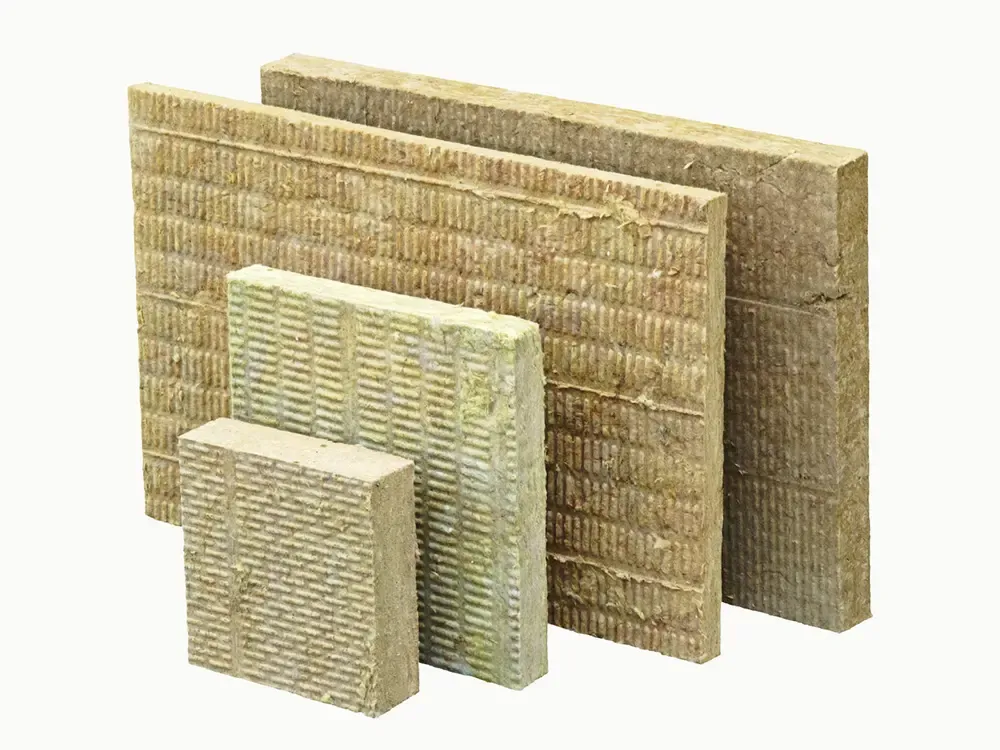
Basalt rockwool insulation slabs (also rock wool board) — Class A non-combustible rockwool material. Fire-safe, water-repellent, sound-absorbing.
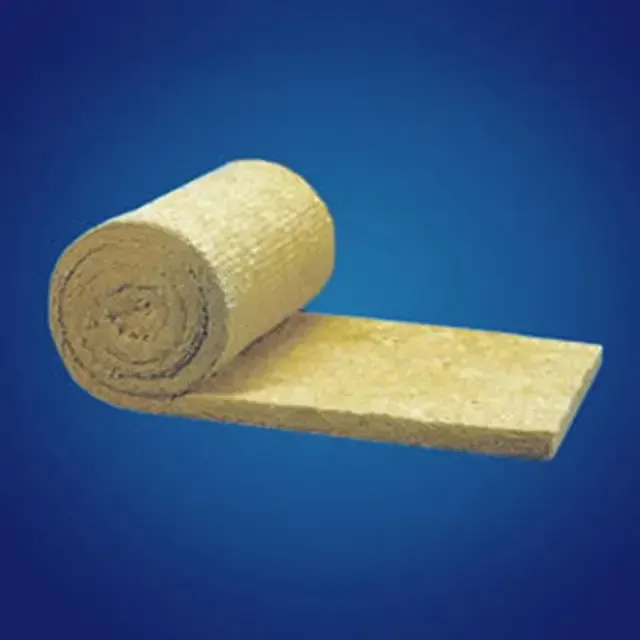
Flexible rockwool insulation blanket (also rock wool blanket) for large area coverage, pipe and equipment thermal insulation.
They refer to the same material — stone wool insulation made from molten basalt rock. "Rockwool" (one word) is the common brand-derived term, while "rock wool" (two words) is the generic industry name. Both describe mineral wool insulation produced by spinning molten rock into fine fibers.
It depends on your application:
40–60 kg/m³: Lightweight thermal insulation for cavity walls and timber frames 80–100 kg/m³: General-purpose building insulation, partition walls, sandwich panel cores 120–150 kg/m³: High-compressive-strength applications, flat roof insulation, load-bearing floors 160–200 kg/m³: Industrial high-temperature insulation, furnace linings, marine applications Contact our engineers with your project specifications for a precise recommendation.
Our rockwool insulation products are tested to:
EN 13501-1 Euroclass A1 — Non-combustible (highest fire classification) ASTM E136 — Non-combustibility for North American markets ISO 9001 — Quality management system CE Marking — European conformity ASTM C612 — Mineral fiber block and board thermal insulation Additional certifications available upon request (FM, UL, DNV, etc.)
Yes. Standard slab dimensions are 600×1200mm (or 600×1000mm), but we offer custom cutting services for any non-standard size. Simply provide your cutting specifications — including thickness (25–200mm), length, width, and edge profile requirements — and we'll deliver precision-cut slabs ready for installation.
Rockwool is water-repellent (hydrophobic) but not fully waterproof. Our slabs are treated with a hydrophobic agent that repels surface moisture and prevents water absorption under normal conditions. For applications with prolonged water exposure (e.g., underground, submerged), we recommend additional waterproofing measures or our specialized high-density water-resistant grade.
Rockwool outperforms fiberglass in several key areas:
Fire resistance: Rockwool is A1 non-combustible, with a melting point above 1000 °C and continuous service to 650 °C, while glass wool is limited to about 400 °C Acoustic performance: Rockwool's denser fiber structure provides ~30% better sound absorption Water resistance: Rockwool repels moisture; fiberglass absorbs it, losing R-value Dimensional stability: Rockwool won't sag or shrink over time Cost: Rockwool is ~20–40% more expensive upfront but offers better long-term value
Our standard MOQ is 1,000 m² per specification. For trial orders or sample requests, we offer smaller quantities — typically 50–100 m². Contact our sales team for current MOQ and pricing based on your required density, thickness, and delivery destination.
Standard orders ship within 15–25 days after order confirmation. For urgent requirements, we can arrange partial shipments within 7–10 days. Delivery time to your port depends on the destination — typically 15–30 days by sea freight. Door-to-door delivery is also available.
The continuous service rating of rockwool is 650 °C — the figure used in ASTM C547, C553 and C612 for mineral fiber pipe, blanket and board. Above that, the fibre mat begins to lose thickness and strength. The melting point is above 1000 °C, but melting point is a fire-survival property, not a working limit. For sustained duty above 650 °C, specify ceramic fiber (1100–1430 °C by grade) or calcium silicate insulation.
Neither. Mineral wool — which covers rock wool, stone wool and slag wool — is classified A1 non-combustible to EN 13501-1 and passes ASTM E136 without igniting. The raw material is basalt that has already been melted at about 1500 °C, so there is nothing left to oxidise. In a fire it does not ignite, does not spread flame, does not drip flaming particles, and produces no significant smoke.
Rockwool works from cryogenic-adjacent lows up to 650 °C. On the cold side there is no lower service limit for the fibre itself — it is used down to roughly −50 °C and below in cold-store and chilled-water duty, provided a vapour barrier is detailed correctly. On the hot side, 650 °C is the ceiling for continuous use; the organic binder begins to volatilise around 200–250 °C, which is a one-off weight loss with no effect on the fibre structure.
Yes, with a temperature check. Mineral wool is non-combustible and is routinely used around fireplace housings, flue penetrations and appliance surrounds. The rule is the sustained temperature at the insulation face: keep it at or below 650 °C. Where flue gas or radiant heat pushes the hot face above that — directly behind a firebox or inside a furnace chamber — use ceramic fiber blanket on the hot face and mineral wool as the back-up layer.
Stock board size is 1200 × 600 mm, with 1000 × 600 mm available on request. Thickness runs from 25 mm to 200 mm, and the most frequently specified building grade is 100 mm at 1200 × 600 mm. Boards can be cut to size for non-standard panels, and edges are available square, tongue-and-groove or shiplap.
Yes. Moulded pipe sections are pre-formed split shells supplied for pipe outer diameters from 15 mm to over 600 mm, in wall thicknesses of 25–100 mm and densities of 80–150 kg/m³. They are available plain or factory-faced with aluminium foil, kraft paper or glass cloth. Moulded sections install faster than wrapped blanket and hold their circular shape under metal cladding. See rock wool pipe insulation.
It is one of the standard choices. Rockwool marine insulation is A1 non-combustible, low smoke, hydrophobic and resistant to vibration and settlement, which suits engine room bulkheads, accommodation fire divisions, HVAC ducts and pipe runs on ships and offshore modules. Marine decks and bulkheads are typically built with 60–120 kg/m³ boards inside assemblies tested to the IMO FTP Code and to EN or ASTM fire-resistance procedures.