
Cryogenic Pipe Insulation: Material & Thickness Guide
A practical guide to cryogenic pipe insulation: compare rock wool, calcium silicate and aerogel by temperature, with a thickness-by-service-temperature chart and installation steps.
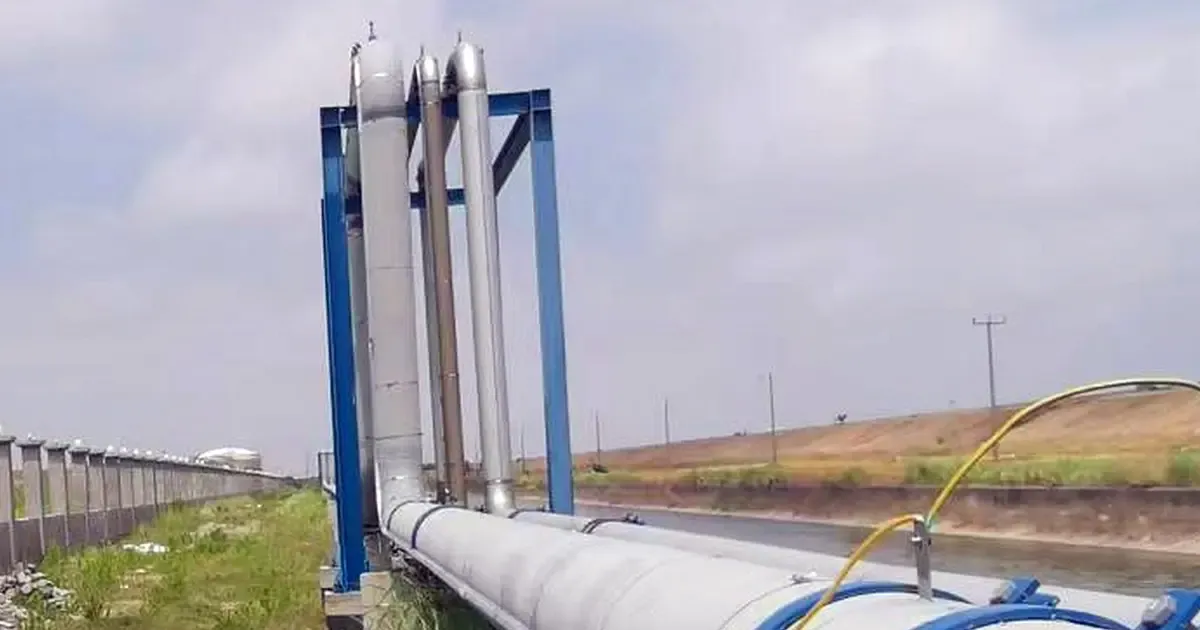
What Is Cryogenic Pipe Insulation and Why It Matters
Cryogenic pipe insulation protects piping that carries media below ambient temperature — from chilled process lines at -20 °C down to liquid nitrogen at -196 °C. Without proper insulation, the pipe surface drops below the dew point, water vapor condenses, and the resulting ice and corrosion attack the line from the outside in.
For industrial facilities — LNG terminals, air-separation plants, refrigeration and cold-chain systems, and petrochemical operations — cryogenic insulation is what keeps product cold, energy bills low, and personnel safe. Selecting the right material and the correct thickness is the difference between a stable system and a failed one.
Key Performance Requirements for Cryogenic Lines
Low-temperature piping has different demands than hot-side insulation. A sound cryogenic insulation system must deliver:
- Vapor tightness. The single biggest failure mode is moisture ingress. The insulation must include a continuous vapor barrier (typically aluminum foil or jacket) so water vapor never reaches the cold surface.
- Fire safety. In chemical and LNG service, the material should be non-combustible — A1 class per EN 13501-1 — so it does not add fuel load.
- Dimensional stability. At -196 °C the material must not shrink or crack. Quality products hold linear change ≤1.0% across the -196 °C to +70 °C range.
- Mechanical strength. Pipe sections need enough compressive and tensile strength to resist thermal stress and handling loads.
- Economy. Thickness is set by the economic-thickness method so lifecycle cost — not just first cost — is minimized.
Best Materials for Cryogenic Pipe Insulation
Rock Wool Pipe Sections
Pre-formed rock wool pipe insulation (hydrophobic grade) is the workhorse for moderate cryogenic service. With water repellency ≥99% and a dense fiber structure, it performs reliably down to about -50 °C when combined with a vapor barrier and aluminum jacketing. It is A1 non-combustible, cost-effective, and easy to install on site. For the practical temperature ceiling of the fiber, see our rock wool temperature guide.
Calcium Silicate Pipe
Calcium silicate pipe is a rigid, high-strength product suited to mildly cold and ambient-to-elevated service. Its closed-cell structure resists water, and it holds shape under pressure — ideal for buried or mechanically stressed lines. Practical lower limit is around -20 °C; below that, rock wool or aerogel is preferred.
Aerogel / Microporous (Nano Insulation)
Aerogel and microporous blankets are the premium choice for deep cryogenic duty. At -196 °C their thermal conductivity is just 0.018–0.022 W/(m·K) — roughly one-third of traditional materials — so a 10–20 mm layer replaces 80–150 mm of conventional insulation. They stay flexible at liquid-nitrogen temperature and are A1 non-combustible. This makes them the standard for LNG (-162 °C) and liquid-nitrogen transfer lines. The nano aerogel insulation blanket and nano insulation board are the two forms supplied for this duty.
Materials to Use With Caution
Glass wool and ceramic fiber can appear in cryogenic specs but have limits: glass wool needs heavy hydrophobic treatment and is best above -20 °C; ceramic fiber is brittle below -50 °C and needs an aluminum-foil moisture wrap. For dedicated pipe runs, rock wool, calcium silicate, and aerogel cover the field more dependably.
In practice most specifications settle on a layered approach: a thin aerogel core for thermal resistance where space is tight, backed by rock wool or calcium silicate for structure and economy. The industrial pipe insulation materials guide compares the full range of pipe insulation types.
| Material | Service range | λ at temp (W/(m·K)) | Typical pipe thickness | Notes |
|---|---|---|---|---|
| Rock wool pipe (hydrophobic) | -50 °C to +250 °C | 0.035–0.045 | 60–150 mm | A1, economical, needs vapor barrier |
| Calcium silicate pipe | -20 °C to +650 °C | 0.040–0.047 | 20–50 mm | Rigid, high strength, buried service |
| Aerogel / microporous | -196 °C to +300 °C | 0.018–0.022 | 3–20 mm | Ultra-thin, deep cryogenic, premium |
The Full Cryogenic Insulation Material Family
Cryogenic insulation is not a single material — it is a family spanning closed-cell and fibrous options, each matched to a temperature band and a structural role. Beyond the rock wool, calcium silicate and aerogel covered above, three further material families carry deep cryogenic insulation duty:
Foam Glass / Cellular Glass
Foam glass (also called cellular glass) is a closed-cell, zero-capillary material made by sintering crushed glass. It is A1 non-combustible, dimensionally stable and completely impermeable to water vapor, which makes it the default for LNG tank bases, buried cryogenic lines and any cryogenic insulation where a vapor-barrier failure cannot be tolerated. Its closed cells stay dry for decades and take compressive loads that would crush fibrous insulation; the trade-off is brittleness and higher weight, so it is usually paired with a flexible sealant layer at expansion joints.
PIR / PUR Polyurethane Foam
Rigid polyurethane (PUR) and polyisocyanurate (PIR) foams cover the low-temperature band from roughly -196 °C up to ambient, where their very low thermal conductivity (0.020–0.025 W/(m·K)) keeps the layer thin. They are lightweight and quick to apply in sprayed or pre-formed sections. Their key limitation is combustibility: PUR/PIR is not A1, so in LNG and chemical service it is either restricted to the cold end behind a non-combustible outer layer, or replaced by foam glass and aerogel in fire-critical zones.
Perlite
Expanded perlite is a loose-fill granular insulation poured into the annular space of double-wall LNG storage tanks and cold boxes. It is low-cost, non-combustible and fills irregular voids completely, but it performs only as a dry fill and must be kept under slight positive pressure or an inert purge to exclude moisture.
Full Cryogenic Insulation Material Family Comparison
| Material family | Service range | λ at temp (W/(m·K)) | Cell type | Typical role in cryogenic insulation |
|---|---|---|---|---|
| Rock wool (hydrophobic) | -50 °C to +250 °C | 0.035–0.045 | Fibrous (open) | Moderate cold; needs vapor barrier |
| Calcium silicate | -20 °C to +650 °C | 0.040–0.047 | Closed-cell | Buried / mechanically loaded cold lines |
| Aerogel / microporous | -196 °C to +300 °C | 0.018–0.022 | Nanoporous | Deep cryogenic, ultra-thin |
| Foam glass / cellular glass | -268 °C to +430 °C | 0.038–0.050 | Closed-cell | LNG tank bases, buried, vapor-tight |
| PIR / PUR foam | -196 °C to +100 °C | 0.020–0.025 | Closed-cell | Cold end where thinness matters |
| Perlite (loose fill) | -268 °C to +650 °C | 0.040–0.060 | Granular | Annular fill in double-wall tanks |
For a site-wide selection across every material family on the same duties, our cryogenic insulation applications guide walks through LNG, air separation and refrigeration duty unit by unit.
Cryogenic Pipe Insulation Thickness by Temperature
Thickness is driven by service temperature, pipe diameter, and the need to keep the outer surface above the dew point. The same diameter rule applies on the hot side: see pipe insulation types by diameter and layer count for where a single layer stops being the right answer. The chart below gives practical starting points for common materials.
| Service temperature | Recommended material | Recommended thickness |
|---|---|---|
| -20 °C to -50 °C | Rock wool pipe (hydrophobic) | 60–80 mm |
| -50 °C to -120 °C | Rock wool pipe or aerogel | 80–120 mm (rock wool) / 5–10 mm (aerogel) |
| -120 °C to -162 °C (LNG) | Aerogel / microporous | 8–15 mm |
| -162 °C to -196 °C (N₂, H₂) | Aerogel / microporous | 10–20 mm |
| -20 °C (mild, buried) | Calcium silicate pipe | 20–40 mm |
Rule of thumb: every 10 °C deeper into cryogenic territory, conventional materials need substantially more thickness, while aerogel stays thin. For DN50 lines, aerogel economic thickness is often 6–12 mm versus 80–120 mm for rock wool.
Pipe diameter matters as much as temperature. A small-bore line (DN25–DN50) needs proportionally more insulation per metre of pipe because its surface-area-to-volume ratio is high; a large line (DN200+) needs less depth for the same heat-loss limit. As a practical check, always run the diameter through the economic-thickness calculation in the next section rather than taking the table value as final. For the exact aerogel thickness selection method, our pyrogel-type insulation thickness guide works the numbers for both hot and cryogenic service.
How to Install Cryogenic Pipe Insulation
A correct installation is as important as material choice. Follow these steps:
- Surface preparation. Remove rust, oil, and moisture from the pipe; reach Sa2.5 cleaning and 40–75 µm roughness.
- Apply pipe sections. Fit rock wool or calcium silicate halves snugly; for aerogel, wrap the blanket tightly with 50 mm longitudinal and 100 mm circumferential overlap.
- Seal joints. Use high-temperature adhesive plus butyl tape for a double seal; stagger seams between layers to avoid thermal bridges.
- Install vapor barrier. Wrap a continuous aluminum-foil vapor barrier with ≥50 mm overlap and seal all penetrations.
- Outer jacketing. Fix metal cladding to shed weather and mechanical impact.
- Inspect. Verify no gaps, no cold bridging, and that the outer surface stays above the dew point.
Work only when ambient temperature is ≥5 °C, relative humidity ≤85%, and wind ≤5 m/s; otherwise erect a sheltered enclosure. Pay special attention at valve and support points — these are where gaps and vapor leaks most often start, so add extra adhesive and a full barrier wrap before closing the jacket.
Thickness Calculation Methods
Two methods govern most specifications:
- Economic thickness. Balances insulation first cost against lifetime energy savings. The result is then checked against anti-condensation requirements.
- Anti-condensation thickness. Ensures the outer surface temperature stays at or above the dew point — critical in humid coastal or tropical sites.
When the economically derived thickness would allow heat loss above the allowable limit, the maximum-allowable-heat-loss thickness governs. For layered systems above 80 mm total, install in multiple layers to prevent cracking.
Worked example. A DN100 line (outer diameter ≈ 0.11 m) carrying LNG at -162 °C, ambient 25 °C, target outer-surface temperature 5 °C (above a 3 °C local dew point). Using rock wool with λ ≈ 0.040 W/(m·K), the cylindrical resistance formula gives a required thickness near 90–110 mm plus a full vapor barrier. The same line with aerogel (λ ≈ 0.020) needs only about 10–15 mm — the same resistance in roughly one-ninth the depth. The aerogel insulation thickness and cost guide shows how the thinner layer pays back over the project life.
Design Considerations for LNG Terminals and Air-Separation Plants
Large cryogenic facilities have system-level issues a single pipe run does not:
- Thermal contraction. Lines shrink as they cool. Design fixed and sliding supports that absorb movement; never clamp insulation so tightly that contraction cracks the jacket.
- Fire and safety zoning. LNG and air-separation plants sit inside strict hazard zones. Specify A1 non-combustible insulation throughout and coordinate jacket material with the plant fire strategy.
- Access for inspection. Build in inspection ports and removable jacket sections at welds and valves so corrosion under insulation can be checked without stripping the whole line.
- Load and space limits. On offshore and skid-mounted units, weight and footprint are constrained — this is where thin aerogel layers earn their cost by cutting both mass and volume.
For petrochemical and refining duty, the same principles apply with added chemical-exposure limits; our rock wool petrochemical refining insulation guide covers material selection in those environments. The same scenario-by-scenario logic is set out in our cryogenic insulation applications guide, which treats cold storage, cold chain and LNG storage as three separate specification problems.
Common Failure Modes and How to Prevent Them
Most cryogenic insulation failures trace to a short list of causes:
- Vapor-barrier breach. The single most common fault. A torn foil or unsealed penetration lets vapor in, which freezes and splits the jacket. Prevent with continuous overlap, sealed penetrations, and a pre-install leak check.
- Cold bridging. Gaps at supports or uninsulated valve bodies create local cold spots that sweat and corrode. Bridge-free supports and full valve covers remove the path.
- Wrong material at temperature. Using rock wool below -50 °C or calcium silicate below -20 °C leads to cracking and loss of effectiveness. Stay inside each material's service range from the table above.
- Compaction. Heavy jacketing or foot traffic compresses fibrous layers, raising conductivity. Use rigid calcium silicate or a protected aerogel core where loads are high.
Inspection and Maintenance
A simple schedule keeps a cryogenic insulation system healthy:
- Visual check at every turnaround — look for jacket damage, staining, or frost bleed that signals a barrier leak.
- Surface-temperature survey with an infrared camera on a cold day; a surface below the dew point indicates failed insulation or bridging.
- Barrier integrity test on lines in corrosion-under-insulation-risk zones every 3–5 years, using the inspection ports built into the design.
Catch a breach early and a local re-wrap fixes it; ignore it and the whole section can be lost to corrosion under insulation.
Related Reading
- Cryogenic insulation applications across LNG, air separation and refrigeration
- Rock wool pipe insulation product specifications
- Calcium silicate pipe for industrial and buried lines
- Nano aerogel insulation blanket for deep cryogenic duty
- Rock wool for marine & offshore engineering
- Industrial pipe insulation materials — full type comparison
- Aerogel insulation thickness and cost guide
Explore flexible aerogel and microporous insulation options in our aerogel insulation guide.
Frequently asked
What temperature range does cryogenic pipe insulation cover? +
Industry practice treats -196 °C to -20 °C as the cryogenic range. LNG runs at -162 °C and liquid nitrogen at -196 °C, while chilled process and refrigeration lines sit at the warm end near -20 °C.
Which insulation is best for LNG and liquid nitrogen pipes? +
Aerogel or microporous (nano) insulation is the standard for deep cryogenic duty — it stays flexible and efficient at -196 °C. Rock wool pipe insulation is suitable only down to about -50 °C and needs a full vapor barrier.
How thick should rock wool pipe insulation be at -40 °C? +
Plan for 80–120 mm of hydrophobic rock wool pipe sections with a continuous aluminum-foil vapor barrier and metal jacketing. Below -50 °C, switch to aerogel.
Do cryogenic pipes need a vapor barrier? +
Yes — mandatory. Without a continuous vapor barrier, water vapor condenses on the cold surface, forms ice, and destroys the insulation from within. Aluminum foil plus sealed jacketing is the typical solution.
Can calcium silicate pipe be used for cryogenic service? +
Down to about -20 °C, yes — its rigid, closed structure suits buried and mechanically stressed lines. For colder service, use rock wool or aerogel.
How thick should cryogenic pipe insulation be? +
It depends on the service temperature: at −20 to −50 °C hydrophobic rock wool pipe runs 60–80 mm; at −50 to −120 °C use 80–120 mm of rock wool or 5–10 mm of aerogel; LNG (−162 °C) typically takes 8–15 mm of aerogel; and liquid nitrogen (−196 °C) 10–20 mm. For DN50 lines, aerogel economic thickness is often 6–12 mm versus 80–120 mm for rock wool.
What is cryogenic pipe insulation made of? +
Three materials dominate: hydrophobic rock wool pipe sections (good to about −50 °C with a vapor barrier), rigid calcium silicate pipe (to about −20 °C, for buried or stressed lines), and aerogel or microporous blankets (the standard for LNG and liquid nitrogen at −162 to −196 °C). All must be A1 non-combustible and dimensionally stable at low temperature.
What is the difference between economic thickness and anti-condensation thickness? +
Economic thickness minimizes lifecycle cost by balancing first cost against energy savings; anti-condensation thickness ensures the outer surface stays at or above the dew point so no moisture forms. Most specifications take the larger of the two as the governing value.
How often should cryogenic pipe insulation be inspected? +
Perform a visual and infrared check at every plant turnaround, and run a barrier-integrity test on corrosion-under-insulation-risk lines every 3–5 years using built-in inspection ports. Early detection lets a local re-wrap fix a breach before the whole section is lost.
What is foam glass (cellular glass) and when is it used in cryogenic insulation? +
Foam glass, also called cellular glass, is a closed-cell insulation made by sintering crushed glass. It is A1 non-combustible, completely impermeable to water vapor and dimensionally stable, which makes it the default for LNG tank bases, buried cryogenic lines and any cryogenic insulation where a vapor-barrier failure cannot be tolerated. It is heavier and more brittle than fibrous insulation, so it is usually paired with a flexible sealant at expansion joints.
Is perlite used in cryogenic insulation? +
Yes. Expanded perlite is a loose-fill granular insulation poured into the annular space of double-wall LNG storage tanks and cold boxes. It is low-cost, non-combustible and fills irregular voids completely, but it works only as a dry fill and must be kept under slight positive pressure or an inert purge to exclude moisture.
Request a quote
Interested in our insulation solutions? Send us your requirements and our team responds within one business day.