
What Is Calsil (Calcium Silicate) Insulation?
Calsil is shorthand for calcium silicate insulation — rigid, asbestos-free board and pipe sections rated to 650 °C or 1 000–1 050 °C, with grades, forms and specification guidance.
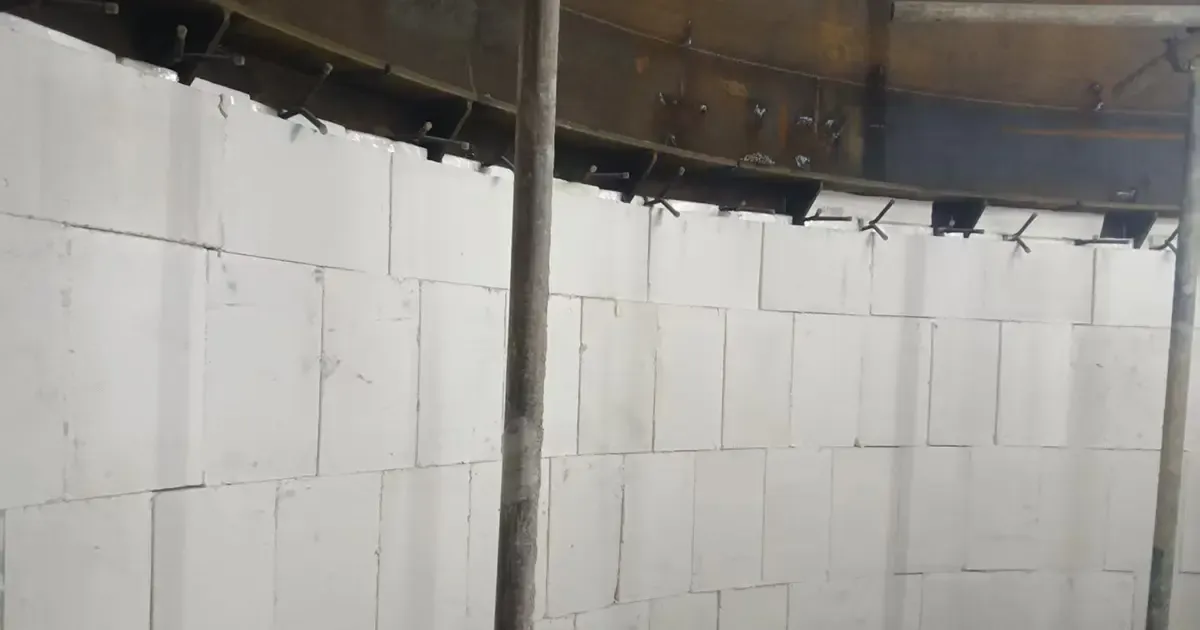
Calcium silicate insulation — shortened on site and on datasheets to calsil — is a rigid, asbestos-free insulation made by reacting lime and silica under high-pressure steam. It is supplied as board, pre-formed pipe section or custom block, and it is rated for continuous service at 650 °C, with high-temperature grades reaching 1 000–1 050 °C.
If you have ever needed an insulation layer that can be walked on, bolted through, or used as a structural backup lining, calcium silicate insulation is the material that does it. Rock wool and ceramic fibre are flexible and have to be carried by something; calsil carries itself. It holds its shape, takes load without slumping, and gives a clean dimensionally stable surface inside furnace casings, boiler walls and kiln linings.
That load-bearing behaviour scales with density, and the range is wide — a 220 kg/m³ board and a 1 000 kg/m³ board share a name but not a purpose. Where a specification depends on compressive strength rather than rigidity alone, our HD calcium silicate grades above 240 kg/m³ guide sets out the density bands, the strength curve, and where the temperature ceiling actually comes from.
What Is Calcium Silicate Insulation?
Calcium silicate insulation is a rigid inorganic thermal insulation composed principally of hydrous calcium silicate crystals, formed by the hydrothermal reaction of lime and siliceous material under steam pressure in an autoclave. The result is a lightweight but strong board or shape that combines low thermal conductivity with genuine structural capability — the property that separates it from every flexible wool on the market.
Three things follow from that definition, and they explain most of the specification decisions around the material:
It is a material, not a shape. Calcium silicate insulation is what the product is made of; board, pipe section and block are the forms it is delivered in. This matters when you read a specification, because "calcium silicate board" and "calcium silicate insulation" are often used to mean the same thing — and the naming across the industry is genuinely inconsistent. If that ambiguity has ever cost you time on a procurement query, our calsil versus cal-sil versus calcium silicate explainer settles it: the three names describe one material.
It replaced asbestos millboard. That history is why "asbestos-free" appears on every modern datasheet. Modern calcium silicate insulation contains no asbestos and no respirable ceramic fibres, which is why it can be handled, cut and installed without the controls that legacy millboard or refractory ceramic fibre demand.
It sits in a specific place on the temperature ladder. Standard grades run to 650 °C and high-temperature grades to 1 000–1 050 °C. Above that you move to ceramic fibre or polycrystalline mullite. For the full ladder across material families, see our top 10 high-temperature insulation materials guide.
What Calsil Is Made Of and How It Is Produced
The raw mix is simple: a lime source, a siliceous source — quartz sand, diatomaceous earth or fly ash depending on the producer — water, and a small fraction of reinforcing fibre. Cellulose and glass fibre are both common; the fibre is there for green strength and handling toughness, not for temperature performance, and it burns out in service.
What turns that slurry into an insulation board is autoclaving. The mix is placed in a pressure vessel and cured in saturated steam, typically at around 180–200 °C under corresponding pressure, for a number of hours. Under those conditions the lime and silica react to form crystalline calcium silicate hydrate — most commonly the tobermorite phase for standard grades, and the xonotlite phase for high-temperature grades rated above about 1 000 °C.
The crystal phase is not a detail for the materials engineer alone, because it sets the temperature ceiling. Tobermorite begins to dehydrate and lose strength as it passes roughly 650–700 °C, which is exactly where the standard grade's rating comes from. Xonotlite is stable well beyond that, which is why every 1 000 °C grade on the market is xonotlite-based. If a supplier quotes 1 000 °C on a tobermorite board, that is a question worth asking.
After autoclaving the boards are dried, trimmed to size, and where specified faced with foil, tissue or glass cloth. Because the material is inorganic and contains no binder that has to cure in service, it does not smoke, outgas or change dimension on first heat-up — one of the reasons it is specified for oven and appliance panels as well as heavy industry.
Key Properties at a Glance
| Property | Typical value |
|---|---|
| Continuous service temperature | 650 °C (standard); 1 000–1 050 °C (high-temperature grade) |
| Density | 170–240 kg/m³ (board); 200–300 kg/m³ (pipe section); 400–1 500 kg/m³ (high-density) |
| Thermal conductivity | 0.048–0.060 W/(m·K) at 50–100 °C; 0.10–0.12 W/(m·K) at 600 °C |
| Compressive strength | 0.5–1.0 MPa at 10 % deformation; higher with density |
| Fire rating | A1 non-combustible |
| Water uptake | Low capillary absorption; dimensionally stable when wet |
| Linear shrinkage | Low; holds geometry through thermal cycling |
| Chemical behaviour | Inert; rot, pest and vermin resistant |
Three of these deserve comment, because they drive most of the value argument.
Rigidity with low conductivity. Very few insulations do both. Calsil can be walked on, bolted through and used as a structural layer, which rock wool and ceramic fibre blankets cannot do — and it does it while holding conductivity in the same band as those materials. That combination is why it appears as the backup layer in composite linings.
Dimensional stability through cycling. The boards are autoclaved at temperature and pressure, so they have already been through a form of the service condition before they reach site. Shrinkage is low and the material does not slump or settle, which keeps joints closed over years of thermal cycling instead of opening gaps in the first few months.
The conductivity curve is not flat. Like every insulation, calsil conducts more as it gets hotter — roughly 0.048–0.060 W/(m·K) near ambient against 0.10–0.12 W/(m·K) at 600 °C. Specify against the value at your operating temperature, never the value at 25 °C. Our calcium silicate board density, thickness and conductivity spec guide carries the full curve and the thickness calculations built on it.
Temperature Grades: 650 °C Standard vs 1 000–1 050 °C High-Temperature
Two grades cover essentially the whole market, and choosing between them is the first decision in any specification.
Standard grade — 650 °C continuous. This is the tobermorite-based board that does the bulk of industrial work: boiler casings, ductwork, oven panels, fire-rated doors, and the backup layer behind a hot-face refractory. It is the lower-cost option and it is entirely adequate wherever the substrate stays below 650 °C.
High-temperature grade — 1 000–1 050 °C continuous. Xonotlite-based, formulated for kiln transition zones, heater linings and any position where the backup layer sees real heat. It carries a cost premium and slightly higher density, and it is the correct choice rather than the conservative one wherever the calculated interface temperature exceeds 650 °C — a standard board pushed past its ceiling does not fail gently, it dehydrates, loses strength and cracks.
Above 1 050 °C. Calsil stops here. Ceramic fibre board takes over to roughly 1 260–1 430 °C, and polycrystalline mullite board above that. Where the choice is between calsil and ceramic fibre board specifically, our calcium silicate versus ceramic fibre board comparison works through the mechanical, thermal and cost trade-offs position by position.
One practical caution: the grade rating is a continuous service figure, not a peak. Short excursions above the rating are survivable, sustained operation above it is not. State both your continuous and your peak temperature when you enquire.
Density Grades: What Higher Density Buys You
Density is the second specification axis, and it is where most of the price variation lives.
| Band | Typical density | What it is for |
|---|---|---|
| Standard | 170–240 kg/m³ (board) | Backup linings, duct and casing insulation, general industrial |
| Pipe section | 200–300 kg/m³ | Hot process pipework, steam lines |
| High-density | 400–800 kg/m³ | Load-bearing positions, kiln car decks, abrasion exposure |
| Ultra-high-density | 1 000–1 500 kg/m³ | Structural refractory shapes, ladle covers, high-wear zones |
What higher density buys is strength, and what it costs is weight, thermal conductivity and money. Compressive strength rises steeply with density — a 220 kg/m³ board sits near 0.5 MPa at 10 % deformation while a 1 000 kg/m³ board is an order of magnitude stronger — but conductivity climbs too, because solid conduction through the skeleton has more material to travel through. The engineering answer is always the lowest density that meets the mechanical requirement, not the highest density available.
Pipe sections run slightly denser than board for the same duty, because a curved segment has to hold its geometry against banding pressure and thermal movement without cracking at the seam.
Specifiers looking for high density calcium silicate board are normally working in the 400–800 kg/m³ band, where the board carries a genuine mechanical load rather than only insulating — kiln car decks, ladle covers and positions exposed to abrasion or impact.
Molded, Reinforced and Specialty Variants
Beyond flat board and pipe section, three variants come up regularly in specifications.
Molded calcium silicate. Rather than being cut from a flat board, molded shapes are formed to the finished geometry during manufacture — valve covers, turbine casings, irregular vessel heads, and the complex transitions where a flat board would need multiple pieces and multiple joints. The advantage is fewer joints, and joints are where heat escapes and where installation time goes.
Reinforced calcium silicate. Glass fibre, or in some grades a chopped strand mat, is added to raise flexural strength and impact resistance. It is the standard answer where boards are handled repeatedly, where they are removed and refitted during maintenance, or where they span an unsupported gap.
Faced and treated boards. Foil, tissue and glass cloth facings are applied for a range of reasons: to keep dust down during handling, to give a paintable or cleanable surface, to add a vapour barrier, or simply to make the board identifiable on site. Hydrophobic treatment is worth specifying wherever the insulation will be exposed to weather before cladding goes on — the material is dimensionally stable when wet, but wet insulation is not insulating.
Calsil vs Rock Wool vs Ceramic Fiber
| Calsil | Rock wool | Ceramic fiber | |
|---|---|---|---|
| Max service temp | 650–1 050 °C | ~750 °C | up to 1 430 °C |
| Form | Rigid board/pipe | Flexible blanket/board | Flexible blanket/module |
| Compressive strength | High (load-bearing) | Low | Low |
| Handling dust | Minimal | Fibrous | Fibrous (PPE advised) |
| Best at | Structural backup, rigid surface | Irregular geometry, budget | Very high temperature |
| Cost | Mid | Low | Higher |
Rule of thumb: choose calsil where you need a rigid, dimensionally stable surface or a backup layer that will not slump; choose rock wool blanket for irregular or curved surfaces on a budget; choose ceramic fiber where temperature exceeds 1 000 °C. In practice the three are frequently combined — ceramic fibre or rock wool on the hot face, calsil as the structural backup.
Common Forms: Board, Pipe, Block and Custom
- Board — the most common form, used as kiln and boiler backup lining, fire-rated wall and duct cores, and oven panels. Standard sizes and thicknesses cover most industrial duty; non-standard thicknesses are routine but move lead time.
- Pipe sections — calcium silicate pipe sections are pre-curved segments supplied in matched halves for hot process pipes, standard in power and petrochemical plants. They are made to the pipe outside diameter and the insulation thickness together, so both numbers belong in the enquiry. For the wider picture on pipe insulation by material, see our industrial pipe insulation materials hub.
- Block and custom shapes — for kiln car decks, ladle covers, and engineered furnace components where the geometry is fixed by the equipment rather than by the insulation.
- Molded parts — see the variants section above; the right answer wherever a flat board would need more than two pieces to cover a shape.
For a full material map by temperature tier, see best heat-resistant furnace materials (2026 guide).
Typical Applications
Calcium silicate insulation is widely specified in high-temperature industrial linings: cement kiln backup and transition zones (see cement kiln thermal protection), where the material's performance in that industry is covered in detail in our calcium silicate insulation cement industry guide; power-plant boiler casings and ducts (power generation applications), detailed in our power plant insulation guide; petrochemical heaters and reformers; fire-rated doors, panels and structural steel protection; and rock wool marine fire barriers. For the SOLAS/IMO standards and H-120 guidance, see marine fire insulation: materials and standards.
It is frequently the rigid layer in a composite lining — ceramic fibre or rock wool on the hot face, calsil as the structural backup. That is the application the material was developed for and still the one where nothing else does the job as well.
How to Specify and Source Calsil
Work through six items and most of the specification writes itself:
- Temperature class — 650 °C standard or 1 000–1 050 °C high-temperature grade. Give continuous and peak, not one number.
- Density grade — higher density buys strength and costs conductivity, weight and money. Specify the lowest band that meets the mechanical requirement.
- Dimensions and form — board thickness and sheet size, or pipe outside diameter plus insulation thickness for sections.
- Facing and treatment — foil, tissue or glass cloth; hydrophobic treatment for weather exposure before cladding.
- Standards and certification — confirm A1 non-combustible certification and any plant-specific or project-specific requirement.
- Volume and logistics — annual quantity, whether custom shapes are needed, and delivery schedule. Custom molded parts are routine but they move both lead time and minimum order quantity.
Ask for the conductivity value at your operating temperature rather than at ambient, and ask for compressive strength at a stated deformation rather than an unqualified number. Both are where datasheets are least comparable and where the difference between grades actually shows. For the full procurement walkthrough — supplier qualification, testing, and what a proper enquiry package looks like — see our calcium silicate insulation buyer's guide.
Closing
Calcium silicate insulation occupies one specific and irreplaceable position: the rigid, load-bearing, dimensionally stable insulation for service up to 1 050 °C. It is not the cheapest insulation per square metre and it is not the highest-temperature one, but where a lining has to support itself, hold geometry through years of cycling, and give a clean structural surface, it is the default answer.
Send us your service temperature, density requirement, geometry and annual volume, and our engineers will return a thickness calculation, a grade recommendation and a quotation.
The pipe form of the same material is documented on the calcium silicate pipe page, including its higher temperature ceiling compared with rock wool pipe.
Frequently asked
What temperature can calcium silicate insulation withstand?
Standard calsil is rated for continuous service at 650 °C. High-temperature grades are formulated for 1 000–1 050 °C. Above that, ceramic fibre or polycrystalline mullite boards are the better choice. Always specify both your continuous and your peak temperature — the rating is a continuous service figure, not a peak.
Is calsil waterproof or water resistant?
Calsil has low capillary water uptake and stays dimensionally stable if it gets wet — it does not soften or slump like some organic foams. It is water-resistant, not waterproof: prolonged immersion should be avoided, and the system should be allowed to dry out. In wet service, specify a hydrophobic grade or a waterproof cladding.
Is calcium silicate insulation asbestos-free?
Yes. Modern calcium silicate insulation is made from lime, silica and reinforcing fibre under autoclave curing. It contains no asbestos and is safe to handle without the precautions required for legacy asbestos millboard, which this material was developed to replace.
Is "calsil" the same as calcium silicate?
Yes. "Calsil" is simply trade shorthand for calcium silicate insulation board or pipe section. You will see the two terms used interchangeably across datasheets and specifications, along with the variant "cal-sil". All three describe the same material.
Can calsil be used for pipe insulation?
Yes. Calsil is available as pre-formed pipe sections and curved boards for hot process piping in power, petrochemical and steam systems — pairing low conductivity with the rigidity to stay in place without external support. Order by pipe outside diameter and insulation thickness together.
What is the difference between standard and high-temperature calsil?
The crystal phase. Standard grade is tobermorite-based and rated to 650 °C; high-temperature grade is xonotlite-based and rated to 1 000–1 050 °C. Xonotlite remains stable at temperatures where tobermorite dehydrates and loses strength, which is why the rating differs by roughly 400 °C.
How does density affect calcium silicate insulation performance?
Higher density raises compressive strength substantially — from around 0.5 MPa at 220 kg/m³ to an order of magnitude more at 1 000 kg/m³ — but it also raises thermal conductivity and weight, and it costs more. The right specification is the lowest density that meets the mechanical requirement, not the highest available.
Can calcium silicate board be cut on site?
Yes, with standard woodworking tools and appropriate dust extraction. It cuts cleanly and holds an edge, which is one reason it is used for fitted panels and oven components. Wear respiratory protection for the dust, and seal or face cut edges where the board will be exposed.
Is calsil suitable for load-bearing applications?
Yes — that is its defining advantage over flexible wools. Calsil can be walked on, bolted through, and used as a structural backup layer behind a hot-face refractory. Specify the density band against the actual load: standard board for self-supporting panels, high-density grades for kiln car decks and high-wear positions.
What should I send to get an accurate quotation?
Service temperature (continuous and peak), required density or compressive strength, form and dimensions — board thickness and sheet size, or pipe outside diameter plus insulation thickness — any facing or hydrophobic treatment, certification requirements, and annual volume. With those items a producer can return a firm specification and price rather than a range.
For a deeper dive into forms, temperature ratings, and application guides, see our ceramic fiber insulation hub.
Frequently asked
What temperature can calcium silicate insulation withstand? +
Standard calsil is rated for continuous service at 650 °C. High-temperature grades are formulated for 1 000–1 050 °C. Above that, ceramic fibre or polycrystalline mullite boards are the better choice. Always specify both your continuous and your peak temperature — the rating is a continuous service figure, not a peak.
Is calsil waterproof or water resistant? +
Calsil has low capillary water uptake and stays dimensionally stable if it gets wet — it does not soften or slump like some organic foams. It is water-resistant, not waterproof: prolonged immersion should be avoided, and the system should be allowed to dry out. In wet service, specify a hydrophobic grade or a waterproof cladding.
Is calcium silicate insulation asbestos-free? +
Yes. Modern calcium silicate insulation is made from lime, silica and reinforcing fibre under autoclave curing. It contains no asbestos and is safe to handle without the precautions required for legacy asbestos millboard, which this material was developed to replace.
Is "calsil" the same as calcium silicate? +
Yes. "Calsil" is simply trade shorthand for calcium silicate insulation board or pipe section. You will see the two terms used interchangeably across datasheets and specifications, along with the variant "cal-sil". All three describe the same material.
Can calsil be used for pipe insulation? +
Yes. Calsil is available as pre-formed pipe sections and curved boards for hot process piping in power, petrochemical and steam systems — pairing low conductivity with the rigidity to stay in place without external support. Order by pipe outside diameter and insulation thickness together.
What is the difference between standard and high-temperature calsil? +
The crystal phase. Standard grade is tobermorite-based and rated to 650 °C; high-temperature grade is xonotlite-based and rated to 1 000–1 050 °C. Xonotlite remains stable at temperatures where tobermorite dehydrates and loses strength, which is why the rating differs by roughly 400 °C.
How does density affect calcium silicate insulation performance? +
Higher density raises compressive strength substantially — from around 0.5 MPa at 220 kg/m³ to an order of magnitude more at 1 000 kg/m³ — but it also raises thermal conductivity and weight, and it costs more. The right specification is the lowest density that meets the mechanical requirement, not the highest available.
Can calcium silicate board be cut on site? +
Yes, with standard woodworking tools and appropriate dust extraction. It cuts cleanly and holds an edge, which is one reason it is used for fitted panels and oven components. Wear respiratory protection for the dust, and seal or face cut edges where the board will be exposed.
Is calsil suitable for load-bearing applications? +
Yes — that is its defining advantage over flexible wools. Calsil can be walked on, bolted through, and used as a structural backup layer behind a hot-face refractory. Specify the density band against the actual load: standard board for self-supporting panels, high-density grades for kiln car decks and high-wear positions.
What should I send to get an accurate quotation? +
Service temperature (continuous and peak), required density or compressive strength, form and dimensions — board thickness and sheet size, or pipe outside diameter plus insulation thickness — any facing or hydrophobic treatment, certification requirements, and annual volume. With those items a producer can return a firm specification and price rather than a range.
Request a quote
Interested in our insulation solutions? Send us your requirements and our team responds within one business day.