
Calcium Silicate vs Ceramic Fiber Board: Which to Choose
Calcium silicate board vs ceramic fiber board: compare temperature limits, strength, thermal conductivity, and cost to pick the right refractory board for furnace linings.
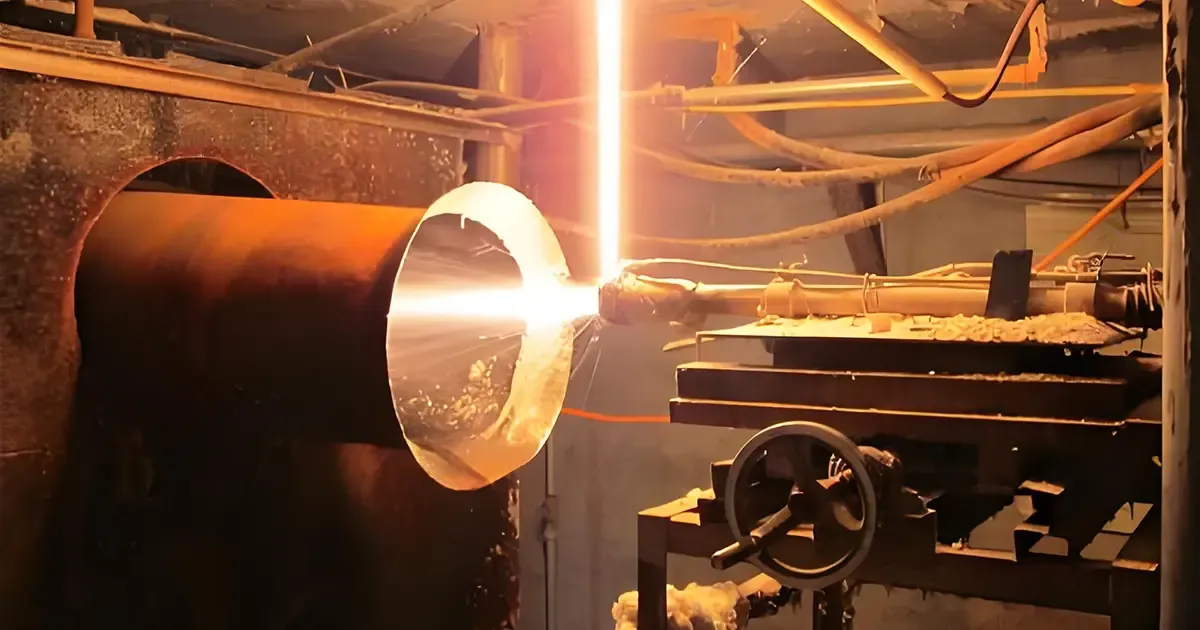
When you need a rigid refractory board for furnace lining, the choice usually comes down to calcium silicate board or ceramic fiber board. Both are A1 non-combustible and widely used in industrial insulation, but they behave very differently under load, temperature, and thermal cycling.
The short answer: pick calcium silicate insulation board for structural, moisture-resistant backup insulation below 1100°C; pick ceramic fiber board for lightweight hot-face linings up to 1430°C. Below is the side-by-side breakdown.
Material Properties Compared
Temperature limit and thermal stability
| Property | Calcium Silicate Board | Ceramic Fiber Board |
|---|---|---|
| Continuous service temperature | ≤1050°C (peak 1100°C) | Up to 1430°C |
| Thermal shock resistance | Moderate; can crack under rapid cycling | Excellent; handles frequent start/stop cycles |
| Density | 200–1200 kg/m³ (grade dependent) | 200–300 kg/m³ |
| Typical compressive strength | ≥1.0 MPa | ≥0.5 MPa standard; enhanced grades higher |
Calcium silicate (also called calsil) keeps its rigidity and strength at moderate temperatures, making it ideal for load-bearing backup layers. Ceramic fiber board is much lighter and far more tolerant of thermal shock, but standard grades are lower in mechanical strength.
Thermal conductivity
Both boards insulate well, but the temperature curve matters:
- Calcium silicate board: thermal conductivity stays relatively flat across the working range, around 0.04–0.06 W/(m·K) at elevated temperatures. That makes it predictable for steady-state industrial processes.
- Ceramic fiber board: conductivity increases with temperature (roughly 0.09 W/(m·K) at 400°C rising to ~0.18 W/(m·K) at 1000°C). Despite the rise, its extremely low thermal mass reduces heat storage and improves fuel efficiency in cyclic furnaces.
Chemical stability
- Ceramic fiber board resists most acids and alkaline slags, especially zirconia-enhanced grades. Avoid strong alkalis and direct contact with phosphate or hydrofluoric acid.
- Calcium silicate board tolerates moisture, weak acids, and salt-laden atmospheres. It is not suitable for strong acid environments such as phosphoric or hydrofluoric acid service.
For the full property set behind the calcium silicate column — composition, density bands and grade ratings — see our calcium silicate insulation guide.
Where Each Board Wins
| Application | Recommended board | Why |
|---|---|---|
| Furnace hot-face, thermal cycling | Ceramic fiber board | High temp + shock resistance, fast heat-up/cool-down |
| Kiln backup layer, structural support | Calcium silicate insulation board | High compressive strength, dimensional stability |
| Moist or fire-rated partitions | Calcium silicate board | Moisture resistant, A1 fire rating, long static life |
| Petrochemical heaters and reformers | Ceramic fiber board | Lightweight modules, easy to replace damaged sections |
| Ship bulkheads, substations, building fire barriers | Calcium silicate board | Fire rating + humidity tolerance |
Cost, Installation and Service Life
Initial cost: calcium silicate board is generally the lower-cost option per square meter for equivalent thickness. Ceramic fiber board costs more upfront, especially high-purity or zirconia grades rated above 1400°C.
Installation: ceramic fiber board is easy to cut on site and can be supplied as pre-engineered modules, cutting rebuild time by 30% or more. Calcium silicate board is heavier and usually needs sawing, drilling, and expansion-joint detailing.
Service life:
- Calcium silicate board: 30–50 years in static, protected service.
- Ceramic fiber board: 5–10 years on a hot face with severe cycling; longer in cooler backup positions.
When whole-life cost is calculated (material + labor + energy + downtime), ceramic fiber board often wins in high-temperature cyclic furnaces because the energy savings and shorter outage windows offset the higher purchase price.
Decision Framework
Use this four-question filter:
- Is the continuous temperature above 1050°C? → Ceramic fiber board is required.
- Does the lining carry structural load or need moisture resistance? → Calcium silicate board is safer.
- Will the equipment cycle frequently? → Ceramic fiber board handles thermal shock better.
- Is first cost or 30-year cost driving the project? → Calcium silicate for low first cost; ceramic fiber for lowest total cost of ownership.
For complex furnaces, the two materials are often combined: ceramic fiber board on the hot face, calcium silicate insulation board behind it as a rigid, insulating backup.
For furnace lining duty specifically — hot face against back-up, batch cycling, gas velocity and slag contact — the four questions above are only the start: see our refractory board selection guide for the full duty assessment.
Beyond furnace linings, the same two families are being specified for molten salt heat storage and battery enclosures, where service temperature and cycling are set by the storage cycle rather than by a production campaign: our LDES 2026 report on long-duration energy storage insulation covers that application.
Related Reading
- Ceramic Fiber vs Rock Wool for Furnace Linings
- Best Heat-Resistant Materials for Furnace (2026 Guide)
- What Temperature Can Rock Wool Withstand?
For a deeper dive into forms, temperature ratings, and application guides, see our ceramic fiber insulation hub.
Frequently asked
What is the main difference between calcium silicate board and ceramic fiber board? +
Calcium silicate board is a rigid, high-strength backup insulation with excellent moisture resistance up to 1100°C. Ceramic fiber board is a lightweight, thermally shock-resistant hot-face insulation rated up to 1430°C.
Can calcium silicate board replace ceramic fiber board above 1100°C? +
No. Standard calcium silicate board is limited to 1050°C continuous service and 1100°C peak. Above that temperature, ceramic fiber board or polycrystalline fiber products are required.
Which board is better for furnace hot-face lining? +
Ceramic fiber board is usually better for hot-face linings because it withstands higher temperatures, handles rapid thermal cycling, and has low thermal mass for faster heat-up and cool-down.
How long does each board last in industrial service? +
Calcium silicate board can last 30–50 years in static, protected backup insulation. Ceramic fiber board typically lasts 5–10 years on a severe hot face with thermal cycling, and longer in cooler positions.
Request a quote
Interested in our insulation solutions? Send us your requirements and our team responds within one business day.