
Top 10 High-Temperature Insulation Materials (2026)
2026 buyer's guide to the 10 best high-temperature insulation materials — mullite, ceramic fiber, aerogel, calcium silicate — with temperature limits and uses.
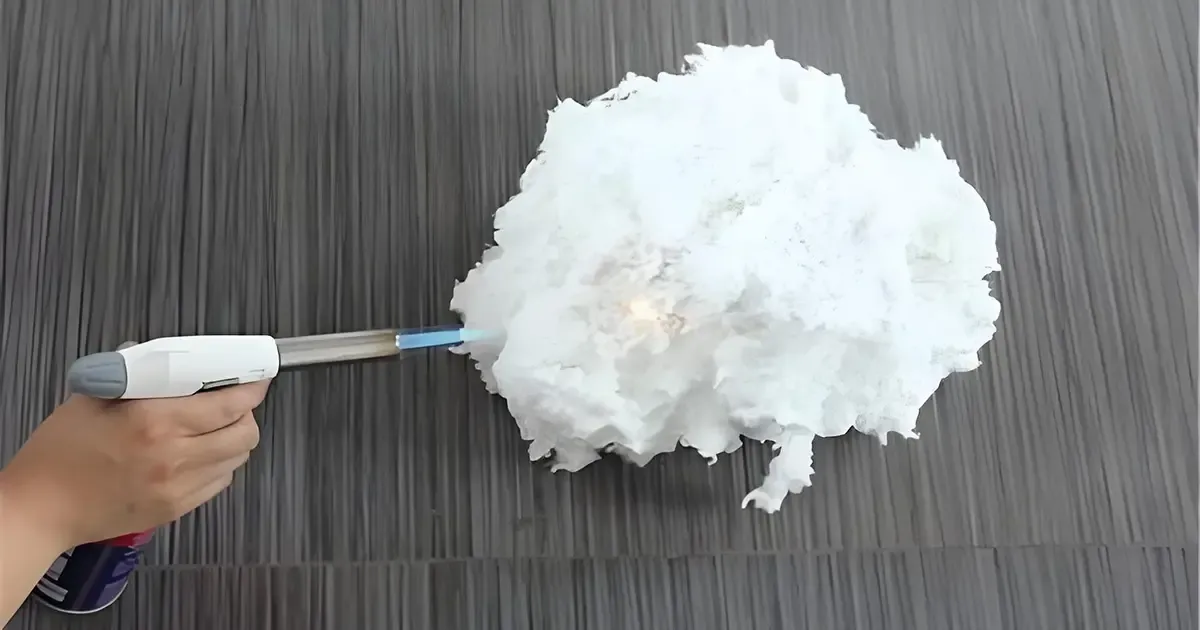
Choosing high-temperature insulation comes down to three numbers: the maximum continuous service temperature, the thermal conductivity, and the form factor that fits your equipment. This 2026 roundup ranks the ten materials our engineering team specifies most often for furnaces, kilns, boilers, and process equipment above 1000 °C — with honest temperature ceilings and where each one earns its place.
How We Ranked the Top 10
The list is ordered by maximum continuous service temperature, because that is the first filter any high-temperature spec must pass. (If you are lining a furnace specifically, our heat-resistant materials for furnace guide organises the same materials by duty rather than by temperature ceiling.) A material rated for 1700 °C continuous outranks one rated for 1000 °C, regardless of cost. We then note conductivity and typical use so you can trade temperature headroom against thickness and budget.
| # | Material | Max continuous temp | Typical use |
|---|---|---|---|
| 1 | Polycrystalline mullite fiberboard | 1600–1700 °C | Hot-face furnace & lab linings |
| 2 | Refractory ceramic fiber blanket | 1260–1430 °C | Furnace, kiln, boiler linings |
| 3 | Refractory ceramic fiber board | 1260–1430 °C | Rigid hot-face & backup boards |
| 4 | Ceramic fiber modules | 1260–1430 °C | Quick furnace wall lining |
| 5 | Ceramic fiber paper | 1260 °C | Gaskets, seals, wrapping |
| 6 | Ceramic fiber rope | 1050–1260 °C | Door & expansion-joint seals |
| 7 | Ceramic fiber bulk | 1050–1430 °C | Loose-fill & feedstock |
| 8 | Nano insulation board (microporous) | 1000–1200 °C | Thin-wall high-temp insulation |
| 9 | Nano aerogel insulation blanket | up to 1000 °C | Space-limited retrofit |
| 10 | Calcium silicate insulation board | 1000–1050 °C | Pipe & equipment insulation |
1. Polycrystalline Mullite Fiberboard — 1600–1700 °C
Polycrystalline mullite fiberboard is the only fibrous board on this list rated for continuous service above 1600 °C. Its fully crystalline mullite structure gives it low shrinkage and high purity that standard glass-phase ceramic fiber cannot match.
- Best for: hot-face linings in steel reheating furnaces, heat-treatment furnaces, ceramic and glass kilns, laboratory and tube furnaces, and semiconductor crystal-growth hot zones.
- Key limit: the "1900 °C" figure is a short-term survival peak, not a continuous rating. Size it for 1600–1700 °C service.
- See the full polycrystalline mullite board guide for grade selection.
2. Refractory Ceramic Fiber Blanket — 1260–1430 °C
Refractory ceramic fiber blanket (RCF blanket) is the workhorse of high-temperature insulation. Standard grades serve to 1260 °C; high-purity and zirconia-containing grades reach 1430 °C.
- Best for: furnace and kiln linings, boiler and duct insulation, expansion-joint packing, and backup behind dense refractory.
- Form factor: rolls and blankets, easy to cut and anchor; also available as ceramic fiber plus blanket for higher density.
- Safety note: RCF is classified as a substance of concern above 1000 °C; use proper PPE and prefer encapsulated or low-bio-persistence alternatives where regulations require.
3. Refractory Ceramic Fiber Board — 1260–1430 °C
Refractory ceramic fiber board is the rigid cousin of the blanket. It holds a flat shape, machines cleanly when cold, and serves as a self-supporting hot-face or backup board.
- Best for: burner blocks, sight-hole covers, kiln car decks, and baffles where a rigid shape is needed.
- Pair with: ceramic fiber board alternatives for non-RCF options.
4. Ceramic Fiber Modules — 1260–1430 °C
Ceramic fiber modules are pre-compressed blanket blocks with integral anchors, engineered for fast furnace-wall lining. They cut installation time versus laying blanket row by row.
- Best for: new furnace linings and rapid relines of existing furnaces and heaters.
5. Ceramic Fiber Paper — 1260 °C
Ceramic fiber paper is a thin, flexible sheet made from refined ceramic fibers. It is the go-to gasket and seal material in high-temperature joints.
- Best for: gaskets, flame curtains, wrapping heating elements, and separation layers.
- Related forms: ceramic fiber cloth for woven fabrics and ceramic fiber tape for narrow sealing strips.
6. Ceramic Fiber Rope — 1050–1260 °C
Ceramic fiber rope is braided or twisted fiber used for sealing and gasketing. It conforms to irregular gaps that rigid boards cannot.
- Best for: furnace and kiln door seals, expansion-joint packing, and boiler manhole gaskets.
- Shaped parts: ceramic fiber special-shaped parts for custom seals.
7. Ceramic Fiber Bulk — 1050–1430 °C
Ceramic fiber bulk is the loose, un-bonded raw fiber. It is used as loose-fill insulation, as feedstock for vacuum-formed shapes, and for packing hard-to-reach cavities.
- Best for: void filling, crucible wrapping, and as the base material for boards, papers, and modules.
- Grade map: 1050 / 1100 / 1260 / 1430 °C grades by alumina content.
8. Nano Insulation Board (Microporous) — 1000–1200 °C
Nano insulation board uses a microporous structure to approach the theoretical conductivity limit of still air. At the same temperature it is a fraction of the thickness of fibrous insulation.
- Best for: where wall thickness is fixed and you need maximum insulation in minimum space — furnace doors, ladle covers, and heat-treatment equipment.
- Background: see our insulation glossary for how microporous ("Pyrogel-class") materials work.
For the full specification picture — the 0.016–0.030 W/(m·K) conductivity range, the ISO 18959:2025 temperature classes, and where ultra-thin board actually pays back — see our nano microporous insulation thickness and conductivity guide.
To see how this family stacks up against aerogel and vacuum panels on conductivity, temperature and cost, read our ultra-thin insulation comparison across all three families.
9. Nano Aerogel Insulation Blanket — up to 1000 °C
Nano aerogel insulation blanket combines silica aerogel with a fiber carrier for the lowest thermal conductivity of any flexible blanket we supply. It is the retrofit king where space is tight.
- Best for: space-limited retrofits on pipes, vessels, and furnaces; compare it directly in our aerogel vs traditional insulation guide.
- Tradeoff: higher cost per mm than ceramic fiber; use it where thickness is the constraint.
10. Calcium Silicate Insulation Board — 1000–1050 °C
Calcium silicate insulation board is a rigid, water-resistant board with excellent dimensional stability and low creep under load. It is the standard for high-temperature pipe and equipment insulation.
- Best for: steam pipes, heaters, and process equipment where rigidity and load-bearing matter.
- Variants: high-density calcium silicate board for higher strength, and calcium silicate pipe for pre-formed pipe sections. Also see composite silicate plate.
How to Choose the Right Material
By service temperature
- Above 1600 °C — polycrystalline mullite fiberboard only.
- 1260–1430 °C — RCF blanket, RCF board, ceramic fiber modules.
- 1000–1200 °C — microporous board, aerogel blanket, calcium silicate board.
- Below 1000 °C — rock wool and glass wool remain the cost-effective choice (see the full catalog below).
By application
- Furnace / kiln hot face — RCF blanket or board; mullite for the hottest zones.
- Pipe & equipment — calcium silicate board/pipe; aerogel where space is tight.
- Seals & gaskets — ceramic fiber rope, paper, cloth, tape.
- Rapid reline — ceramic fiber modules.
Complete Product Catalog
For the full range, browse every high-temperature insulation product we manufacture:
Ceramic fiber family
- Refractory Ceramic Fiber Blanket
- Ceramic Fiber Plus Blanket
- Refractory Ceramic Fiber Board
- Ceramic Fiber Board Alternative
- Ceramic Fiber Modules
- Ceramic Fiber Bulk
- Ceramic Fiber Rope
- Ceramic Fiber Paper
- Ceramic Fiber Cloth
- Ceramic Fiber Tape
- Ceramic Fiber Special-Shaped Parts
Ultra-high-temperature & nano
Calcium silicate
- Calcium Silicate Insulation Board
- High-Density Calcium Silicate Board
- Calcium Silicate Pipe
- Composite Silicate Plate
Rock wool (up to ~750 °C, for lower-temperature duty)
- Rockwool Insulation Blanket
- Rock Wool Board
- Rockwool Pipe Insulation
- Rock Wool Strips
- Rock Wool Acoustic Panels
- Rock Wool Blanket with Glass Fiber Mesh
- Rock Wool Wired Insulation Blanket
Glass wool (up to ~450 °C)
For how these same materials are selected across a whole process site — distillation, cracking, storage and traced lines — see our petrochemical insulation guide by process unit.
Bottom Line
There is no single "best" high-temperature insulation — only the right one for your service temperature, space, and load. For continuous duty above 1600 °C, polycrystalline mullite fiberboard is the answer. From 1260–1430 °C, refractory ceramic fiber in blanket, board, or module form covers most furnaces and kilns. Below that, microporous board, aerogel, and calcium silicate win on thickness and rigidity.
At Rosewool we have manufactured high-temperature insulation since 1982, with ISO 9001, CE, and SGS certification across the full product range. Contact our engineering team for material selection and thickness recommendations matched to your exact service temperature and cycle profile.
Explore flexible aerogel and microporous insulation options in our aerogel insulation guide.
Frequently asked
What is the highest-temperature insulation material? +
For continuous service, polycrystalline mullite fiberboard leads at 1600–1700 °C. Short-term exposure up to ~1900 °C is possible in mullite and oxide-fiber systems, but sustained operation above 1700 °C requires ultra-high-purity alumina or zirconia-based boards.
What is the difference between ceramic fiber blanket and board? +
They share the same aluminosilicate fiber and the same 1260–1430 °C rating. The blanket is a flexible roll; the board is the same fiber needled and bonded into a rigid, machinable shape that can stand on its own as a hot-face or backup board.
Is aerogel better than ceramic fiber for high-temperature use? +
Not automatically. Aerogel has the lowest conductivity of any flexible blanket but is capped near 1000 °C. Ceramic fiber serves to 1430 °C (blanket/board) and mullite to 1700 °C. Choose aerogel when thickness is the constraint and the temperature stays under 1000 °C; choose ceramic fiber when the temperature is higher.
What insulation is used above 1000 °C? +
Refractory ceramic fiber in blanket, board, or module form covers 1260–1430 °C. Polycrystalline mullite fiberboard covers 1600–1700 °C. Between 1000–1200 °C, microporous board, aerogel blanket, and calcium silicate board are common choices.
Is ceramic fiber safe to handle? +
Refractory ceramic fiber (RCF) is classified as a substance of concern above 1000 °C. Use PPE (gloves, respirator, eye protection) when cutting or installing, and prefer encapsulated or low-bio-persistence grades where local regulations require them.
Request a quote
Interested in our insulation solutions? Send us your requirements and our team responds within one business day.