
Best Heat-Resistant Materials for Furnace (2026 Guide)
A 2026 guide to the best heat-resistant furnace materials by temperature tier — ceramic fiber, calcium silicate, rock wool and aerogel, with pros, cons, and service-life data.
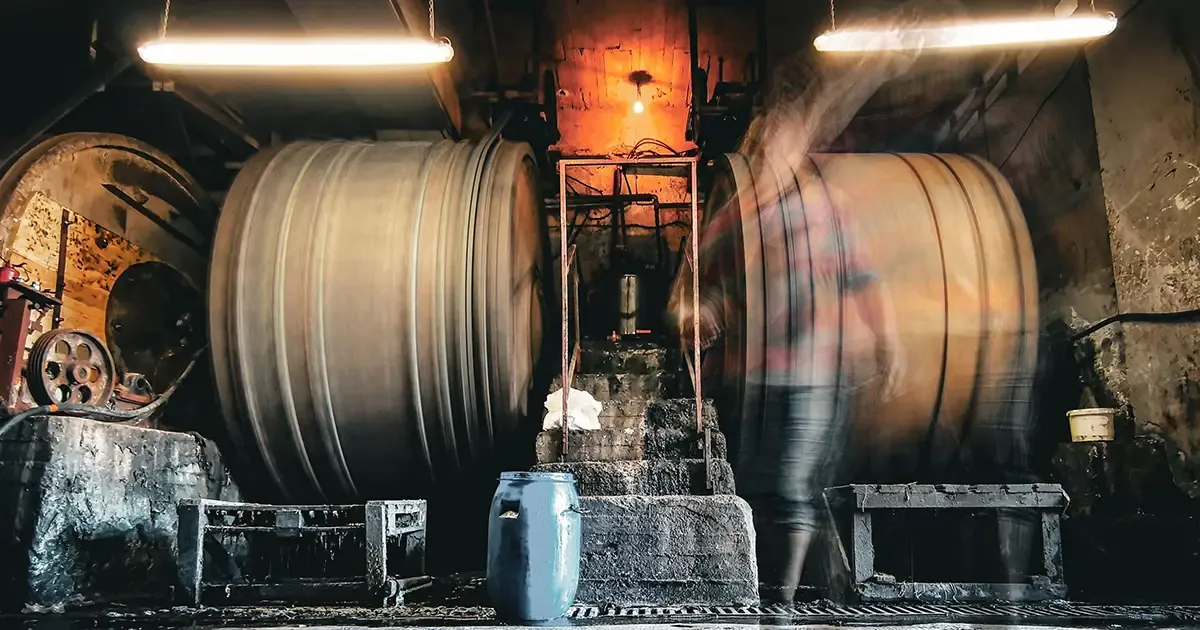
Industrial furnaces span a huge temperature range — from low-temperature drying ovens below 200°C to continuous-process kilns running above 1400°C. The single most important factor in furnace design and relining is choosing heat-resistant materials for furnace walls that matches the operating temperature, load, and atmosphere. Pick wrong and you face collapsed linings, wasted energy, and unplanned shutdowns.
This 2026 guide ranks the leading furnace-grade materials by temperature tier, with comparison tables, pros and cons, and real service-life data so you can specify the right lining the first time.
How to Match Material to Furnace Temperature
A core rule from refractory engineering: a material's continuous-service limit should sit 10–20% above the furnace's maximum operating temperature. A furnace peaking at 1000°C needs a material rated for at least 1100–1200°C. Below, materials are grouped into four practical tiers.
Furnace Temperature Ladder: Match Material to Peak Temp
The best heat-resistant materials for furnace lining are matched to the furnace's peak temperature in the ladder below. When a spec calls out a single peak temperature, use this ladder to pick the primary hot-face material and the backup that supports it. Each step is a practical rule of thumb — always leave a 10–20% margin above the furnace's maximum operating temperature.
| Furnace peak temp | Primary hot-face material | Backup / support layer | Typical form |
|---|---|---|---|
| ≤600 °C | Rock wool board; calcium silicate board | — (single layer often enough) | Rigid board, low cost |
| 1000 °C | Standard ceramic fiber (1260 °C grade) | Calcium silicate / rock wool board | Blanket or board |
| 1200 °C | High-alumina ceramic fiber (1360 °C grade) | Calcium silicate board | Pre-formed module |
| 1400 °C | Zirconia ceramic fiber (1430 °C grade) or high-alumina castable | Calcium silicate + ceramic fiber | Module + backup |
| 1600 °C | Polycrystalline mullite / high-alumina castable + brick | Ceramic fiber backup | PCW board hot face |
The backup layer usually runs at 30–50% of the hot-face temperature, which is why a calcium silicate or rock wool backup stays perfectly adequate behind a 1300 °C ceramic fiber hot face. Selecting heat-resistant materials for furnace walls this way — by zone, not by furnace name — is what keeps a lining within budget. For the full composite-wall method, see the hot-face / backup section below.
≤600°C — Backup Layers & Low-Temperature Zones
At the cold face and in low-temperature drying equipment, cost and conductivity matter more than raw heat resistance.
| Material | Max service temp | Thermal conductivity | Notes |
|---|---|---|---|
| Rock wool (stone wool) | ≤650 °C | 0.035–0.085 W/m·K | A1 non-combustible, rigid, cheap |
| Silica aerogel | 650–850°C | 0.016–0.030 W/m·K | Ultra-thin backup, premium cost |
Rock wool is the workhorse backup layer: it is inexpensive, easy to cut, and performs well on conductivity below 600°C. Silica aerogel earns its place where space is tight — it delivers the same insulation in a fraction of the thickness. Neither belongs on a hot face above ~650°C.
600–1100°C — Load-Bearing & Mid-High Zones
This is where most process furnaces, kilns, and reformers operate, and where calcium silicate insulation board becomes the material of choice for structural zones.
| Material | Max service temp | Thermal conductivity | Compressive strength |
|---|---|---|---|
| Calcium silicate board | 900–1050°C | 0.056–0.070 W/m·K | ≥0.55 MPa (load-bearing) |
| Standard ceramic fiber | 1000–1260°C | 0.025–0.050 W/m·K | Low (needs anchoring) |
| Silica aerogel (upper range) | 850°C | 0.016–0.030 W/m·K | Very low |
Calcium silicate insulation board combines high compressive strength (≥0.55 MPa) with A1 non-combustibility and excellent dimensional stability — ideal for furnace floors, walls, and any zone that must carry load. Its main weakness is a higher thermal-expansion coefficient, so in frequent thermal-cycling designs it is often paired with ceramic fiber.
1100–1430°C — High-Temperature Hot Face
Above 1100°C the lining must survive the flame zone. Ceramic fiber — especially as pre-formed ceramic fiber modules — dominates here.
| Material | Max service temp | Thermal conductivity | Key strength |
|---|---|---|---|
| Standard ceramic fiber | 1000–1350°C | 0.025–0.050 W/m·K | Low thermal mass, fast cycling |
| Zirconia ceramic fiber | 1350–1430 °C | ~0.025 W/m·K | Alkali / corrosion resistant |
| Nano-composite ceramic fiber | 1200–1400°C | 0.022–0.030 W/m·K | Best thermal-shock resistance |
Ceramic fiber modules are anchored directly to the furnace shell, need no curing, and their very low thermal mass lets furnaces heat and cool faster — improving thermal efficiency by 15–20% versus heavy brick linings. In a typical petrochemical furnace lining, a ceramic fiber hot face is backed by calcium silicate or rock wool for a cost-efficient composite wall.
Nano-composite ceramic fiber is the standout for thermal shock: in testing, modules retained 85%+ of compressive strength after 10 thermal cycles (1100°C → water quench), versus under 40% for traditional ceramic fiber — exactly what rotary kilns and frequent start-stop furnaces need.
≥1430°C — Ultra-High-Temperature & Special Applications
For the hottest zones — semiconductor annealing, high-purity labs, and ultra-high-temp research — standard fibers are not enough.
| Material | Max service temp | Why it's used |
|---|---|---|
| Polycrystalline mullite fiber | 1900°C | Ultra-low shrinkage, high purity |
| Zirconia ceramic fiber | 1430 °C | Extreme alkali resistance |
| Carbon aerogel | 1800–3000°C | Frontier material, highest temp, very high cost |
Polycrystalline mullite fiber board holds its structure with minimal shrinkage even at 1900°C and is the practical choice for ultra-high-purity furnaces. Carbon aerogel reaches 3000°C but remains a niche, high-cost option mostly outside mainstream industrial furnace specification.
Ceramic Fiber Forms: Blanket, Board, and Module
Among heat-resistant materials for furnace hot faces from 1100–1430 °C, ceramic fiber is the most-used, but it ships in three forms that are not interchangeable.
- Blanket — a needled, flexible roll at 96–160 kg/m³. It conforms to irregular surfaces and is the standard backup and expansion-joint fill. Density grades run 1100 (common), 1260 (standard), 1360 (high-alumina) and 1430 °C (zirconia) classification temperature, with continuous-working temperatures about 10–20% lower. Ceramic fiber blanket is the workhorse for lining repairs and pipe wrapping.
- Board — a rigid, machinable panel at 260–400 kg/m³. Use it where the lining must hold a shape: door liners, gaskets, burner blocks and expansion joints. It cuts cleanly and resists airflow erosion better than blanket.
- Module — pre-compressed blocks anchored directly to the steel shell. Ceramic fiber modules are the dominant hot-face form for process furnaces: install is fastest, there is no curing step, and their very low thermal mass lets a furnace heat and cool far quicker than a brick or castable wall.
For a head-to-head against rock wool in furnace duty, see Ceramic Fiber vs Rock Wool for Furnace Linings.
Castable Refractory vs Ceramic Fiber: Choosing the Form
Three lining forms dominate furnace construction, and they trade the same variables against each other: density, slag / load resistance, install speed and thermal mass.
| Form | Density | Slag / load duty | Install | Thermal mass | Best for |
|---|---|---|---|---|---|
| Fired brick | Highest | Best | Slow, jointed | High | Harshest hot faces, ladles |
| Monolithic castable | Medium–high | Good (low-cement) | Fast, jointless, pourable | High | Complex geometry, repairs |
| Ceramic fiber | Lowest | None (no load / slag) | Fastest | Tiny | Fast-cycling clean heat, backup |
Castable refractory covers 1200–1800 °C and is the default for irregular shapes, transition zones and on-site pours — but its high thermal mass means a brick or castable furnace stores a lot of heat each cycle and needs 24–48 h of curing. Ceramic fiber is immune to thermal shock and reaches temperature almost instantly, but it cannot carry load or resist slag, so it is reserved for clean, low-velocity, lower-temperature duty or used as backup behind a dense face.
Most real linings combine forms: a castable or brick hot face backed by ceramic fiber and calcium silicate. When you weigh heat-resistant materials for furnace duty, the form you pick matters as much as the chemistry. For board-level selection between calcium silicate and ceramic fiber, see Refractory Board Selection: Calcium Silicate vs Ceramic Fiber, and for the full material rating map see Refractory Insulation Materials: Types, Ratings & Applications.
Bio-Soluble (AES) Fiber: A Safer Lower-Temperature Option
Alkaline earth silicate (AES) wool — built on a calcium–magnesium–silica chemistry rather than alumina–silica — is a bio-soluble alternative to conventional ceramic fiber. It dissolves in body fluid and is exonerated from carcinogen classification under EU Directive 97/69/EC (Note Q), which removes the compulsory health-surveillance burden that traditional refractory ceramic fiber carries in EU and UK projects.
AES fiber insulates comparably to standard ceramic fiber up to about 1200 °C (classification temperature 1300 °C) and typically carries a 5–15% material premium — but on regulated projects the eliminated monitoring and notification costs usually deliver a net saving. It is the right call for medium-temperature furnaces, appliances and any lining where installers work close to the material.
The limit: above ~1200 °C continuous hot-face duty you still need ceramic fiber (high-alumina or zirconia grade) or castable. AES is a complement to, not a full replacement for, ceramic fiber in high-temperature furnaces.
Pros & Cons by Material (Quick Comparison)
| Material | Temp ceiling | Strength | Cost | Best for |
|---|---|---|---|---|
| Rock wool | 650 °C | Medium (rigid) | Low | Backup, ≤600°C zones |
| Calcium silicate board | 1050°C | High (load-bearing) | Medium | Floors, load-bearing walls |
| Ceramic fiber | 1350°C | Low (needs anchor) | Medium-low | Hot face, thermal cycling |
| Nano-composite ceramic fiber | 1400°C | Low–medium | Medium-high | High thermal-shock zones |
| Silica aerogel | 850°C | Very low | High | Thin backup, space-limited |
| Polycrystalline mullite | 1900°C | Low–medium | High | Ultra-high-temp, pure atm. |
Hot Face vs Backup: Getting the Composite Wall Right
Very few industrial furnaces are lined with a single material. The standard construction is a layered composite, because the temperature the hot face sees and the temperature the backup sees are 300–600 °C apart — and paying hot-face prices for backup material is the most common way furnace budgets get wasted.
| Layer | Typical material | What it does |
|---|---|---|
| Hot face | Ceramic fiber modules / nano-composite fiber | Survives flame, thermal shock, low heat storage |
| Intermediate | Ceramic fiber blanket | Absorbs shrinkage, cushions the hot face |
| Backup | Calcium silicate board / rock wool board | Controls shell temperature, carries load |
| Shell | Carbon steel plate | Structure |
The design rule that matters: specify each layer by the temperature it actually sees, not by the furnace's peak temperature. The backup layer typically runs at 30–50 % of hot-face temperature, which is why rock wool and calcium silicate are perfectly adequate behind a 1300 °C ceramic fiber hot face.
Two details that get missed. First, anchoring: the metal anchors holding a fiber hot face must survive close to hot-face temperature, so they are alloy (310 stainless or equivalent), never carbon steel — anchor oxidation and creep is a leading cause of lining collapse. Second, shell temperature target: most specifications aim for 60–80 °C on the shell, which protects personnel and caps heat loss; that target is what actually sets backup thickness.
Atmosphere Matters More Than Temperature
A lining that fails at 1100 °C is rarely a temperature problem. In our experience it is more often the furnace atmosphere attacking a material that was correctly rated for the heat.
| Atmosphere | What it does | Safer choice |
|---|---|---|
| Oxidising | Mildest case; almost all fibers are stable | Standard ceramic fiber, calcium silicate |
| Reducing / hydrogen | Reduces SiO₂ to volatile SiO, causing fibre mass loss | High-alumina or alumina fiber, low-silica grades |
| Vacuum | Removes convective heat transfer; fibrous linings perform better | Ceramic fiber, polycrystalline fiber |
| Alkali vapour | Attacks alumino-silicate fibres, causing powdering | Zirconia ceramic fiber |
| Sulphur / chlorine bearing | Corrodes metal anchors before it attacks the fibre | Special alloy anchors, plus fibre review |
This is why the same ceramic fiber that runs ten years in an air-fired heat-treatment furnace can fail in eighteen months in a reducing-atmosphere unit at 200 °C lower. When you specify, state the atmosphere alongside the temperature — a temperature-only spec is incomplete.
Maintenance & Service Life
Material choice decides not just first cost but how often you reline. Field data:
- Rock wool loses strength above ~650°C and in high-temperature service can fail in under 3 years.
- Ceramic fiber linings last 5–10 years with preventive care — e.g., a high-temperature hardener sprayed every 12 months.
- Calcium silicate board is the longest-lived structural option, with a service life often cited at 50+ years in stable zones.
- Silica aerogel composites typically deliver 15+ years with 60%+ heat-loss reduction.
- Nano-composite ceramic fiber modules keep 85%+ strength after 10 severe thermal cycles.
Maintenance best practices: spray ceramic fiber with a refractory hardener annually to reduce fiber shedding and dust; request third-party test reports (thermal shrinkage, shot content, fiber diameter) for every batch; and manage thermal shock in frequent-cycling furnaces by pairing fiber with calcium silicate.
A rotary-kiln case using a calcium silicate + nano-ceramic-fiber composite cut shell temperature from 280°C to 205°C and reduced fuel use by 11.2% — a payback of about 6.5 years on a 50-year asset.
Five Failure Modes and What Actually Causes Them
1. Shrinkage cracking. The single most common failure. The lining is operated above the material's continuous service limit rather than its short-term classification temperature, the fibres devitrify and shrink, and gaps open at the joints. Hot gas tracks through the gaps and attacks the shell.
2. Anchor failure. Metal anchors oxidise, creep, or were specified in the wrong alloy for the hot-face temperature. The lining stays intact but detaches. Almost always a specification error rather than a material defect.
3. Chemical attack. Alkali vapour, molten slag, or a reducing atmosphere degrades the fibre surface. The material was the right temperature grade and the wrong chemistry grade.
4. Mechanical damage. Charging impact, slag removal, and maintenance traffic break a rigid board or tear a blanket. Concentrated on lower walls, door surrounds and hearth edges.
5. Thermal shock spalling. Rapid heat-up or cool-down cracks rigid linings. The fix is usually a material change — ceramic fiber modules tolerate cycling that calcium silicate board does not — rather than a procedural one.
Note that four of these five are specification problems, not material defects. That is why the temperature-tier tables above are built around continuous service limits, and why the polycrystalline mullite fiber board guide puts shrinkage data ahead of temperature headline numbers.
How to Choose: A Decision Framework
- Operating ≤600°C? → Rock wool or aerogel backup.
- 600–1100°C, load-bearing? → Calcium silicate board.
- 1100–1430°C hot face / frequent cycling? → Ceramic fiber modules (zirconia if alkali is present).
- ≥1430°C, high purity? → Polycrystalline mullite fiber.
- Large furnace? → Composite wall: fiber hot face + calcium silicate / rock wool backup.
For most process and petrochemical furnace lining projects, the working lining is ceramic fiber with calcium silicate or rock wool behind it.
Real-World Examples: Cement Kiln & Reformer Furnace
Two common furnaces show how heat-resistant materials for furnace lining are combined in practice, zone by zone.
Cement kiln. The burning / sintering zone sees material at ~1450 °C under a flame above 1800 °C, so the hot face runs on magnesia-based brick while the shell is protected by ceramic fiber and calcium silicate board backup. The preheater tower and calciner, running cooler, use refractory castable plus ceramic fiber linings. A full engineering walkthrough is in Cement Kiln Thermal Protection: Insulation Engineering.
Steam methane reformer. The radiant box holds tube walls around 900–1100 °C. The lining is high-alumina or zirconia ceramic fiber modules on anchors, backed by calcium silicate, with castable at the harshest penetrations. Our Petrochemical Reformer Furnace Reline case study and the Refinery & Reformer Insulation unit guide cover the detail.
Related Reading
- Ceramic Fiber vs Rock Wool for Furnace Linings: Which to Choose
- Refractory Board Selection: Calcium Silicate vs Ceramic Fiber
- Cement Kiln Thermal Protection: Insulation Engineering
- Petrochemical Reformer Furnace Reline — Case Study
- Calcium Silicate Insulation: Board, Pipe & Panels
For process-unit lining standards across furnaces, kilns and reactors, see our petrochemical furnace insulation guide.
Explore flexible aerogel and microporous insulation options in our aerogel insulation guide.
Frequently asked
What is the best heat-resistant material for a furnace? +
It depends on temperature. For hot faces at 1100-1430°C, ceramic fiber (especially modules) is best; for load-bearing zones at 600-1100°C, calcium silicate board; for backup below 600°C, rock wool. Ultra-high-temp zones above 1430°C use polycrystalline mullite fiber.
What material can withstand 1000°C continuously? +
Standard ceramic fiber serves 1000-1260°C continuously, calcium silicate board to 1050°C, and high-purity alumina refractories higher still. Rock wool should not be used above about 650°C.
What material can withstand 1500°C or more? +
Polycrystalline mullite fiber board is rated to 1900°C with minimal shrinkage; zirconia ceramic fiber reaches 1350-1600°C; carbon aerogel up to 3000°C but at very high cost.
Is rock wool good for furnace lining? +
Only for backup and zones below about 650°C. Above that it loses strength and eventually melts near 1000°C, so the hot face must use ceramic fiber or refractory.
What is the difference between refractory brick, castable, and ceramic fiber lining? +
Brick wins the harshest hot faces and slag duty; castable wins install speed, complex geometry and most new linings; ceramic fiber wins fast-cycling clean heat and backup insulation because it has almost no thermal mass. Most real furnace linings combine more than one form across their layers.
Is bio-soluble fiber a replacement for ceramic fiber in furnaces? +
Only up to about 1200 °C. Bio-soluble (AES) fiber insulates like standard ceramic fiber and is safer to handle under EU and UK rules, but for continuous hot-face duty above 1200 °C you still need high-alumina or zirconia ceramic fiber, or a castable. It complements rather than replaces ceramic fiber at high temperature.
Request a quote
Interested in our insulation solutions? Send us your requirements and our team responds within one business day.