
Why Is Aerogel So Expensive? Aerogel vs Traditional Insulation
Why is aerogel so expensive? Silica precursors, supercritical drying and low production scale add cost — compare aerogel with rock wool, ceramic fiber and PU foam on thickness and payback.
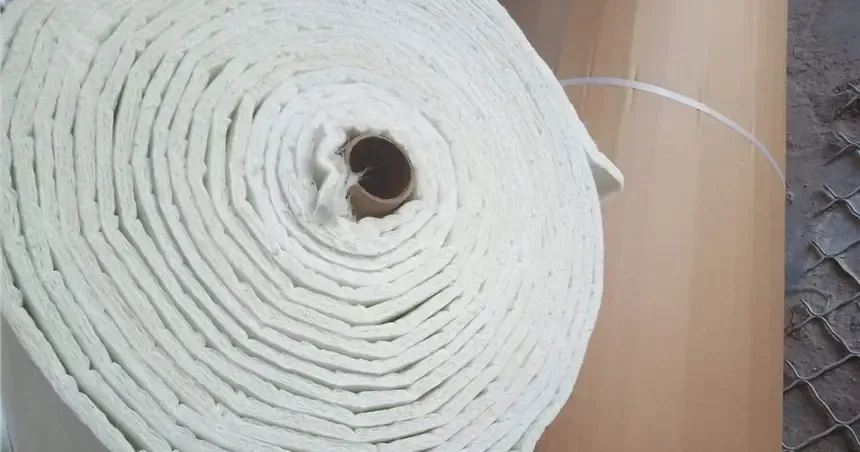
Aerogel is no longer a laboratory curiosity. In the last decade it has moved from aerospace prototypes into petrochemical pipelines, high-performance building envelopes and electric-vehicle battery packs. The reason is simple: aerogel insulation delivers the same thermal resistance as conventional materials in a fraction of the thickness, often with a lifecycle cost that is lower than the alternatives.
This article compares aerogel with the most common traditional insulation materials — rock wool, ceramic fiber and polyurethane (PU) foam — across two dimensions that matter most to engineers and procurement teams: thickness and cost. The data is drawn from field projects, published thermal-property tables and Rosewool's own work with high-temperature and cryogenic insulation systems.
1. Thermal Performance and Thickness Comparison
The starting point for any insulation comparison is thermal conductivity. The lower the value, the less material is needed to achieve a target heat loss or surface temperature.
| Material | Thermal Conductivity (W/m·K) | Typical Thickness for Equivalent Performance | Max Service Temperature |
|---|---|---|---|
| Aerogel blanket | 0.017 – 0.020 | 5 – 10 mm | –200 °C ~ 650 °C |
| Ceramic fiber blanket | 0.036 – 0.050 | 50 – 100 mm | 1,000 °C ~ 1,260 °C |
| Rock wool board / blanket | 0.030 – 0.050 | 80 – 120 mm | 600 °C ~ 700 °C |
| Polyurethane foam | 0.021 – 0.041 | 50 – 100 mm | –40 °C ~ 120 °C |
A practical example makes the difference clearer. A hot-oil pipeline that would traditionally be insulated with 180 mm of ceramic-fiber pipe covering plus metal cladding can often be redesigned with 20 mm of silica aerogel blanket backed by 30 mm of rock wool blanket — a total thickness reduction of roughly 60 %. That frees up walkway space, simplifies pipe supports and reduces cladding cost.
Why Aerogel Is So Much Thinner
Aerogel's advantage comes from its nano-porous structure:
- Pore size is below the mean free path of air, so gas-phase convection and conduction are strongly suppressed.
- Solid conduction is limited because the silica network touches at very few points.
- Infrared radiation can be reflected with opacifier additives, further cutting radiative heat transfer at elevated temperatures.
The combined effect is a material that conducts 50 %–80 % less heat than conventional insulation of the same thickness — or, equivalently, needs only one-fifth to one-half the thickness for the same performance.
Temperature and Moisture Stability
Aerogel also holds its performance in conditions that degrade traditional materials:
- High-temperature stability: linear shrinkage below 650 °C is negligible, whereas organic foams degrade and some mineral-fiber products compact over time.
- Hydrophobic behavior: water absorption is typically below 1 %, so the thermal conductivity does not spike after rain, steam leaks or wash-down cycles the way it does with open-cell foams.
For applications where both thermal performance and space are constrained — such as cryogenic pipe systems — this stability is a decisive advantage.
Where the application calls for a rigid pressed board rather than a flexible blanket, our ultra-thin nano microporous board guide covers the same thickness question from the board side.
2. Why Is Aerogel So Expensive?
The short answer: aerogel is expensive because of what it is made from, how it is dried and how little of it the world produces today. Those three factors account for most of the price gap against mineral wool, ceramic fiber or foam.
- The silica raw material. Aerogel begins as a silica sol-gel, built from high-purity silica precursors and specialized infrared opacifiers. Raw materials alone account for roughly 48 % of total aerogel cost — a far higher share than in basalt or slag-fibre insulation, whose feedstock is largely a by-product.
- The drying step. The liquid inside the wet gel has to be removed without collapsing its nano-porous skeleton. Supercritical CO₂ drying achieves this, but it is energy-intensive and runs in batches inside high-pressure vessels, so both the energy and the capital cost are carried in the unit price. Ambient-pressure drying routes now entering commercial use are cutting that energy demand by 30 % or more.
- Production scale. Rock wool and PU foam are made in vast commodity volumes that spread fixed costs thinly. Aerogel output is growing fast but is still a small fraction of that base, so per-kilogram overhead stays high.
Taken together, aerogel blanket can cost several times more than conventional insulation per square metre — yet because it needs only one-fifth to one-half the thickness, the installed premium is usually far smaller than the raw material price gap suggests, as the thickness comparison above shows.
All three drivers are also moving in the same direction: precursor supply is diversifying, drying energy is falling and capacity is expanding, which is why the aerogel insulation market keeps widening into mainstream projects. The cost outlook later in this article traces the projected trajectory.
3. Upfront Cost versus Lifecycle Cost
There is no way around it: aerogel has a higher purchase price per square metre than commodity insulation. The question is whether the higher first cost is recovered through operating savings.
Typical Installed Cost Ranges
| Application | Traditional Solution | Aerogel-Based Solution |
|---|---|---|
| Petrochemical pipeline | Mineral wool — baseline cost | Aerogel composite — roughly 1.8 times mineral wool |
| Building exterior wall | Rock wool system — higher installed cost | Aerogel composite panel — lower installed cost |
| EV battery pack | IXPE / MPP foam — lowest first cost | Aerogel thermal barrier — highest first cost |
Note: regional pricing varies significantly. Chinese domestic supply chains are currently the most competitive, while North American projects may carry a 25 %–30 % premium related to local manufacturing and policy incentives.
Lifecycle Economics: Where the Payback Appears
A 120 km crude-oil pipeline retrofit is a useful reference. The aerogel solution required a higher initial investment but reduced steam consumption by 18,500 tonnes per year, and the operating savings recovered that premium with a payback period of approximately 4.5 years, with continued savings for the remaining 15–20-year service life.
A 5,000 m² building-envelope comparison showed a similar pattern:
| Solution | First Cost | Mid-Life Maintenance | 25-Year Total |
|---|---|---|---|
| Aerogel composite | Highest | Minimal | Lowest |
| Rock wool | Lowest | Moderate | +40 % vs aerogel |
| PU foam | Middle | Moderate | Higher than aerogel |
In energy-intensive systems, aerogel usually wins on total cost of ownership even when it loses on purchase price.
4. Application-Specific Recommendations
Petrochemical Pipelines
- High-temperature lines above 400 °C: aerogel is usually the best economic choice because the energy savings repay the premium in 2.8–4.5 years.
- Medium-temperature lines below 400 °C: consider an aerogel + ceramic fiber composite to balance cost and performance.
- Corrosive environments: specify hydrophobic aerogel with compatible cladding to avoid the water-ingress failures common in mineral wool systems.
- Cryogenic and LNG duty: this is where the thickness premium pays back fastest, because at these temperatures foam and foam glass need two to three times the depth. See the cryogenic insulation applications guide for the full scenario split.
Building Envelopes
- High-performance or net-zero buildings: aerogel's thin profile maximizes usable floor area and often simplifies detailing around windows and balconies.
- Fire-critical facades: aerogel composites can achieve A1 non-combustible ratings, matching the safest mineral wool systems.
- Retrofit projects: the thinness minimizes the impact on existing floor plans and facade depths.
Electric Vehicle and Energy Storage Batteries
Thermal runaway containment is now a regulated requirement in many markets. Aerogel thermal barriers:
- Are as thin as 1 mm, preserving pack energy density.
- Can extend the time before cell-to-cell propagation from minutes to 30+ minutes.
- Meet A1 / non-combustible requirements without the toxic smoke associated with some polymer foams.
For large battery-energy-storage systems, this safety margin often justifies the higher material cost on its own.
5. Cost Outlook and Market Trends
The aerogel industry is scaling rapidly. Global production capacity is projected to exceed 330,000 m³ per year in the near term, with Chinese producers driving much of the expansion. As a result:
- Raw-material costs are expected to fall by roughly 30 % as precursor supply diversifies.
- New drying technology is cutting energy use by 30 %.
- EV-battery aerogel unit prices are forecast to fall further by 2027.
These trends mean the economic crossover point between aerogel and traditional insulation is moving into more mainstream applications every year.
6. How to Choose
Use this short decision tree when specifying insulation:
- Is space constrained? If yes, short-list aerogel.
- Is the operating temperature above 400 °C or below –100 °C? Aerogel's stability becomes more valuable.
- Is moisture or corrosion present? Hydrophobic aerogel reduces maintenance.
- Will the asset operate for more than 10 years? Lifecycle savings usually outweigh the higher first cost.
- Is first cost the only selection criterion? A conventional material may still be appropriate.
Rosewool supplies a range of high-performance insulation products including nano insulation board, rock wool blanket, ceramic fiber bulk and glass wool blanket. All products are backed by ISO 9001, CE and SGS certifications and manufactured from a supply base established in 1982.
For project-specific thickness and cost estimates, contact our technical team with your operating temperature, pipe diameter or wall assembly details.
For a decision table that also weighs microporous board and vacuum panels against aerogel, see our nano vs aerogel vs microporous selection guide.
Explore flexible aerogel and microporous insulation options in our aerogel insulation guide.
Frequently asked
Is aerogel insulation better than rock wool? +
Aerogel is thinner and has lower thermal conductivity, making it ideal where space is limited. Rock wool remains cost-effective for standard high-temperature applications and is often the better choice when first cost is the main driver.
Why is aerogel more expensive than traditional insulation? +
The higher cost comes from silica precursor raw materials (about 48 % of cost) and energy-intensive drying processes, especially supercritical CO₂ drying. New ambient-pressure drying and larger production volumes are rapidly narrowing the gap.
How much does aerogel insulation cost? +
Aerogel costs more per square metre than conventional insulation, but it is normally specified by performance rather than price alone: because it needs only one-fifth to one-half the thickness, the installed premium is far smaller than the material price gap. For petrochemical pipelines an aerogel system typically lands at roughly 1.8 times a mineral wool system. Send your operating temperature, pipe diameter or wall assembly and we will return a project-specific figure.
How thin can aerogel insulation be? +
For many industrial applications, 5–10 mm of aerogel blanket can replace 50–100 mm of mineral wool or ceramic fiber. In EV batteries, aerogel thermal barriers as thin as 1 mm are in commercial use.
What is the typical payback period for aerogel insulation? +
In energy-intensive systems such as hot pipelines, payback periods of 2.8–4.5 years are common. In building envelopes, aerogel often has the lowest 25-year total cost despite a higher first cost.
Can aerogel completely replace rock wool or ceramic fiber? +
Not always. Aerogel excels where space, weight or moisture resistance is critical. For very high temperatures above 650 °C, ceramic fiber is still required. A composite design often gives the best balance of performance and cost.
Request a quote
Interested in our insulation solutions? Send us your requirements and our team responds within one business day.