
Nano vs Aerogel vs Microporous: Choosing the Right Ultra-Thin Insulation
Aerogel leads at room temperature at 0.013–0.021 W/(m·K), microporous board wins above 600 °C at 0.030–0.038. Where each one pays back — and where each one fails.
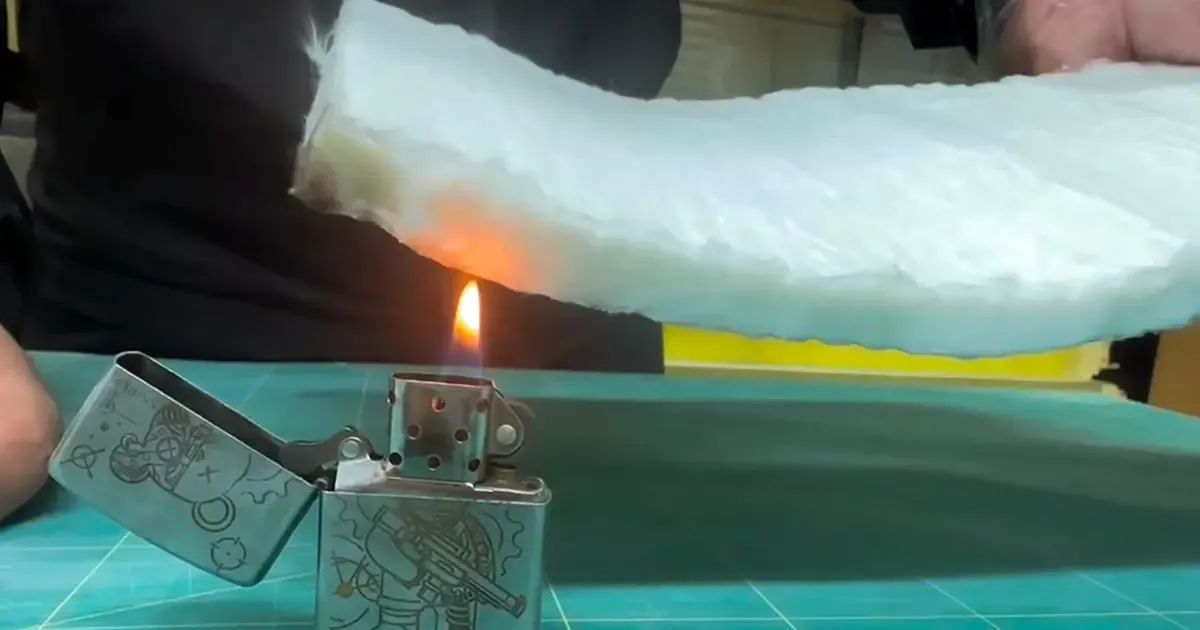
Specifying ultra-thin insulation usually starts the same way: the thermal calculation says you need 100 mm, the drawing says you have 35 mm, and someone asks which of the three high-performance families will close the gap. The honest answer is that all three can, and they fail in completely different places. Those thin-format advantages translate directly to spacecraft design — see our satellite and spacecraft thermal insulation materials guide.
This comparison is written for that moment. It puts nano insulation, aerogel and microporous board side by side on the five axes that actually decide a specification — thermal conductivity, temperature capability, density and strength, cost and service life, and the application each one is genuinely built for — then turns the result into a selection table you can take to a supplier.
For the full material landscape beyond these three families, see our top 10 high-temperature insulation materials guide.
What "Ultra-Thin" Actually Buys You
Conventional mineral wool sits at 0.035–0.047 W/(m·K) and ceramic fibre at 0.038–0.060 W/(m·K) in service. All three high-performance families beat that by a wide margin, which is why they are described as ultra-thin: for the same heat loss and the same shell temperature, a lower conductivity translates directly into less thickness.
The rule of thumb used across the industry is that roughly 10 mm of a high-performance material replaces about 50 mm of conventional insulation. That five-to-one ratio is what unlocks retrofits that were previously impossible — a pipe run that could never take 100 mm of mineral wool can usually take 20 mm of something better.
The catch is that the ratio only holds while the material stays inside its design envelope. Push aerogel past its temperature ceiling and the ratio collapses. Put a vacuum panel somewhere it gets punctured and it collapses faster. The rest of this guide is about finding the envelope for each family.
The Three Families at a Glance
Nano insulation is an umbrella term rather than a single product. It covers nanofibre materials — SiO₂ and ZrO₂ nanofibre membranes, aerogel-fibre textiles — mesoporous materials with pore sizes below 70 nm, and vacuum insulation panels (VIP), which are the extreme case at 0.002–0.004 W/(m·K). Pore structure in the nanoporous grades runs 20–50 nm, which is why some suppliers classify them as a microporous sub-type.
Aerogel is a nanostructured solid network with porosity of 80–99.8 % and pore sizes of 20–50 nm. It is supplied as silica aerogel for long-term duty at 400–600 °C, alumina aerogel for 600–800 °C, and as fibre-reinforced blanket or board composites that make the material handleable. Aerogel has the lowest thermal conductivity of any commercial solid, and at room temperature it is below still air.
Microporous insulation is a pressed inorganic powder composite — fumed silica in most commercial grades — with pore sizes typically 7–12 nm or 30–60 nm depending on the grade, loaded with an infrared opacifier and sealed inside a barrier envelope. It does not need vacuum encapsulation to reach its numbers, and it is the strongest of the three in compression. For a deep dive on this family, see our nano microporous insulation guide.
The single most important structural difference: aerogel and nanofibre products are flexible or semi-flexible, while microporous board is rigid. That one property decides more specifications than any conductivity number.
Thermal Conductivity at 25 °C and at 800 °C
Two temperatures tell the whole story, because the ranking reverses between them.
| Property | Nano | Aerogel | Microporous |
|---|---|---|---|
| Thermal conductivity at 25 °C | 0.018–0.025 W/(m·K) | 0.013–0.021 W/(m·K) | 0.018–0.021 W/(m·K) |
| Thermal conductivity at 800 °C | 0.035–0.052 W/(m·K) | 0.080–0.090 W/(m·K) | 0.030–0.038 W/(m·K) |
| VIP sub-class conductivity | 0.002–0.004 W/(m·K) | — | — |
At room temperature, aerogel wins. At 0.013–0.021 W/(m·K) it is the lowest of the three and, remarkably, below the 0.025 W/(m·K) of still air. Nano and microporous sit close together at 0.018–0.025 and 0.018–0.021 respectively. If your duty is ambient to roughly 200 °C, aerogel is the correct default.
At 800 °C, the order inverts completely. Microporous board holds 0.030–0.038 W/(m·K) — roughly a third to a quarter of aerogel's 0.080–0.090. The reason is structural: the aerogel skeleton loses stability above about 600 °C, the nanostructure begins to collapse, and conductivity climbs steeply. Microporous board has no such transition because it is a pressed powder with an opacifier rather than a delicate network.
This is the single most common specification error in the category. A buyer compares datasheets at 25 °C, picks aerogel on the strength of that number, and installs it at 700 °C where microporous board would have given two to four times the insulating effect per millimetre.
Temperature Limits and Long-Term Stability
Short-term peak capability and long-term service temperature are different numbers, and conflating them is the second most common error.
| Nano | Aerogel | Microporous | |
|---|---|---|---|
| Short-term peak | 1 300 °C (nanofibre) | 1 200–1 400 °C (composite) | 1 200–1 400 °C |
| Long-term service | ≤ 800 °C (VIP), 800–1 000 °C (nanofibre) | 400–600 °C (silica), 600–800 °C (alumina) | 1 000–1 200 °C |
| Structural note | Vacuum degrades over time | Skeleton collapses above ~600 °C | Stable, no transition |
Microporous board has the highest long-term service temperature of the three at 1 000–1 200 °C, and it is the reason the material dominates steel and petrochemical duty. Silica aerogel is a 400–600 °C material in continuous service; the 1 200–1 400 °C figures quoted for aerogel apply to short-term peaks and to alumina-composite grades, not to continuous duty on a silica blanket.
VIP sits apart. Its conductivity is extraordinary, but performance depends on maintaining vacuum, and vacuum decays. A VIP is the right answer where you need maximum insulation in minimum thickness at low temperature and can guarantee the panel is never cut, punctured or crushed — cold-chain containers and controlled-temperature enclosures, not plant pipework.
For how these limits map onto the conventional fibre and wool families, see our high-temperature insulation wool temperature ratings guide.
Density, Strength and Handling on Site
| Property | Nano | Aerogel | Microporous |
|---|---|---|---|
| Density | 7.1–320 kg/m³ (VIP ≈ 450 kg/m³) | 3–250 kg/m³ | 200–320 kg/m³ |
| Compressive strength | 0.14–0.25 MPa (VIP ≤ 0.5 MPa) | 0.3–8 MPa (composite) | 3.5–5 MPa |
| Puncture resistance | > 100 N | 100–500 N (composite) | 100–150 N |
| Fabrication on site | Limited — VIP cannot be cut | High — cuts and wraps | High — cuts and re-seals |
| Service life | 10–15 years (VIP) | 15–20 years | 10–15 years |
Aerogel is the lightest of the three at 3–250 kg/m³, which matters where structural load is the constraint. But raw aerogel is brittle and is essentially always used as a composite with a reinforcing fibre or scrim; the quoted 0.3–8 MPa compressive range applies to those composites, and mechanical performance falls as the temperature grade rises.
Microporous board is the heaviest at 200–320 kg/m³ and by far the strongest at 3.5–5 MPa. That strength is what makes it usable as a load-bearing backup layer, on vibrating equipment, and in positions where the insulation is clamped or bolted rather than protected inside a casing.
The fabrication line matters more than buyers expect. VIP cannot be cut on site at all — a cut edge is a failed panel, so every dimension has to be ordered. Aerogel cuts and wraps easily, which is why it suits complex geometry. Microporous board cuts with standard tools, but every cut face is an unsealed face and has to be re-sealed with foil tape before installation.
Cost, Service Life and Lifecycle Value
On first cost per square metre the ranking is stable across most markets: aerogel carries the highest material cost, driven largely by supercritical drying and the capital equipment behind it; microporous board sits in the middle and typically runs about 15 % below fibre-reinforced aerogel composites at comparable performance; VIP is the outlier, generally an order of magnitude above conventional insulation and used only where nothing else fits.
First cost is the wrong comparison, and every experienced buyer in this category knows it. The right one is cost per unit of thermal resistance over the planned service life, which brings three other factors in:
- Thickness reduction. Less insulation means less support steel, less cladding, smaller clearances and faster installation.
- Service life. Aerogel quotes 15–20 years, nano and microporous 10–15 years, against three to five for conventional insulation.
- Energy. For retrofit work, the reduction in heat loss usually shows up as a double-digit percentage saving on the insulated system, and payback on the premium material is often measured in a small number of years rather than decades.
Aerogel is the rational choice where space is genuinely the binding constraint and the duty is moderate — the premium buys millimetres nothing else can. Microporous board wins the lifecycle argument on continuous high-temperature industrial duty, where the combination of 2–4 times the insulating effect per millimetre and a long stable service life outweighs a lower first cost that delivers less insulation. VIP only wins where its unique conductivity is the only way to meet the specification at all.
For a worked comparison of how thickness assumptions move the economics against conventional materials, see our aerogel versus traditional insulation thickness and cost analysis.
Where Each Material Wins: Four Real Scenarios
Steel — ladles, converters and heat treatment. Furnace interiors run at 1 000–1 200 °C, the shell has to stay far below that, and the insulation has to survive mechanical abuse. Microporous board dominates here: it holds 1 000–1 200 °C continuously, carries 3.5–5 MPa in compression, and does not lose geometry at temperature. Measured results on ladle duty show molten steel temperature drop falling from more than 2 °C per minute to about 1 °C per minute, with shell temperature down 70–90 °C.
Process pipework and steam lines at 300–400 °C. Aerogel is usually the answer. On a 350 °C steam line, aerogel has cut required insulation thickness by roughly two thirds against conventional material, and because it is flexible it wraps valves, flanges and irregular geometry without pre-formed shapes. The duty is comfortably inside aerogel's long-term range, so the room-temperature advantage holds.
Battery packs and thermal runaway barriers. Aerogel is the default, normally encapsulated in a polymer film so that the material cannot shed dust into the pack. Its flexibility, thin section and low-temperature performance suit the application. Microporous board withstands 1 200 °C flame impingement better than aerogel does, but its thickness and rigidity limit it in pack design, so it appears only where the barrier is a separate structural element.
Aerospace and defence. Both appear. Alumina-composite aerogel is used for thermal shielding and engine bay insulation where weight is critical, while rigid microporous board is supplied into certified aerospace positions under quality systems such as AS 9100. The deciding factor is usually whether the part needs to be light and shaped (aerogel) or rigid and load-bearing (microporous).
For applications at the boundary between these families, our pyrogel versus mineral wool comparison walks through a worked cost-and-lifecycle case.
Selection Cheat Sheet and Sourcing Checklist
Start with temperature, then space, then mechanics:
| If your binding constraint is | Choose | Because |
|---|---|---|
| Space, at duty below 400 °C | Aerogel | Lowest conductivity at 0.013–0.021 W/(m·K) |
| Continuous duty above 600 °C | Microporous | 0.030–0.038 W/(m·K) at 800 °C, stable to 1 200 °C |
| The insulation must carry load | Microporous | 3.5–5 MPa compressive, rigid board |
| Weight is critical | Aerogel | 3–250 kg/m³, lightest of the three |
| Complex geometry, valves, flanges | Aerogel | Cuts and wraps on site |
| Vibration or frequent replacement | Aerogel or nanofibre | Flexible, mechanically durable |
| Absolute minimum thickness, low temperature | VIP (nano) | 0.002–0.004 W/(m·K), but never cut it |
| Maximum lifecycle value in static high-temperature plant | Microporous | Stable, strong, long-lived |
Five things to put in the enquiry:
- Operating temperature, continuous and peak. Not "high temperature" — the actual numbers. This single input eliminates two of the three families most of the time.
- Geometry and available clearance. Pipe diameter or vessel outside diameter, plus the millimetres you actually have.
- Mechanical duty. Is the insulation protected inside a casing, or is it clamped, bolted, walked on or vibrating?
- Substrate and environment. Austenitic stainless steel means a chloride limit of 50 mg/kg or below. Water exposure means a hydrophobic grade or a waterproof jacket.
- Volume and form. Board, blanket, pre-formed pipe section or cut shape, and annual quantity. Custom forms are routine but they move both lead time and minimum order quantity.
Ask for the conductivity curve across your operating range, not a single value at 25 °C, and ask for lot-level test certificates rather than typical values. The gap between grades in this category is not visible on a datasheet.
Closing
Aerogel wins on conductivity at room temperature and on flexibility. Microporous board wins above 600 °C, in compression, and on lifecycle cost in continuous industrial service. Nano covers everything from nanofibre mats to vacuum panels, and the VIP sub-class is unmatched at low temperature and unusable the moment it is cut.
If you take one thing from this comparison: specify against your operating temperature, not against the headline conductivity figure. The ranking genuinely reverses between 25 °C and 800 °C, and that reversal is where most of the wasted spend in this category happens.
Send us your operating temperature, geometry, available clearance and annual volume, and our engineers will return a thickness calculation, a sample plan and a quotation within two weeks.
For terminology used across these product families, see our insulation glossary.
The board format of that family is documented on nano insulation board with its thickness steps for cyclic service.
Frequently asked
Which is better, aerogel or microporous insulation?
It depends entirely on temperature. At 25 °C aerogel is best at 0.013–0.021 W/(m·K), below still air. At 800 °C microporous board is best at 0.030–0.038 W/(m·K) against aerogel's 0.080–0.090, because the aerogel skeleton loses stability above roughly 600 °C. Below 400 °C choose aerogel; above 600 °C choose microporous.
What is the difference between nano and microporous insulation?
"Nano insulation" is an umbrella term covering nanofibre materials, mesoporous materials and vacuum insulation panels, while microporous insulation is a specific pressed inorganic powder composite with an infrared opacifier. Some nanoporous grades have pore sizes of 20–50 nm and are marketed as a microporous sub-type, which is why the two names overlap in supplier literature.
How much thinner is ultra-thin insulation than mineral wool?
As a working rule, about 10 mm of a high-performance material replaces roughly 50 mm of conventional insulation for the same heat loss. The ratio only holds inside the material's design envelope — aerogel above 600 °C and VIP once punctured both lose the advantage quickly.
Can aerogel be used at 800 °C?
Not in continuous service. Silica aerogel is rated for long-term duty at 400–600 °C, and alumina grades reach 600–800 °C. The 1 200–1 400 °C figures quoted for composite aerogels are short-term peak values. For continuous duty at 800 °C, microporous board at 1 000–1 200 °C is the correct specification.
Is microporous board stronger than aerogel?
Yes, substantially. Microporous board reaches 3.5–5 MPa in compression against 0.3–8 MPa for composite aerogel, and it is rigid rather than flexible. That is why microporous board is used where the insulation is clamped, bolted or acting as a load-bearing backup layer, and why aerogel is used where flexibility and conformability matter more.
Is vacuum insulation panel worth the cost?
Only where its 0.002–0.004 W/(m·K) conductivity is the only way to meet the specification, and where the panel will never be cut, punctured or crushed. VIP typically costs an order of magnitude more than conventional insulation, cannot be cut on site, and its performance depends on vacuum that decays over time.
Which material lasts longest in service?
Aerogel quotes the longest at 15–20 years, with nano and microporous at 10–15 years. All three substantially exceed the three to five years typical of conventional insulation. The failure modes that shorten service are different: envelope damage and water ingress for microporous, skeleton collapse above temperature for aerogel, and vacuum loss for VIP.
What should I send to get an accurate quotation?
Continuous and peak operating temperature, the geometry — pipe diameter or vessel outside diameter — the clearance available, whether the insulation is protected or load-bearing, the substrate including whether it is stainless steel, any water exposure, the required form, and annual volume. With those items a producer can return a thickness calculation and a firm price rather than a range.
Explore flexible aerogel and microporous insulation options in our aerogel insulation guide.
Related guides: aerogel vs traditional insulation.
Frequently asked
Which is better, aerogel or microporous insulation? +
It depends entirely on temperature. At 25 °C aerogel is best at 0.013–0.021 W/(m·K), below still air. At 800 °C microporous board is best at 0.030–0.038 W/(m·K) against aerogel's 0.080–0.090, because the aerogel skeleton loses stability above roughly 600 °C. Below 400 °C choose aerogel; above 600 °C choose microporous.
What is the difference between nano and microporous insulation? +
"Nano insulation" is an umbrella term covering nanofibre materials, mesoporous materials and vacuum insulation panels, while microporous insulation is a specific pressed inorganic powder composite with an infrared opacifier. Some nanoporous grades have pore sizes of 20–50 nm and are marketed as a microporous sub-type, which is why the two names overlap in supplier literature.
How much thinner is ultra-thin insulation than mineral wool? +
As a working rule, about 10 mm of a high-performance material replaces roughly 50 mm of conventional insulation for the same heat loss. The ratio only holds inside the material's design envelope — aerogel above 600 °C and VIP once punctured both lose the advantage quickly.
Can aerogel be used at 800 °C? +
Not in continuous service. Silica aerogel is rated for long-term duty at 400–600 °C, and alumina grades reach 600–800 °C. The 1 200–1 400 °C figures quoted for composite aerogels are short-term peak values. For continuous duty at 800 °C, microporous board at 1 000–1 200 °C is the correct specification.
Is microporous board stronger than aerogel? +
Yes, substantially. Microporous board reaches 3.5–5 MPa in compression against 0.3–8 MPa for composite aerogel, and it is rigid rather than flexible. That is why microporous board is used where the insulation is clamped, bolted or acting as a load-bearing backup layer, and why aerogel is used where flexibility and conformability matter more.
Is vacuum insulation panel worth the cost? +
Only where its 0.002–0.004 W/(m·K) conductivity is the only way to meet the specification, and where the panel will never be cut, punctured or crushed. VIP typically costs an order of magnitude more than conventional insulation, cannot be cut on site, and its performance depends on vacuum that decays over time.
Which material lasts longest in service? +
Aerogel quotes the longest at 15–20 years, with nano and microporous at 10–15 years. All three substantially exceed the three to five years typical of conventional insulation. The failure modes that shorten service are different: envelope damage and water ingress for microporous, skeleton collapse above temperature for aerogel, and vacuum loss for VIP.
What should I send to get an accurate quotation? +
Continuous and peak operating temperature, the geometry — pipe diameter or vessel outside diameter — the clearance available, whether the insulation is protected or load-bearing, the substrate including whether it is stainless steel, any water exposure, the required form, and annual volume. With those items a producer can return a thickness calculation and a firm price rather than a range.
Request a quote
Interested in our insulation solutions? Send us your requirements and our team responds within one business day.