
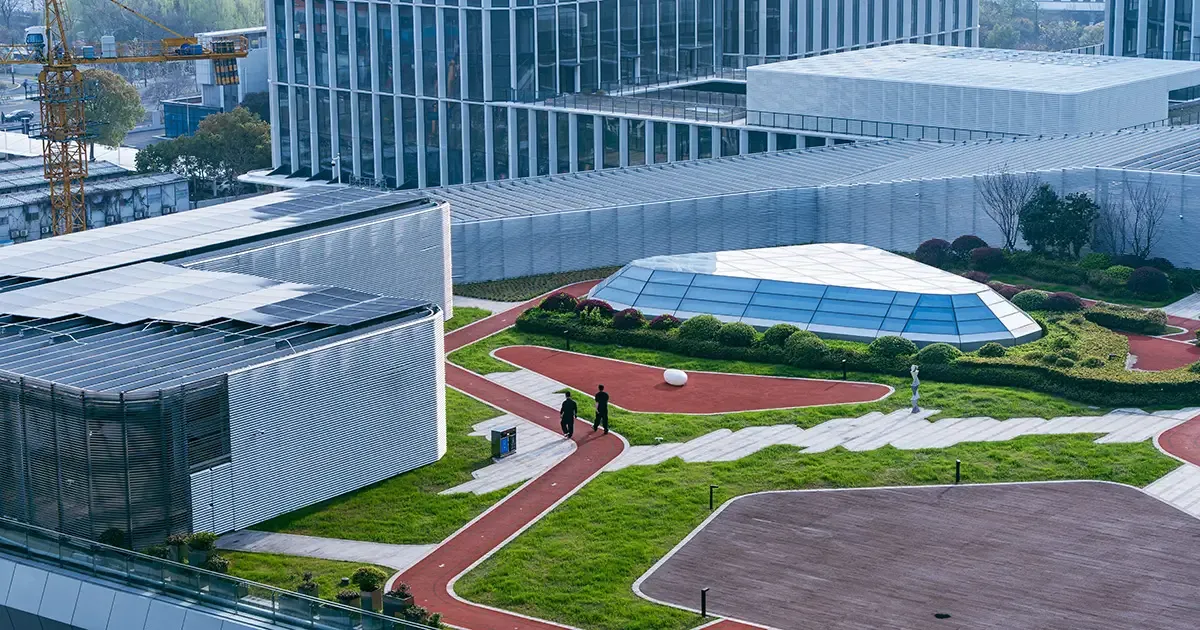
Green Building & Retrofit
Energy-efficient insulation and retrofit solutions — industrial furnace energy-saving coatings, steel-structure fire wrapping, fire-door cores and partition walls using ceramic fiber and calcium silicate.
Green building and retrofit work pairs energy efficiency with fire safety. Industrial furnaces get thin high-temperature coatings that cut heat loss; existing buildings add fire wrapping and partition fills without major reconstruction. The aim is lower operating energy and stronger code compliance.
Material Comparison
| Material | Best fit | Service temp | Key advantage |
|---|---|---|---|
| Ceramic fiber | Furnace coatings, equipment, facades | 1100–1430 °C | Thin, high-temp energy saving |
| Calcium silicate | Steel wrap, doors, partitions | up to 1000 °C | Structural fire, durable |
Application Scenarios
Green Building & Retrofit Application Scenarios
- Industrial furnace energy-saving coating — a high-temp insulation coating (≈0.03 W/m·K, rated to 1000 °C) applied to furnace shells cuts heat loss in retrofit projects.
- Industrial equipment energy layers — ceramic fiber on boilers and thermal pipes reduces standby losses.
- Building exterior insulation layers — ceramic fiber and other systems raise facade efficiency.
- Steel-structure fire wrapping — calcium silicate slows the temperature rise of structural steel, protecting load capacity.
- Fire-door cores — calcium silicate boards with high fire rating and stable structure.
- Fire partition walls — calcium silicate fills interior fire divisions for code compliance.
Related Articles
Standards & Compliance
Green Building Insulation Standards
Sustainable and retrofit projects are judged on three axes at once: energy performance, fire safety and documented environmental impact. The certifications that specifiers ask for reflect all three, and insulation choices feed directly into the credit calculations.
- Energy codes — ASHRAE 90.1 and the EU EPBD — set minimum envelope performance and continuous-insulation requirements by climate zone; insulation is the primary control layer for thermal resistance.
- EN 13501-1, Class A1 — non-combustible mineral wool supports fire-safe, code-compliant envelopes, especially where continuous insulation crosses structural members.
- LEED and BREEAM — award points for optimized energy performance and for transparent material documentation, including Environmental Product Declarations (EPDs) and low-emitting, low-VOC products.
- EPDs and ISO 14025 / ISO 14044 — life-cycle assessments that let a project claim the Materials and Resources credits tied to responsible sourcing and embodied carbon.
We support green-building submissions with documented thermal performance, A1 fire classification and EPD-ready product data for our mineral wool and calcium silicate ranges.
Material Selection Guide
How to Select Green Building Insulation
- Target the energy code first. Meet or exceed ASHRAE 90.1 or EPBD envelope thresholds; continuous insulation that breaks thermal bridges is usually the fastest route to credits.
- Keep the envelope fire-safe. Specify A1 non-combustible mineral wool for assemblies that cross structural members or sit in high-occupancy zones.
- Document the material. Collect EPDs and low-VOC declarations early; they are required for LEED and BREEAM Materials and Resources credits.
- Match temperature to the system. Ceramic fiber serves high-temperature equipment and facade retrofits up to 1430 °C; calcium silicate provides structural fire wrapping and durable partition fills.
- Favor durability and low load. Lightweight, stable boards and coatings upgrade existing buildings with minimal added structural burden.
See our ceramic fiber blanket and calcium silicate board for energy-saving and fire-safe retrofit systems.
Related Applications
Sustainable construction pairs thermal efficiency with healthy indoor air and fire safety. Related building-sector applications:
- Building insulation for envelopes, roofs, and mechanical systems
- Dust and emission control for cleaner, low-emission facilities
- Fire protection for fire-rated assemblies in occupied structures
- Pipe insulation for HVAC and plumbing pipe networks
Why Rosetexwool
Key Benefits
Why Green Building & Retrofit operations choose Rosetexwool insulation solutions.
Energy Efficiency
Insulating coatings and wraps on boilers and pipes cut heat loss and reduce utility bills.
Fire Protection
Calcium silicate cladding on steel structures and fire doors slows heating, preserving structural integrity.
Retrofit Friendly
Lightweight boards and coatings upgrade existing buildings with minimal added structural load.
Long Service Life
Durable, stable systems extend renovation payback and asset life.
Support
Frequently asked questions
How do you improve industrial furnace efficiency? +
High-temperature insulating coatings (conductivity about 0.03 W/m·K, up to 1000°C) plus ceramic fiber linings reduce furnace shell heat loss.
Can you fire-protect steel structures? +
Yes. Calcium silicate cladding wraps steel columns and beams, slowing temperature rise and maintaining load capacity.
Are your products eco-friendly? +
We use asbestos-free calcium silicate and low-impact ceramic fiber aligned with green-building and sustainability goals.
Does insulation help earn LEED or BREEAM credits? +
Yes. Insulation contributes to Energy and Atmosphere credits through optimized thermal performance and to Materials and Resources credits through EPDs, recycled content and low-emitting documentation. A continuous, fire-safe envelope that breaks thermal bridging also supports additional innovation credits.
Are your insulation products non-combustible and low-emission? +
Our mineral wool and calcium silicate products are A1 non-combustible under EN 13501-1 and are formulated to be low-emitting and low-VOC, supporting indoor air-quality credits in LEED and BREEAM.
Ready to start? Tell us your specs — we'll quote within 24 hours.
Get pricing
Request a quote for Green Building & Retrofit solutions
Tell us about your green building & retrofit project requirements — our team responds within one business day.