
Petrochemical Reformer Furnace Reline — A Complete Ceramic Fiber Module Solution
How Rosetexwool relined a Middle East reformer furnace in 12 days with 1,200 ceramic fiber modules, achieving sub-65°C shell temps.
Project Overview
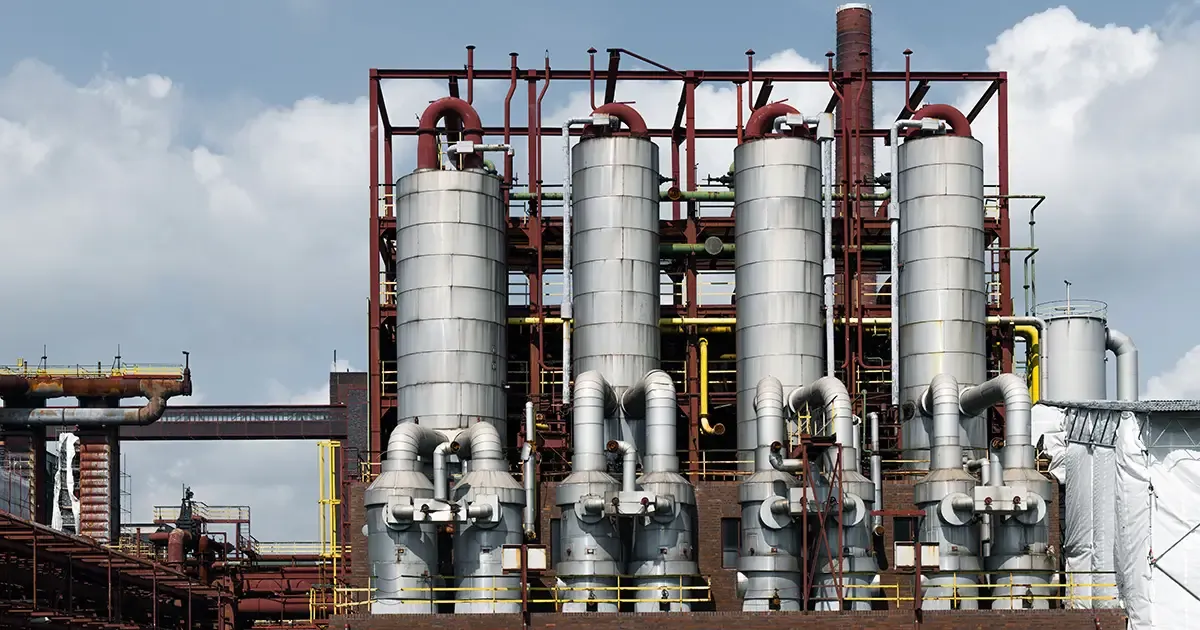
In Q3 2025, Rosetexwool completed a major reformer furnace reline project for a petrochemical plant in the Middle East. The facility operates a continuous catalytic reformer (CCR) producing high-octane gasoline components, with design temperatures reaching 1260 °C in the radiant section. The existing lining had suffered thermal degradation after 8 years of service, resulting in excessive shell temperatures and energy loss.
"Rosetexwool's engineering support during material selection was exceptional. Their team was on-site for installation supervision and the furnace has performed above expectation since restart." — Senior Project Engineer, Client
Challenge
The client faced three key constraints:
- Thermal cycling severity — the reformer undergoes 6–8 planned shutdowns per year, requiring insulation that withstands repeated thermal shock without spalling.
- Shell temperature target — the plant's energy management program mandated shell temperatures below 65 °C at any point, with an ambient reference of 25 °C.
- Installation window — a tight 14-day turnaround window during the scheduled plant turnaround, with 24-hour shift work required.
Solution
Radiant Section — Ceramic Fiber Module System
We supplied 1430 °C-grade ceramic fiber modules (300×300×300mm, 210 kg/m³ density) with SS310 stainless steel anchoring for the radiant wall and arch. The modules were factory pre-compressed to 35% compression for simplified field installation. A 25mm ceramic fiber blanket backing layer (128 kg/m³) was installed behind modules to achieve the target cold-face temperature.
Design Temperature
1260 °C
Radiant section operating
Shell Temperature
< 65 °C
Post-installation measured
Module Density
210 kg/m³
Optimal for radiant duty
Installation Time
12 days
vs 14-day target
Convection Section & Breaching
For the convection section and hot gas breaching (operating at 600-900 °C), we supplied calcium silicate pipe sections (100mm thickness, 245 kg/m³ density) for all steam and transfer lines, and rock wool blankets (100kg/m³, 50mm thickness) with aluminium cladding for large-diameter ducting.
| Material | Location | Spec | Qty |
|---|---|---|---|
| Ceramic Fiber Module | Radiant wall & arch | 1430 °C, 300×300×300mm, 210kg/m³ | 1,200 pcs |
| Ceramic Fiber Blanket | Backup layer | 1430 °C, 25mm, 128kg/m³ | 380 m² |
| Calcium Silicate Pipe | Steam & transfer lines | 100mm, 245kg/m³ | 620 m |
| Rock Wool Blanket | Hot gas ducting | 50mm, 100kg/m³ | 480 m² |
Installation & Quality Control
Our technical team provided on-site supervision for the full 12-day installation , ensuring proper module anchoring, compression release, and joint sealing. Key quality metrics verified during installation:
- Anchor weld integrity — 100% visual inspection + 10% random dye penetrant testing
- Module compression release — measured post-release expansion to ensure zero-gap joints
- Blanket backing layer overlap — minimum 100mm overlap at all joints
- Shell temperature survey — thermographic scan of full radiant shell 48 hours after restart
Results
- Shell temperatures reduced by an average of 28 °C compared to the previous lining, with all points under the 65 °C target.
- Installation completed in 12 days — two days ahead of the 14-day turnaround window, enabling earlier restart.
- Estimated fuel savings of approximately 3.5% based on reduced heat loss through the furnace shell, per the client's energy balance model.
- Zero non-conformance reports (NCRs) during the entire quality inspection process.
This case study demonstrates Rosetexwool's capability to deliver complete insulation systems for critical high-temperature petrochemical applications, from material selection through on-site installation support.
Why the CCR reactor behind this furnace drove every one of those material decisions — including the cold-wall alternative — is explained in our guide to hot-wall and cold-wall reformer insulation.
Related Reading
This reformer reline came down to three material decisions we've since documented in depth:
- Ceramic Fiber vs Rock Wool for Furnace Linings — why 1430 °C ceramic fiber modules beat rock wool in the radiant section.
- Best Heat-Resistant Materials for Furnace (2026 Guide) — how to grade insulation by furnace operating temperature.
- Calcium Silicate vs Ceramic Fiber Board — how these two high-temperature materials compare across furnace applications.
Explore more on our Petrochemical Insulation application page.
For a deeper dive into forms, temperature ratings, and application guides, see our ceramic fiber insulation hub.
Frequently asked
What ceramic fiber grade is recommended for reformer furnace radiant sections? +
For reformer radiant sections operating at 1100-1260 °C, we recommend 1430 °C-grade ceramic fiber modules (210 kg/m³) with a 25mm 1430 °C-grade blanket backing layer. This combination provides the thermal shock resistance required for frequent cycling and achieves shell temperatures below 65 °C. For less severe service (below 1150 °C), 1400 °C-grade modules may be sufficient.
How long does a typical reformer furnace reline take? +
A complete radiant section reline typically requires 10-14 days with 24-hour shift work, depending on furnace size and access. Pre-planning is critical — we recommend ordering materials at least 6-8 weeks before the turnaround, confirming anchor patterns with the engineering team, and having installation tools pre-staged. Rosetexwool can provide on-site supervision to ensure quality and schedule adherence.
Can you provide on-site installation supervision? +
Yes. Our technical team provides on-site supervision for large-scale installation projects including furnace relines, boiler linings, and kiln insulation. We cover anchor welding inspection, module compression release verification, joint sealing, and final thermographic survey. Supervision can be arranged as part of the material supply contract.
Request a quote
Interested in our insulation solutions? Send us your requirements and our team responds within one business day.