
Refractory Insulation Materials: Types, Ratings & Applications
Refractory insulation materials explained: ceramic fiber, PCW, calcium silicate, rock wool and microporous grades compared by rating, conductivity and applications.
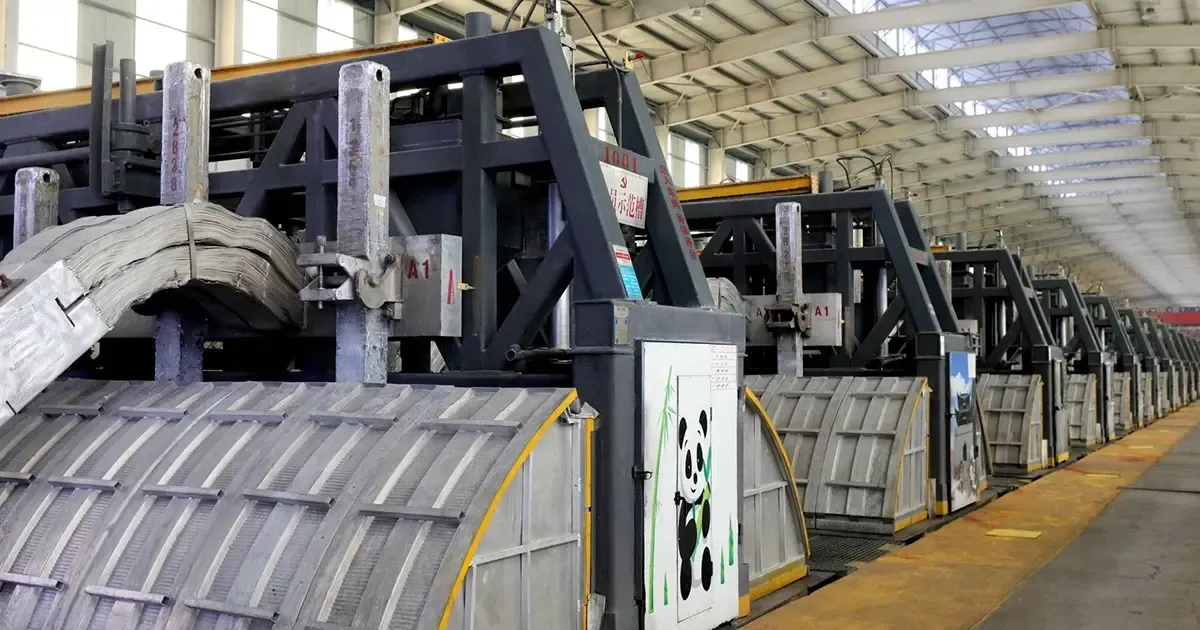
Industrial high-temperature equipment lives in a particular band of temperatures where the insulating material must do two jobs at once — keep the heat inside the process and keep its own shape while doing it. Materials that meet this dual requirement sit in a category the industry calls refractory insulation materials (or, when the dual role is explicit, insulating refractory). This article is a practical map of that category: where the boundary lies between "refractory" and "plain insulation", which families dominate the band between 800 °C and 1,800 °C, how each family is rated, and how engineers actually pick one.
1. What "Refractory Insulation" Actually Means
The word refractory has a strict, technical definition. A refractory is a non-metallic material that resists high temperature without melting or deforming under load, usually defined in laboratory pyrometric-cone equivalents (ISO 2245 and ASTM C24 both set the entry bar around 1,500 °C). That is the language used in furnaces, kilns and metallurgical vessels.
In industrial insulation practice, the term refractory insulation material is used more loosely to mean a material that is rated for service at or above 800 °C and that also delivers useful thermal-insulation performance — typically a thermal conductivity well below 0.10 W/(m·K). The 800 °C line is a pragmatic threshold used by procurement and engineering teams to separate these "hot-face" grades from regular industrial insulation such as standard rock wool or mineral wool pipe sections.
The key point is that the material has to do both jobs: take the heat, and stop the heat moving through it. Traditionally, refractories were dense and load-bearing, made to last at 1,500 °C-plus temperatures in furnaces where they carried structural load. Insulating refractories trade some of that load capacity for low thermal conductivity — they are light, low-density, and sit behind or alongside a denser working lining.
2. The Six Families That Dominate 800 °C and Above
Six material families cover almost every practical application in this temperature band. The differences come down to chemistry, maximum service temperature, density and cost.
| Family | Main chemistry | Long-term limit | Short-term peak | λ at 400 °C (W/(m·K)) | Bulk density (kg/m³) | Dominant uses |
|---|---|---|---|---|---|---|
| Ceramic fiber (aluminosilicate) | SiO₂ 43–55 %, Al₂O₃ 45–57 % | 800–1,260 °C | to 1,430 °C (high-alumina) / 1,600 °C (zirconia-bearing) | 0.035–0.080 | 64–200 | Furnace linings, pipe wraps, reformer tubes |
| Polycrystalline wool (PCW) | Al₂O₃ 72–97 % | 1,260–1,700 °C | 1,800–1,900 °C | 0.045–0.075 | 80–400 | Petrochemical crackers, ceramic kilns, re-entry hardware |
| Calcium silicate | CaO + SiO₂ | 800–1,100 °C | – | 0.045–0.065 | 170–1,000 | Cement kilns, glass tanks, fire-rated boards |
| Microporous calcium silicate | CaO + SiO₂ + opacifiers | 950–1,100 °C | – | 0.020–0.035 | 170–230 | Process piping, distillation columns |
| Rock wool, high-temperature grade | SiO₂ 44–66 %, Al₂O₃ 15–25 % | 600–800 °C | – | 0.035–0.055 | 40–200 | Industrial pipework, fire walls |
| Aerogel composite blanket | SiO₂ aerogel + fiber matrix | to ~1,000 °C | – | 0.020–0.025 | 130–180 | Thinnest envelope, retrofit upgrades |
Two practical observations follow directly from this table. First, rock wool stops at about 800 °C — above that, ceramic fiber or PCW is the only realistic choice. Second, where the application crosses 1,400 °C in continuous service, ceramic fiber gives way to PCW (or to a layered construction with dense refractories behind). Our PCW modules guide covers the install side of that band in detail. For the 1600 °C-and-above band where even PCW reaches its edge, see our guide to alumina zirconia ultra-high-temperature fiber.
3. "Refractory" vs "Insulation" — Two Functions in One Material
The defining feature of the category is the dual function. A traditional dense refractory brick may be excellent at 1,500 °C, but its thermal conductivity is typically 0.8–1.2 W/(m·K) at 400 °C — meaning a lot of heat walks straight through. An insulating refractory in the same temperature bracket may sit at 0.04–0.08 W/(m·K), an order of magnitude lower.
| Function | Traditional dense refractory | Insulating refractory | Plain industrial insulation |
|---|---|---|---|
| Service temperature | ≥1,500 °C | 800–1,700 °C | up to ~700 °C |
| Thermal conductivity at 400 °C | 0.8–1.2 W/(m·K) | 0.04–0.10 W/(m·K) | 0.030–0.060 W/(m·K) |
| Bulk density | 2,500–3,200 kg/m³ | 150–1,000 kg/m³ | 30–200 kg/m³ |
| Main role | Structural containment + heat | Containment + insulation (no major load) | Insulation only |
| Typical form | Brick, castable, monolithic | Brick, board, blanket, microporous | Pipe section, blanket, panel |
The trade is mechanical strength: insulating refractories are lighter and weaker, so they are usually paired with a denser working lining or with mechanical anchors. The heat-loss saving is large enough that, in almost every retrofit or rebuild, this trade is worthwhile.
4. Rating Systems and How to Read Them
Three rating systems appear most often on supplier datasheets, and they answer different questions.
- Refractoriness (ISO 2245 / ASTM C24): the pyrometric cone equivalent temperature, in other words the temperature at which a standard sample deforms under its own weight. This is the strict refractory number — almost always ≥1,500 °C for any material sold as a true refractory.
- Classification of insulating refractories (ISO 2246 / ASTM C401): groups insulating refractory products by bulk density, thermal conductivity and permanent linear change. This is where you find grades labelled "type 1.0", "type 1.4" and so on, with the number being the nominal density in g/cm³.
- Maximum service temperature (manufacturer-rated): the temperature the material can withstand in continuous service while still meeting its published conductivity and shrinkage limits. For ceramic fiber this is usually 1,050–1,260 °C; for PCW it climbs to 1,400–1,700 °C. Industrial procurement usually works to this number, not to the cone equivalent.
A practical reading rule: if a datasheet quotes only a cone equivalent but no service temperature, ask before you buy. The cone number tells you the material will not melt; it does not tell you it will keep its thickness or its conductivity at the temperature you actually need.
5. The Selection Decision Matrix
A five-step selection usually covers the whole problem.
- Working conditions. Maximum continuous temperature, temperature cycling, atmosphere (oxidising, reducing, alkaline, acidic), mechanical load and any vibration.
- Material family. Match the temperature band (Section 2) to one of the six families. If the answer is "ceramic fiber", choose between standard, high-alumina and zirconia-bearing grades. If the answer is "PCW", choose between PCW bulk fiber and PCW modules.
- Thermal performance. Look at the λ-versus-temperature curve, not just a single-point value. Microporous boards win at moderate temperatures; ceramic fiber wins at 800–1,300 °C; PCW wins above 1,300 °C.
- Chemistry. Alkaline environments favour calcium silicate; reducing atmospheres and petrochemical service favour PCW or high-alumina ceramic fiber; aluminium reduction cells (the classic application shown in the image above) are a textbook case for microporous calcium silicate board.
- Economy. Balance material cost against energy saved. For a continuous furnace at 1,200 °C, switching from dense firebrick to high-alumina ceramic fiber blanket typically reduces shell losses by 60–80 %.
| Application | Working temperature | Atmosphere | Recommended family | Typical form |
|---|---|---|---|---|
| Steel reheating furnace | 1,100–1,350 °C | Oxidising | High-alumina ceramic fiber | Blanket, module, board |
| Petrochemical cracking furnace | 1,200–1,400 °C | Reducing | PCW or zirconia-bearing ceramic fiber | Module, blanket |
| Cement rotary kiln (outer layer) | 1,400–1,500 °C | Alkaline | Calcium silicate board | Rigid board |
| Glass melting tank | 1,500–1,600 °C | Alkaline + carry-over | PCW + calcium silicate composite | Board behind dense lining |
| Aluminium reduction cell | 950–1,000 °C | Cryolite + fluoride | Microporous calcium silicate board | Rigid board |
| Power-station boiler (HRSG) | 800–1,100 °C | Oxidising | High-temperature rock wool or microporous | Pipe section, board |
Our broader industrial pipe insulation guide covers the system-side questions of where each of these grades sits in a complete pipe or duct assembly.
Three mistakes appear repeatedly in refractory insulation specifications and are worth flagging up front.
- Quoting the cone equivalent as the service temperature. A refractory with a 1,790 °C cone equivalent can still fail in service at 1,300 °C if it has been rated only for short exposure. Always confirm the maximum continuous service temperature separately.
- Mixing chemistries on the same hot face. Zirconia-bearing ceramic fibre and standard aluminosilicate fibre look identical but have different shrinkage behaviour. Use the same family in one lining to avoid differential shrinkage between hot and cold panels.
- Ignoring the cold-side skin temperature. The point of an insulating refractory is to keep the shell temperature low enough to touch and to reduce heat loss. If the chosen material does not bring the shell below ~60 °C in the actual ambient, the engineering objective has not been met, regardless of how well the hot face performs.
6. Why Insulating Refractory Matters: Heat-Loss Economics
For a continuously operating furnace, the casing heat loss is usually 5–15 % of the heat input when built with dense firebrick. Switching the outer layers to insulating refractories usually drops that figure to 2–5 %, with the exact number depending on the lining thickness and the chosen material.
A worked comparison for a 1,200 °C steel reheating furnace (illustrative figures only):
| Lining construction | Hot-face temperature | Casing temperature | Heat flux through wall |
|---|---|---|---|
| 230 mm dense firebrick only | 1,200 °C | ~180 °C | ~3,500 W/m² |
| 115 mm dense firebrick + 50 mm high-alumina ceramic fiber blanket | 1,200 °C | ~85 °C | ~1,200 W/m² |
The payback on the upgrade typically falls in the 1–3-year range for a continuously operating furnace, with the exact figure driven by fuel cost, hours of operation and the cost of the chosen insulating layer.
7. Forms and Shapes in Practice
Within each family the material is supplied in several physical forms, and the choice of form is often as important as the choice of chemistry.
- Blanket — flexible, supplied in rolls; used where the surface is irregular or where the installation wraps around ducts and pipework. Anchored with studs and washers, or impaled on existing anchors.
- Board — rigid panels cut from the same fibre or from calcium silicate; used where a flat surface is needed, for example behind a brick lining or as a back-up layer in a furnace wall.
Which refractory board belongs where is decided less by conductivity than by duty: our furnace lining board selection guide works through position, cycling and chemical exposure in order.
- Module — pre-compressed folded or layered fibre blocks, typically 200–300 mm thick, anchored with a built-in ceramic or alloy stud. Common in petrochemical cracker linings because installation speed matters and the post-installation expansion seals the joints.
- Microporous board — rigid calcium-silicate-based panels with opacifiers that block radiation at moderate temperatures. Where shell size is tight and the surface temperature must be kept low, this is often the first choice for process piping.
- Castables and gunning mixes — monolithic refractories poured or sprayed in place, used where geometry is complex or where the lining has to be repaired without a full shutdown.
- Felt and paper — thin flexible sheets for gaskets, expansion joints and small-format insulation in instruments and laboratory equipment.
For any form that involves fibre, the installation team needs adequate dust protection, and the supplier should provide a product safety datasheet for the specific grade. Our polycrystalline wool versus standard ceramic fiber comparison explains when PCW's higher temperature rating justifies its higher cost.
8. Health, Safety, and Compliance
Refractory ceramic fibres (RCF) and some older alkaline-earth silicate (AES) wools have been classified in some jurisdictions as substances that should be handled with care. Two practical points follow.
- Installation dust control. Cutting, machining or gunning fibre products generates airborne dust. Wet cutting, local exhaust ventilation and appropriate respiratory protection are standard practice on industrial sites. These are well-known controls in any high-temperature insulation installation and not unique to one supplier.
- Newer low-bio persistence alternatives. Alkaline-earth silicate (AES) wool and certain biosoluble fibre grades are designed to clear from the lung more rapidly than traditional RCF. Where local regulations push in that direction, AES or biosoluble grades can be specified with a thermal-performance penalty that is usually small.
Procurement teams should ask for the product safety datasheet, the country-of-origin certification, and confirmation of compliance with REACH (EU) and OSHA occupational exposure limits (US) before placing an order, regardless of which family is selected.
On the operational side, three practices are worth standardising in any refractory insulation installation.
- Pre-job planning. Confirm the lining drawing, anchor pattern and storage layout before the material arrives on site. Most delays in furnace lining jobs come from missing anchors or from insulation delivered in the wrong thickness.
- Air monitoring during work. Personal dust sampling is standard practice on industrial sites for any project that disturbs fibrous insulation. The samples are quick to take and they protect both the workforce and the contractual record.
- Lifecycle tracking. Each lining should be tagged with installation date, supplier batch and the operating conditions of the campaign. When the next shutdown arrives, this record is the only reliable basis for deciding whether the lining can be repaired in place or has to come out.
9. Conclusion
Refractory insulation materials are not a single product. They are a family of inorganic materials — ceramic fibre, polycrystalline wool, calcium silicate, high-temperature rock wool, microporous boards and aerogel composites — that together cover the temperature band from 800 °C to roughly 1,800 °C. The right pick is rarely "the best insulator"; it is the best match between temperature, chemistry, mechanical load and economics for the specific lining.
The selection matrix in Section 5, the top-10 high-temperature insulation materials round-up, and the high-density calcium silicate board properties and uses reference together cover most procurement questions that come up in this band.
Rosewool supplies ceramic fibre, PCW, calcium silicate, rock wool and microporous insulation from a single manufacturing base established in 1982, certified to ISO 9001, CE and SGS. For a furnace-zone approach to refractory insulation material selection, see Alumina & AES refractory insulation applications. For a specification matched to your operating temperature, atmosphere and lining geometry, send the project brief to our technical team — typical material recommendation, thickness calculation and quotation are returned within one working day.
For product-level specifications and datasheets, see our ceramic fiber bulk, ceramic fiber blanket, PCW fiberboard and calcium silicate insulation board product pages.
Explore flexible aerogel and microporous insulation options in our aerogel insulation guide.
Frequently asked
What is a refractory insulation material? +
A refractory insulation material is an inorganic non-metallic product rated for continuous service at or above 800 °C that also delivers useful thermal-insulation performance, usually a thermal conductivity well below 0.10 W/(m·K). It is dual-purpose: it resists high temperature and reduces heat loss at the same time.
What is the difference between refractory and insulating refractory? +
A traditional refractory is a dense, load-bearing material rated for very high temperatures (typically above 1,500 °C) and its main job is to contain the heat. An insulating refractory, also called insulating firebrick or IFB, trades some of that load capacity for low thermal conductivity — it is lighter and reduces heat loss, but it is not designed to carry the same structural loads.
At what temperature is insulation classified as refractory? +
In strict technical language, refractory materials are defined by pyrometric-cone equivalents at or above 1,500 °C under ISO 2245 and ASTM C24. In industrial insulation practice, however, materials rated for service at or above 800 °C are usually grouped as refractory insulation grades, and that 800 °C threshold is widely used for procurement.
What is the maximum service temperature of ceramic fiber insulation? +
Standard aluminosilicate ceramic fibre is rated for continuous service up to about 1,050–1,260 °C depending on the Al₂O₃ content. High-alumina grades reach 1,260–1,350 °C, and zirconia-bearing grades can be used up to about 1,430 °C in continuous service, with short peaks to roughly 1,600 °C.
Is polycrystalline wool (PCW) the same as refractory ceramic fiber? +
PCW is a member of the refractory ceramic fibre family but a higher-performance grade. Where standard ceramic fibre is glassy aluminosilicate rated to about 1,260 °C, PCW is a crystalline alumina-mullite composition rated to 1,260–1,700 °C in continuous service, with short peaks to 1,800–1,900 °C. It is more expensive but holds its thickness and conductivity where standard fibre would shrink.
What is the best insulation for a petrochemical cracking furnace? +
For ethylene and hydrocarbon cracking furnaces running at 1,200–1,400 °C under reducing atmosphere, the standard choice is PCW modules or high-alumina ceramic fibre blanket, anchored with ceramic or high-temperature alloy studs. PCW modules are typically preferred above 1,300 °C because they resist shrinkage under continuous hot-face load.
How do you choose between rock wool and ceramic fiber above 800 °C? +
Above 800 °C, rock wool in its standard grades starts to lose mechanical integrity and to sinter, while ceramic fibre keeps its thickness and low conductivity. The practical rule is: rock wool to about 800 °C; ceramic fibre from 800 °C to about 1,300 °C; PCW or layered systems above 1,300 °C.
What is the thermal conductivity of calcium silicate insulation board? +
Standard calcium silicate board sits at about 0.045–0.065 W/(m·K) at 400 °C, with a maximum service temperature around 800–1,100 °C. Microporous calcium silicate board, which adds opacifiers to suppress radiation, drops the conductivity to about 0.020–0.035 W/(m·K) — closer to aerogel than to standard calcium silicate.
Are refractory ceramic fibers (RCF) dangerous to install? +
RCF and certain older AES grades have been classified by some regulators as substances that warrant careful handling. With modern controls — wet cutting, local exhaust ventilation, suitable respiratory protection, and following the product safety datasheet — installation is routine on industrial sites. Where local rules encourage it, AES or biosoluble fibre grades are available with similar thermal performance and improved clearance behaviour.
What is insulating refractory used for in aluminium smelting? +
Aluminium reduction cells operate at around 950–1,000 °C in a cryolite-and-fluoride atmosphere. Microporous calcium silicate board is the textbook insulating refractory here because it combines low thermal conductivity with resistance to fluoride attack, keeping the cell shell temperature low and protecting the surrounding structure.
Request a quote
Interested in our insulation solutions? Send us your requirements and our team responds within one business day.