
Glass Wool Blanket: Specifications & Buying Guide (2026)
A practical guide to glass wool blanket specifications, performance parameters, application selection, and supplier evaluation for industrial insulation buyers.
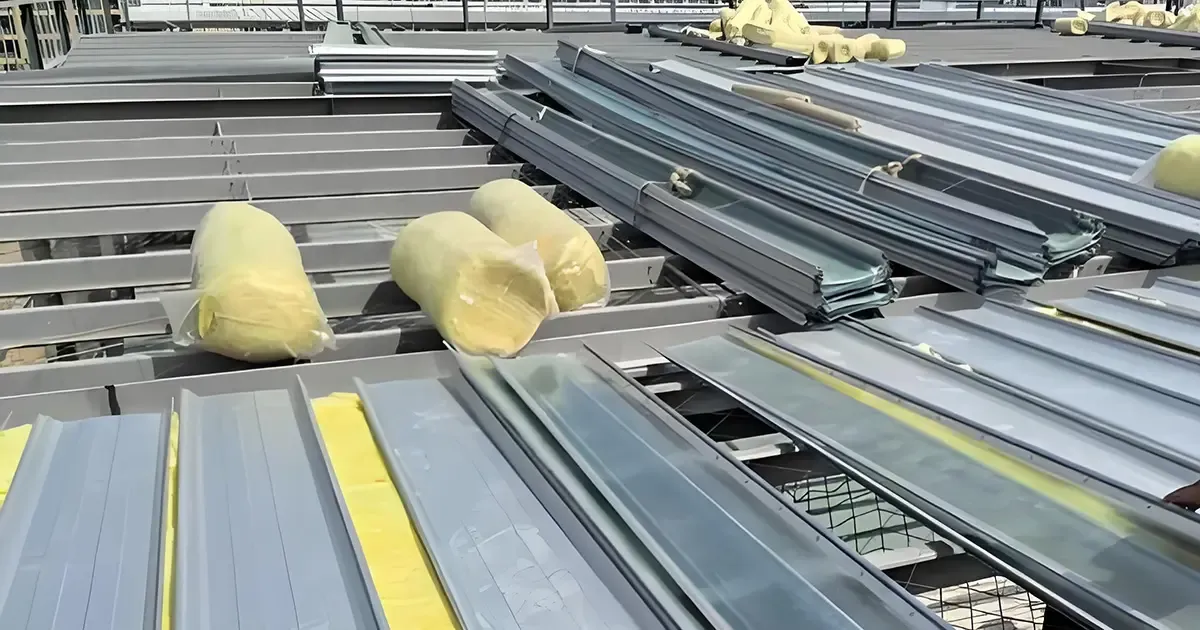
Quick answer: A glass wool blanket is a flexible roll of inorganic glass fibers bonded with a thermosetting resin. It offers thermal conductivity as low as 0.032 W/(m·K), A1 non-combustible fire class under EN 13501-1, and continuous service temperatures up to 350–400 °C depending on grade, with short-term peaks to 450 °C. It is the material of choice for HVAC ductwork, acoustic partitions, industrial pipe wrapping, and low-to-medium temperature equipment where low weight and easy handling matter.
When buyers search for a "glass wool blanket," they are usually comparing specifications, not brands. They need to know whether the density, facing, and temperature rating fit the job, how it differs from rock wool, and what certifications to demand. This guide covers the specification parameters that actually determine performance, maps common applications to the right product grade, and gives a supplier-evaluation checklist that works across ASTM C553, EN 13162, and GB/T 13350 projects.
What Is a Glass Wool Blanket?
A glass wool blanket is manufactured by melting silica sand, recycled glass, limestone, and dolomite at temperatures above 1,300 °C, then centrifuging or blowing the molten glass into fine fibers. A small amount of binder is added to hold the fibers in a resilient, rollable mat. The result is a lightweight, flexible insulation material with a fiber diameter typically between 4 µm and 9 µm and a density range from about 10 kg/m³ to 80 kg/m³ for blankets.
The key performance advantages are:
- Low thermal conductivity — among the lowest of mineral insulation products at room temperature.
- A1 non-combustible — inorganic fibers do not sustain combustion; see our A1 fire-rating guide for the test details.
- Good acoustic absorption — open fiber structure absorbs mid-to-high frequency noise.
- Lightweight and soft — easy to cut, wrap around pipes, and install in cavity walls.
- Chemically stable — does not rot, is resistant to most industrial atmospheres, and is non-corrosive to steel when dry.
The trade-off is service temperature. Standard glass wool is rated for continuous use up to about 350 °C; pre-cured high-temperature grades extend continuous duty to roughly 400 °C with short peaks to 450 °C. Above that, rock wool blanket or ceramic fiber blanket is the safer choice.
Glass Wool Blanket Types and Specifications
By density
| Grade | Typical density | Best use |
|---|---|---|
| Light duty | 10–24 kg/m³ | Ceiling voids, lightweight HVAC ducts, acoustic panels |
| Standard | 24–48 kg/m³ | Industrial pipe wrapping, vessel insulation, wall cavities |
| Heavy duty | 48–80 kg/m³ | External walls, equipment with higher mechanical load, pipe supports |
Higher density improves compressive resistance and dimensional stability but adds weight and cost. For pipe wrapping, 32–48 kg/m³ is the most common range because it balances thermal performance with ease of bending around elbows.
By facing
| Facing | Function | Typical application |
|---|---|---|
| Unfaced | Lowest cost, dry environments | Indoor cavities, equipment behind cladding |
| Aluminum foil | Moisture barrier, reflects radiant heat | HVAC ducts, pipe insulation |
| Fiberglass cloth | Higher tensile strength, abrasion resistance | Industrial equipment, frequent maintenance access |
| Reinforced foil / PVC | Tear resistance, vibration tolerance | Underground utilities, marine engine rooms |
The facing must be checked against the fire classification. A plain glass wool core may be A1, but a polymer-coated facing can downgrade the finished product. Always request the classification report for the complete composite.
By temperature rating
| Type | Continuous service | Peak exposure | Notes |
|---|---|---|---|
| Standard glass wool blanket | -50 °C to 350 °C | 400 °C short-term | Most common industrial grade |
| High-temp glass wool blanket | -50 °C to 400 °C | 450 °C short-term | Pre-cured binder; no glass wool grade survives 500 °C |
For continuous duty above 400 °C, switch to rock wool (up to ~750 °C) or ceramic fiber (above 800 °C). The article "What Temperature Can Rock Wool Withstand?" explains when that transition makes sense.
Key Performance Parameters (Specification Table)
The following table lists the parameters a buyer should verify on a test report. Values shown are typical for a quality industrial glass wool blanket meeting ASTM C553 / EN 13162 / GB/T 13350-2017.
| Parameter | Typical range | Test standard | Why it matters |
|---|---|---|---|
| Density | 10–80 kg/m³ (blanket) | ASTM C303 / GB/T 5480 | Determines thermal and mechanical performance |
| Thermal conductivity | 0.032–0.045 W/(m·K) at 25 °C | ASTM C518 / GB/T 10294 | Lower λ = better insulation and lower energy loss |
| Max service temperature | 350–450 °C | ASTM C411 / GB/T 17430 | Must exceed operating temperature |
| Water repellency | ≥ 98% | GB/T 10299 / ASTM C1101 | Controls moisture uptake in humid environments |
| Moisture content | ≤ 1.0% | GB/T 13350 | High moisture raises thermal conductivity |
| Fire class | A1-s1,d0 (EN 13501-1), Class A (ASTM E84) | EN ISO 1182, EN ISO 1716 | Confirms non-combustibility for fire-rated systems |
| Compression recovery | ≥ 85% at 70 °C | ISO 13153 / ASTM C165 | Keeps thickness under vibration and thermal cycling |
| Shot content | ≤ 1.0% (fine fiber) | GB/T 5480 / ASTM C1335 | Lower shot = better fiber uniformity and less dust |
| Acoustic absorption coefficient | 0.7–1.0 at 1,000–4,000 Hz | ASTM C423 / ISO 354 | Important for noise-control applications |
Thermal conductivity is the headline number. A blanket with λ = 0.032 W/(m·K) transfers roughly 30% less heat than one at 0.045 W/(m·K) for the same thickness. Over a plant operating 8,000 hours per year, that gap can mean measurable fuel or electricity savings.
Shot content is a hidden quality indicator. Shot is the coarse, un-fiberized glass residue left during production. Excessive shot reduces flexibility, lowers thermal performance, and creates dust during installation. Premium centrifugal glass wool keeps shot content well below 1% — for how the centrifugal line controls fibre diameter, shot and roll recovery, see our centrifugal glass wool manufacturing guide.
Glass Wool Blanket Sizes, Rolls and Compression
A glass wool blanket order is specified by width, length, thickness and density — usually in that order — and most of the dimensional questions buyers ask are really roll-format questions.
| Density grade | Typical thickness | Roll format |
|---|---|---|
| Light duty, 10–24 kg/m³ | 25–100 mm | Wide low-density rolls for ceilings, ducts and acoustic lining |
| Standard, 24–48 kg/m³ | 25–100 mm | Standard rolls and cut strips for pipe wrap and vessel insulation |
| Heavy duty, 48–80 kg/m³ | 25–75 mm | Denser, shorter rolls where mechanical strength matters |
Sheet width is commonly 1200 mm, with narrower strips cut for pipe wrapping; roll length is set by thickness, density and the compression ratio, so it varies by manufacturer — confirm the supplied roll length in writing rather than assuming a standard.
Compression packaging is part of the specification. Glass wool blankets for transport are usually vacuum-compressed to roughly one-fifth to one-eighth of their unpacked volume, which is why freight and storage cost so much less than for rigid board. The compression ratio depends on density: light 10–16 kg/m³ rolls compress hardest, while heavy 48–80 kg/m³ blankets compress least. After the wrapping is cut, let the roll recover in a dry indoor space — most of the nominal thickness returns within 24–48 hours, and recovery slows sharply in damp or cold storage. If the material will be stored for weeks, open one roll and measure the recovered thickness before the full batch goes to site; the rebound check belongs in goods-inward inspection, not at the wall.
Because blankets are compressed and boards are not, the two formats carry different dimensional-tolerance systems — see our rigid glass wool board selection guide before mixing blanket and board in one specification. Factory catalogues sometimes list the same product as glass wool felt or glass wool roll; the material is identical to the centrifugal glass wool blanket described on this page.
How to Choose Glass Wool Blanket by Application
HVAC ducts and air handling
Use light-to-medium density (24–48 kg/m³) with aluminum foil facing. The foil acts as a vapor barrier and reflects radiant heat. Confirm the composite meets local HVAC fire codes, such as UL 181 / NFPA 90A in North America or EN 13501-1 in Europe.
Industrial pipe and vessel wrapping
Medium density (32–48 kg/m³) is the standard. For straight runs, cut the blanket to the calculated thickness and secure with bands or wire. At elbows and flanges, the flexibility of the blanket is a major advantage over rigid boards. If the pipe operates above 350 °C, consider rock wool instead.For the full decision — when the flexible form gives way to board, and where a pre-cut batt beats both — see our glass wool board vs blanket vs batt selection guide.
Building wall and roof insulation
For metal building roofs or curtain-wall cavities, choose 32–64 kg/m³ with reinforced foil facing. The higher density resists wind loading and foot traffic during installation. Pair with a continuous air barrier to prevent convective heat loss.
Underground utilities and tunnels
Specify a water-repellent grade (≥ 98%, preferably ≥ 99%) with a reinforced foil or PVC jacket. Underground humidity can saturate standard glass wool and collapse its thermal performance. For deeper treatment of moisture behavior, see our article "Is Glass Wool Blanket Waterproof?".
Acoustic enclosures and machine rooms
Use a medium-density blanket (48–80 kg/m³) unfaced or with a perforated facing that lets sound reach the fibers. Target an absorption coefficient ≥ 0.7 across the frequency range of the noise source. For NRC and αw data by density grade, and how they compare with rock wool panels, see our glass wool acoustic insulation guide.
New energy and battery storage (BESS)
Battery compartments and power conversion skids need A1-s1,d0 insulation with low smoke and no toxic emissions. Glass wool qualifies on fire class, but only if the facing and adhesive are also A1. Verify the full composite classification.
If the question is broader than blanket — how the types of glass wool compare with rock wool on temperature, density and fire duty — start with our seven-difference glass wool and rock wool guide.
Buying Guide: What to Verify from a Supplier
Certifications and test reports
Demand documentation for the exact product SKU you will receive, not a generic family certificate. Essential items include:
- ISO 9001 quality-management certification
- CE marking for European projects (DoP with declared thermal conductivity and fire class)
- Third-party test reports for thermal conductivity, density tolerance, fire class, and water repellency
- Factory production control (FPC) records or batch test reports for large orders
Density tolerance
A reputable supplier controls density within ±10% of nominal; high-precision lines hold it within ±5%. Large density variation leads to uneven thermal performance and poor fit on pipes.
Binder and emission credentials
For indoor or HVAC use, confirm low-VOC or formaldehyde-free binder options. Ask for an SGS or equivalent report on TVOC emissions if the project has indoor-air-quality requirements.
Delivery and support
- Lead time for standard densities and thicknesses should be stated in writing.
- MOQ and cut-roll policy matter for small-to-medium MEP projects.
- Technical support should include installation guidance, especially for pipe wraps and penetration seals.
- Warranty period — 8 years is common; 10–15 years is available from manufacturers with strong quality systems.
Packaging and handling
Insist on moisture-resistant packaging. Compressed rolls save freight but must rebound to full thickness after unpacking; test a sample roll if the product will be stored on site for more than a few weeks.
Common Mistakes to Avoid
- Specifying glass wool above its continuous temperature limit. Above roughly 400 °C the binder degrades progressively and the blanket loses thickness — no glass wool form survives 500 °C. Use rock wool or ceramic fiber for hot zones.
- Ignoring the facing. A foil facing changes the fire classification and the vapor-barrier performance. Match facing to environment.
- Buying on price alone. Low-cost rolls often have high shot content, wide density tolerance, and poor recovery after compression.
- Forgetting about compression. In pipe supports, heavy valves, or vibration zones, low-density blanket can compact. Use higher density or a rigid board at support locations.
- Skipping the composite fire report. A core may be A1, but the finished roll with facing and adhesive may not be.
For the cross-product buying view — supplier audit, formaldehyde-free selection and density by service condition — see our glass wool procurement checklist.
Related Reading
- Is Glass Wool Fireproof? A1 Non-Combustible Explained
- Is Glass Wool Blanket Waterproof?
- Non-Combustible Insulation Systems: A1 Fire Rating Explained
- Rock Wool Blanket — for temperatures above the glass wool ceiling
- Glass Wool Board — rigid form for walls, roofs, and equipment panels
For a deeper dive into forms, temperature ratings, and application guides, see our ceramic fiber insulation hub.
Frequently asked
What is the standard density of glass wool blanket? +
Industrial glass wool blankets typically range from 10 kg/m³ to 80 kg/m³. Light-duty HVAC and acoustic applications use 10–24 kg/m³, standard pipe and vessel wrapping uses 24–48 kg/m³, and heavy-duty wall or equipment applications use 48–80 kg/m³. Higher density improves mechanical stability but adds weight and cost.
What temperature can glass wool blanket withstand? +
Standard glass wool blankets are rated for continuous service from about -50 °C to 350 °C, with high-temp variants reaching approximately 450 °C. Peak exposure should not exceed 500 °C. For service temperatures above 450 °C, rock wool or ceramic fiber is the safer choice.
Is glass wool blanket A1 fire rated? +
Yes. The inorganic glass fiber core is non-combustible and can achieve A1-s1,d0 under EN 13501-1 and Class A under ASTM E84. However, the complete product — including facings, coatings, and adhesives — must be tested as a whole. Some foil or polymer facings can downgrade the finished roll, so always request the classification report for the exact SKU.
How do I choose between glass wool and rock wool blanket? +
Choose glass wool when you need the lowest thermal conductivity at room temperature, light weight, easy handling, and acoustic absorption, and when service temperatures stay below 350–450 °C. Choose rock wool when you need higher temperature resistance (up to ~750 °C), greater rigidity, or better performance in vibration and moisture-prone industrial environments.
What should I check before buying glass wool blanket in bulk? +
Verify the third-party test report for thermal conductivity, density tolerance, fire class, water repellency, and shot content. Confirm ISO 9001 and CE (or equivalent) certification. Check that the facing matches your environment, ask for a sample roll to verify recovery after compression, and agree on batch testing, delivery lead time, warranty, and technical support in the purchase contract.
What sizes does a glass wool blanket come in? +
Sheet width is commonly 1200 mm, with narrower strips cut for pipe wrapping. Thickness typically ranges from 25 mm to 100 mm, and roll length depends on thickness, density and the compression ratio, so it varies by manufacturer. Specify width, length, thickness and density in the enquiry, and confirm the supplied roll length in writing.
How much does a glass wool blanket compress during transport? +
Vacuum-compressed rolls typically pack to about one-fifth to one-eighth of their unpacked volume. Light 10–16 kg/m³ rolls compress hardest, while heavy 48–80 kg/m³ blankets compress least. After unpacking, allow 24–48 hours of recovery in dry indoor storage, and measure recovered thickness on a sample roll before large installations.
Request a quote
Interested in our insulation solutions? Send us your requirements and our team responds within one business day.