
Glass Wool Insulation Buyer's Guide 2026: Supplier, Density and Specification Selection
Supplier audit, formaldehyde-free selection, density selection and an enquiry checklist — the four decisions that settle an industrial glass wool insulation purchase.
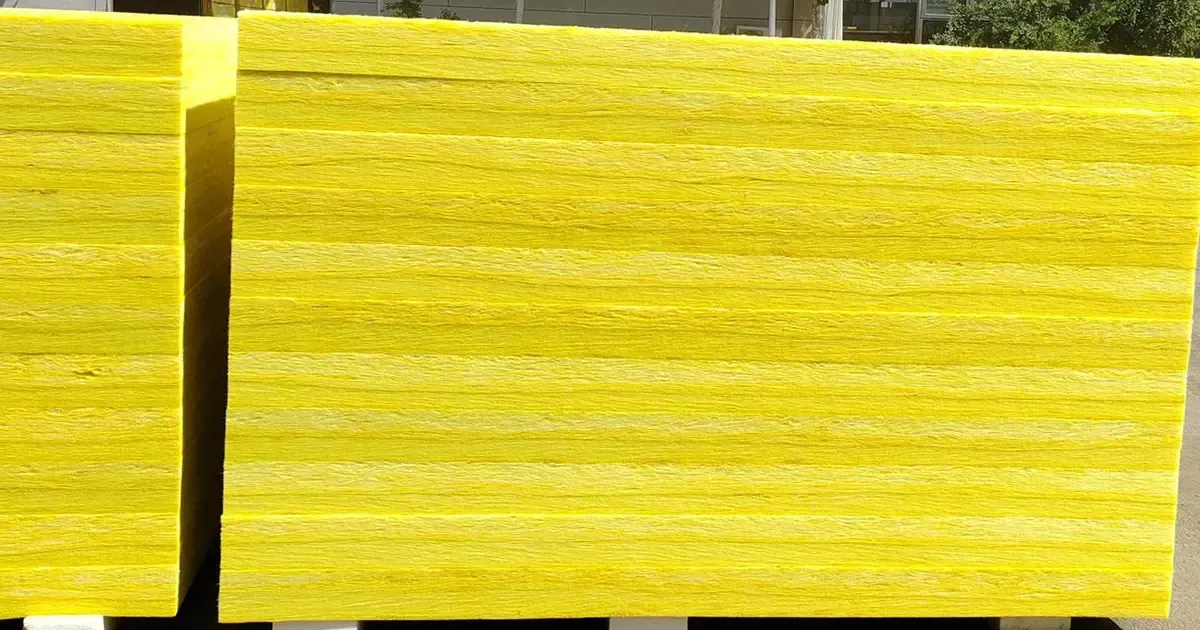
Insulating an industrial plant is not one purchase repeated across the building. The blanket wrapped around a steam header, the rigid board in a clean-room ceiling and the acoustic layer inside a partition wall are three different specifications, and the material that is correct on one is frequently wrong on the next.
This guide is written for engineers, procurement teams and project buyers who have to source industrial glass wool insulation and want to buy it once, correctly. It walks through the four decisions that settle a glass wool insulation enquiry — supplier audit, formaldehyde-free performance, density selection and the specification checklist — and ends with the working tables and the questions that stop most disputes before they start. For the roll-format detail of the most commonly ordered form, see our glass wool blanket specification detail.
Why Glass Wool Buyer Selection Has Become a System, Not a Spec Comparison
Twenty years ago a glass wool insulation purchase was a density and a thickness set against a price. It is no longer that simple.
Three pressures have turned glass wool insulation procurement into a system. First, project specifications now attach to certificates, not just numbers — an A1 fire rating, a formaldehyde-emission limit and a lot-level test report have become the difference between a quote and a pass. Second, the cost of a bad batch has moved from material to schedule: rework, hold points and re-testing cost more than the wool itself. Third, environmental and indoor-air requirements keep tightening, so a supplier that cannot document its binder chemistry is increasingly a liability.
The result is that a competent glass wool buyer now audits a supplier the way they audit a contractor — on evidence, consistency and response time — rather than on a datasheet headline. That shift is what separates a careful glass wool buyer from a price shopper, and it is the subject of the rest of this guide.
The Four Decision Dimensions That Settle a Glass Wool Enquiry
Every glass wool insulation enquiry — whether the buyer writes the term glass wool or glasswool — resolves into four questions. Get these four right and the rest is quotation arithmetic.
Supplier integrity — can the manufacturer document what it makes, and will the batch you receive match the sample you approved?
Formaldehyde-free performance — is the binder chemistry suitable for the space, and can the emission level be certified?
Density selection — is the density right for the service temperature, the mechanical load and the environment?
Specification completeness — does the enquiry checklist capture the parameters, certificates, acceptance criteria and warranty that stop disputes?
The four dimensions interlock. A strong supplier cannot rescue a wrong density, and a perfect density cannot rescue a specification that never stated the acceptance tolerance. This guide treats them in that order.
Supplier Audit: From Documentary Evidence to Real Consistency
A supplier audit for glass wool insulation has two layers: documentary evidence and production consistency. The first is checkable in an afternoon; the second is what separates a reliable manufacturer from a trader.
Documentary evidence. Ask for the current certificates and read the scope. The fire classification should be A1 non-combustible. The quality system should be a recognised ISO 9001 framework, and the product should carry third-party test reports — preferably from an accredited laboratory — covering density, thermal conductivity, fibre diameter and shot content. A certificate that is out of date, or that covers a different product line than the one quoted, is a warning sign.
Production consistency. This is the part most buyers skip, and it is where a large share of project problems originate. Three numbers reveal it. Density deviation should be held within about ±3 % to ±5 % — better than the ±10 % many standards allow — because density drift of even a few points changes both thermal and acoustic performance. Fibre diameter should sit at or below 8 µm, and shot content (unfiberised particles) at or below 3 %. Ask for lot-level data across recent production runs, not a single "typical" value.
Service response. Confirm the manufacturer can do more than ship. A competent glass wool supplier can advise on density for a given service temperature, offer density-gradient or special-size cutting, and answer a technical question within a working day. Delivery lead time is part of the specification — write it down, and build the consequence for missing it into the contract. Whether the enquiry is phrased as a glass wool or glasswool insulation manufacturer search, the audit is the same. For the manufacturing process behind those consistency numbers, see our centrifugal glass wool manufacturing guide.
Regional Supplier Profiles: What Each Manufacturing Cluster Is Known For
Industrial glass wool insulation production clusters around a few manufacturing regions, and each cluster has a recognisable character. Knowing it helps you match a supplier to a project rather than to a price.
A northern manufacturing cluster is known for speed and scale. High-volume production, dense logistics networks and short lead times make it the natural choice for pipe insulation and standard-duty blankets on fast-moving industrial projects. Expect density control in the ±3 % range and the ability to run density-gradient and special-size orders.
A coastal cluster is known for lightweight, low-emission products. Manufacturers here have invested in fine-fibre and low-VOC binder technology, which makes them the default for clean rooms, medical spaces and precision manufacturing where indoor air quality governs.
A southern coastal cluster is known for moisture performance. Products aimed at hot, humid conditions carry higher water repellency and facing options, which matters for coastal plants, HVAC systems and any service where condensation is a threat.
A high-altitude cluster and a cold-region cluster specialise in the extremes — stable acoustic performance at altitude, and low-temperature, sand-resistant grades for severe winter and desert duty.
None of this is a rule; it is a starting bias. The audit in the previous section decides the shortlist, and the cluster character decides which shortlist is worth the freight cost for your site.
Formaldehyde-Free Glass Wool: Binders, Certifications and Project Fit
Formaldehyde-free glass wool has moved from a premium option to a near-default requirement in anything that touches people or sensitive process air.
The chemistry. Traditional glass wool uses a phenolic resin binder, which can release trace formaldehyde. Formaldehyde-free grades replace it with a plant-based, bio-based or silica-based binder that cures at roughly 150–250 °C for about five minutes, leaving no formaldehyde in the finished product. The wool itself is the same; the binder is what changes.
Why it matters. Formaldehyde-free material removes a health and indoor-air liability, carries no odour during installation, ages more stably in hot-humid service, and makes green-building certification (such as LEED or WELL) easier to achieve. In clean rooms, food and pharmaceutical plants, electronics factories, hospitals and laboratories it is increasingly a written requirement rather than a preference.
Certification to ask for. Ask for the emission test method and the limit. A common benchmark is a formaldehyde release at or below 0.05 mg/m³ under a climate-chamber method, with TVOC release at or below 0.5 mg/m³ for the most demanding spaces. Request the test report, check the laboratory is accredited, and confirm the value applies to the product you are actually buying — not a sibling line.
For the fire side of the same material, see our glass wool A1 non-combustible rating guide.
Density Selection: A Working Table by Service Condition
Density is the single parameter that most decides whether glass wool insulation performs, holds its shape and lasts. A useful starting rule: every 100 °C rise in continuous service temperature calls for roughly 8 kg/m³ more density.
Density matters for three reasons at once. It sets thermal and acoustic performance, it sets compressive strength and sag resistance, and it sets long-term dimensional stability — a higher-density board keeps its thermal resistance longer under load and temperature.
The table below is a working selector across the common industrial conditions. All values sit within the 10–100 kg/m³ range in which glass wool is manufactured, and the temperature column respects the material's continuous ceiling.
| Service condition | Density range (kg/m³) | Key selection factors |
|---|---|---|
| Hot pipe insulation | 64–96 | Continuous temperature up to 350 °C, thermal-shock resistance, structural stability |
| Cold pipe insulation | 32–48 | Light weight, moisture resistance, ease of installation |
| Plant building envelope | 48–64 | Wind load, rain ingress, long-term thermal-resistance stability |
| Clean-room ceiling | 32–48 | Low dust release, easy cleaning, HVAC compatibility |
| Mechanical / acoustic partition | 80–100 | High density for sound isolation, NRC ≥ 0.95, low vibration transfer |
| Damp or below-grade service | 40–52 | High water repellency, freeze-thaw resistance, mould resistance |
A note on the temperature ceiling. Glass wool is an A1 non-combustible material, but its binder limits continuous service to about 350 °C, with short peaks to 400 °C. Above that ceiling the specification moves to rock wool, which carries the higher temperatures. Stating the boundary cleanly avoids the classic error of putting a standard glass wool blanket on a line it cannot survive. For the form-by-form trade-off, see our glass wool vs rock wool comparison.
Density-gradient construction. Where cost matters as much as performance, an outer low-density layer (around 32 kg/m³) over an inner high-density layer (around 48 kg/m³) meets the thermal requirement at a lower overall cost than a single high-density fill.
Density is one axis of the decision; form is the other. Our glass wool board vs blanket vs batt comparison covers which form suits which surface before density is even considered.
Specification Parameters That Catch a Bad Batch Before Installation
The parameters below are what a buyer should put in writing, because they are the ones a bad batch fails. Each is measurable, and each has a reasonable acceptance number.
Density and density deviation. State the nominal density and the tolerance — within ±5 % is a reasonable commercial requirement, tighter than the ±10 % many national standards allow. Verify on arrival by weighing a cut sample of known volume.
Thickness tolerance. Specify the thickness and its tolerance; ±1.5 mm is normal, with ±0.5 mm achievable for precision work.
Fibre diameter. At or below 8 µm is the general requirement; 5 µm and below is the premium grade that improves both conductivity and handleability.
Shot content. At or below 3 % — a higher shot count means coarser fibre, worse conductivity and more dust.
Thermal conductivity. Accept a declared value of 0.036 W/(m·K) or better at 25 °C for most industrial work, understanding that the number rises with temperature. Ask for the curve, not a single point.
Water repellency. For humid or exposed service, specify a water-repellency rating of 98 % or better, rising to 99 % for high-humidity or below-grade duty.
Emission limits. For formaldehyde-free requirements, state the release limit (typically ≤0.05 mg/m³) and the TVOC limit (≤0.5 mg/m³) where it applies.
The Enquiry Checklist: Eleven Sections That Block Most Disputes
A structured enquiry checklist is the cheapest dispute-avoidance tool in procurement. A large share of project problems trace to an enquiry that was never specific enough to enforce.
The eleven sections below cover the ground. Copy them into the enquiry and fill in every blank — an empty box is the dispute waiting to happen.
- Project basics — project name, location, scale, technical requirement and expected delivery date.
- Product type — board, blanket, roll or other, stated explicitly.
- Nominal density and tolerance — for example "48 kg/m³, measured not below 43.2 kg/m³".
- Thickness and size with tolerance — thickness in mm and sheet dimensions in mm, each with a stated deviation.
- Surface treatment — none, single-sided glass cloth, double-sided aluminium foil, PE film or other facing.
- Thermal conductivity — the declared value at 25 °C, and the curve across the service range if it matters.
- Water repellency — the minimum percentage, where the environment calls for it.
- Emission limits — formaldehyde and TVOC where formaldehyde-free material is required.
- Fire performance — A1 non-combustible, with the certificate number.
- Certificates — ISO 9001, third-party test reports, and any industry-access qualifications required.
- Acceptance, warranty and terms — acceptance window, warranty period, response time, retention ratio and the penalty for late delivery.
Two acceptance rules complete the picture. Inspect appearance, dimensions and thickness within 48 hours of arrival, and complete performance sampling within 72 hours. If the density deviates more than the agreed tolerance, or the conductivity or emission limit is exceeded, reject the lot — do not negotiate it down.
Whole-Life Cost: Why the Cheapest Quote Is Rarely the Cheapest Project
The lowest unit price is a good place to start a negotiation and a poor place to end a decision. Industrial glass wool insulation is judged over the life of the plant, not the life of the invoice.
Four cost buckets decide the real number. Initial cost is material, freight and installation. Operating cost is the energy the insulation saves or leaks over its life — a few points of conductivity difference compounds for years. Maintenance cost is replacement and repair when the material ages or fails. Hidden cost is the rework, schedule delay and re-testing when a batch fails acceptance or a certificate is missing.
Two levers keep whole-life cost down. The density-gradient construction already described cuts initial cost without cutting performance. And selecting a higher-density grade pays back in service life — as a rough guide, each 8 kg/m³ step in density adds about five years of stable performance, which has to be weighed against the higher first cost.
A supplier that offers a strategic, volume-based relationship with technical support is usually worth more than the lowest spot quote, because the support and the consistency are exactly what prevent the hidden-cost bucket from filling up.
Common Mistakes in Industrial Glass Wool Procurement
Four mistakes account for most failed glass wool purchases. They are easy to make and easy to avoid.
"Thicker is better." Adding thickness without density does little for performance — a 60 mm board at 24 kg/m³ can underperform a 30 mm board at 48 kg/m³. Performance follows density and conductivity, not thickness alone.
"Fire-resistant means it cannot smoke." Glass wool itself is A1 non-combustible, but a phenolic binder can char and smoke at high temperature. If smoke behaviour matters, specify a formaldehyde-free or otherwise low-smoke binder, and a suitable facing.
"Good acoustics means good insulation." The two are controlled by different parameters. Low-frequency sound absorption needs thickness and density working together, while thermal performance follows conductivity. A material can be excellent at one and average at the other.
"The lowest price saves money." A low price can hide recycled glass feedstock, short and brittle fibre, poor resilience and a supplier with no technical response. The savings disappear into rework, replacement and downtime. Judge the whole-life cost, not the invoice line.
Closing
Industrial glass wool insulation procurement is a system of four decisions. Audit the supplier on evidence and consistency, not a datasheet headline. Demand formaldehyde-free binder chemistry and its certificate wherever people or sensitive air are involved. Select density against service temperature, load and environment, using the working table rather than a guess. And run the enquiry through an eleven-section checklist that makes every tolerance, certificate and penalty enforceable.
Buy once, correctly. Send us the service condition, the density or temperature requirement, the surface treatment and the annual volume, and our engineers will return a material recommendation, a specification schedule and a quotation — with lot-level test certificates — within two weeks.
For the acoustic specification that often accompanies a glass wool insulation purchase, see our NRC and αw in glass wool partitions guide.
Manufacturer & Supplier: Rosewool Glass Wool Capacity & Certifications
Beyond the supplier audit, the fastest way to qualify a glass wool manufacturer is to confirm it runs the fibre line and can ship the exact density and facing you need. A glass wool board manufacturer and a glass wool insulation supplier should provide the same mill-direct traceability, not a traded assortment.
Glass wool products we manufacture
- Glass Wool Board — rigid panels for HVAC, duct and equipment insulation
- Glass Wool Blanket — roll stock for large-surface and cavity applications
- Glass Wool Insulation hub for densities, facings and project data
Rosewool also supplies formaldehyde-free glass wool grades with low-VOC binders, certified to A1 non-combustible and produced under ISO 9001, CE and SGS frameworks. We have manufactured glass wool and exported to 60+ countries since 1982; contact our team for density selection and facing specifications.
Frequently asked
How do I choose the right density for glass wool insulation? +
Match density to the service condition rather than to habit. Hot pipe insulation typically needs 64–96 kg/m³, cold pipe and clean-room ceilings 32–48 kg/m³, plant building envelopes 48–64 kg/m³, mechanical and acoustic partitions 80–100 kg/m³, and damp or below-grade service 40–52 kg/m³. A useful starting rule is roughly 8 kg/m³ more density for every 100 °C rise in continuous service temperature.
How can I tell whether glass wool is genuinely formaldehyde-free? +
Ask for the binder chemistry and the emission test report, not just the marketing claim. A reliable formaldehyde-free grade uses a plant-based, bio-based or silica-based binder and carries a release at or below 0.05 mg/m³ under a climate-chamber method, with TVOC at or below 0.5 mg/m³ for the most demanding spaces. Check that the report comes from an accredited laboratory and applies to the exact product quoted.
What should a glass wool enquiry checklist include? +
An eleven-section checklist: project basics, product type, nominal density and tolerance, thickness and size with tolerance, surface treatment, thermal conductivity, water repellency, emission limits, fire performance, certificates, and acceptance plus warranty terms. Stating the density tolerance (for example within ±5 %) and the acceptance window is what makes the specification enforceable rather than aspirational.
Does the supplier's region matter when buying glass wool? +
Region is a starting bias, not a rule. A northern manufacturing cluster is known for speed and scale, a coastal cluster for low-emission lightweight products, a southern coastal cluster for moisture performance, and high-altitude and cold-region clusters for acoustic stability and severe-weather grades. The documentary and consistency audit decides the shortlist; the cluster character decides which shortlist is worth the freight cost.
What thermal conductivity should I accept in a glass wool quotation? +
For most industrial work, accept a declared value of 0.036 W/(m·K) or better at 25 °C, and ask for the curve across the service range rather than a single ambient point, because conductivity rises with temperature. A higher-density or finer-fibre grade will return a lower figure, and the saving compounds over the operating life.
When should I reject a glass wool delivery? +
Reject the lot when a measurable parameter fails the agreed tolerance — for example density deviation beyond the stated limit, conductivity above the accepted value, or an emission limit exceeded. Inspect appearance, dimensions and thickness within 48 hours of arrival and complete performance sampling within 72 hours. A parameter failure is a reason to reject, not to negotiate the batch down.
What warranty and after-sales terms should I ask for? +
Ask for a warranty of at least 12 months, a quality-issue response time within 24 hours, a clear defective-product replacement commitment, and a quality retention ratio of at least 5 % where the project scale justifies it. The contract should also fix the delivery lead time and the penalty for missing it, because schedule is part of the specification.
Request a quote
Interested in our insulation solutions? Send us your requirements and our team responds within one business day.