
Centrifugal Glass Wool: How It's Made & Why It Matters
Centrifugal glass wool manufacturing explained: raw materials, melting, fiber spinning, curing, and why the centrifugal process produces better thermal and acoustic insulation.
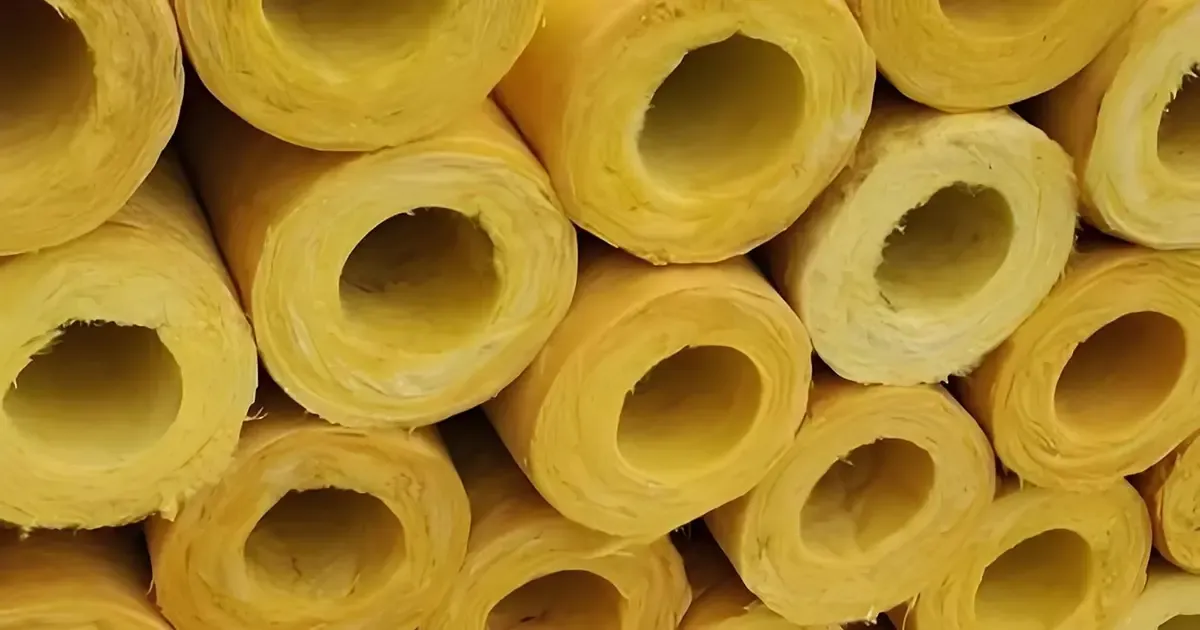
Centrifugal glass wool is the form of glass wool most commonly used in industrial and building insulation. It is made by melting glass-forming minerals and spinning the molten glass into fine fibres with a high-speed centrifuge. The result is a lightweight, low-density mat with excellent thermal resistance and sound absorption.
This article walks through the manufacturing process, explains why the centrifugal method dominates the market, and shows where centrifugal glass wool blanket and board fit in industrial insulation.
What Is Centrifugal Glass Wool?
Glass wool is a fibrous insulation material made from recycled glass, sand, limestone, and other glass-forming minerals. The fibres trap air, which gives the material its low thermal conductivity. Centrifugal glass wool is produced by a dry mechanical process rather than a wet slurry process, so the fibres are finer, more uniform, and bonded without excess water or energy-intensive drying.
The typical end products are rolls, blankets, boards, and pipe sections used for:
- HVAC ductwork and equipment
- Industrial pipe and vessel insulation
- Power plant steam and process lines
- Cold storage and chilled-water systems
- Acoustic lining and sound attenuation
For a comparison of glass wool with rock wool, see our guide on glass wool vs rock wool.
Raw Materials and Batch Composition
A standard centrifugal glass wool batch contains:
- Silica sand (10–40 %) — main glass former
- Recycled cullet /碎 glass (15–60 %) — reduces raw material use and melting energy
- Limestone / dolomite (7–15 %) — adds durability and chemical resistance
- Soda ash (7–15 %) — lowers melting temperature
- Borax (2–10 %) — improves fibre quality and moisture resistance
- Small amount of thermosetting resin binder — locks fibres together during curing
Modern plants increasingly use recycled glass because it lowers melting energy, reduces quarrying, and keeps production cost stable. The binder is typically a phenolic or bio-based thermosetting resin. Formaldehyde-free options are available for applications where indoor air quality matters.
The Centrifugal Manufacturing Process
The process runs in four main stages.
1. Batch preparation and melting
Raw materials are crushed to 5–10 mm, mixed to the target chemistry, and fed into an electric or gas-fired melting furnace. The batch melts at 1300–1500 °C over 1–2 hours. Operators control temperature, redox, and homogeneity because any inconsistency affects fibre diameter and final product strength.
2. Fibre formation by centrifuge
Molten glass flows through a rotating spinner with thousands of peripheral holes. Centrifugal force throws glass streams outward, and a high-velocity gas stream attenuates them into fibres typically 5–8 µm in diameter. This is the key difference from older blown-fibre or flame-attenuation processes:
| Process | Typical fibre diameter | Fibre uniformity | Energy use |
|---|---|---|---|
| Centrifugal spinning | 5–8 µm | High, uniform mat | Lower |
| Blown / steam attenuation | 8–15 µm | More variable | Higher |
Finer, more uniform fibres create smaller air pockets, which reduces thermal conductivity and improves acoustic absorption.
3. Binder application and collection
As the fibres form, a spray system applies the thermosetting binder. The fibres are then drawn onto a perforated collection conveyor by negative pressure. The collected web is compressed to the target thickness and density. Density can range from 10 kg/m³ for lightweight rolls up to 96 kg/m³ for heavy-duty boards and pipe sections.
4. Curing, cutting, and finishing
The mat passes through a curing oven at 100–250 °C, where the binder cross-links and sets the product thickness. After curing, the product is slit, cut, and optionally faced with aluminium foil, glass tissue, or black glass cloth for moisture resistance, clean handling, or acoustic tuning.
The final products are packed in polyethylene or shrink wrap to protect against moisture until installation.
Why the Centrifugal Process Matters
The centrifugal route has become the industry standard for several reasons.
Lower thermal conductivity
Finer fibres trap smaller pockets of still air. Typical centrifugal glass wool thermal conductivity at 25 °C is 0.032–0.040 W/m·K. At 50 °C mean temperature it is usually 0.035–0.045 W/m·K, competitive with other fibre insulations in the same density range.
Better acoustic absorption
The fine fibre structure absorbs mid- and high-frequency sound efficiently. Glass wool blankets and boards commonly achieve noise reduction coefficients (NRC) of 0.85–1.0 depending on thickness and facing.
Lower embodied energy
Centrifugal production is a dry process. It avoids the water-based slurry, drainage, and drying steps used in some alternative processes, which reduces energy use and emissions per kilogram of product.
Consistent thickness and density
Controlled collection and compression give uniform density across the roll or board. This matters for thermal calculations and for predictable acoustic performance.
Typical Properties and Performance
| Property | Typical value | Notes |
|---|---|---|
| Density | 10–96 kg/m³ | Blankets 10–32; boards 48–96 |
| Thermal conductivity @ 25 °C | 0.032–0.040 W/m·K | Lower is better |
| Service temperature | −30 °C to +300 °C long-term; short peaks to 400 °C | Above 350 °C consider rock wool |
| Fire classification | A1 non-combustible (unfaced) | EN 13501-1 |
| Acoustic absorption | NRC 0.85–1.0 | Thickness-dependent |
| Water absorption | <1 % by volume for hydrophobic grades | Faced products lower |
These numbers explain why centrifugal glass wool is the default choice for building services, process piping below 300 °C, and acoustic treatment.
Where Centrifugal Glass Wool Is Used
HVAC and building services
Duct lining, air-handling units, and chilled-water pipes use glass wool blanket or board because it combines thermal insulation with sound attenuation. Foil-faced products also act as a vapour barrier.
Industrial pipe and equipment
For process lines operating up to 250–300 °C, glass wool pipe sections and boards insulate effectively at lower weight than mineral wool. The lower density reduces support load.
Power generation
Steam lines and auxiliary equipment operating below 300 °C are often insulated with glass wool blanket or board for thermal efficiency and personnel protection.
Cold storage and cryogenic support
Hydrophobic glass wool grades are used in cold-storage walls and chilled-water systems because they resist moisture uptake better than some competing materials.
Acoustic enclosures
The high NRC of glass wool makes it a standard fill for acoustic panels, silencers, and machinery enclosures.
When to Choose Glass Wool vs Rock Wool
Centrifugal glass wool and rock wool overlap in some applications but differ in temperature ceiling and density. A simple rule:
- Below 300 °C, with weight or acoustic priority → centrifugal glass wool blanket/board
- 300–750 °C, fire barrier, or high humidity/abrasion → rock wool
- Above 750 °C → ceramic fiber
Rock wool has a higher melting point and better fire-barrier performance, but glass wool is lighter, easier to cut, and has lower thermal conductivity at moderate temperatures.
Specification Tips
When buying centrifugal glass wool, ask for:
- Mean-temperature thermal conductivity across your service range, not just the 25 °C value
- Density matched to the mechanical load and support spacing
- Facing — plain, aluminium foil, glass tissue, or black acoustic facing
- Fire classification — A1 for most industrial applications
- Hydrophobic treatment if the product will see condensation or outdoor exposure
- Binder type — standard phenolic or formaldehyde-free for indoor air quality
Bottom Line
Centrifugal glass wool dominates building services and moderate-temperature industrial insulation because the manufacturing process produces fine, uniform fibres at controlled density. That combination gives low thermal conductivity, high acoustic absorption, and easy handling. The process also keeps energy use lower than alternative fibre-forming methods by avoiding wet slurry steps.
If your application stays below 300 °C and you need thermal, acoustic, and moisture performance in one lightweight material, centrifugal glass wool is usually the right choice.
At Rosewool we supply centrifugal glass wool blanket and board in densities from 10 to 96 kg/m³, with plain, foil, and tissue facings. All products are ISO 9001, CE, and SGS certified. Contact our technical team for density, thickness, and facing recommendations for your project.
Frequently asked
What is centrifugal glass wool? +
Centrifugal glass wool is a fibrous insulation material made by melting glass-forming minerals and spinning the molten glass into fine fibres with a high-speed centrifuge. It is supplied as rolls, blankets, boards, and pipe sections for thermal and acoustic insulation.
How is centrifugal glass wool made? +
The manufacturing process has four stages: raw-material batching and melting at 1300–1500 °C; centrifugal fibre formation where molten glass is spun into 5–8 µm fibres; binder application and collection on a perforated conveyor; and curing, cutting, and finishing.
Why is the centrifugal process better than blown fibre? +
Centrifugal spinning produces finer, more uniform fibres with less energy than blown or flame-attenuation processes. The result is lower thermal conductivity, better acoustic absorption, and more consistent product density.
What is the maximum service temperature of glass wool? +
Standard centrifugal glass wool is rated for continuous service up to about 300 °C, with short-term peaks to 400 °C. Above 350–400 °C continuously, rock wool or ceramic fiber is usually the better choice.
Is glass wool fireproof? +
Unfaced centrifugal glass wool is classified as A1 non-combustible under EN 13501-1. It does not contribute to fire spread, although organic facings can change the fire classification of the finished product.
What is the thermal conductivity of centrifugal glass wool? +
At 25 °C, typical thermal conductivity is 0.032–0.040 W/m·K. At 50 °C mean temperature it is usually 0.035–0.045 W/m·K. Always size insulation using the mean-temperature value for your actual service range.
Request a quote
Interested in our insulation solutions? Send us your requirements and our team responds within one business day.