
Non-Combustible Insulation Systems: A1 Fire Rating Explained
A1 is the highest Euroclass reaction-to-fire rating. This guide explains what A1 means under EN 13501-1, how it is tested, how it differs from A2, and which insulation families can reach it.
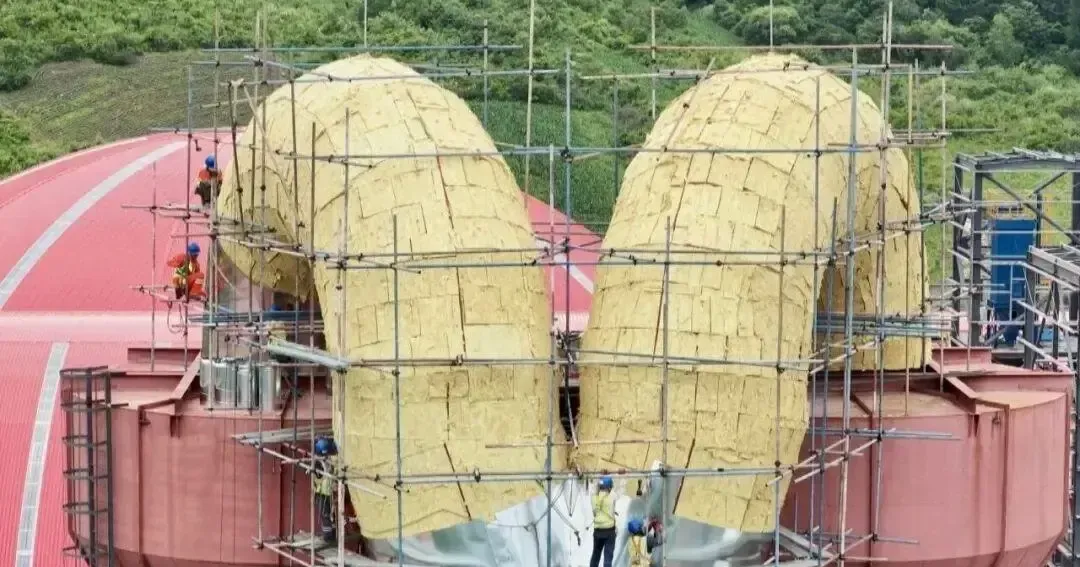
A1 is the highest Euroclass for reaction to fire, not a synonym for fire resistance, low smoke, zero dripping, or safe end-use performance. For specifiers and procurement teams, the practical question is narrow but decisive: does a named, faced, dimensioned, fixed, and tested insulation product carry a class A1 fire rating, or is the label being borrowed from the material family? This guide explains what A1 means under EN 13501-1, how it is tested, how it differs from A2, how it maps across EN, BS, ASTM and China's national framework, which insulation families can reach it, where projects require it, and the exact evidence a buyer should request. A non-combustible insulation system starts with a documented product, not a material claim.
What Does A1 Non-Combustible Mean?
A1 identifies a defined construction product's contribution to fire growth under the EN 13501-1 classification route. A product with an A1 fire rating meets two complementary tests — EN ISO 1182 (non-combustibility) and EN ISO 1716 (gross heat of combustion) — and is therefore assumed not to contribute to fire growth or to the fully developed fire.
The classification is precise about what it covers and what it does not:
- It covers reaction to fire — the product's own decomposition under specified test conditions.
- It does not establish fire-resistance duration (REI), smoke performance, flame-spread approval, acoustic or thermal performance, or acceptability in a particular assembly.
For an EN 13501 A1 result, the classification criteria for the tested specimen are:
- temperature rise ΔT ≤ 30 °C;
- mass loss Δm ≤ 50 %;
- no sustained flaming (tf = 0);
- gross heat of combustion ≤ 2.0 MJ/kg.
A1 is a tested result for a defined product. Treat it as the ceiling of the Euroclass reaction-to-fire scale, not as a blanket description of every inorganic insulation. For the full A1–F lattice with smoke and droplet subcategories, see our Euroclass fire classification guide.
How A1 Is Tested and Classified
An A1 classification is built from two tests; a third, the Single Burning Item (SBI) test, is explicitly not part of the A1 route.
| Test | Role in the A1 route | Result to verify |
|---|---|---|
| EN ISO 1182 | Non-combustibility | Specimen at 750 °C; ΔT ≤ 30 °C; Δm ≤ 50 %; no sustained flaming |
| EN ISO 1716 | Maximum heat-release potential | Gross heat of combustion ≤ 2.0 MJ/kg for A1 |
| EN 13823 (SBI) | Not used for A1 | Relevant to A2–D classification only |
EN ISO 1182 exposes the specified specimen in a furnace stabilised at 750 °C and checks for sustained flaming, temperature rise and mass loss. EN ISO 1716 measures the maximum total heat the product would release if it burned completely. Both must be satisfied for A1.
Crucially, EN ISO 1182 evaluates the specimen as prepared and presented — the foil-faced roll, bonded panel or installed assembly — not the bare fiber alone. The result applies only to the tested construction and condition; it does not evaluate an entire rainscreen assembly, cavity-barrier retention, or long-term in-situ performance. A product may shrink, embrittle or lose functionality while still satisfying the classification criteria.
The most common error is assuming SBI proves A1. EN 13823 places two vertical specimens in a corner and measures heat release, smoke and flaming droplets; it is the route for A2, B, C and D. A compliant datasheet may show an SBI report for an A2-s1,d0 variant, but an A1 evidence stack should contain EN ISO 1182, EN ISO 1716, the classification report, and product or conformity documentation — not an SBI result as the basis for A1.
The A1 Compliance and Documentation Chain
Because A1 belongs to a defined product or system, the documentation must name the exact article. A robust A1 certification process starts with the classification report for the precise product, then — where the CPR (Construction Products Regulation) route applies — verifies the conformity chain.
Specifiers should confirm:
- exact product name, facing, thickness and density;
- the EN 13501-1 classification report number, test laboratory and accreditation scope;
- report date and validity conditions;
- product-level or system-level scope;
- the Declaration of Performance and Conformity (DoP/DoPC), the applicable assessment and verification system (AVCP/AVS), and CE information where relevant;
- ETA number, EAD reference, TAB and transition status where an ETA/EAD route applies;
- the installation and fixing method.
A single private test report can support an A1 claim only when its product definition matches the marketed article. It does not by itself create an ETA, a DoP/DoPC, or CE conformity, and notified-body involvement is required only where the relevant system demands it — not for every A1 product. Where no harmonised standard covers the product, manufacturers may follow the EOTA route: a Technical Assessment Body issues an ETA on the basis of an EAD, and EAD references are published in the Official Journal of the European Union. Under the current CPR framework, the former Declaration of Performance becomes a Declaration of Performance and Conformity (DoPC); the exact conformity route depends on the product, date and adopted specification. CE marking demonstrates conformity with a declared-performance framework; it is not a substitute for checking the actual A1 report, system scope and installation conditions.
A1 vs A2: Reaction to Fire, Not a Single "Non-Combustible" Category
A1 and A2 both reflect limited combustibility, but the boundary is numeric and matters where a specification requires A1 rather than A2-s1,d0.
| Parameter | A1 | A2 |
|---|---|---|
| Gross heat of combustion | ≤ 2.0 MJ/kg | ≤ 3.0 MJ/kg |
| EN ISO 1182 / EN ISO 1716 | Required | Required |
| EN 13823 (SBI) | Not used | Required (FIGRA ≤ 120 W/s; THR600s ≤ 7.5 MJ; LFS < specimen edge) |
A2 permits a higher total heat potential and a finite fire-development contribution measured by SBI, whereas A1 is based purely on non-combustibility and gross calorific value. That difference is why A1 cannot be downgraded to A2 simply because both classes use EN ISO 1182 and EN ISO 1716. Where a façade, cavity barrier or procurement spec calls specifically for A1, an A2-s1,d0 product — even with excellent smoke and droplet ratings — does not satisfy it. For a deeper A1 vs A2 vs B comparison, see A1 vs A2 vs B fire rating; the Euroclass fire classification guide covers the full A1–F ladder.
A1 Across Standards: EN 13501, BS 476, ASTM E84 and China's National A1
All four frameworks address combustion behaviour, and several share a ~750 °C testing theme, but they use different product definitions, sampling rules and regulatory regimes. The correct position is prudent comparison, not automatic interchange.
| Scheme | Object and classification | Key basis | Defensible statement |
|---|---|---|---|
| EN 13501-1 A1 | Reaction to fire of a defined product | EN ISO 1182; EN ISO 1716 | Highest Euroclass reaction-to-fire result |
| BS 476 Part 4 | Non-combustibility of a material | 750 °C furnace | A relevant UK benchmark, not a label for all EN A1 products |
| ASTM E84 Class A | Comparative surface burning | 10-minute tunnel; flame-spread and smoke-developed index | Relevant to US exposed-surface specs |
| China national A1 | Chinese classification of a product | National non-combustibility and gross heat-of-combustion methods | A distinct Chinese result, separate documentation |
A shared ~750 °C theme supports technical discussion, but EN 13501-1 A1, BS 476, ASTM E84 and China's national A1 remain separate classifications under separate regulatory regimes. Project conversion must follow the adopted local code and the competent design authority.
Why BS 476 Class 0 Is Not an A1 Substitute
In the UK context, Class 0 addresses specific wall and ceiling-lining provisions under BS 476 Parts 6 and 7, which cover fire propagation and surface spread of flame. BS 476 Part 4 assesses non-combustibility. Class 0 therefore combines a specific regulatory route and cannot be written as "Class 0 = A1."
A product may be non-combustible under BS 476 Part 4 and still require separate evaluation for Class 0 or for EN 13501-1 A1, depending on the material, assembly, mounting and adopted route. Equally, an EN 13501-1 A1 classification does not by itself establish UK lining compliance or surface-flame-spread acceptability. Where a UK project requires Class 0, the responsible designer should confirm the actual BS 476 test report and regulatory route rather than inferring it from an A1 label.
Four A1-Capable Insulation Families Compared
Rock/mineral wool, glass wool, ceramic fiber and calcium silicate are all inorganic families that can be considered for A1 where the finished product carries appropriate classification evidence. Binders, facings, coatings and system components must be included in the tested product definition.
| Family | Inorganic basis | Why A1 is possible | Binder/facing caution | Typical density* | Typical service temp* | Typical λ* |
|---|---|---|---|---|---|---|
| Rock/mineral wool | Basalt/dolomite fiber | Low fuel content can meet 1182/1716 | Resin binders, oils, foil or coating can alter result | 23–200 kg/m³ | ~230 °C building; specials higher | 0.033–0.052 W/(m·K) |
| Glass wool | Vitreous silica fiber | Low-combustibility vitreous fiber | Organic binder, facing, vapour barrier, adhesive | 10–100+ kg/m³ | ≤ 230–250 °C building | 0.030–0.045 W/(m·K) |
| Ceramic fiber | Alumina-silica fiber | Refractory, very low fuel contribution | Organic carrier/lubricant or jacket must be tested | 50–300 kg/m³ | up to ~1600 °C | 0.08–0.18 W/(m·K) |
| Calcium silicate | Hydrated silicate matrix | Inorganic, often autoclaved | Organic reinforcement or coating can affect result | 240–400 kg/m³ | ~800 °C standard | 0.054–0.068 W/(m·K) |
*Typical engineering ranges for orientation only; values vary with temperature, product form, density, facing and test method. Not a specification. These are general material properties, not verified Rosetex Wool values — confirm the exact product data before specification. Our rock wool insulation overview covers mineral wool forms and duties in detail.
Rock and Mineral Wool: A1 Potential Depends on the Finished Product
Mineral wool is produced from inorganic rock and formed into blankets, boards, pipe sections and lamellas. Its A1 potential depends on the finished product, including resin binders, processing oils, facings and installation adhesives — not only the base fiber.
For building and HVAC forms, typical maximum operating temperatures are around 230 °C, while special products may be used at much higher temperatures. That spread makes it unacceptable to transfer a high-temperature product result onto a lightweight, binder-containing board without checking the tested article. High density or "rigid" construction does not independently establish A1, nor does high-temperature resistance. The correct question is whether the marketed product has been tested and classified in its final or representative form.
Glass Wool, Ceramic Fiber and Calcium Silicate: Match the Material to the Duty
Each family serves a different temperature and mechanical duty, and none transfers A1 automatically across forms.
- Glass wool is common in building and HVAC applications where temperatures stay moderate; facings, vapour barriers and support systems must be included in the assessed product. Our glass wool fireproof guide addresses its reaction-to-fire behaviour specifically.
- Ceramic fiber suits high-temperature industrial insulation — blankets, boards, modules and rope — with service temperatures that can reach ~1600 °C; some commercial forms contain temporary organic carriers that must be present in the tested product.
- Calcium silicate is a rigid, often autoclaved silicate board or pipe section suited to structural backup and high-temperature industrial duty; see our calcium silicate insulation overview for forms and grades.
Across all three, an A1 result must be obtained for the actual product and intended use. For high-temperature ceramic-fiber forms specifically, our ceramic fiber insulation overview covers the product range.
Façades, ETICS and Cavity Barriers: System Evidence Comes First
In façades, ETICS (external thermal insulation composite systems) and cavity-barrier design, fire performance depends on the complete assembly: insulation, render or cladding, substrate, adhesive, mechanical fixing, joints, fire barriers and cavity closers. An A1 insulation board is only one component.
England's external-wall combustible-materials restriction — a national building-regulatory development, not an EU-wide rule — took effect on 1 December 2022 and, for relevant buildings, requires specified external-wall and attachment components to achieve A1 or A2-s1,d0 under BS EN 13501-1:2018. The applicable class, building height, attachment scope and system test remain project- and jurisdiction-specific. An A1 insulation result does not validate the whole system, and cavity barriers additionally need tested retention, compatibility and installation performance — A1 alone does not prove barrier integrity.
Tunnels, BESS, Data Centres and Marine Applications
These sectors require sector-specific fire-performance and system-test evidence; A1 is only one element.
- Tunnels commonly specify fire-resistance-rated structures and linings selected for RWS/HCinc or ISO 834 curves and durations (PIARC recommends, for example, 60 minutes for cars and vans under ISO 834, or 120 minutes for lorries under RWS/HCinc). A1 alone is not the complete tunnel-fire solution.
- BESS and data centres need system-level thermal-runaway and fire-propagation evidence. In the US, NFPA 855 is the model installation document, but adoption and enforcement are jurisdiction-specific; IEC 62933-5-2:2025 strengthens BESS fire-propagation measures. Design evidence should demonstrate thermal-runaway propagation for the actual module, rack, cabinet or container — for example through large-scale testing such as UL 9540A — together with a site-specific hazard analysis. A1 insulation supports that strategy at the material level but is one input, not the complete fire-safety case.
- Marine and offshore projects must follow the IMO FTP Code and approved system documentation. A-60 and A-30 are division classifications with their own temperature-rise limits, not general insulation product classes. For the SOLAS/IMO framework and H-120 guidance, see our marine fire insulation materials and standards guide.
A1-Capable Product Forms: Board, Blanket, Pipe Section and Loose-Fill
"Non-combustible" is a property of the finished product, not the fibre alone, and A1 insulation reaches the market in several forms. Each form must carry its own classified evidence.
- Rigid boards and slabs — used in façade systems, cavity barriers, equipment enclosures and below-deck ceilings. Density and compression resistance vary with duty; boards for load-bearing or impact-exposed locations sit at the higher end of the density range.
- Blankets and rolls — flexible mineral wool for cavities, plant rooms and between studs. They contribute A1 as supplied but rely on the surrounding construction for fixing and continuity.
- Pre-formed pipe sections — shaped mineral wool or calcium silicate for process and HVAC lines, where continuous service temperature and dimensional stability matter more than flexibility.
- Loose-fill and granulate — poured or blown into voids, typically mineral wool or perlite-based, used where a pre-shaped product cannot reach.
- Calcium silicate slabs — rigid, dimensionally stable and often used where the element must also carry load or resist mechanical abuse.
The practical point for specifiers: confirm the A1 evidence for the exact form you are buying. A1-classified blanket does not automatically extend A1 status to an unfaced composite, a faced board or a bonded panel unless that specific finished product has been classified.
A1 and Fire-Resistance Minutes: Reaction-to-Fire vs EI/REI Ratings
A1 describes how a product reacts to fire (EN 13501-1). It is not a time-based fire-resistance rating, and an A1 material does not by itself give a wall, duct or enclosure "30 minutes" or "60 minutes" of protection.
Fire resistance — how long a complete building element withstands a standard fire — is classified under EN 13501-2 and expressed as EI or REI followed by minutes:
- E — integrity: no flames or hot gases pass to the unexposed side.
- I — insulation: the unexposed face stays below the limiting temperature rise (no single point above 180 °C over ambient, average below 140 °C over ambient under the standard fire curve).
- R — load-bearing capacity, required for structural elements.
So EI 60 means the assembly held integrity and insulation for at least 60 minutes; REI 90 adds load-bearing performance for 90 minutes. The rating belongs to the whole assembly — board plus substrate, fixings, joints, cavity fill and penetrations — not to one A1 board. A non-combustible board can still be part of a wall that fails the time rating because joints opened, fasteners released, or a cavity material performed differently. Fire-resistance testing of assemblies and ducts is carried out to EN 1363 / EN 1366 and reported under EN 13501-2 (ducts) and EN 13501-3.
For buyers, the takeaway is to ask for the system-level fire-resistance certificate (EI/REI minutes) when the specification calls for a fire-rated element, and to keep A1 reaction-to-fire evidence separate from that request. Where marine or offshore duty is involved, the same logic applies to A-60 and related division ratings, which are fire-resistance minutes, not a reaction-to-fire class.
A1 in Wet Zones and Outdoor Applications
Moisture does not remove A1 status. Hydrophobic (water-repellent) mineral wool keeps its non-combustible classification because the treatment is a surface agent that sheds water without changing the inorganic fibre — commonly achieving hydrophobicity at or above 99%, mass moisture absorption around 0.3% and volumetric water absorption below 5% under total immersion.
That makes A1 mineral wool usable in basements, below-grade and tunnel linings, external wall and roofing systems in humid or rainy regions, and high-humidity industrial spaces such as paper or textile mills. It also suits cold stores and plant rooms where condensation is a routine risk. The relevant moisture-resistance performance is verified by standards such as ASTM C1104.
One caveat specifiers must keep: water-repellent is not waterproof. Hydrophobic A1 insulation should not be specified where it will be continuously submerged or in direct, prolonged water contact, and it must be kept dry in storage and during installation. On the temperature side, mineral wool serves continuously up to about 650 °C with a melting point above 1000 °C, while ceramic fibre and calcium silicate cover higher-duty points on the same A1-compatible family tree. For the glass-wool variant specifically, see is glass wool fireproof.
Common A1 Misconceptions
Separating classification from fire resistance, smoke, dripping and surface spread prevents the most frequent overclaims:
- "A1 means fireproof." No — it is a reaction-to-fire result, not immunity to heat.
- "A1 gives a fire-resistance duration." No — REI/耐火 ratings belong to the tested element or system.
- "A1 guarantees low smoke and zero dripping." No — those are separate (A2-s1,d0) subcategories.
- "A1 automatically approves surface flame spread." No — that is a different performance.
- "Inorganic means automatically A1." No — binders, facings and coatings can change the result.
- "A faced product inherits the unfaced result." No — foil, adhesive and coating change the tested article.
- "A test report is automatic CE/ETA certification." No — the conformity chain must be in place.
- "A1 in one country equals approval in another." No — regimes, sampling and assemblies differ.
Compliance Checklist for Specifiers and Procurement Teams
Use this checklist before requesting an "A1" price or sample. The most reliable way to prevent overclaims is to match the documentation to the installed product.
- Product name/SKU and manufacturer entity
- Thickness, density, facing, edges and dimensions
- EN 13501-1 report number, laboratory and date
- EN ISO 1182 and EN ISO 1716 results (ΔT, Δm, tf, PCS)
- Product-level or system-level classification scope
- DoP/DoPC, AVCP/AVS and CE status where applicable
- ETA/EAD, TAB and transition status where applicable
- Façade, ETICS, cavity, firestop or system test
- Project jurisdiction and adopted code
- Installation and fixing compatibility
If the facing, thickness, adhesive, fixing or intended use differs from the classified article, request updated evidence before specification.
How to Request A1 Evidence and Next Steps
A useful A1 enquiry identifies the installed assembly, not only the material family. Share the substrate, insulation form, facing, thickness, fixing method, system assembly and project jurisdiction. Rosetex Wool product families include mineral-fiber, ceramic-fiber and calcium-silicate insulation; where an exact product has an EN 13501-1 A1 classification report and, where relevant, a valid conformity document for the declared intended use, that product may be specified as A1 non-combustible insulation.
Material family and previous project experience do not transfer A1 to a different facing, thickness, adhesive, fixing or system configuration. If no current evidence exists for a specific article, the correct commercial wording is "available A1 options" or "contact us with your specification" — not a blanket A1 claim.
Technical note: A1 relates to reaction to fire under EN 13501-1. Project compliance depends on the applicable jurisdiction, building or installation code, the complete system, and supporting documentation. This page is technical guidance, not a substitute for project-specific design, fire-engineering or regulatory review.
Related Reading
- Euroclass fire classification: A1–F, smoke and droplet ratings
- Is glass wool fireproof? Reaction-to-fire explained
- Marine fire insulation: materials and IMO standards
- Rock wool insulation: forms, properties and applications
See our traffic and fire-protection insulation applications for tunnels, transit, and A1 fire-rated passive protection.
Frequently asked
What does A1 mean for insulation? +
A1 means the defined construction product meets the EN 13501-1 reaction-to-fire route using EN ISO 1182 and EN ISO 1716. It indicates limited contribution to fire growth under the classification tests; it does not by itself establish fire resistance, smoke performance, or suitability for every assembly.
Does A1 require the SBI test? +
No. A1 follows EN ISO 1182 and EN ISO 1716. EN 13823/SBI is used for A2–D classification. An SBI report may appear for an A2-s1,d0 product, but it is not the basis for an A1 classification.
Is a Class 0 material the same as A1? +
No. Class 0 relates to specific UK wall and ceiling-lining provisions under BS 476 Parts 6 and 7. EN 13501-1 A1 follows a different classification route. A product may need separate reports for each regulatory system.
Can ASTM E84 Class A be called A1? +
Not automatically. ASTM E84 compares surface burning characteristics and reports flame-spread and smoke-developed index over a 10-minute test. It states that flame-spread index alone does not define a material as non-combustible. Project conversion requires the adopted local code and competent design authority.
Is foil-faced insulation still A1? +
Only if the faced product has an A1 classification that covers that exact facing, thickness and intended use. Foil, adhesives, coatings and laminates can change the tested article, so the documentation must match the installed product.
Does A1 insulation provide fire resistance? +
A1 addresses reaction to fire, not the fire-resistance duration of a wall, partition, duct or enclosure. Fire-resistance ratings such as REI or A-60 must be established for the complete tested element or system.
What should I ask a supplier for? +
Request the exact product name, thickness, density, facing, EN 13501-1 classification report, test laboratory, and — where CPR is relevant — DoP/DoPC and AVCP/AVS or ETA/EAD details. Also confirm the system test for façades, ETICS, cavities, tunnels, BESS or marine applications.
Does A1 insulation have a fire-resistance rating in minutes? +
A1 is a reaction-to-fire classification under EN 13501-1, not a time-based fire-resistance rating. Fire-resistance minutes (EI 30, EI 60, REI 90 and so on) come from EN 13501-2 and apply to the complete assembly — board, substrate, fixings, joints and cavity fill — not to a single A1 product. Ask the supplier for the system-level EI/REI certificate when the specification calls for a fire-rated element.
Can A1 insulation be used in wet or outdoor areas? +
Yes. Hydrophobic mineral wool keeps its A1 non-combustible classification because the water-repellent treatment is a surface agent that does not change the inorganic fibre. It is used in basements, below-grade and tunnel linings, external wall and roofing systems, and high-humidity plant rooms. The one rule: water-repellent is not waterproof, so it must not be specified for continuous submersion and must be kept dry in storage and during installation.
Request a quote
Interested in our insulation solutions? Send us your requirements and our team responds within one business day.