
Is Glass Wool Fireproof? Yes — A1 Non-Combustible
Glass wool is A1 non-combustible — it won't burn or spread flame. Rated -120°C to 400°C, it's fire-safe for buildings yet not a high-temperature insulation.
Is Glass Wool Fireproof? (Short Answer)
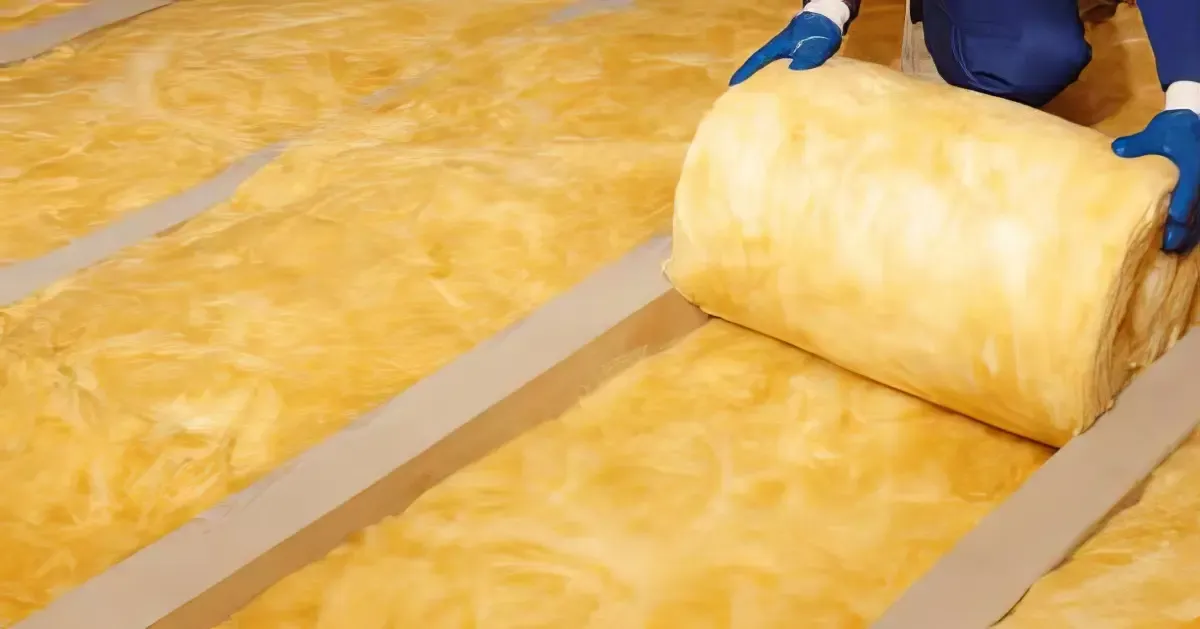
Yes — glass wool is non-combustible and carries the highest European fire class, A1. The glass fibers themselves do not burn, and bonded glass wool rolls or boards contribute no fuel to a fire. It will not ignite, drip, or spread flame.
That said, "fireproof" and "high-temperature" are different things. Glass wool is fire-safe but has a moderate service-temperature ceiling of about 400°C (752°F). For furnace or process-heat duty you need a higher-rated material such as rock wool blanket (up to 750°C) or ceramic fiber. See our glass wool blanket for the full specification sheet.
Glass Wool Fire Rating: A1 (Euroclass)
Glass wool is classified Euroclass A1 — non-combustible, the same top rating as rock wool. In fire tests it:
- Does not ignite or sustain combustion
- Releases no significant smoke or flaming droplets
- Retains its form far longer than combustible foams or plastics
This makes it suitable for fire-rated building assemblies, HVAC ducts, and cavity barriers where non-combustibility is required by code.
Why Glass Wool Does Not Burn
Glass wool is made by spinning molten glass into fine fibers. Glass is already a fired, inorganic material — it cannot burn. Two points matter for real-world use:
- The fibers: Inorganic glass softens and melts around 600–700°C. It does not combust.
- The binder: Rolls and boards use a thermosetting resin binder. The binder can char above roughly 250–300°C, which is why the rated continuous service limit is about 400°C, not the glass melting point. Even as the binder degrades, the material still does not catch fire.
Glass Wool Temperature Range: -120°C to 400°C
| Property | Glass Wool |
|---|---|
| Fire class | A1 non-combustible |
| Continuous service temp | -120°C to 400°C |
| Glass softening point | ~600–700°C (melts, does not burn) |
| Thermal conductivity | λ 0.036 W/m·K |
The A1 rating is one class in the European scale. For how that scale is built — A1 through F, the s1-s3 smoke and d0-d2 droplet suffixes, and what each test measures — see our Euroclass fire classification system explained.
Glass Wool vs Rock Wool: Fire Resistance
| Glass Wool | Rock Wool | |
|---|---|---|
| Fire class | A1 non-combustible | A1 / Class A (fireproof) |
| Max service temp | ~400°C | ~750°C |
| Melting point | ~600–700°C | ~1000°C+ |
| Best for | Buildings, HVAC, ducts | Buildings + higher-heat process |
Both are A1 non-combustible, so both are "fireproof" in the fire-safety sense. The difference is temperature ceiling: rock wool tolerates roughly double the heat, which is why it is chosen for closer-to-source thermal duty. See our glass wool blanket for full specifications.
Fire rating is only one part of the specification. For the full procurement view — supplier audit, density selection and the enquiry checklist — see our glass wool insulation buyer's guide.
When Glass Wool Is NOT the Right Choice
Because its ceiling is ~400°C, glass wool is not a high-temperature insulation. Avoid it for:
- Furnace linings and kilns
- Exhaust and flue gas streams above 400°C
- Continuous process piping above its service limit
For those, step up to rock wool blanket (≤750°C) or ceramic fiber blanket (up to 1260–1430°C). For a broader A1 vs A2 vs B fire rating comparison across insulation families, see the dedicated guide.
See our traffic and fire-protection insulation applications for tunnels, transit, and A1 fire-rated passive protection.
For a deeper dive into forms, temperature ratings, and application guides, see our ceramic fiber insulation hub.
Frequently asked
Is glass wool fireproof? +
Yes. Glass wool is A1 non-combustible — it does not burn, ignite, or spread flame. Its continuous service limit is about 400°C; above that the binder can char but the glass fibers still will not combust.
What fire rating does glass wool have? +
Glass wool carries Euroclass A1, the highest non-combustibility rating in European standards — the same class as rock wool. It emits no significant smoke or flaming droplets in fire tests.
At what temperature does glass wool melt? +
The glass fibers soften and melt around 600–700°C. However, the resin binder that holds rolls and boards together begins to break down above ~250–300°C, which is why the rated continuous-use temperature is about 400°C.
Is glass wool better than rock wool for fire? +
Both are A1 non-combustible, so neither burns. Rock wool wins on temperature ceiling (~750°C vs ~400°C) and is preferred closer to heat sources, while glass wool is the cost-effective choice for buildings and HVAC.
Can glass wool be used for furnace insulation? +
No. With a ~400°C service limit, glass wool is not a high-temperature material. For furnaces, kilns, and hot flues use rock wool (≤750°C) or ceramic fiber (up to 1430°C).
What does non-combustible glass wool mean? +
It means the material passes the non-combustibility test — EN 13501-1 class A1 or the equivalent GB 8624 A1 — and contributes no heat, flame, or fuel to a fire. Glass wool does not burn; at very high temperature the fibers soften and melt rather than ignite.
Is glass wool fire safe? +
For fire propagation, yes: glass wool is A1 non-combustible and will not ignite or spread flame. The practical limit is thermal, not fire — sustained service above about 350–538°C carbonizes the binder and weakens the material, so above that range rock wool or ceramic fiber is the safer spec.
Request a quote
Interested in our insulation solutions? Send us your requirements and our team responds within one business day.