
Ceramic Fiber Bulk: Grades, Uses & How to Apply (2026)
A practical guide to ceramic fiber bulk grades, high-temperature applications, and installation methods for furnaces, kilns, and industrial equipment.
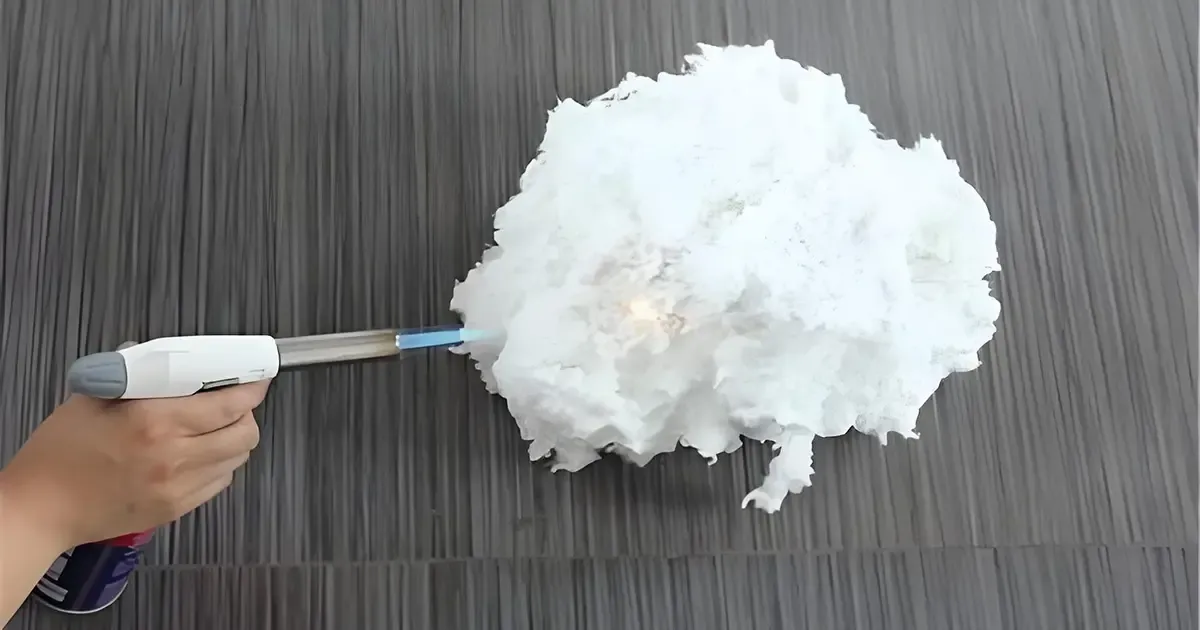
Quick answer: Ceramic fiber bulk is a loose, unformed high-temperature insulation made from aluminosilicate fibers. It is classified by temperature rating from 1,050 °C to 1,500 °C and is used to fill expansion joints, back-up furnace linings, and feed the production of blankets, modules, ropes, and textiles. Because it is binder-free, it keeps its thermal stability up to the maximum rated temperature of the fiber grade.
Specifiers choose bulk fiber when they need a fill material that can be packed into irregular cavities, or when they want the raw material for vacuum-formed parts and custom shapes. Compared with blankets and modules, bulk fiber is lower cost per kilogram and easier to transport, but it requires on-site handling, compaction control, and dust management during installation.
This guide covers the common grades, the blown-vs-spun process difference, where bulk fiber is used, and how to install it safely and effectively.
Ceramic Fiber Bulk Grades and Temperature Ratings
The most important selection parameter for ceramic fiber bulk is its classification temperature — the maximum temperature at which the fiber retains its structure in a short-term laboratory test. The continuous use temperature is typically 100–150 °C lower and is the number that governs real service life.
| Grade | Classification temp | Continuous use temp | Al₂O₃ | ZrO₂ | Fe₂O₃ | Typical use |
|---|---|---|---|---|---|---|
| Common / 1,050 °C | 1,050 °C | ≤ 1,000 °C | 44% | — | < 1.2% | Low-temperature plant, flues, duct backup lining |
| Standard / 1260 °C | 1,260 °C | ≤ 1,100 °C | 45–46% | — | < 1.0% | General furnaces, boilers, expansion joints |
| High-purity / 1260 °C | 1,260 °C | ≤ 1,100 °C | 47–49% | — | ≤ 0.2% | Processes sensitive to iron contamination |
| High-alumina | 1,350–1,400 °C | ≤ 1,200 °C | 52–55% | — | ≤ 0.2% | Glass tank furnaces, ceramic kilns, hot faces |
| Zirconia-alumina | 1,360 °C | ≤ 1,200 °C | 45–46% | 5–7% | ≤ 0.2% | High thermal-shock zones |
| Zirconia / 1430 °C | 1,430 °C | ≤ 1,350 °C | 39–40% | 15–17% | ≤ 0.2% | Severe thermal cycling, chemical exposure |
| Chrome-bearing | 1,500 °C | ≤ 1,350 °C | ≥ 42.5% | — | ≥ 2.6% (Cr₂O₃) | Extreme temperature, controlled-health environments |
Thermal conductivity increases with temperature. A typical 1260 °C grade measures roughly 0.045–0.060 W/(m·K) at 200 °C and 0.15–0.20 W/(m·K) at 600 °C. Higher alumina and zirconia grades trade slightly higher conductivity at low temperatures for much better creep resistance and dimensional stability above 1,200 °C.
Density, Shot Content and Thermal Conductivity: What the Numbers Mean
Five numbers on a ceramic fiber bulk data sheet decide whether the material will perform in service. Reading them together prevents most field failures.
Classification temperature vs continuous use temperature. Classification temperature is a short-term laboratory result; continuous use temperature is 100–150 °C lower and is the figure that governs service life. Specifying on the first number is the single most common ordering error.
Shot content. Shot is the non-fibrous pellet that survives fiberizing, reported as the percentage retained on a stated sieve. It is the most under-specified number on a bulk order. Standard grades typically run up to about 20 % shot; high-purity and zirconia grades are usually held to roughly 15 % or less. High shot makes the fiber dustier to handle, packs to a less uniform density, and raises thermal conductivity because the pellets conduct heat far better than the fiber mat. If the material will be vacuum-formed or converted into blanket, specify a maximum shot content rather than just a grade name.
Installed density. Loose ceramic fiber bulk is sold by weight but performs by volume. Installed density for direct fill is normally 80–160 kg/m³: the lower end for static cavity fill where insulation value per millimetre matters most, the upper end for joints and door seals exposed to gas velocity or vibration. Compressing beyond the design density improves erosion resistance but reduces thermal performance, so the target density belongs on the drawing instead of being left to the installer.
Thermal conductivity at temperature. Conductivity has to be quoted at the mean temperature of service, not at ambient. A 1260 °C grade that measures about 0.045–0.060 W/(m·K) at 200 °C will read roughly 0.15–0.20 W/(m·K) at 600 °C. Comparing two suppliers on a single ambient figure is meaningless.
Permanent linear shrinkage. Measured after a defined soak at temperature, shrinkage tells you how much the fill will settle in service, and therefore how much you need to over-fill on the first pass.
For a wider view of how each temperature tier is defined across insulation wool families, see our high-temperature insulation wool temperature ratings guide.
Blown Fiber vs Spun Fiber
Ceramic fiber bulk is produced by either blowing or spinning molten aluminosilicate:
| Process | Fiber diameter | Length | Characteristics | Best for |
|---|---|---|---|---|
| Blown | 2–3 µm | Short, uniform | Fine, fluffy, low shot content, excellent fill | Vacuum forming, expansion joints, lightweight fill |
| Spun | 3–4.5 µm | Longer, tangled | Higher tensile strength, better handling | Textile feedstock, modules, sprayed linings |
Blown fiber creates a softer, more uniform pack and is preferred where the material will be vacuum-formed into boards or shapes. Spun fiber is tougher and is the normal feedstock for blankets, ropes, and modules because the longer fibers hold together under mechanical stress.
Ceramic Fiber Bulk vs Blanket and Module: Choosing the Right Form
Ceramic fiber bulk, blanket, and module are the same base fiber in three delivery forms, and the choice is usually economic rather than thermal.
| Decision factor | Ceramic fiber bulk | Blanket | Module |
|---|---|---|---|
| Best for | Irregular cavities, joints, patching, conversion feedstock | Large flat or curved surfaces, wrapped pipe | Fast furnace wall linings |
| Binder | None | Small organic binder, burns out on first heat-up | Small organic binder, burns out on first heat-up |
| Density control | Installer-dependent | Factory-set, consistent | Factory pre-compressed |
| Labour | High — on-site packing and dust control | Medium — cut, pin, butt joints | Low — anchor and release |
| Cost per kg | Lowest | Higher | Highest |
| Cost per m² installed | Can be highest once labour is counted | Medium | Lowest on large walls |
Buy ceramic fiber bulk when the cavity shape defeats a preformed product, when you are patching or topping up an existing lining, or when you convert fiber into your own shapes, boards, and papers. Buy blanket or module when you are lining a large, accessible surface and labour dominates the material saving. A practical rule of thumb: if the crew can reach the surface and the area exceeds a few square metres, a preformed product almost always installs cheaper; if the crew has to push material into a void it cannot see, ceramic fiber bulk is the only form that works.
Because ceramic fiber bulk carries no binder, it keeps its full rated temperature from the first heat-up — the reason it is also the preferred feedstock for vacuum-formed shapes, where any binder is added deliberately under controlled conditions. The same logic explains where the other two forms come from and what the binder costs you: see how ceramic fiber bulk becomes blanket and board for the needling and vacuum-forming routes side by side.
For the formed products themselves, our comparison of ceramic fiber blanket, board, paper and cloth shows which form suits which duty, and the ceramic fiber blanket range covers the standard needled options.
Where Ceramic Fiber Bulk Is Used
Metallurgy: furnaces, ladles, and seals
In reheating furnaces, annealing lines, and heat-treatment equipment, bulk fiber fills expansion joints, seals around doors and lids, and provides backup insulation behind dense refractory. Its resilience compensates for thermal movement and keeps hot gases from bypassing the working lining.
For ladle and tundish covers, high-alumina or zirconia grades reduce heat loss and lower shell temperatures. The thermal-shock resistance of zirconia grades is especially valuable where furnaces cycle frequently.
Petrochemical: cracking furnaces and reformers
Ethylene cracking furnaces and catalytic reformer walls often combine a dense castable hot face with a ceramic fiber backup layer. Bulk fiber is used to pack cavities, seal around burner blocks, and insulate around anchors where prefabricated modules do not fit. In these units, replacing some dense refractory with fiber can cut shell heat loss substantially.
For petrochemical applications, see our petrochemical insulation page.
Power generation: boilers and gas turbines
Utility and industrial boilers use 1260 °C bulk fiber to fill expansion joints, seal penetrations, and insulate around headers and supports. Gas turbines use bulk fiber as a fill around combustor cases and transition ducts where a soft, conformable seal is needed between rigid metal parts.
Glass, ceramics, and cement kilns
High-alumina bulk fiber withstands the alkaline and abrasive environment inside glass tank furnaces and ceramic kiln roofs. It is used as a backup lining and to fill joints between dense refractory bricks. In cement and lime kilns, zirconia grades resist the combined effects of high temperature, thermal shock, and dust erosion.
Other applications
- Expansion joints in any high-temperature vessel that cycles thermally.
- Vacuum-formed shapes such as cones, sleeves, and burner tiles.
- High-temperature filtration media when processed into fiber papers or felts.
- Fire protection behind cladding or around penetration seals.
- Acoustic and vibration damping in marine and heavy transport compartments.
How to Apply Ceramic Fiber Bulk
Direct fill
Direct filling is the simplest application method and is ideal for expansion joints, door seals, and backup insulation cavities.
- Prepare the cavity. Remove debris, loose refractory, and oil. The surface should be dry.
- Install anchors if needed. For furnace-wall backup layers, place anchors on the cold shell at the spacing specified by the design.
- Fill in layers. Add fiber in 40–50 mm layers, distributing it evenly. Avoid dumping large clumps, which create density gradients.
- Compress slightly. Over-fill by 10–15% and compress gently so the pack stays in contact with the walls after the first heat-up shrinkage.
- Seal the surface. A thin layer of ceramic fiber coating or a covering blanket reduces surface erosion and dust release.
Target installed density for direct fill is usually 80–160 kg/m³, depending on the duty. Higher density gives better erosion resistance but lower thermal insulation per millimeter of thickness. Field procedure for expansion joints. Joint width is typically 25–50 mm, set by the expected thermal movement of the lining. Where the joint is wide enough to need restraint, fit metal anchors on the cold side at 300–500 mm spacing so the anchor steel stays below its own temperature limit. Fill in layers no thicker than 50 mm, over-fill by 10–15 % and compress each layer lightly so the pack stays resilient rather than densified. Finish the surface flush to within ±5 mm, then seal with a ceramic fiber coating or a covering blanket so hot gas cannot channel along the joint.
Processing into blankets, modules, and textiles
Bulk fiber is the raw material for most formed ceramic fiber products:
Ceramic fiber bulk is the raw material for most formed ceramic fiber products, and the conversion route is exactly why the blown-versus-spun decision matters at ordering stage.
- Blanket. Bulk fiber is blended with a small share of organic carrier fiber — typically around 15 % — to give the web enough green strength to run through the line. The blend is opened and carded into a uniform web, then needle-punched at roughly 20–50 needles per cm² so the layers interlock without being crushed. The mat is dried, usually for 10–24 hours at 100–150 °C, then trimmed and rolled. See our ceramic fiber blanket line for formed products.
- Modules. Blanket is cut or folded into blocks, pre-compressed by roughly 10–20 %, banded, and dried so it expands against the shell once installed and forms a joint-free lining. Folded modules are normally laid in a soldier course with the folds running parallel to the hot face; stacked and parquet layouts are used where the design calls for them.
- Textiles. Spun fiber is blended with about 10–15 % reinforcement — continuous glass filament or heat-resistant alloy wire — plied into yarn, then braided or woven into rope, tape, and cloth at roughly 18–22 picks per centimetre. Large-diameter ropes are built over a metal core so they hold their shape under compression. Choosing between those finished forms — and setting the reinforcement to suit the duty — is covered in our ceramic fiber rope, tape, cloth and paper buying guide.
- Vacuum-formed shapes and board. Blown fiber is slurried with a binder, vacuum-dewatered onto a screen of the required profile, dried, and machined. This is the route for cones, sleeves, burner tiles, and custom shapes, and the reason converters buy blown rather than spun fiber.
- Paper and felt. Wet-laid from a short-fiber slurry and used for gaskets, parting layers, and high-temperature filtration media.
Spray application
For complex surfaces such as ductwork, flues, and incinerator walls, bulk fiber can be sprayed with an inorganic adhesive. Sprayed linings conform to irregular shapes and can be applied over existing refractory. The layer is built up in passes until the specified thickness is reached, then trimmed and coated. This method requires trained crews and dust-control equipment.
Common Specification Mistakes with Ceramic Fiber Bulk
Most bulk fiber problems trace back to one of six ordering errors, and all six are avoidable at enquiry stage.
- Ordering to classification temperature. A 1,430 °C grade is normally rated for ≤ 1,350 °C continuous use. Write the continuous figure into the specification.
- Leaving shot content open. Without a maximum, a low-cost quotation can arrive with a materially dustier, denser-packing fiber. Set the limit and the sieve size.
- Specifying thickness instead of installed density. Loose fiber compacts. A thickness on the drawing with no density target will be installed anywhere from 80 to 200 kg/m³ depending on the crew, with a correspondingly wide spread in thermal performance.
- Treating every grade within one class as equal. Two fibers both sold as "1260 °C" can differ in alumina content by several percent, and the purer one will hold its structure longer at the top of the range. Ask for the chemical analysis, not just the class.
- Ignoring the service atmosphere. Reducing atmospheres, alkali vapour from glass and cement kilns, and fuel or oil impingement in fired heaters attack aluminosilicate fiber differently. Above roughly 1,200 °C in a contaminated atmosphere, step up to a high-alumina or zirconia grade.
- Forgetting the health classification. Where local rules require low-biopersistence fiber for new installations, ordering a standard aluminosilicate grade creates a compliance problem at handover. State the biosoluble requirement in the enquiry, not after delivery.
Safety and Handling
Ceramic fiber bulk is an inhalation hazard in its loose form. Always follow these practices:
- Wear PPE: dust mask or respirator, safety goggles, gloves, and long sleeves.
- Ventilate the work area and use local extraction where possible.
- Avoid dry sweeping. Use vacuum systems with HEPA filtration to collect spilled fiber.
- Bag waste and dispose of it according to local regulations for industrial mineral fiber.
- Check the product safety data sheet (SDS) for health classification and exposure limits in your jurisdiction.
Some jurisdictions now encourage or require low-biopersistent (biosoluble) alkaline-earth-silicate fibers for new installations. Biosoluble fibers are designed to dissolve in lung fluid more quickly than traditional aluminosilicate fibers while retaining similar high-temperature performance. If you operate under EU REACH, UK COSHH, or similar frameworks, confirm whether biosoluble fiber is specified for your project.
Specifying and Buying Checklist
- Match grade to continuous service temperature, not classification temperature. A 1,430 °C grade is normally rated for ≤1,350 °C continuous use.
- State the fiber process — blown or spun — if the bulk will be used as a feedstock for blankets or vacuum-formed parts.
- Request a test report covering classification temperature, chemical analysis, shot content, and thermal conductivity at the operating temperature.
- Confirm physical form: compressed bale, loose bag, or pre-blended for spraying. Bale density affects how much material you receive versus the installed volume.
- Plan for dust control in the contract, including PPE, cleanup, and disposal.
- Verify certifications: ISO 9001, CE marking where applicable, and third-party test reports from accredited labs such as SGS.
Related Reading
- Ceramic Fiber Blanket — formed, flexible high-temperature insulation
- Ceramic Fiber Bulk — raw loose fiber for fill and formed shapes
- Ceramic Fiber vs Rock Wool for Furnace Linings
- Best Heat-Resistant Materials for Furnace (2026 Guide)
- Petrochemical Insulation Applications
- Ceramic Fiber Blanket vs Board vs Paper vs Cloth
- High-Temperature Insulation Wool Temperature Ratings
- Ceramic Fiber Raw Materials and Manufacturing Process
For a dedicated manufacturer and supplier evaluation guide, see our refractory ceramic fiber (RCF) manufacturer selection.
For a deeper dive into forms, temperature ratings, and application guides, see our ceramic fiber insulation hub.
Frequently asked
What is ceramic fiber bulk used for? +
Ceramic fiber bulk is used as a loose fill for expansion joints, furnace backup linings, door seals, and cavity insulation. It is also the raw material for manufacturing ceramic fiber blankets, modules, vacuum-formed shapes, ropes, and textiles. Its main advantage is that it is binder-free and therefore keeps its thermal stability up to the maximum rated fiber temperature.
What temperature can ceramic fiber bulk withstand? +
Commercial grades are classified from 1,050 °C to 1,500 °C. The continuous use temperature is typically 100–150 °C below the classification temperature: standard 1260 °C fiber is used up to about 1,100 °C, high-alumina grades up to about 1,200 °C, and zirconia grades up to about 1,350 °C.
What is the difference between blown and spun ceramic fiber? +
Blown fiber is finer (2–3 µm), shorter, and fluffier, making it ideal for vacuum forming and lightweight fill. Spun fiber is longer and tougher (3–4.5 µm), giving better tensile strength and handling for blankets, modules, and textiles.
How do you install ceramic fiber bulk? +
For direct fill, clean the cavity, install anchors if required, add fiber in 40–50 mm layers, distribute evenly, and compress about 10–15%. Seal the surface with a ceramic fiber coating or covering blanket. Bulk fiber can also be processed into formed products or sprayed with an inorganic adhesive for complex surfaces. Always wear dust PPE and follow local waste-disposal rules.
How do I choose the right ceramic fiber bulk grade? +
Select by continuous service temperature first: standard 1260 °C grades for general furnaces and boilers up to 1,100 °C; high-alumina grades for glass and ceramic kilns up to 1,200 °C; zirconia grades for severe thermal cycling or chemical exposure up to 1,350 °C. Then confirm the fiber process (blown or spun), shot content, and required certifications for your project.
What density should ceramic fiber bulk be packed to? +
For static cavity fill, 80–120 kg/m³ normally gives the best insulation per millimetre. For expansion joints, door seals, and any location exposed to gas velocity or vibration, pack to 130–160 kg/m³ for erosion resistance. Agree the target with the installer before work starts and put it on the drawing, because over-compaction is the most common reason a fill underperforms its data sheet.
Is ceramic fiber bulk the same as ceramic fiber blanket? +
No. Ceramic fiber bulk is loose, binder-free fiber sold by weight; blanket is bulk fiber that has been blended with a small amount of organic binder, carded into a web, needle-punched, and rolled. Ceramic fiber bulk is used to fill cavities and as conversion feedstock, while blanket is used to line accessible surfaces. Bulk fiber keeps its full temperature rating from the first heat-up, whereas blanket loses its organic binder during the first firing.
Can ceramic fiber bulk be reused after it has been heated? +
Only partially. Once fired, aluminosilicate fiber begins to devitrify and loses resilience, so recovered material compacts and insulates less effectively. Reuse is acceptable for low-duty backup fill or as a topping layer, but not in a joint or hot-face position where resilience is doing the sealing work. Fiber removed during a repair should be bagged and treated as waste rather than re-laid.
Request a quote
Interested in our insulation solutions? Send us your requirements and our team responds within one business day.