
Alumina & Zirconia Ultra-High-Temperature Fiber: A Buyer's Guide
Engineering guide to alumina and zirconia ultra-high-temperature fiber: five temperature tiers, AZS vs Y-PSZ selection, sol-gel manufacturing, shrinkage and CMAS limits above 1600 C.
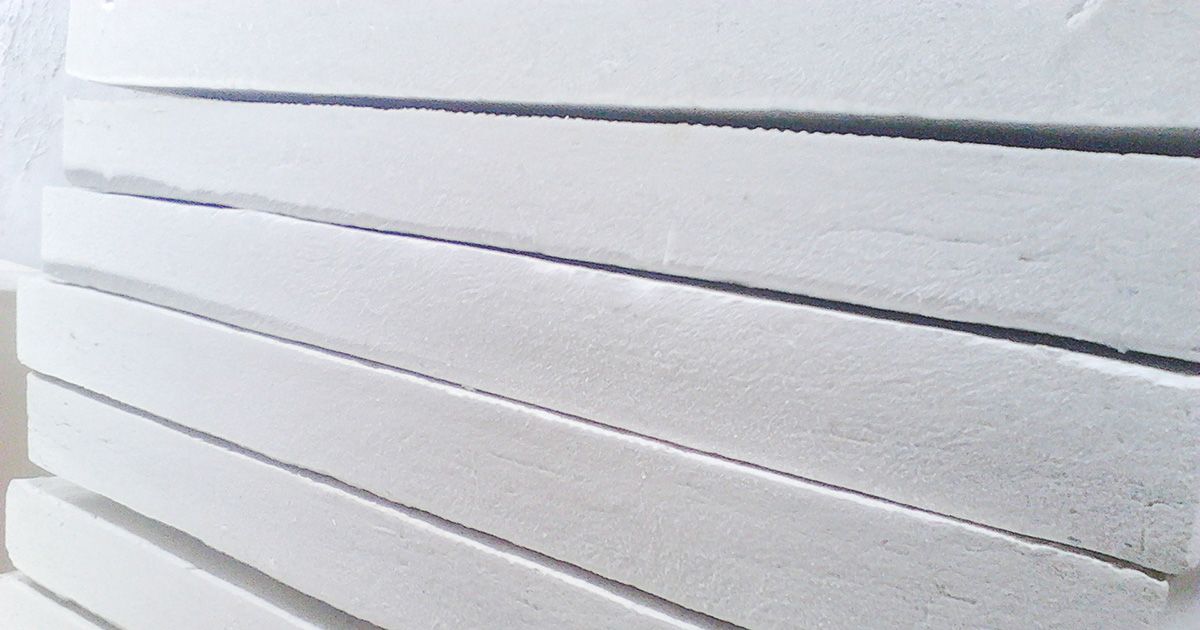
The moment a furnace hot face climbs past about 1600 °C, the usual insulation vocabulary changes. Standard refractory ceramic fiber (RCF) and soluble fiber have already reached the end of their reliable life. Polycrystalline alumina and mullite fiber can carry the load for another 200–300 °C, but eventually they too hit a wall. That wall is where alumina-zirconia-silica (AZS) fiber and yttria-stabilized zirconia (Y-PSZ) fiber take over.
This guide is written for buyers and specifiers who search for alumina wool panel, high alumina wool or want to buy high temperature zirconia insulation. The product name alone does not define performance. What matters is the material family, its real continuous use temperature, the phase changes it will undergo in service, and the failure mode that will end its life. Get those four things right and the insulation system will outlast the campaign. Get them wrong and a 2200 °C label will not save the lining.
Because the terms are used loosely in commerce, a search for alumina wool panel may return anything from non-glass high-alumina blanket to rigidized mullite board, while buy high temperature zirconia insulation may point to AZS felt, Y-PSZ loose wool or even alumino-silicate wool with a small zirconia addition. The rest of this article gives the engineering boundaries that separate those products.
Why 1600 °C is the line where standard ceramic fiber stops
Below roughly 1350 °C, glass-state aluminosilicate fibers dominate industrial insulation. They are flexible, low-cost and easy to convert into blankets, papers, modules and boards. Their weakness is that the glassy structure is thermodynamically unstable. Between 1000 °C and 1200 °C, amorphous alumino-silicate begins to devitrify, forming cristobalite and mullite. That crystallization is accompanied by shrinkage, loss of resilience and, in blanket linings, joint opening and local hot spots.
The result is a hard boundary: RCF can be classified at 1260–1430 °C, but its practical continuous use temperature in most industrial atmospheres is closer to 1000–1260 °C. Above that, the fiber spends its service life destroying its own structure.
This is not a problem that can be solved by simply raising the alumina content inside a glass-state fiber. High-alumina RCF delays devitrification slightly, yet it is still produced by melt-spinning and still contains a glass phase. Once that glass begins to crystallize in service, the same shrinkage and embrittlement occur. That is why the step above 1400–1600 °C is not a linear extension of RCF chemistry — it is a change of material route.
The five temperature tiers of industrial insulation fiber
We group industrial insulation fibers into five tiers. The first three are covered in detail elsewhere on this site; this article owns Tier 4 and Tier 5.
| Tier | Material family | Continuous use window | Why it survives |
|---|---|---|---|
| 1 | Low-alumina AES / standard RCF | ≤ ~1050 °C | Low cost, flexible, easy to install |
| 2 | High-alumina RCF / ASW | ~1100–1350 °C | Higher Al₂O₃ delays devitrification, but still glass-state |
| 3 | PCA / PCW / mullite fiber | ~1400–1600 °C | Pre-crystallized; no massive in-service devitrification |
| 4 | AZS alumina-zirconia-silica fiber | ~1500–1700 °C | Multi-phase design suppresses creep and crack growth |
| 5 | Y-PSZ yttria-stabilized zirconia fiber | ~1800–2200 °C | Stabilized cubic/tetragonal ZrO₂; virtually no glass phase |
These ranges are engineering boundaries, not supplier guarantees. Within each tier, density, impurity level, atmosphere and thermal cycling can move the practical limit up or down by more than 100 °C. A classification temperature printed on a datasheet is therefore only the first filter, not the design temperature.
What "classification temperature" really means
Three temperature concepts are routinely confused. Treating them as interchangeable is one of the most expensive mistakes in high-temperature specification.
- Classification temperature is the temperature at which a fiber can pass a standardized short-term test. It is useful for sorting products into grades, but it says nothing about 5000-hour life.
- Continuous use temperature is the hot-face temperature the material can tolerate for the design life under the actual atmosphere, load and cycle. It is always lower than the classification temperature, often by 100–300 °C.
- Short-term limit is the maximum temperature the material can survive without catastrophic failure in a controlled test. It must not be converted into a 24-hour or long-term rating.
For example, a Y-PSZ blanket may be associated with a 2200 °C short-term capability in manufacturer literature, but that does not mean it can be left at 2200 °C indefinitely in an oxidizing, dusty furnace with mechanical vibration. The real continuous use temperature is more likely 1800–2000 °C, and only after the supplier has confirmed the density, stabilizer content and impurity limits for the batch. This distinction between classification temperature and continuous use temperature applies to every tier, but it becomes critical — and expensive — above 1600 °C.
Tier 1–2: Glass-state aluminosilicate fibers — where they win and fail
RCF and alkaline-earth silicate (AES) wool win on cost, flexibility and supply chain maturity. They can be needled into blankets, converted into papers and ropes, and folded into modules. Their continuous-use ceiling is set by devitrification, not by melting. As the glass phase crystallizes, the fibers become rigid and brittle, and the blanket loses the spring-back that keeps joints tight.
High-alumina RCF pushes the Al₂O₃ content toward 50–70 wt%, but the manufacturing route is still melt-spinning. The fiber remains predominantly glassy, so it still devitrifies in service. high alumina wool is therefore not a safe shorthand for "high-temperature wool." Unless the specification also demands a pre-crystallized structure, a supplier could deliver a non-glass high-alumina fiber that fails the same way standard RCF does.
For the 1000–1350 °C range, RCF and AES remain excellent choices when chemical attack is not severe and maintenance access is available. Once the design hot face moves above ~1350 °C for long periods, the economics shift toward pre-crystallized fibers.
Tier 3: Polycrystalline alumina & mullite fiber — the pre-crystallized upgrade
Polycrystalline alumina (PCA), polycrystalline wool (PCW) and mullite fiber are produced by sol-gel or precursor spinning, not by melt-spinning. The key difference is that the major crystallization happens during manufacture. The delivered fiber is already dominated by α-Al₂O₃ and/or 3Al₂O₃·2SiO₂ (mullite), so there is far less in-service phase change to drive shrinkage.
A typical mullite composition is 72–75 wt% Al₂O₃ and 25–28 wt% SiO₂. PCA products may be higher in Al₂O₃. Their continuous-use window is roughly 1400–1600 °C, with short-term excursions toward 1650–1800 °C depending on density and impurity level. Linear shrinkage at 1500 °C is commonly below 2.5% for quality grades, but the exact figure must be tied to a test temperature, hold time and pre-load.
This tier is the direct upgrade path from RCF. Our polycrystalline mullite fiberboard and polycrystalline fiber modules sit here, covering rigid boards and folded module systems for furnace linings up to about 1900 °C classification. For many heat-treatment, ceramics and metal-processing furnaces, Tier 3 is the right economic choice.
Tier 4: Alumina-zirconia-silica (AZS) fiber — the 1500–1700 °C workhorse
When the hot face sits between 1500 °C and 1700 °C, a simple high-alumina fiber is no longer enough. The material needs zirconia. AZS fiber is an Al₂O₃–ZrO₂–SiO₂ system, typically with 55–75 wt% Al₂O₃, 10–25 wt% ZrO₂ and the balance SiO₂. The zirconia exists mainly as tetragonal ZrO₂, pinned by the alumina-silica matrix, and acts as a second-phase strengthener that slows creep, crack growth and grain-boundary sliding.
AZS is not "mullite with extra ZrO₂." It is a multi-phase engineering material. During service it can undergo further mullitization, ZrO₂ coarsening and, if the silica or impurity level is too high, formation of zircon (ZrSiO₄) and cristobalite. Those secondary phases can embrittle the fiber and cause powdering. The balance between Al₂O₃, ZrO₂ and SiO₂ therefore matters more than the classification temperature.
AZS is the natural home of alumina zirconia fiber when the application needs a flexible or shaped hot-face layer in the 1600–1700 °C range and the budget does not justify Y-PSZ. The term alumina zirconia fiber is sometimes applied to any aluminosilicate fiber that contains a small zirconia addition, but in the strict engineering sense it describes the high-zirconia AZS system used above 1500 °C. It is used in laboratory furnaces, specialty kilns, high-temperature filters and furnace hot-face repair layers.
Tier 5: Yttria-stabilized zirconia (Y-PSZ) fiber — the 1800–2200 °C ceiling
Pure ZrO₂ transforms from high-temperature cubic, through tetragonal, to low-temperature monoclinic on cooling. That t→m transformation is accompanied by a 3–5% volume expansion — enough to destroy a fiber mat or a rigid lining. The solution is a stabilizer, most commonly 3–8 wt% Y₂O₃, which locks the structure in the cubic/tetragonal t′ phase.
Y-PSZ fiber contains more than 90–95 wt% ZrO₂. It has virtually no glass phase and can operate continuously around 1800–2200 °C in clean, oxidizing atmospheres. It is the material people reach for when they want to buy high temperature zirconia insulation for crystal growth, vacuum heat treatment, aerospace thermal protection, rocket-nozzle linings or ultra-high-temperature research furnaces.
yttria stabilized zirconia fiber is not a single commodity. The stabilizer content, impurity level, density and fiber architecture all shift the practical continuous use temperature. A loose wool feels very different from a vacuum-formed board, and a hollow-fiber felt at 38 mg/cm³ has a thermal conductivity far below that of a dense Y-PSZ body. Anyone specifying yttria stabilized zirconia fiber must therefore lock density and form before comparing numbers.
The weaknesses of Y-PSZ are different from those of lower-tier fibers. Instead of devitrification, the risks are:
- t′ phase decomposition: long exposure above ~1200 °C can gradually break down the metastable t′ phase, allowing t→m transformation on cooling.
- Sintering: high temperature accelerates diffusion, closes pores and raises effective thermal conductivity.
- CMAS attack: calcium-magnesium-alumino-silicate melts can dissolve Y₂O₃ and destabilize the fiber.
- Brittleness: Y-PSZ is the most fragile of the five tiers and needs careful support and gradient design.
Head-to-head: AZS vs Y-PSZ selection matrix
The choice between AZS and Y-PSZ is rarely about a single temperature. It is about the combination of temperature, chemistry, cycling and budget.
| Criterion | AZS fiber | Y-PSZ fiber |
|---|---|---|
| Continuous hot face | ~1500–1700 °C | ~1800–2200 °C |
| Main chemistry | Al₂O₃–SiO₂–ZrO₂ multi-phase | >90% ZrO₂, Y₂O₃-stabilized |
| Thermal conductivity | Moderate; rises with density and aging | Very low in porous felts; higher in dense bodies |
| Thermal shock | Better than Y-PSZ due to residual glass/second phases | Good when t′ is stable; poor after sintering |
| Chemical resistance | Good in clean oxidizing air; sensitive to basic slag and glass | Excellent in many oxide melts; attacked by CMAS |
| Formability | Flexible blankets, boards, shaped pieces | Loose wool, felts, fabrics, vacuum-formed shapes |
| Relative cost | High, but below Y-PSZ | Highest of the five tiers |
| Dominant failure | Mullitization, ZrO₂ coarsening, liquid-phase softening | t′ decomposition, sintering, CMAS penetration |
If the hot face is 1650 °C in a clean furnace and the design needs boards or complex shapes, AZS is usually the more rational choice. If the hot face exceeds 1900 °C, or if chemical purity and extreme inertia are mandatory, Y-PSZ becomes necessary.
Manufacturing routes: why melt-spinning fails above 1600 °C
RCF is made by melting alumino-silicate and then blowing or spinning the melt into fibers while it is still viscous. That route works because the melt temperature is manageable and the glass phase keeps the fiber flexible.
High-alumina, AZS and Y-PSZ compositions cannot be melt-spun economically for three reasons:
- The melt temperature would be far higher, consuming refractory crucibles and energy.
- The melt crystallizes too quickly to form continuous, fine fibers.
- Contamination from the crucible and atmosphere becomes severe at those temperatures.
Instead, these fibers are made by sol-gel or precursor spinning. Metal salts or alkoxides are hydrolyzed and condensed into a viscous, spinnable sol. The sol is spun into precursor fibers by dry spinning, centrifugal spinning or electrospinning. The fibers are then dried, pre-sintered to remove organics and hydroxyl groups, and finally calcined at high temperature to convert them into crystalline oxides. The sol-gel route is what makes yttria stabilized zirconia fiber and high-purity alumina fiber commercially possible: it distributes the Y₂O₃ stabilizer uniformly through the precursor and keeps the final grain size small enough to retain the toughened t′ phase.
This route controls composition, fiber diameter and phase distribution far better than melt-spinning, but it is also more expensive and less suited to very large, dense or highly complex shapes. That manufacturing reality is what separates the "market name" from the "deliverable product."
Thermal conductivity, shrinkage and phase change: what the datasheet hides
Thermal conductivity of a fiber mat is not a single number. It is the sum of solid conduction through the fibers, gas conduction through the pores, and radiation across the pores. Above 800 °C, radiation becomes increasingly important, so the effective conductivity rises faster than a linear interpolation would predict. Published fits for aluminosilicate fiber give an exponent of roughly 1.3–1.5 on absolute temperature.
Reported values for polycrystalline mullite fiber are around 0.336 W/(m·K) at 1300 °C and 0.384 W/(m·K) at 1400 °C for typical blanket densities. Those are useful anchor points, but they cannot be transplanted to a different density, thickness or atmosphere. Hollow Y-PSZ fiber felts have been reported as low as 0.019 W/(m·K) at room temperature and 0.103 W/(m·K) at 1000 °C, but those values belong to laboratory structures around 38 mg/cm³ and do not describe a dense Y-PSZ board. For comparison, a dense Y-PSZ body may read 1.5–2.5 W/(m·K), an order of magnitude higher than the porous felt.
Shrinkage is a structural health indicator, not just a dimensional tolerance. It tracks the same processes that degrade insulation performance: crystallization, sintering and grain growth. A blanket that shrinks 2% at temperature may also have lost the spring-back that keeps seams closed, which can create hot spots even if the average thickness looks acceptable.
| Material | Dominant shrinkage driver | Typical design control |
|---|---|---|
| RCF / AES | Devitrification to cristobalite and mullite | Keep below continuous-use limit |
| PCA / PCW | Residual glass crystallization, grain growth | Pre-crystallized route, impurity control |
| AZS | Mullitization, ZrO₂ coarsening, liquid-phase softening | Control ZrO₂ and SiO₂, long-term aging tests |
| Y-PSZ | t′ decomposition, sintering, pore closure | Stabilizer control, limit CMAS exposure |
Chemical stability: molten metals, slag, CMAS and atmosphere limits
Alumina and zirconia are more chemically inert than glass-state fibers, but "inert" is always conditional. Silica-rich RCF, PCW and AZS are attacked by strong alkalis, basic slags, glass melts and fluorine-bearing atmospheres. In those environments, liquid silicates can penetrate along grain boundaries and accelerate softening.
High-purity Y-PSZ resists many oxide melts, yet it is not immune. CMAS deposits can dissolve the Y₂O₃ stabilizer, destabilize the t′ phase and trigger t→m transformation on cooling. Alkaline oxide slags, fluorides and metals that form low-melting compounds with ZrO₂ also require separate testing.
In reducing, vacuum or carbon-rich atmospheres, silica in the matrix can react:
SiO₂ + C → SiO↑ + CO↑
That reaction is controlled by temperature, oxygen partial pressure and catalytic surfaces. Air-oxidation data therefore cannot be extrapolated to a hydrogen furnace, vacuum furnace or active-metal process. Any UHT specification must state the atmosphere and the chemical species the hot face will contact.
Specifying UHT fiber: what to put on the purchase order
A product name such as alumina wool panel, high alumina wool or buy high temperature zirconia insulation is the starting point, not the specification. The phrase zirconia insulation alone can describe an alumino-silicate fiber with a few percent ZrO₂, a high-zirconia AZS felt or a Y-PSZ vacuum-formed shape — three very different products. Likewise, alumina zirconia fiber is sometimes attached to anything that contains both oxides, even when the zirconia level is too low to influence the 1600 °C boundary. A robust purchase order should therefore lock at least the following boundaries:
- Chemistry: Al₂O₃ / SiO₂ / ZrO₂ / Y₂O₃ ranges and impurity limits for Fe, Na, K, Ti and others.
- Phase: required main phases and allowed secondary phases after aging.
- Temperature: continuous hot face, short-term peak, heating/cooling rate and cycle count.
- Atmosphere: oxidizing, reducing, vacuum, inert gas or chemical vapor exposure.
- Density and thickness: with tolerances, because conductivity and strength depend on them.
- Linear change: test temperature, hold time, preload and acceptance limit.
- Thermal conductivity: test conditions including hot-face, cold-face and mean temperatures.
- Form and size: blanket, board, module, vacuum-formed shape or loose wool; maximum dimensions.
- Mechanical loads: compression, vibration and anchoring requirements.
- Safety: SDS, cutting and machining controls, waste handling.
When a supplier cannot provide project-specific corrosion, aging or phase-stability data, the safest path is to run a coupon test before committing the full lining.
Bottom line: match the material to the failure mode
Above 1600 °C, the correct answer is not "a higher grade of RCF." It is a switch to a pre-crystallized or fully oxide fiber. The selection sequence is:
- Define the real hot-face temperature, cycle, atmosphere and chemical exposure.
- Eliminate any material whose continuous-use boundary is below the design condition.
- Compare the remaining candidates by their dominant failure mode: devitrification for RCF, grain growth for PCW, liquid-phase softening for AZS, t′ decomposition and CMAS for Y-PSZ.
- Specify chemistry, phase, density and test conditions rather than a trade name.
For the 1400–1600 °C range, our polycrystalline mullite fiberboard and polycrystalline fiber modules provide a proven, pre-crystallized solution. For 1600–1700 °C, AZS fiber becomes the rational candidate. Above 1800 °C, only Y-PSZ can carry the thermal and chemical boundary. In every case, the material must be matched to the failure mode, not to the highest number on a datasheet.
If you are evaluating an alumina wool panel for a furnace hot face, start with the continuous use temperature and the expected shrinkage at that temperature, not the alumina percentage. If you want to buy high temperature zirconia insulation, decide first whether the application needs AZS or Y-PSZ, because the cost and failure modes differ by an order of magnitude. A well-written specification turns a vague request for zirconia insulation or alumina zirconia fiber into a deliverable product with traceable chemistry, phase stability and tested performance.
Frequently asked
Is 1700 C hot enough to need Y-PSZ, or will AZS work? +
For most 1500–1700 C clean oxidizing furnaces, AZS is the rational first choice. Y-PSZ becomes necessary when the continuous hot face approaches 1800 C, when extreme chemical purity is required, or when the application cannot tolerate the failure modes of AZS such as liquid-phase softening. The final decision should be confirmed by thermal cycling and aging tests.
Why can't high-alumina RCF simply be used at higher temperatures? +
High-alumina RCF is still manufactured by melt-spinning and remains predominantly glassy. Above 1000–1200 C it devitrifies, forming cristobalite and mullite, which causes shrinkage, embrittlement and joint opening. Raising the alumina content delays but does not eliminate this process. Pre-crystallized PCA or AZS fibers are needed because the major phase change is completed during manufacture.
Can alumina wool panels replace refractory bricks? +
Alumina wool panels are attractive where low thermal mass, fast heat-up, complex shape or low conductivity is needed, typically up to about 1600 C continuous. They are not a direct replacement for refractory bricks in high-abrasion, heavy-load or severe slag-contact zones. In those areas a gradient lining — rigid fiber backed by dense refractory — is usually safer.
Is zirconia insulation always the best choice above 1800 C? +
Y-PSZ zirconia insulation is the only practical fiber option for many 1800–2200 C applications, but it is not automatically the best choice. It is brittle, expensive and vulnerable to CMAS attack and t′ phase decomposition. If the atmosphere is dusty, contains alkaline oxides, or the component sees heavy mechanical loading, a different hot-face architecture may be required.
What does a 2200 C rating actually mean on a zirconia datasheet? +
It usually indicates a short-term upper capability under controlled conditions, not an unlimited continuous-use temperature. The practical continuous-use window for Y-PSZ is more commonly 1800–2000 C, depending on density, stabilizer content, impurity level and atmosphere. Always ask the supplier for the continuous-use temperature and shrinkage data at your specific design conditions.
Are polycrystalline alumina and AZS fibers safer than standard RCF? +
PCA and AZS have different chemistry from standard RCF, but any high-temperature fiber can release respirable particles during cutting, machining or removal. Safety should be managed by following the SDS, using local exhaust ventilation, HEPA collection, appropriate respiratory protection and safe waste disposal — not by assuming a material is harmless because of its chemistry.
What information must a buyer request from a UHT fiber supplier? +
At minimum: Al2O3/SiO2/ZrO2/Y2O3 ranges and impurity limits; main and allowed phases after aging; continuous-use temperature and short-term limit; linear change with test conditions; thermal conductivity at the design hot and cold faces; density and thickness tolerances; atmosphere compatibility; form and maximum dimensions; and a project-specific coupon or aging test plan.
Request a quote
Interested in our insulation solutions? Send us your requirements and our team responds within one business day.