

Ceramic Fiber
Ceramic Fiber Plus Blanket
Blanket with lower shot content and higher tensile strength for demanding linings and modules.
Baghouses, ESP hoppers, SCR reactors and FGD ducts, lined to keep the steel above the acid dewpoint at low load.
Overview
Environmental protection equipment — including baghouse dust collectors, electrostatic precipitators, SCR/SNCR systems, and flue gas desulfurization units — must operate reliably at elevated temperatures while handling corrosive, abrasive, and particulate-laden gas streams. Insulation is critical for maintaining process temperature above acid dew point, preventing condensation and corrosion, and protecting personnel.
Rosetexwool provides insulation and filtration solutions engineered for environmental equipment. From high-temperature ceramic fiber linings for baghouse tube sheets to rock wool blanket insulation for large-diameter flue gas ducting, our products ensure your emissions control systems operate efficiently and reliably.
Most failures in dedusting and flue-gas systems are not thermal. They happen when the steel surface drops below the acid dewpoint, condensate forms behind the insulation and the shell corrodes from the outside in. Thickness, a continuous vapour barrier and a sealed jacket have to work together: a gap at a flange or a crushed blanket at a support is enough to start the cycle.
Fire safety is the second constraint. Baghouse casings, ductwork and stacks run through plant areas where a combustible lining would add fuel load, so A1 non-combustible rock wool and calcium silicate are the default, with ceramic fiber reserved for thermal-oxidizer and incinerator zones above 800 °C.
Material Comparison
Dedusting and flue-gas-cleaning systems move hot, often corrosive and humid gases, so insulation must prevent condensation, keep surfaces above the acid-dewpoint and stay fire-safe. How rock wool compares with the materials used in environmental and dust-removal plants:
| Material | Service temperature | Fire rating | Thermal conductivity | Relative cost | Key use |
|---|---|---|---|---|---|
| Rock wool | -200 to 650°C | A1 non-combustible | 0.032-0.040 W/(m·K) | Low | Baghouse casings, ducts, stacks, fire barriers |
| Ceramic fiber | up to 1260°C | A1 | ~0.03 | Higher | High-temp incinerator & thermal-oxidizer linings |
| Calcium silicate | up to 1100°C | A1 | ~0.05-0.07 | Medium | Rigid duct & vessel insulation, humid areas |
| Glass wool | up to 400°C | A1 | ~0.04-0.05 | Low | Low-temp ducts, acoustic enclosures |
| PU / PIR foam | -50 to 150°C | B1/B2 | 0.022-0.027 | Medium | Thermal-only; needs fire barriers |
For most dedusting and FGD/SCR systems rock wool is preferred: A1 non-combustible, resistant to the humid, mildly corrosive environment, and cost-effective; ceramic fiber handles thermal-oxidizer and incinerator zones above 800°C; calcium silicate adds rigid, moisture-stable insulation on large ducts and vessels.
Application Scenarios
Collection and transport equipment is where surface temperature and condensation control carry the specification:
Cleaning, exhaust and fire-safety work is governed by acid dewpoint, wash-down and fire load rather than by peak gas temperature:
Material choice follows gas temperature and corrosivity: below 650°C rock wool is the cost-effective, fire-safe default for ducts, casings and stacks; above 800°C ceramic fiber lines oxidizers and incinerators; in continuously wet or wash-down areas calcium silicate adds moisture stability. Rosetexwool supplies jackets, boards and blankets sized for the dusty, humid dedusting environment, with vapor barriers where condensation control is required.
SCR & SNCR
Selective catalytic reduction only works inside a narrow band. Vanadia-titania catalyst operates between roughly 320 and 400 °C; below that window ammonium bisulfate forms and blinds the catalyst, above it the catalyst sinters and the NOx conversion falls away. Insulation on the reactor casing and the duct between the economiser outlet and the reactor is what keeps the gas inside that band when the unit runs at part load.
This makes the low-load case the design case. A duct that holds temperature at full firing but drops 20 °C at 50 per cent load will force ammonia injection to be curtailed, and the fix afterwards is far more expensive than the thickness that would have prevented it.
Ammonia injection grids, sootblower openings and catalyst access hatches are the details to watch — each one is a cold bridge into the reactor, and each one needs a sealed, insulated closure rather than an opening left for the next inspection.
Electrostatic Precipitators
An ESP is a large steel box with a hopper underneath, and both halves have an insulation duty. The casing is insulated to keep the gas above its dewpoint, while the hopper is insulated and often traced to keep the collected dust free-flowing.
The hopper target is usually around 130 to 150 °C at the wall, which is above the water and acid dewpoint of the gas but below the temperature at which the dust caking behaviour changes. Insulation alone rarely holds it at low load, so hopper heating is specified together with the lining, and the insulation is what makes the heater economically viable.
Structurally, an ESP casing is stiffened with beams that interrupt the lining. Each stiffener is a thermal bridge and a place where water collects; the lining detail has to wrap the web rather than stop at it, and the jacket has to drain over the flange rather than into it.
FGD & Wet Stacks
Flue-gas desulfurization splits the insulation problem in two. Upstream of the absorber the gas is hot and dry, and insulation keeps the duct above the acid dewpoint. Inside and downstream of the absorber the gas is saturated, and the steel is protected by a lining — rubber, glass-flake or acid-resistant brick — rather than by insulation.
In that wet zone external insulation is still fitted, but for a different reason: to stop the shell running cold enough for acid condensation on the outside, and to keep the surface safe to touch. The lining carries the corrosion duty; the insulation carries the thermal and personnel duty, and confusing the two is how wet stacks end up with corrosion under the cladding.
Reheat ducts between the absorber and the stack, where they exist, are the most exposed section in the plant: saturated gas, a temperature only slightly above dewpoint, and a large surface area. These runs are lined and insulated as a system, with a continuous vapour barrier on the warm side.
Wash-Down & Jacketing
Dust-removal plants are washed. Hoses, deluge systems and monsoon rain all put water on surfaces that were specified for dry conditions, and the jacket is the only thing standing between that water and the insulation.
Aluminium jacketing is acceptable where the environment is clean and slightly alkaline; stainless steel is the default anywhere chlorides, acid mist or regular wash-down are present. Lap direction, sealant placement and fastener type decide the outcome more than the metal thickness: laps run with the water, sealant goes at the outer edge so the joint drains, and fasteners are the same alloy as the jacket so the fixing does not become the corrosion site.
Where the plant washes the outside of a hot duct, thermal shock is also a factor. A jacket that is rigid and fully sealed will hold water against the lining; one that is sealed against ingress but free to drain at the bottom will survive years of the same treatment.
Fans & Expansion Joints
The components between the ducts are where air in-leakage and heat loss concentrate. Induced-draft fan casings, guillotine dampers, and fabric or metal expansion joints all sit in the gas path and all of them are routinely left bare because they are awkward shapes.
Expansion joints need a flexible insulation pack — ceramic fiber blanket or a knitted composite suitable for the temperature — restrained so it moves with the joint instead of tearing away from it. A rigid board across a joint will crack within a few thermal cycles and the crack becomes the water path.
Fan casings and damper frames are usually covered with a removable or semi-permanent mattress, because both are maintenance items. The rule is the same as anywhere else in the plant: if the component is opened, the insulation must be designed to be opened with it.
Retrofit on Live Plant
Most dust-removal systems are insulated long after they were built, and the constraints are different from a new-build. Scaffolding access, an operating gas path, and a surface that may already be corroded all shape what can be done.
The sequence that works is survey, repair, then insulate. A thermographic scan identifies the hot sections and the existing defects; the shell is inspected and repaired where wall loss is found, since insulating over a thin section hides the problem rather than solving it; and only then is the lining installed, with the thickness chosen from the measured surface temperature rather than from a generic table.
Two details are worth writing into the scope. Existing penetrations and supports are the places where retrofit insulation is usually compromised, and confirming that the new jacket does not trap water against an already-corroded shell is more valuable than another 10 mm of mineral wool.
Related Articles
Related Applications
Dust collection and emission control systems operate across industrial and commercial facilities. Related clean-operation applications:
Recommended Products
Matched to this application's temperature range and service conditions.
Blanket with lower shot content and higher tensile strength for demanding linings and modules.

Rigid calsil board to 1100 °C for furnace and kiln linings. High compressive strength.
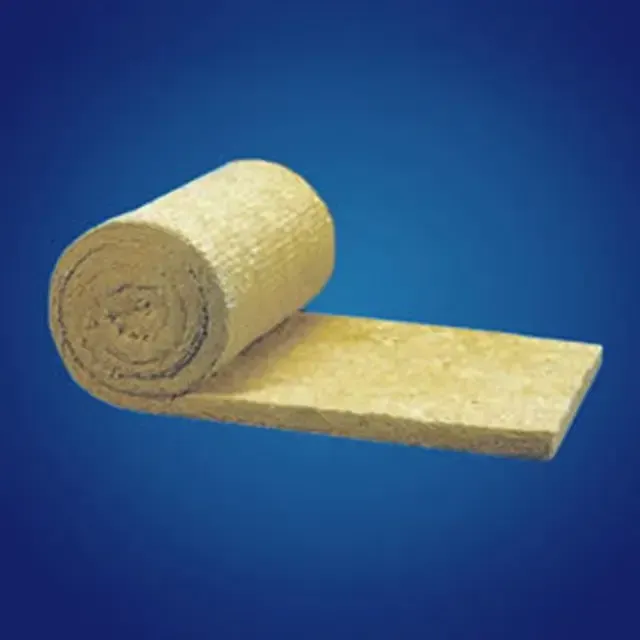
Flexible rock wool blanket to 650 °C for tanks, large ducts and equipment. A1 non-combustible.
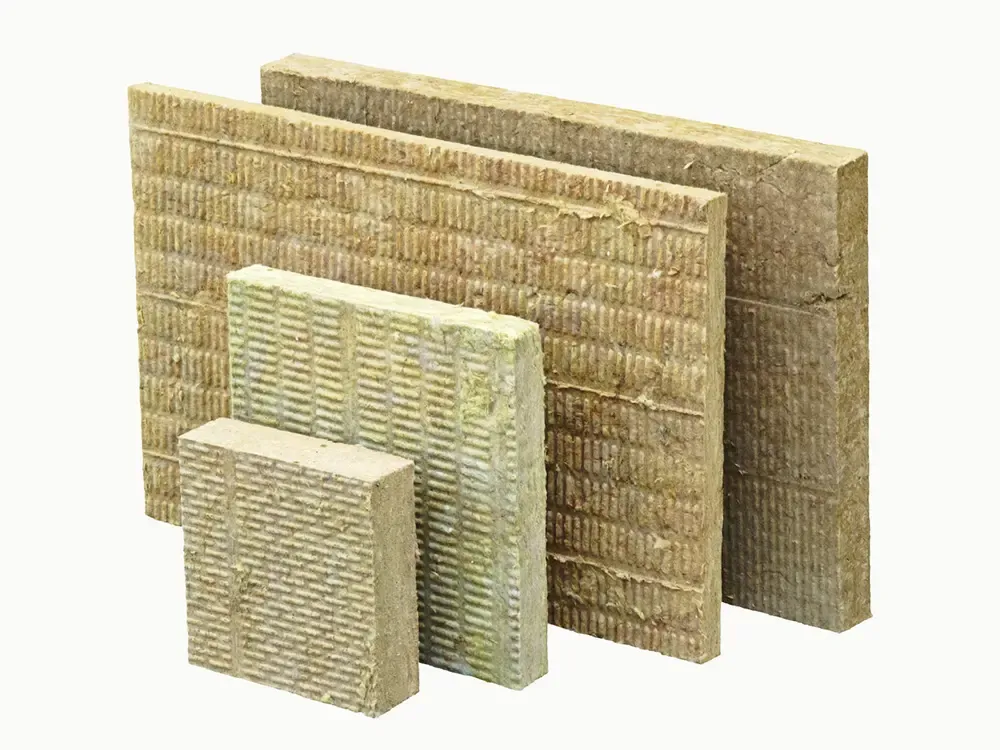
Basalt board to 650 °C. Fire-safe, water-repellent, for walls, roofs and oven casings.
Why Rosetexwool
Why Environmental & Dust Removal operations choose Rosetexwool insulation solutions.
Proper insulation keeps duct wall temperatures above acid dew point, preventing sulfuric and hydrochloric acid condensation that causes rapid corrosion.
Minimized heat loss maintains optimal flue gas temperature for downstream pollution control equipment.
Corrosion-resistant insulation systems reduce maintenance frequency on baghouses, precipitators, and ducting.
Reliable insulation helps maintain consistent emissions control performance for regulatory compliance.
Support
We recommend hydrophobic rock wool or ceramic fiber blanket with proper cladding and vapor barrier to keep duct and housing wall temperatures above the acid dew point. For coal-fired applications, we typically design for a minimum 25°C margin above the calculated dew point. Contact us for a system recommendation based on your fuel sulfur content and operating temperature.
While our primary focus is thermal insulation, we can supply ceramic fiber filtration media and related products through our partner network. Please contact us to discuss your filtration requirements and we will recommend the most suitable option.
Yes, our insulation systems use mechanical fastening with welded pins and speed clips to withstand baghouse pulse-jet vibration. We recommend rock wool blanket with wire mesh reinforcement for high-vibration areas, secured with stainless steel washers and clips on a 300mm grid pattern.
Last updated: November 6, 2026
Ready to start? Tell us your specs — we'll quote within 24 hours.
Get pricing
Tell us about your environmental & dust removal project requirements — our team responds within one business day.
Free sample + 24-hour engineering quote
Spec-match guarantee