
Refractory Ceramic Fiber (RCF) Manufacturer: Grades, Specifications & Supplier Selection
A buyer's guide to selecting a refractory ceramic fiber manufacturer - RCF grades, ASTM C892 specifications, composition certificates, and supplier quality assurance.
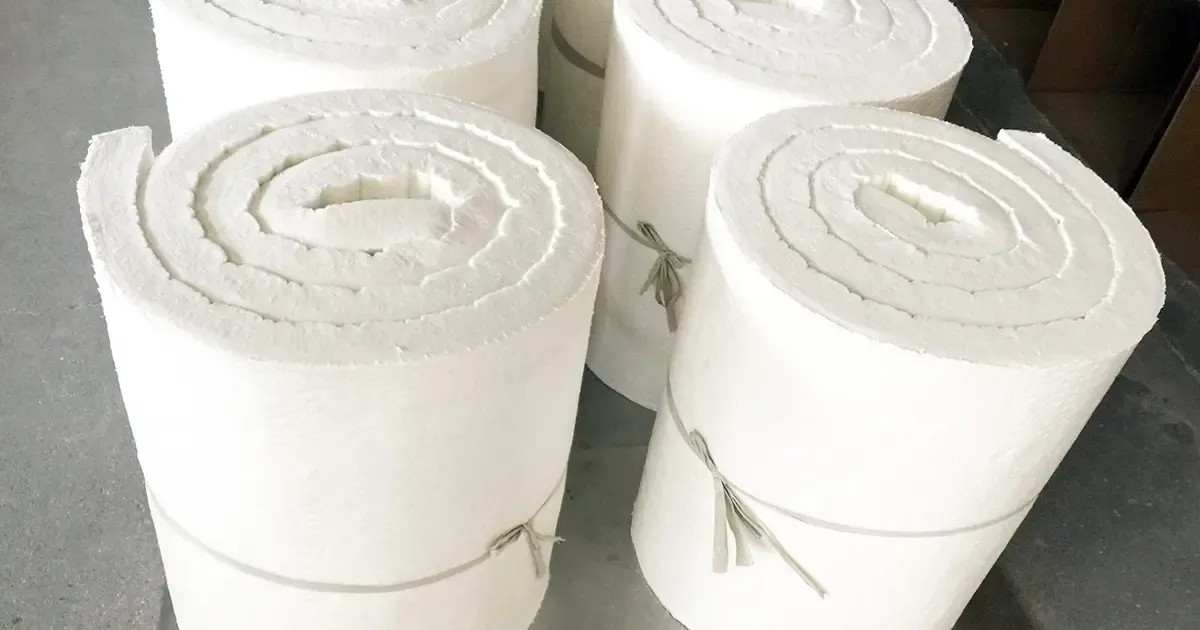
Refractory ceramic fiber (RCF) is the workhorse alumino-silicate insulation of the high-temperature industry - the material behind most furnace, kiln, and boiler linings running between 1100 °C and 1400 °C. For any buyer shortlisting a refractory ceramic fiber manufacturer, the fiber grade and the supplier's process control matter more than the price on the first quotation.
This guide explains what RCF actually is, the grade and specification data you should request, and the verification steps that separate a refractory ceramic fiber manufacturer with its own melt-spinning line from a trader reselling blanket by the roll.
What Is Refractory Ceramic Fiber
Refractory ceramic fiber is an alumino-silicate wool produced by melting a blend of alumina (Al2O3) and silica (SiO2) - typically 45-55 % Al2O3 - and fiberizing the melt by blowing or spinning. The wool is then processed into blanket, board, paper, rope, cloth, and module forms.
RCF earns the "refractory" label because its classification temperature starts at 1260 °C, well past the limit of mineral wool and glass fiber. Within the fiber family it sits between soluble AES fiber (lower temperature, lower bio-persistence) and polycrystalline mullite fiber (higher temperature, higher cost).
RCF Grades and Classification Temperatures
A credible refractory ceramic fiber manufacturer should offer at least three grades, each with a documented classification temperature:
- Standard RCF - classification 1260 °C, recommended continuous service around 1100 °C. The general-purpose grade for most furnace hot faces.
- High-purity / high-alumina RCF - classification 1400 °C, continuous service near 1200-1300 °C. Lower impurity (alkali and iron oxide) content for cleaner atmospheres.
- Zirconia-containing RCF - classification 1430 °C, continuous service around 1350 °C. Added ZrO2 stabilises the fiber against high-temperature devitrification.
Classification temperature is the temperature at which the fiber still meets its linear-shrinkage limit after 24 h; it is not the same as continuous service temperature.
Key Specifications to Request
When you ask a refractory ceramic fiber supplier for a quotation, these numbers belong on the data sheet - not in marketing prose:
- Chemical composition - Al2O3 and SiO2 content, plus impurity limits (Fe2O3, alkali oxides, CaO + MgO). Request a mill test certificate per batch.
- Classification / continuous temperature - confirm the grade and the recommended continuous limit under your furnace atmosphere.
- Density - blanket commonly 64-160 kg/m3; board 280-400 kg/m3 depending on rigidity and application.
- Fiber diameter and shot (slag) content - quality RCF carries low non-fibrous shot, typically below 15-20 % for blanket, improving handleability and thermal performance.
- Thermal conductivity - expect roughly 0.08-0.12 W/(m·K) at 400 °C and 0.18-0.25 W/(m·K) at 800-1000 °C depending on density.
- Loss on ignition (LOI) - organic binder content, verified so the lining does not shrink abnormally on first heat-up.
For product detail on the most common forms, see our ceramic fiber blanket, ceramic fiber board, and ceramic fiber module ranges, with the full material overview on the ceramic fiber insulation hub.
How to Evaluate the Manufacturer
The word "manufacturer" implies a production partner, not a roll reseller. Use these checks before issuing a purchase order.
1. In-house melt and spin control
A capable refractory ceramic fiber manufacturer runs its own melting and fiberizing line. That vertical control is what lets the supplier hold Al2O3 content and shot level batch after batch - and document it.
2. Grade range and customization
Beyond standard blanket, confirm the supplier can deliver board, paper, rope, cloth, module, and custom shapes, and can tune density and thickness to your lining design rather than only stock sizes.
3. Standards and certifications
Look for ASTM C892 (standard specification for RCF blanket) and EN 1094 references for ceramic fiber products, backed by ISO 9001, CE, and SGS documentation. Certifications are only useful if the supplier can show the valid scope and the test reports behind them.
4. Export and project capability
For distributors and EPC contractors, confirm seaworthy export packaging, private-label option, and documented lead times. A manufacturer exporting to 60+ countries already carries the packing and paperwork discipline your project needs.
5. Batch-level quality assurance
Request thermal-cycling and linear-shrinkage test reports, plus compression-recovery data for module products. Batch-level QA is the difference between a factory and a trader.
Typical Applications
Refractory ceramic fiber is specified wherever the hot face sits between roughly 1100 °C and 1400 °C:
- Steel and foundry furnace linings and covers
- Ceramic and technical-ceramic kilns
- Petrochemical reformers, crackers, and heaters
- Heat-treatment and annealing furnaces
- Boiler and duct insulation
- Power-plant and incinerator linings
Standards and Compliance
- ASTM C892 - RCF blanket specification
- EN 1094 - ceramic fiber insulating products
- ISO 9001 / CE / SGS - quality and conformity documentation
All Rosetexwool RCF products are manufactured under an ISO 9001 system, with CE and SGS supporting documents available per order, and are suitable for export to more than 60 countries.
Why Specify Rosetexwool
With manufacturing heritage since 1982, Rosetexwool supplies refractory ceramic fiber in every standard form - blanket, board, paper, rope, cloth, and module - with verified composition, documented grade temperatures, and batch-level quality reports. Our technical team assists with lining design and grade selection so the specification matches the real furnace atmosphere, not a generic datasheet.
Request a quotation with your service temperature and form requirement, and we will return a grade schedule with densities, impurity limits, and lead time.
Frequently asked
What is refractory ceramic fiber (RCF)? +
Refractory ceramic fiber is an alumino-silicate insulation wool (roughly 45-55 % Al2O3 plus SiO2) made by melting and fiberizing the blend, then forming it into blanket, board, paper, and module. Its classification temperature starts at 1260 °C, placing it above mineral wool and glass fiber for high-temperature furnace linings.
What temperature can refractory ceramic fiber withstand? +
Standard RCF is classified 1260 °C with recommended continuous service around 1100 °C. High-alumina grades reach 1400 °C classification (about 1200-1300 °C continuous), and zirconia-containing grades reach 1430 °C classification (about 1350 °C continuous).
How do I choose a reliable refractory ceramic fiber manufacturer? +
Verify five things: (1) in-house melting and fiberizing line with batch mill-test certificates for Al2O3 content; (2) a full grade range (standard, high-alumina, zirconia) and form flexibility; (3) ASTM C892 / EN 1094 references plus ISO 9001, CE, and SGS documentation; (4) export packaging and lead-time discipline; (5) batch-level QA including linear-shrinkage and thermal-cycling reports.
What certifications should an RCF manufacturer hold? +
The product is referenced against ASTM C892 and EN 1094; the quality system is evidenced through ISO 9001, with CE and SGS supporting documents available per order. Ask for the valid certificate scope and the test reports behind each claim.
Which RCF grades are available? +
Three main grades: standard RCF (1260 °C classification, ~1100 °C continuous), high-purity / high-alumina RCF (1400 °C classification, ~1200-1300 °C continuous), and zirconia-containing RCF (1430 °C classification, ~1350 °C continuous). Each is selected from the furnace atmosphere and service temperature.
Request a quote
Interested in our insulation solutions? Send us your requirements and our team responds within one business day.