
Aerogel vs Ceramic Fiber: High-Temperature Performance Compared
Aerogel blanket wins below 650 °C; ceramic fiber owns 1000–1430 °C. A zone-by-zone comparison of thermal conductivity, shrinkage, CUI resistance and life-cycle cost.
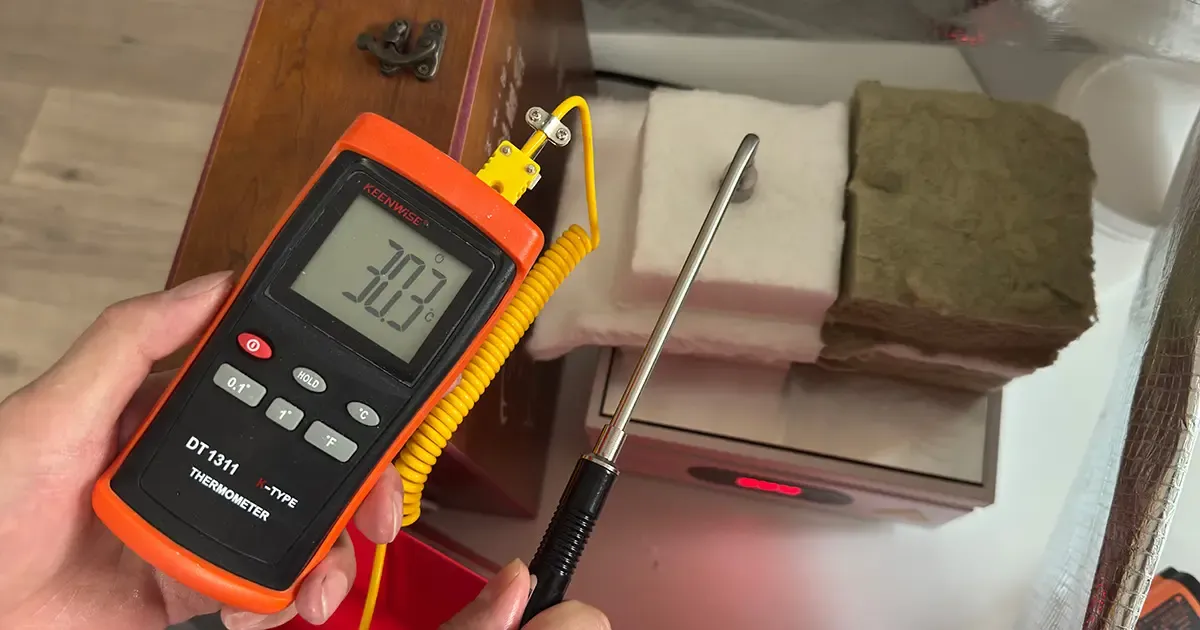
Aerogel and ceramic fiber are often compared as if they were competing grades of the same product. They are not. They are two material systems built for different temperature worlds, with different failure modes and different cost structures — and choosing between them is a temperature-boundary decision before it is a price decision. This guide compares them where the comparison actually matters: sustained high-temperature service, not datasheet highlights.
The Short Answer: Different Materials, Different Temperature Worlds
Flexible silica aerogel blanket holds a genuine advantage from ambient up to roughly 650 °C. Its nanoporous structure suppresses gas conduction so effectively that it reaches the target insulation value at roughly half the thickness of fibrous alternatives — a decisive benefit in dense pipe racks, offshore platforms and space-constrained retrofits. It is also hydrophobic, which makes it one of the better tools against corrosion under insulation (CUI).
Ceramic fiber — high-temperature insulation wool (HTIW) — plays a different game. Spun or blown from molten alumina-silica, graded from standard 1260-class through high-purity, high-alumina and zirconia grades up to 1430 °C classification, it is the default working-layer and back-up material for furnace linings, kilns, heaters and anywhere the hot face runs from about 900 °C upward. Its thermal conductivity is higher, but its temperature ceiling is roughly double that of commercial aerogel blanket.
The mistake to avoid: treating either material's headline number as a service rating. Aerogel's conductivity advantage shrinks as temperature rises, and ceramic fiber's classification temperature is a heat-aging grade, not a continuous hot-face rating. Both need interpretation before either enters a specification.
What "Classification Temperature" Actually Means
Ceramic fiber datasheets lead with numbers like 1260 °C, 1400 °C and 1430 °C. These are classification temperatures — the grade achieved in a standardized heat-aging test (permanent linear shrinkage not exceeding a defined limit after a defined soak). They are not continuous service ratings. Established industry practice keeps continuous hot-face service well below classification — commonly 100–200 °C below — which is why a 1260-class blanket is typically designed around 1050–1100 °C continuous hot face, a 1400-class around 1250–1300 °C.
Aerogel products have the same trap. Commercial flexible silica aerogel blankets typically classify at 650 °C, but peer-reviewed work on pure silica aerogel shows long-term stability only up to about 650 °C, above which particle coarsening, neck growth and pore collapse degrade the nanostructure irreversibly. Field guidance is even stricter: hydrophobic surface treatment degrades above roughly 400 °C, and datasheets commonly rate continuous hot-face service at 400–650 °C depending on the reinforcement fiber. The lesson generalizes: design from continuous service data and linear shrinkage values, never from the grade number on the front page.
Thermal Conductivity: Where the Gap Closes
Near ambient, the gap is dramatic. Aerogel blanket commonly tests around 0.020–0.025 W/(m·K) at a 25 °C mean temperature, while ceramic fiber blanket at comparable density typically falls in the 0.05–0.10 W/(m·K) range depending on grade, density and fiber structure. This is why a 10 mm aerogel blanket can replace a 25–40 mm fibrous layer at low temperatures.
But conductivity curves diverge with temperature — and they converge. Published upper-limit values for Class-A aerogel products show mean-temperature conductivity rising from about 0.021 W/(m·K) at 25 °C to roughly 0.036 W/(m·K) at 300 °C and 0.072 W/(m·K) at 500 °C. At the same 500 °C mean temperature, commercial ceramic fiber blanket can fall in the 0.10–0.16 W/(m·K) range — still higher, but no longer a 4:1 story. Two effects drive aerogel's curve upward: the solid skeleton conducts more as temperature rises, and infrared radiation increasingly bypasses the nanopores unless opacifiers are added.
Three comparison rules prevent the most common datasheet errors:
- Same mean temperature. One product reports at mean temperature, another at hot-face temperature — sorting the columns directly is meaningless.
- Same test standard and conditions. Different standards control edge losses, hot plate orientation and compression differently.
- Installed, not lab condition. Joints, compression, seams and anchor penetration can dominate real heat loss; a laboratory slab number is a starting point, not a result.
The 650 °C Ceiling: Why Aerogel Fails High
Aerogel's failure at high temperature is structural, not gradual. Three mechanisms stack up:
- Sintering and densification. Above roughly 600–650 °C the silica skeleton sinters: particles coarsen, necks grow, pores collapse and the material densifies. Conductivity rises and the blanket shrinks — and shrinkage opens gaps at seams that compound the problem.
- Loss of hydrophobic treatment. The organic surface chemistry that repels water degrades above roughly 400 °C. The blanket does not fail because of this, but its CUI advantage quietly disappears at exactly the temperatures where CUI risk is most severe.
- Reinforcement limits. Commercial blankets are silica aerogel hosted on glass or ceramic fiber batting. The aerogel may survive, but if the reinforcement fiber or stitching fails first, the composite sheds powder and delaminates. The composite's real limit is always the weakest component.
This is why the practical rule is simple: flexible aerogel blanket is a sub-650 °C material, and conservative designs keep continuous hot-face service well inside that band. Above it, the material does not melt dramatically — it quietly shrinks, gaps and underperforms, which in a furnace wall is worse.
Ceramic Fiber: Graded for 1000–1430 °C Service
Ceramic fiber's strength is not a single number but a system of grades and installation methods:
| Grade | Classification | Typical continuous hot face | Typical role |
|---|---|---|---|
| Standard RCF (1260-class) | 1260 °C | ~1000–1100 °C | Back-up layers, general furnace linings |
| High-purity (1260–1350) | 1260–1400 °C | ~1100–1200 °C | Cleaner atmospheres, lower shot content |
| High-alumina (1400-class) | 1400 °C | ~1200–1300 °C | Hot-face linings in kilns and heaters |
| Zirconia-grade (1430–1600) | 1430 °C+ | ~1300–1430 °C | Highest-temperature fiber linings |
Blanket, module, board and felt forms cover different jobs: needle-free interlocked blanket for compressible linings, folded or stacked modules for large furnace walls and roofs (where anchor systems and compression recovery do the structural work), and boards where erosion resistance and dimensional accuracy matter. For chemistry-driven limits — alkali attack, reducing atmospheres, flame wash — the grade selection matters more than the classification number, and where conditions exceed even zirconia-grade fiber, polycrystalline mullite fiber board extends the fiber route to about 1600 °C continuous service and alumina-zirconia fiber products go higher still.
The trade-offs are equally real: fiber linings transmit radiation at high temperature (their effective conductivity rises with hot-face temperature), modules concentrate heat at anchors, and long exposure above ~900–1000 °C progressively converts amorphous silica to crystalline phases — relevant to both shrinkage and demolition safety, as covered below.
Durability: Shrinkage, Crystallization and Aging
Aerogel ages from the chemistry up. Loss of hydrophobic groups, then sintering-driven densification, then — if the reinforcement fails — powder shedding and delamination. Service-exposed blankets should be re-checked for thickness, basis weight, conductivity and compression recovery, not just visual condition. The performance you bought is not automatically the performance you have after two years at 550 °C.
Ceramic fiber ages from the crystal structure down. Heat treatment causes grain growth and linear shrinkage (datasheets typically warrant 3–5% after classification-temperature exposure); above ~900–1000 °C the amorphous silica phase progressively crystallizes to cristobalite, making the lining more brittle. Add gas-velocity washout, chemical attack from alkalis and fluorides, mechanical vibration and thermal cycling, and the lining's service life becomes a systems question — anchors, joints and outer cladding included.
The procurement consequence: buy initial and aged performance as separate line items. Require conductivity before and after defined heat aging, permanent linear change, hydrophobicity retention (aerogel), crystalline-phase screening after service (ceramic fiber), and define inspection triggers — surface temperature anomalies, seam cracking, anchor hot spots — rather than calendar-based replacement.
Selection by Temperature Band
| Design hot face | Best-fit primary material | Role for the other | Notes |
|---|---|---|---|
| Up to 400 °C | Aerogel blanket | Ceramic fiber viable if cost-driven | Aerogel wins on thickness, weight, CUI; compare installed cost |
| 400–650 °C | Verified aerogel blanket (check the actual datasheet) | Ceramic fiber as economical core with aerogel cold-face layer | Grade-specific verification is mandatory; do not generalize |
| 650–900 °C | Ceramic fiber (standard/high-purity grades) | Aerogel only as cold-face back-up, thin layer | Fiber's natural territory begins here |
| 900–1200 °C | Ceramic fiber: high-alumina/zirconia grades, modules | Aerogel cold-face layer only in hybrid linings | Design from linear shrinkage and radiation transmission |
| Above 1200 °C or flame wash | Polycrystalline fiber, refractory working lining + fiber back-up | — | Out of aerogel's range entirely |
Two patterns are worth emphasizing. First, 650 °C is not an aerogel guarantee, and 1200 °C is not a ceramic fiber guarantee — every band assumes grade-specific verification. Second, hybrid linings usually beat either pure choice: at 900–1200 °C, an erosion-resistant hot-face working layer, high-grade ceramic fiber as middle back-up and a thin cold-face aerogel layer combines each material's strength. Conversely, on a 400–650 °C pipeline, ceramic fiber as the bulk layer with aerogel only where thickness matters can balance cost and compactness. See our guide to high-temperature insulation wool temperature ratings for grade-by-grade detail.
CUI, Moisture and Space: Where Aerogel Still Wins Below 650 °C
Three operating problems repeatedly hand the decision to aerogel within its temperature band:
- Corrosion under insulation (CUI). Aerogel blanket is typically highly hydrophobic with low water absorption, keeping the steel surface drier during shutdowns and in marine or humid environments. Most ceramic fiber products absorb moisture readily, raising both conductivity and corrosion risk when cladding leaks.
- Space and weight. Half the thickness means smaller support steel, tighter pipe routing, lighter offshore loads and slimmer personnel protection. On dense pipe racks and retrofits, this can be worth more than the material premium.
- Complex geometry. Blanket wraps valves, flanges, elbows and irregular equipment without the custom fabrication rigid products need — faster installation and fewer joints.
Ceramic fiber answers back on cost, temperature ceiling and repairability: local replacement of a damaged module is far simpler than re-wrapping an aerogel system, and no fiber grade struggles to survive 1000 °C. The correct comparison is installed life-cycle cost at equal cold-face performance — not price per cubic meter.
Safety and Handling: RCF Exposure vs Aerogel Dust
Ceramic fiber carries the heavier regulatory framework. Refractory ceramic fibers of respirable size are classified by IARC as Group 2B (possibly carcinogenic) and by the US NTP as "reasonably anticipated to be human carcinogens"; recognized exposure limits include the NIOSH REL of 0.5 f/cm³ and ACGIH TLV of 0.2 f/cm³, and EU rules list specific RCF types as carcinogens with a 0.3 f/mL occupational limit. After service above ~900–1000 °C, crystallization adds respirable crystalline silica to the hazard profile — US OSHA's silica standard sets an 8-hour TWA PEL of 50 µg/m³ — so demolition of a long-serving RCF lining needs crystalline-silica-aware controls, not just fiber controls.
Aerogel blanket avoids the RCF classification but is not "risk-free": cutting, abrasion and breakage release fine dust and fibers, and damaged blankets shed powder. Both material families need the same discipline — enclosed cutting, local exhaust ventilation, HEPA vacuuming, never compressed-air blowing — with respiratory protection matched to a real exposure assessment. For a comparison of aerogel against fibrous materials on thickness and cost grounds at lower temperatures, see aerogel vs traditional insulation; for the mineral-wool matchup, see aerogel-type blanket vs mineral wool.
Life-Cycle Cost: Look Beyond Price per Cubic Meter
Aerogel's material premium (commonly several times ceramic fiber per unit volume) buys thickness, weight and hydrophobicity. Whether it is "worth it" depends entirely on what those attributes are worth in the specific project:
- Aerogel ROI appears when space, support steel, scaffold time, CUI risk or outage windows are expensive — dense pipe racks, offshore platforms, compact skids.
- Ceramic fiber ROI appears when space is available, temperature is high, and mature anchor-and-module systems allow local repair at low material cost.
- Energy savings must be computed, not assumed: identical boundary conditions, same cold-face target, same energy price and operating hours, then compare — savings claims quoted without a defined baseline are marketing.
The practical method: run three designs to the same cold-face temperature (all-aerogel, all-ceramic-fiber, hybrid gradient), price each through full installed cost including anchors, cladding, scaffold and outage time, then add a maintenance-and-removal line that honestly accounts for fiber exposure controls (ceramic fiber) and contamination/delamination risk (aerogel). The ranking often flips between projects — which is exactly why the analysis must be project-specific.
FAQ
Need product-level options? Browse our ceramic fiber modules product page and nano aerogel insulation blanket product page, or compare nano microporous insulation and polycrystalline mullite fiber board for the ultra-high-temperature end. For fiber-grade chemistry trade-offs, see polycrystalline fiber vs standard ceramic fiber, and for furnace-material shortlisting, our best heat-resistant materials guide covers the full ladder from mineral wool to alumina fiber.
Frequently asked
Can aerogel blanket replace ceramic fiber above 650 °C? +
No. Commercial flexible silica aerogel blankets lose hydrophobic treatment above roughly 400 °C and enter sintering-driven shrinkage near 650 °C, which is why most product standards cap their long-term class at 650 °C. Above that band, ceramic fiber — graded from standard 1260-class blanket through high-alumina and zirconia grades to 1430 °C — is the correct working-layer material. Aerogel can still appear in a hybrid lining, but only as a cold-face back-up layer, never as the hot-face layer.
Why does a 1260 °C ceramic fiber blanket not run at 1260 °C continuously? +
1260 °C, 1400 °C and 1430 °C are classification temperatures: the grade achieved in a standard heat-aging test, not a continuous hot-face rating. Good practice keeps continuous hot-face service 100–200 °C below classification, so a 1260-class blanket is typically designed for about 1050–1100 °C continuous service. Always design from the specific data sheet's permanent linear shrinkage value, not the grade number.
Is aerogel insulation really four to five times better than ceramic fiber? +
Only in narrow, low-temperature comparisons. Aerogel blanket conducts roughly 0.020–0.025 W/(m·K) near ambient versus about 0.05–0.10 for ceramic fiber at the same mean temperature, but the gap narrows sharply as temperature rises — at a 500 °C mean temperature high-grade aerogel is already near 0.07 W/(m·K). Comparisons must use the same mean temperature, thickness, density and test standard; fixed ratios quoted across all temperatures are marketing, not engineering.
Which material is safer to handle, aerogel or ceramic fiber? +
Neither is risk-free. Refractory ceramic fiber is subject to recognized occupational exposure limits (NIOSH 0.5 f/cm³, ACGIH 0.2 f/cm³) and, after service above about 900–1000 °C, can convert to crystalline silica, adding a respirable crystalline silica hazard during demolition. Aerogel blanket avoids the RCF classification but still sheds dust and fine particles when cut or abraded. Both need enclosed cutting, local exhaust, HEPA vacuuming and respiratory protection — never compressed-air blowing.
When is aerogel blanket worth its premium over ceramic fiber? +
In thin-space, weight-sensitive and CUI-prone applications below about 650 °C: dense pipe racks, offshore platforms, compact equipment and retrofits where cutting insulation thickness in half reduces support steel, scaffold time or personnel protection. If space is not constrained, ceramic fiber or mineral wool usually delivers the same cold-face temperature at lower material cost.
What is the best hybrid approach for a 1000–1200 °C furnace wall? +
A gradient lining: an erosion-resistant hot-face working layer, high-grade ceramic fiber modules or blanket as the middle back-up, and — where the steel shell temperature must be pushed down — a thin aerogel layer on the cold face, well inside its temperature limit. This combines ceramic fiber's temperature capability with aerogel's low-conductivity, thin-profile advantage where it is safe to use.
Request a quote
Interested in our insulation solutions? Send us your requirements and our team responds within one business day.