
Pyrogel vs Mineral Wool: Which to Choose?
Pyrogel vs mineral wool on cost per R-value and lifecycle payback for tanks, vessels and equipment: when aerogel pays back faster, and when mineral wool remains the value default.
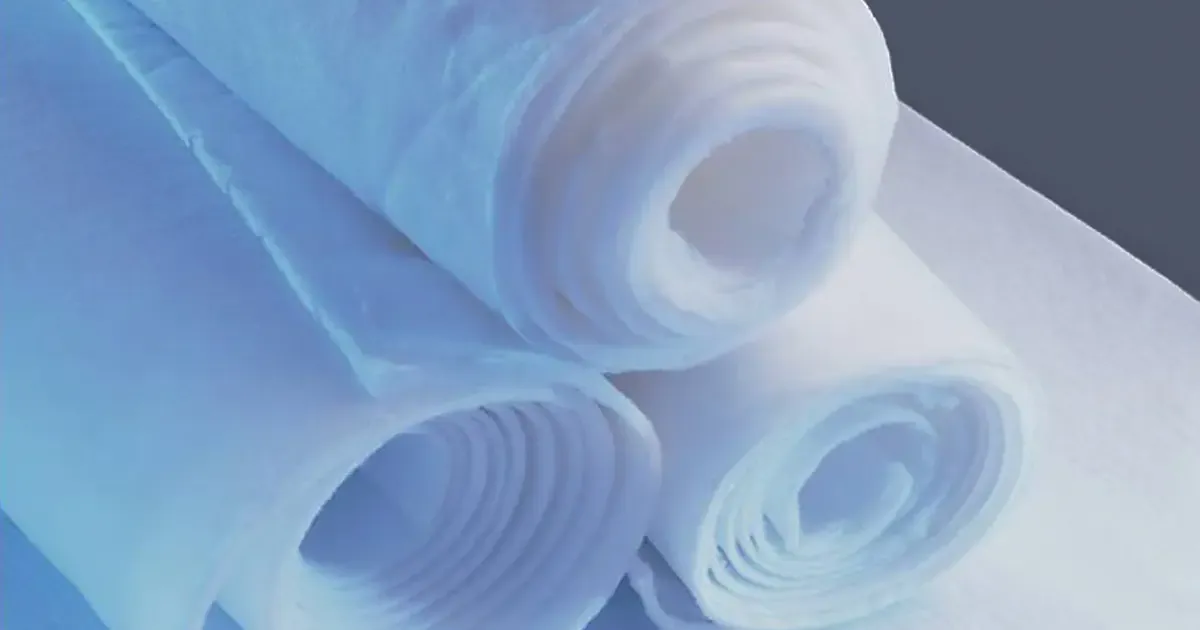
Pyrogel-type aerogel — the thin, high-efficiency blanket family most buyers mean when they search for "pyrogel" — is the most efficient industrial insulation per millimetre. Mineral wool (rock or glass) is the cheap, proven, high-temperature workhorse. They are not really rivals; they slot into different constraints. The practical question is rarely "which material is better" and almost always "which one is cheaper to own over the life of the plant" — and that depends on where the money actually goes.
This article compares the two on cost per R-value, lifecycle cost and payback for general plant surfaces — tanks, vessels, equipment and ducts — where space is not the binding constraint. If your application is piping, see our dedicated pyrogel vs mineral wool pipe insulation comparison, which covers pipe racks, CUI and line-by-line economics.
The Core Trade-off
| Factor | Pyrogel (aerogel) | Mineral Wool (rock / glass) |
|---|---|---|
| Thermal conductivity (25 °C) | 0.020–0.025 W/(m·K) | 0.034–0.044 W/(m·K) |
| Thickness for same R | roughly 1/3 to 1/2 | baseline |
| Max continuous service temp | about 650 °C (typical grade) | rock wool ~650–750 °C; glass wool ~350–450 °C |
| Density | 150–250 kg/m³ | 80–200 kg/m³ (common 100–150) |
| Hydrophobic behaviour | Inherently hydrophobic, breathable | Hydrophilic unless treated; relies on jacketing |
| Typical service life | 20+ years | 5–10 years in wet/cyclic service, 15–30 in dry |
| Material cost | 3–10× mineral wool | Lowest first cost |
The last three rows — water behaviour, service life and cost — are where the lifecycle decision is actually made. Conductivity differences get most of the attention, but on a dry indoor tank the conductivity gap narrows to a thickness argument, while outdoors the water behaviour can decide whether the insulation is replaced once or three times in twenty years.
The Real Cost Question: Price per R-Value, Not Price per Square Metre
"Mineral wool is cheaper" compares the wrong unit. A square metre of 25 mm aerogel and a square metre of 25 mm mineral wool are not the same product — the aerogel carries roughly twice the thermal resistance. The fair comparison is cost per unit of R-value (thermal resistance) at the same surface temperature.
Because aerogel needs only one-third to one-half the thickness for the same performance, the material premium is partially offset before installation even starts: you buy less volume, ship less weight, store less material and handle fewer layers. On an area basis aerogel is still the more expensive material — that does not change. But the gap is much smaller than the 3–10× multiple on a per-square-metre quote suggests, and on the next page of the cost sheet the thinner system starts saving money.
Five Lines of a Lifecycle Cost Estimate
A defensible comparison has five lines, not one:
- Material cost — aerogel 3–10× per m³; mineral wool lowest. This is the only line where mineral wool wins outright.
- Installation labour — aerogel is light and flexible: one person can carry a large roll, and it cuts with a knife around nozzles, brackets and irregular geometry. Mineral wool is heavier and rigid boards need cutting and fitting. On complex equipment the labour gap narrows or reverses the material gap.
- Structure and support — at one-third to one-half the thickness and a fraction of the weight, aerogel reduces support steel, jacketing area and, on elevated or offshore work, the crane and scaffolding cost. Weight is a real money line on roofs, vessels and modules.
- Energy loss over the operating life — the line that compounds. A small conductivity advantage on a surface that runs hot for years is worth more than any first-cost saving. This is the line that justifies aerogel on continuously hot process equipment.
- Maintenance and replacement — mineral wool that gets wet loses performance and must be replaced; aerogel's hydrophobic structure survives wet–dry cycling. Where the outer jacket is likely to be damaged or opened repeatedly, this line can exceed the original material cost.
Add the five lines over a 15–20 year horizon and the "cheap" material is not always the cheapest. On dry, protected, indoor surfaces mineral wool usually still wins the total; on wet, cyclic or repeatedly-maintained equipment aerogel frequently wins despite the 3–10× material multiple.
When Aerogel Pays Back Faster
The payback period for the aerogel premium is a function of three variables: operating hours, surface temperature and how often the insulation gets wet or damaged. Rough rules from plant practice:
- Continuously hot process equipment (over ~6,000 operating hours per year at high temperature) — the energy-loss line compounds fastest. Payback on the premium is commonly in the 2–3 year range, after which aerogel is the cheaper material for the rest of its 20+ year life.
- Outdoor, wet or coastal duty — every wet–dry cycle that would force a mineral wool replacement pays back part of the aerogel premium. Where mineral wool would be replaced even once before the first planned shutdown, the case flips early.
- Retrofit where access, scaffolding or downtime is expensive — a thin single-layer aerogel system installs faster than a thick multi-layer mineral wool build. The saved shutdown hours can repay the material premium in a single outage.
- Weight-sensitive locations — roof plant, vessel tops, offshore modules and structures near their load limit. Saving structural steel is saving money before the insulation ever carries heat.
When none of these conditions apply — the surface is dry, indoor, warm rather than hot, and rarely opened — the payback stretches past a sensible horizon and mineral wool is the value answer. The decision is a payback calculation, not a brand preference.
When Mineral Wool Is Still the Value Choice
Mineral wool remains the smarter buy in the majority of general plant situations:
- Large flat and curved surfaces — boiler casings, big ducts, tank roofs and walls where there is no shortage of space. Thick mineral wool is cheap and the extra thickness costs nothing but a few centimetres.
- Dry, protected, indoor locations — the service-life penalty for mineral wool mostly disappears when the material never gets wet.
- Acoustic duties — rock wool and glass wool are excellent sound absorbers; aerogel is not. Where noise control shares the specification, mineral wool does two jobs at once.
- Budget-capped projects — when the first-cost line is a hard gate, mineral wool delivers acceptable performance for a fraction of the outlay, and the maintenance team can manage the water risk with good jacketing and inspection.
- Broad availability — mineral wool is stocked locally in virtually every industrial region; aerogel is a specialist purchase with longer lead times (see below).
For most plant insulation, rock wool blanket delivers the best cost per R-value in dry indoor service. Reach for aerogel when space, weight, water or operating hours make the lifecycle calculation favour the premium material. Above the aerogel temperature limit, step up to ceramic fiber blanket instead.
Supply Chain and MOQ Realities
Aerogel blanket is a specialist product: production is concentrated, lead times are longer, and minimum order quantities are higher than for mineral wool. Standard rolls come in set widths (typically around 1.2–1.5 m) and fixed thicknesses, so offcuts and wastage need planning on irregular jobs. Mineral wool, by contrast, is manufactured in every industrial country, stocked by distributors, and available in short lengths and odd quantities within days.
Practical consequences for procurement:
- Order aerogel early and in planned batches — combining several small requirements into one order improves both price and lead time.
- Confirm the minimum order quantity with the supplier before design freeze — a project sized just under a MOQ threshold can be forced into a much larger purchase.
- Check roll width against your largest flat surface — joining narrow rolls costs labour and creates seam risk; one wide roll is often cheaper than two narrow ones.
- Budget for protective handling — aerogel compresses under point loads; storage and installation need care that mineral wool does not demand.
None of these are blockers — they are planning items. But they explain why aerogel is specified deliberately for the surfaces where it pays, while mineral wool remains the default everywhere else. Our nano aerogel insulation blanket page gives the available widths, densities and service limits.
Our Take
Pyrogel-type aerogel and mineral wool are not competing versions of the same product; they are answers to different cost questions. Mineral wool is the value default for dry, spacious, indoor plant surfaces. Aerogel earns its premium where the operating hours, the water risk or the weight budget make the lifecycle total cheaper — and on those surfaces it is genuinely the lower-cost material over 20 years.
Specify on a payback calculation, not on the per-square-metre quote. If you need a thickness starting point, our pyrogel insulation thickness guide provides charts by temperature and surface type. For piping-specific selection — pipe racks, CUI risk and line-by-line economics — see the pyrogel vs mineral wool pipe insulation comparison.
Need a cost-per-R-value comparison for your actual surface temperature and operating hours? Contact our engineering team with the surface type, temperature and annual operating hours, and we will send back a five-line lifecycle estimate for both materials.
Explore flexible aerogel and microporous insulation options in our aerogel insulation guide.
Frequently asked
Is Pyrogel better than mineral wool? +
For thinness and efficiency per mm, yes. For cost and general plant use, mineral wool wins. They suit different constraints, not a straight upgrade.
What temperature can Pyrogel withstand? +
Typical aerogel blanket grades serve up to about 650°C. Above that, use ceramic fiber (1000–1260°C) instead.
Why is aerogel insulation so expensive? +
Aerogel manufacturing is energy-intensive and low-volume; you pay for extreme thinness where space is the constraint.
Can mineral wool replace Pyrogel? +
On open surfaces, usually yes and far cheaper — just thicker. In tight pipe racks where space forbids the thickness, aerogel is the practical choice.
What is the payback period for aerogel insulation? +
On equipment running over about 6,000 hours per year at high temperature, the premium commonly pays back in 2–3 years through reduced heat loss. On outdoor or coastal duty where mineral wool would need replacement after wetting, or on retrofits where downtime is expensive, payback can be much faster — sometimes in a single outage. It depends on operating hours, surface temperature and water exposure.
What is the cheapest alternative to Pyrogel? +
Mineral wool (rock wool or glass wool) is the cheapest alternative on dry, indoor surfaces with space to spare, and it adds acoustic absorption. Calcium silicate and ceramic fiber cover higher-temperature or load-bearing duties. Aerogel is worth its premium only where thickness, weight, water resistance or operating hours make the lifecycle total favour it.
Is Pyrogel available as a rigid board? +
Yes. The same aerogel insulation family is produced as rigid nano-aerogel boards for flat surfaces that need dimensional stability and a harder face, alongside the flexible blanket form for curved equipment and irregular geometry. Rigid forms suit tank walls, vessel heads and applications where the insulation must hold its shape under light load.
Does aerogel insulation have a minimum order quantity? +
Yes — aerogel blanket is a specialist product with higher MOQs than mineral wool. Standard rolls come in set widths and fixed thicknesses, so procurement should order early, batch small requirements into one order, and confirm the MOQ with the supplier before design freeze to avoid being forced into a larger purchase.
Request a quote
Interested in our insulation solutions? Send us your requirements and our team responds within one business day.