
Polycrystalline Wool Fiber vs Standard Ceramic Fiber: What's Different?
Compare polycrystalline wool fiber and standard ceramic fiber: crystal structure, temperature ratings, shrinkage, thermal shock, cost, and when to upgrade to polycrystalline insulation.
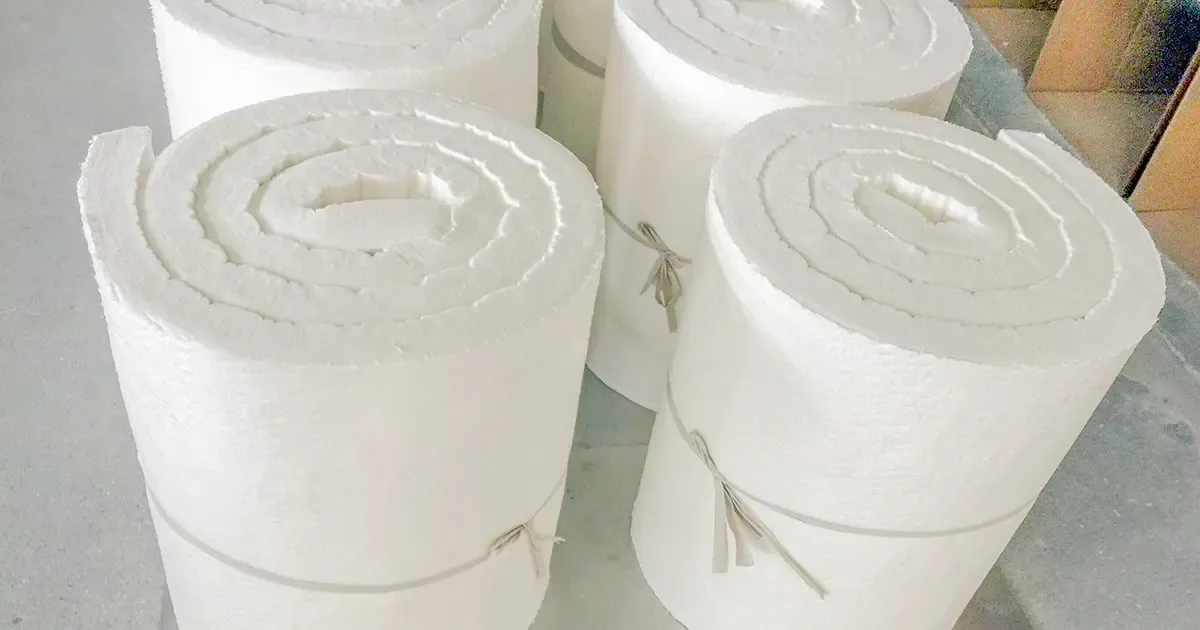
Polycrystalline wool fiber and standard ceramic fiber look similar on the shelf. Both are white, lightweight, high-temperature insulation wools. But the difference in crystal structure changes almost everything that matters in service: temperature limit, shrinkage, thermal conductivity, and lifespan.
This guide compares polycrystalline wool fiber with standard aluminosilicate ceramic fiber from a materials and purchasing perspective. If you are deciding whether the extra cost of polycrystalline wool is justified for your furnace or kiln, start here.
What the Names Mean
Standard ceramic fiber is the general name for amorphous aluminosilicate wool — the material most people picture when they hear "ceramic fiber blanket." It is made by melting alumina and silica together and spinning or blowing the melt into fibers. Common grades are classified at 1260 °C, 1400 °C, and 1430 °C depending on alumina content and zirconia additions.
Polycrystalline wool fiber is a higher-grade refractory fiber made by sol-gel and controlled crystallisation. Instead of a glassy structure, the fibers contain crystalline phases such as mullite or alpha-alumina. This gives the material a higher use temperature and much lower high-temperature shrinkage.
For an ultra-high-temperature board option, see our polycrystalline mullite fiberboard product page. For 1900 °C application guidance, read our guide on polycrystalline mullite boards for ultra-high temperature.
Composition and Crystal Structure
The core difference is the atomic arrangement.
| Property | Standard ceramic fiber | Polycrystalline wool fiber |
|---|---|---|
| Chemistry | Al₂O₃ + SiO₂ glass | Al₂O₃-rich or mullite crystalline structure |
| Typical Al₂O₃ | 43–55 % | 70–95 % |
| Structure | Amorphous (glass) | Polycrystalline |
| Fiber diameter | 2–5 µm | 3–7 µm |
| Classification temp | 1260–1430 °C | 1600–1800 °C |
Standard ceramic fiber is a frozen liquid. The atoms are arranged randomly, like glass. That makes it flexible and easy to manufacture, but the structure starts to reorganise and shrink above about 1000–1100 °C.
Polycrystalline wool fiber is already crystalline. The grains are locked in place, so the fiber stays dimensionally stable at far higher temperatures.
How They Are Made
Standard ceramic fiber
Standard ceramic fiber is produced by melting a mixture of alumina, silica, and sometimes zirconia in an electric arc furnace at around 1800–2000 °C. The molten stream is blown or spun into fibers, then collected as bulk, blanket, board, paper, or module. The process is fast and energy-efficient, which is why standard ceramic fiber is inexpensive.
Polycrystalline wool fiber
Polycrystalline wool fiber is made by sol-gel chemistry. An aluminium-rich solution is prepared, spun into gel fibers, dried, and then heat-treated at high temperature to crystallise the structure. The process is slower, requires purer raw materials, and uses more energy. That is the main reason polycrystalline wool costs several times more than standard ceramic fiber.
Temperature Ratings and Shrinkage
Temperature performance is where the difference becomes visible.
| Property | Standard ceramic fiber (1260 grade) | Polycrystalline wool fiber |
|---|---|---|
| Classification temperature | 1260 °C | 1600–1800 °C |
| Continuous use temperature | ~1000–1100 °C | ~1400–1500 °C |
| Linear shrinkage at 24 h | 3–5 % at 1260 °C | <1–2 % at 1400 °C |
| Maximum practical limit | ~1200 °C short term | ~1600 °C short term |
The numbers matter for furnace design. A lining rated for 1260 °C classification temperature may only be suitable for 1050 °C continuous operation because of shrinkage and embrittlement. Polycrystalline wool fiber is the next step up when continuous operating temperatures move into the 1300–1500 °C range.
Thermal Conductivity and Thermal Shock
Thermal conductivity rises with temperature for both materials, but the curves diverge at very high temperature.
| Temperature | Standard ceramic fiber (1260 grade) | Polycrystalline wool fiber |
|---|---|---|
| 400 °C | ~0.09–0.13 W/m·K | ~0.08–0.12 W/m·K |
| 800 °C | ~0.17–0.23 W/m·K | ~0.13–0.18 W/m·K |
| 1200 °C | ~0.28–0.35 W/m·K | ~0.18–0.25 W/m·K |
At 1200 °C and above, polycrystalline wool fiber retains better insulating value. The lower conductivity becomes important in fuel-fired furnaces and kilns where heat loss directly affects operating cost.
Thermal shock resistance is also different. Standard ceramic fiber is generally more flexible and forgiving in cyclic applications because the glassy structure can absorb some strain. Polycrystalline fiber is stiffer. In very rapid thermal cycling, fiber modules may need a different anchoring or compression design, but the material itself resists shrinkage damage far better.
Cost Curve: When Is Polycrystalline Wool Worth It?
Polycrystalline wool fiber is more expensive than standard ceramic fiber — often several times the price per kilogram. The upgrade pays off when one or more of the following conditions apply:
- Continuous operating temperature is above 1200 °C. Standard fiber shrinks too much and loses insulation value.
- Furnace uptime is critical. Less shrinkage means longer lining life and fewer rebuilds.
- Energy cost is high. Lower thermal conductivity at 1200–1400 °C reduces fuel consumption.
- Product contamination must be minimised. Higher purity and lower alkali content reduce contamination risk in glass, ceramics, and metals.
- Process temperature is close to the limit. Running 1260-grade fiber at 1200 °C continuous leaves no margin; polycrystalline fiber provides a safety buffer.
For temperatures below 1100 °C, standard ceramic fiber is usually the better economic choice. The performance gain from polycrystalline wool is small, and the cost increase is significant.
Application Guide by Temperature and Industry
Use the following guidance to narrow the choice.
| Continuous temperature | Recommended fiber | Typical applications |
|---|---|---|
| ≤1100 °C | Standard ceramic fiber (1260 grade) | General furnaces, kilns, boilers, petrochemical heaters |
| 1100–1300 °C | High-alumina or zirconia ceramic fiber | Steel reheating, aluminium holding, glass forehearths |
| 1300–1500 °C | Polycrystalline wool fiber | High-temperature kilns, diffusion furnaces, crystal growth, ceramic sintering |
| >1500 °C | Polycrystalline wool fiber or oxide board | Specialty ceramics, aerospace testing, research furnaces |
Steel and non-ferrous metals
Reheating furnaces and ladle covers in steelmaking often operate at 1200–1300 °C. At the lower end of this range, high-alumina ceramic fiber works. At the upper end or in areas with severe chemical attack, polycrystalline wool fiber is preferred.
Glass and ceramics
Glass melting and ceramic sintering demand clean, stable linings. Polycrystalline wool fiber is used where purity and low shrinkage justify the cost, especially in continuous production lines where downtime is expensive.
Electronics and solar
Diffusion furnaces, crystal pullers, and sintering equipment for battery materials and photovoltaic wafers often run at 1300–1500 °C. Polycrystalline fiber is the standard choice in these applications because of its cleanliness and temperature stability.
Handling, Health, and Installation Notes
Both materials are respirable fiber products and should be handled with appropriate personal protective equipment. Both are classified as articles under most regulatory frameworks when installed, but loose fiber and cutting dust require control measures.
Polycrystalline wool fiber is slightly stiffer than standard ceramic fiber. This makes it less forgiving around tight curves, but it machines cleanly and holds shape well in modules and boards. For details on how these modules are built, anchored, and installed, see our guide to polycrystalline fiber modules: spec, installation and applications.
Common Mistakes When Specifying
- Confusing classification temperature with service temperature. A 1260 °C classification fiber is not designed for 1260 °C continuous use.
- Upgrading unnecessarily. Below 1100 °C, the premium for polycrystalline wool rarely pays back.
- Ignoring shrinkage. In a 50 mm lining, 4 % shrinkage creates a 2 mm gap and hot spots. At 1400 °C, standard fiber shrinks much more than polycrystalline fiber.
- Forgetting the backup layer. A polycrystalline hot face is often backed by standard fiber or rock wool to reduce total cost while keeping the hot-zone performance.
For a broader overview of high-temperature options, see our guide to the top 10 high-temperature insulation materials.
Bottom Line
Polycrystalline wool fiber and standard ceramic fiber serve different temperature regimes. Standard ceramic fiber is the workhorse for furnaces up to about 1100 °C continuous. Polycrystalline wool fiber takes over when continuous temperatures climb above 1200–1300 °C, where shrinkage, conductivity, and lining life become critical. For service beyond the PCW range into the 1500–1700 °C band and above, the selection moves to alumina zirconia ultra-high-temperature fiber.
The decision is not about which material is "better." It is about matching the fiber to the temperature, thermal cycling, uptime requirement, and energy cost of the process.
At Rosewool we supply both standard ceramic fiber products and polycrystalline mullite fiberboard for high-temperature industrial applications. See how these materials fit into complete furnace systems in our guide to Alumina & AES in high-temperature furnace insulation. Contact our technical team for help selecting the right fiber grade and lining design for your furnace or kiln.
For supplier qualification and a buyer's checklist, see our polycrystalline fiber module supplier selection guide.
For a dedicated manufacturer and supplier evaluation guide, see our standard refractory ceramic fiber manufacturer guide.
For a deeper dive into forms, temperature ratings, and application guides, see our ceramic fiber insulation hub.
Frequently asked
What is the difference between polycrystalline wool fiber and standard ceramic fiber? +
Standard ceramic fiber is an amorphous aluminosilicate glass fiber, usually classified at 1260–1430 °C. Polycrystalline wool fiber is made by sol-gel and crystallisation, giving it a crystalline mullite or alumina structure and a higher continuous use temperature of about 1400–1500 °C.
What is polycrystalline wool used for? +
Polycrystalline wool fiber is used in high-temperature furnaces, kilns, diffusion furnaces, crystal growth equipment, and ceramic sintering processes where continuous temperatures exceed 1200–1300 °C and low shrinkage is required.
Is polycrystalline wool fiber better than ceramic fiber? +
It depends on temperature. Above about 1200 °C continuous, polycrystalline wool fiber has lower shrinkage, better thermal stability, and lower thermal conductivity. Below 1100 °C, standard ceramic fiber is usually more cost-effective and performs well.
What is the maximum temperature for polycrystalline wool fiber? +
Polycrystalline wool fiber is typically classified at 1600–1800 °C and can be used continuously at approximately 1400–1500 °C, depending on grade and atmosphere. Short-term exposure can reach 1600 °C.
Why does polycrystalline wool fiber cost more than ceramic fiber? +
Polycrystalline wool fiber is made by a sol-gel process that requires high-purity alumina raw materials and controlled high-temperature crystallisation. The process is slower and more energy-intensive than melting and spinning standard ceramic fiber.
When should I upgrade from standard ceramic fiber to polycrystalline wool fiber? +
Upgrade when continuous operating temperature is above 1200 °C, when shrinkage and lining life are critical, when energy costs are high, or when product contamination from impurities must be minimised.
Request a quote
Interested in our insulation solutions? Send us your requirements and our team responds within one business day.