
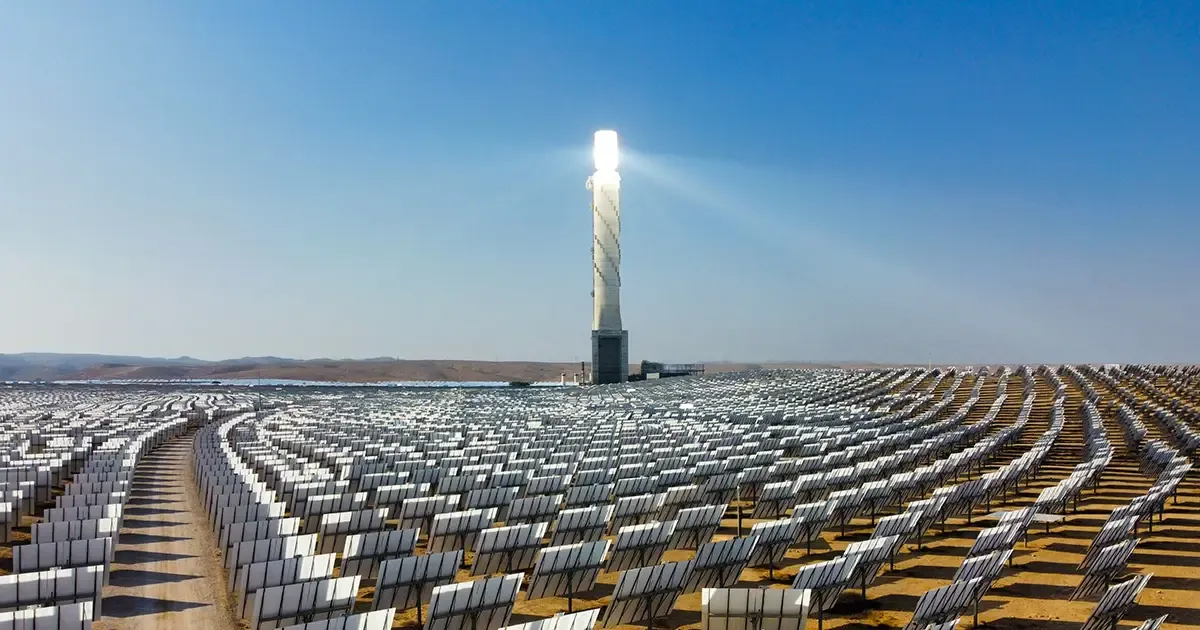
Concentrated Solar Power
High-temperature insulation for concentrated solar power — receivers, molten-salt tanks and piping, and fire-safety systems using ceramic fiber and calcium silicate.
Concentrated solar power runs at very high temperatures — molten salt around 565°C and receivers far higher — so insulation must survive sustained heat and resist salt corrosion. Receiver towers can exceed 200 m, making lightweight, durable high-temp materials essential for both efficiency and safety.
Material Comparison
| Material | Best fit | Service temp | Key advantage |
|---|---|---|---|
| Ceramic fiber | Receivers, salt tanks, piping | 1100–1430 °C | High-temp, corrosion resistant |
| Calcium silicate | Equipment, fire-safety systems | up to 1000 °C | Structural, integrated fire+insulation |
Application Scenarios
Concentrated Solar Power Application Scenarios
- CSP receivers — ceramic fiber insulates tower and trough receivers operating under intense concentrated flux (tower receivers can stand over 200 m high).
- Molten-salt tank insulation — ceramic fiber resists salt corrosion while limiting standby heat loss.
- High-temperature molten-salt piping — ceramic fiber on salt lines withstands heat and corrosion.
- Equipment insulation — calcium silicate on various plant equipment.
- Fire-safety systems — calcium silicate in integrated fire-and-insulation packages for the plant.
Related Articles
Standards & Compliance
CSP Insulation Standards
Concentrated solar power operates at temperatures where most building-insulation products are out of their range, so the relevant standards are the high-temperature mineral-wool and fire-safety specifications rather than general building codes.
- EN 14303 — the European specification for factory-made mineral wool used in building equipment and industrial installations, covering product forms and declared properties; it addresses mineral wool service up to about +800 °C, which covers molten-salt and many equipment duties.
- EN 13501-1, Class A1 — non-combustible mineral wool supports the passive fire safety of plant equipment and tanks.
- ASTM C553 and ASTM C592 — mineral-fiber insulation specifications for high-temperature piping and equipment, referenced for North American and export projects.
- ASTM E84 — surface-burning characteristics for materials used in plant buildings and equipment enclosures.
Because molten salt operates around 565 °C and receivers run far hotter, ceramic fiber is specified for the highest-temperature sections and calcium silicate for equipment and integrated fire-thermal packages.
Material Selection Guide
How to Select CSP Insulation
- Split the loop by temperature. Molten-salt tanks and piping around 565 °C are served by mineral wool and calcium silicate; receivers and tower sections above 1000 °C call for ceramic fiber.
- Account for salt corrosion. Specify chemically stable, salt-resistant linings for any surface touching or near molten salt.
- Respect the height. Receiver towers can exceed 200 m, so lightweight ceramic fiber reduces structural and handling load versus rigid alternatives.
- Integrate fire safety. Use calcium silicate where fire and thermal protection are combined in one package.
- Detail for cycling. Daily start-stop thermal cycling demands joints and supports that accommodate movement without cracking.
See our ceramic fiber blanket and calcium silicate board for receiver, molten-salt and equipment insulation in CSP plants.
Related Applications
Concentrated solar power relies on high-temperature thermal storage and reflective surfaces. Related high-heat applications:
- Power generation insulation for thermal and steam-cycle generation
- Cement kiln insulation for high-temperature kiln systems
- Aerospace and defense insulation for high-heat thermal protection
- Pipe insulation for solar-field heat-transfer piping
Why Rosetexwool
Key Benefits
Why Concentrated Solar Power operations choose Rosetexwool insulation solutions.
High-Temp Stability
Ceramic fiber and calcium silicate withstand molten-salt and receiver operating temperatures in CSP plants.
Thermal Efficiency
Receiver and pipe insulation cuts heat loss, raising plant output and capacity factor.
Corrosion Resistance
Chemically stable materials resist molten-salt and tower-environment corrosion.
Long Service Life
Durable linings reduce downtime in high-temperature CSP loops.
Support
Frequently asked questions
What insulates CSP receivers and towers? +
Ceramic fiber materials rated for the high-temperature operation of receivers on tall solar towers, such as 220 m towers in demonstration plants.
How do you insulate molten-salt storage? +
Calcium silicate and ceramic fiber linings protect molten-salt tanks and high-temperature salt piping from heat loss and corrosion.
Do you offer integrated fire-thermal solutions? +
Yes. We provide combined fire and thermal insulation packages for CSP equipment, tanks and piping.
What temperature can ceramic fiber withstand in CSP? +
Our ceramic fiber insulation is specified for continuous service up to about 1430 °C, covering tower and trough receivers, molten-salt piping and high-temperature equipment. Molten-salt storage and distribution around 565 °C is typically served by mineral wool and calcium silicate, with ceramic fiber used where temperatures exceed 1000 °C.
Is your solar-plant insulation non-combustible and corrosion resistant? +
Yes. Our mineral wool and calcium silicate products are A1 non-combustible under EN 13501-1, and the ceramic fiber linings used near molten salt are chemically stable and salt-resistant, which protects both efficiency and plant safety.
Ready to start? Tell us your specs — we'll quote within 24 hours.
Get pricing
Request a quote for Concentrated Solar Power solutions
Tell us about your concentrated solar power project requirements — our team responds within one business day.