
Pipe Insulation Cladding & Weatherproofing Guide: Jacketing, Vapor Barriers and Installation
Pipe insulation cladding and weatherproofing: aluminum vs stainless jacketing, vapour retarders for cold service, CUI control, lap direction, fixings and installation practice.
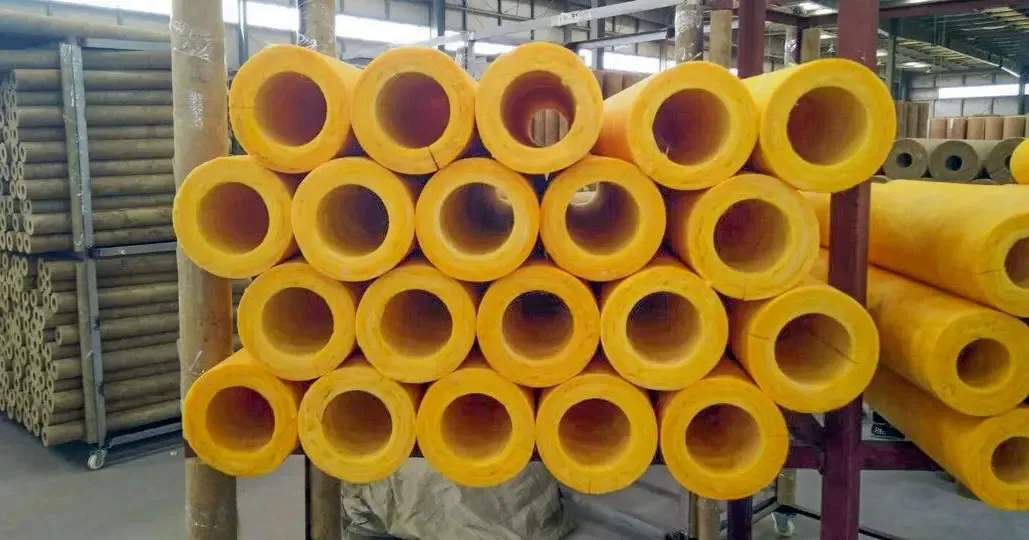
Pipe insulation earns its keep in the middle layers, but its service life is decided at the surface. A correctly selected mineral wool section can hold its thermal performance for decades, while a badly chosen or badly sealed outer layer lets in rain, wash-down water and water vapour — the single most serious factor causing impaired insulation performance and the root cause of most corrosion-under-insulation (CUI) failures. This guide explains the three different jobs an outer layer can do, how to compare metal and non-metal cladding materials, why cold service demands a continuous vapour retarder while hot service needs a weather barrier, and the installation details — lap direction, fixings, drainage and removable covers — that separate a jacketing system that lasts from one that leaks. (For the substrate itself, start with the industrial pipe insulation materials overview and the pipe insulation types guide.)
Jacketing, Weather Barrier and Vapor Retarder: Three Terms, Three Jobs
The three terms are not synonyms, and confusing them is the first specification error to eliminate. Cladding (jacketing) is the rigid or flexible outer covering over the insulation — its duties are mechanical protection, appearance and, where sealed, water shedding. A weather barrier is any system whose job is to stop rain, splash, snow, wind-driven water and wash-down water from entering the insulation. A vapour retarder is a continuous layer with low water-vapour permeance whose job is to slow vapour diffusion into the insulation — a role that matters only where the pipe surface can fall below the dew point of the surrounding air.
Standards keep the definitions apart for good reason. ASTM terminology for thermal insulation explicitly declines to classify materials by performance, and the jacketing selection guide ASTM C1423 is a guide, not a performance specification — it frames the criteria (temperature, environment, mechanical duty, cleanability, fire) but leaves the numbers to the project. Flexible low-permeance retarder materials are covered by ASTM C1136, which applies to membranes of 0.15 perm or lower for service roughly between −29 and 66 °C, and it states plainly that compliance of the sheet does not guarantee the same performance once the system is fabricated on site. The design choice standard, ASTM C755, makes the point even more directly: uncontrolled water entry — whether by diffusion, by air leakage carrying vapour, or by liquid water on the surface — is the dominant failure mechanism, and seams, penetrations and terminations decide the outcome far more often than the membrane itself.
One practical conclusion follows from all three documents: material permeance ratings never substitute for sealed joints. A vapour retarder with an excellent laboratory rating becomes a vapour distributor the moment a fixingscrew, an unsealed butt joint or a torn corner connects the cold surface to ambient air. The system — membrane, tapes, mastics, sealants, termination details — is the product.
Metal Jacketing: Aluminum, Stainless Steel and Galvanized Steel
Metal jacketing remains the default outdoors choice for hot service, and each metal buys a different point on the cost–durability curve.
| Jacketing metal | Strengths | Watch items | Typical duty |
|---|---|---|---|
| Aluminum (3xxx-series, mill or stucco-embossed) | Light, formable, economical, reflective; embossing adds stiffness | Chloride environments cause pitting; galvanic corrosion near copper or wet carbon steel; wind uplift on thin gauges; "fish-mouthing" open laps if not pre-crimped | General outdoor hot pipe runs, district heating, most plant piping |
| Stainless steel (typ. 316L) | Highest corrosion and UV resistance, wash-down cleanable, impact resistant, fire-stable | Cost; still susceptible to chloride pitting/SCC under wet insulation carrying salts — needs compatible coatings under it | Coastal plants, food/pharma hygiene zones, high-temperature and critical circuits |
| Galvanized / aluminum-zinc steel | Dent-resistant, cheaper than stainless | Coating damage at cuts and welds; galvanic couples with stainless or copper; high-temperature coating degradation | Indoor mechanical rooms, moderate outdoor duty with sealed cuts |
Three material-specific disciplines matter more than the alloy choice itself. First, pre-crimped longitudinal laps are not optional outdoors: aluminum's thermal expansion is high, and an uncrimped lap springs open ("fish-mouth"), creating a rain funnel along the top of the pipe. Second, dissimilar-metal contact must be managed — a stainless band on aluminum jacketing, or aluminum in contact with copper tubing or wet carbon steel supports, sets up a galvanic cell that perforates the less noble metal; isolation tapes or compatible banding materials break the circuit. Third, fasteners must match the system: screws and rivets for metal jacketing are specified in the product standards (ASTM C1729 for aluminum, C1767 for stainless), but the installation performance — band spacing, screw sealing, expansion provision — comes from the manufacturer's system documentation, not the material sheet.
Non-Metallic Cladding: PVC, HDPE, Membranes and Foil Laminates
Where continuous, cleanable, corrosion-proof surfaces matter more than impact resistance, polymeric and laminate jackets take over.
- PVC jacketing forms welded or solvent-cemented near-seamless covers, standard on indoor chilled-water lines, cleanrooms and hygienic areas. Its limits are heat (softening well below metal jacketing temperatures), UV embrittlement outdoors, and sensitivity to solvents and some cleaning chemicals — outdoor exposure needs a UV-rated formulation.
- HDPE jacketing offers excellent weld continuity and moisture immunity for buried-to-above-grade transitions and aggressive atmospheres, but softens at moderate temperature and needs UV stabilisation outdoors.
- TPO / CSPE / FRP membranes produce continuous weatherproof covers over irregular equipment and large vessels, fixed by adhesive, mechanical fasteners or hot-air welding; each formulation has its own adhesive, primer and ageing envelope, so "a membrane" is never a specification without the system data.
- Foil-scrim-kraft (FSK) and foil-faced facings are the workhorse vapour retarders of the industry — factory-applied or wrapped facing skins that give fiber glass and mineral wool products their low-permeance outer skin. Laminates covered by ASTM C1775 combine foil layers with polymer films and tapes for outdoor weather-protective duty; they excel at vapour continuity but cannot take impact, so outdoor hot service puts metal jacketing over them.
The selection logic mirrors the metals: plastics win on continuity and cleanability, lose on temperature, UV and impact. Manufacturer life claims for polymeric systems are system-specific — climate, cleaning regime and installation method change the answer — so they should be read as product data, not as project guarantees.
Cold Service: Why the Vapor Retarder Is Non-Negotiable
Below-ambient systems invert the moisture problem. The pipe surface is colder than the surrounding air, so water vapour migrates inward through the insulation and condenses at the cold interface — not on the outer surface where anyone would notice. The result is progressive: insulation saturation, ice formation in cold climates, chilled-water pipe corrosion, loss of thermal performance, and eventually dripping jackets that look like a "jacket leak" but are actually a failed vapour retarder.
Four rules govern cold-service jacketing:
- Continuity beats permeance. Every longitudinal and circumferential seam, every fitting, every termination and every hanger penetration must be sealed with the retarder system's own tapes and mastics. Air leakage paths — not just diffusion — carry vapour, which is why diffusion-only calculations (the basis of ISO 15758 for cold pipe vapour transmission) underestimate real-world risk at flanges, valves and damaged sections.
- Position on the warm side. The retarder belongs where the vapour drive pushes against it — at the outer surface of the insulation, before any weather jacket. On multi-layer cold insulation, every layer's joints and cut edges get sealed, not just the outer skin.
- Penetrations are the failure surface. Every fixingscrew through a retarder is a leak; bands, staples and screws either use sealed caps and mastic or the system's designed vapour-tight fixings. Vapor-stopping mastic barriers at intervals (commonly at each fourth section and at fitting terminations, per manufacturer installation manuals for faced systems) stop moisture that does get in from migrating along the pipe.
- "No visible condensation" is not a retarder test. Indoor pipes in stable, dry air may survive without a retarder under a well-sealed jacket, but seasonal humidity, wash-downs, shutdowns and HVAC failures can reverse the risk within a year. Specify for the worst-case duty, not the average day.
For cryogenic and deep-cold systems — LNG, cold boxes, liquid lines — the jacketing question folds into a much thicker substrate and vapour design; see the cryogenic pipe insulation guide and the cryogenic insulation applications overview.
Hot Service: Weather Barriers and CUI Prevention
Hot systems rarely need a vapour retarder — the vapour drive points outward — but outdoor, wash-down and high-humidity installations absolutely need a weather barrier, because liquid water entering a hot insulation system does not simply dry out again. It accumulates at the cold pipe wall during shutdowns, picks up soluble salts from the insulation and the atmosphere, and drives corrosion under insulation (CUI): localized carbon-steel loss rates that can reach tenths of a millimetre per year in the 50–175 °C band where wet-dry cycling is most aggressive, and stress-corrosion cracking risk on austenitic stainless piping under wet chlorides.
The weather-barrier logic for hot service:
- Sealed metal jacketing with downward-facing laps keeps rain and wash water out; the jacket is lapped like roof cladding so water always sheds over the next sheet, never under it.
- Drainage paths are designed, not accidental. Low points, vessel bottoms, flange covers and vertical runs get drip edges or weep details so any water that does enter can leave; horizontal "bathtubs" — laps facing up, unsealed top seams, pocketed flange guards — trap water against the pipe.
- Vapour retarders on hot service are the exception, not the rule. They earn their place on steam lines that cycle cold (standby and shutdown condensation), hot-water and district-heating lines in humid climates, and any hot line where the surface can dip below dew point — the same continuous-seam rules as cold service then apply.
- "Breathing" designs are a specialist choice, not a default. Open-mesh or unsealed systems that let insulation dry by ventilation exist, but they demand proven drying conditions, no freeze risk, compatible substrate and disciplined source control; they are wrong for closed-cell substrates, cold-prone lines and corrosion-sensitive assets.
Matching the Jacket to the Insulation Substrate
The jacket is chosen with the substrate, not after it. Service temperatures below are continuous-use ranges consistent with our material hubs — always verified against the specific product datasheet.
| Substrate | Continuous service temperature | Moisture behaviour | Jacketing interface notes |
|---|---|---|---|
| Rock wool / stone wool | ≤650 °C | Open-fibre; absorbs liquid water when unprotected | Standard weather jacket outdoors; sealed retarder system on cold duty; see rock wool pipe sections |
| Glass wool | −120 to 400 °C (binder-limited; continuous ≈350 °C) | Open-fibre; loses performance when wet, facings carry the vapour duty | Factory foil facings (FSK/ASJ-type) act as the retarder; all seams taped and mastic-sealed; see glass wool blanket |
| Calcium silicate | ≤1100 °C | Rigid, wet-service tolerant, but water uptake at cut faces | Metal jacketing; wash-resistant; standard on hot lines with mechanical duty; see calcium silicate pipe insulation |
| Ceramic fibre | 1100–1430 °C classification range (service lower) | Low mass, shrinkage limits at temperature | Usually jacketed with metal mesh/fabric or foil-faced blankets in process duty; handling controls for respirable fibre |
| Foam glass | −268 to 427 °C | Closed-cell, near-zero permeance — substrate is its own retarder | Jacketing still needed for mechanical and UV duty; thermal-stress detailing above ≈120 °C on single-layer work |
| Aerogel blanket | ≤650 °C (blanket products; cryogenic grades lower) | Hydrophobic, but seams and cut edges are not | Factory vapour-barrier skins on cold grades; site-sealed retarder over seams and terminations |
Two interface disciplines prevent most substrate–jacketing failures. Never let the jacket fixings compromise the substrate's moisture design — screws through a foil facing on a cold line destroy the retarder exactly where the vapour drive is highest; hangers and bands need load-spreading inserts. Never assume temperature compatibility — adhesive-backed foil tapes, mastics and PVC have service limits far below the metal jacketing they seal; every tape and sealant in a system is rated, and the lowest rating governs the assembly.
Indoor vs Outdoor: Environment Changes the Answer
Outdoors, the environment is a combination attack: rain, UV, wind uplift, temperature cycling, salt spray and mechanical damage. Aluminum performs well in dry, mild climates but needs chloride review on the coast; stainless is the corrosion answer at a cost; polymer jackets need UV-rated formulations and thermal-movement design. Wind uplift and negative pressure from adjacent structures or vehicle drafts can peel thin jacketing — band spacing, end sealing and gauge selection follow the wind exposure, not habit. Every outdoor fastener and band is specified for weather and galvanic compatibility.
Indoors, the drivers are cleanability, fibre containment and appearance. Food, pharmaceutical and electronics spaces want continuous, flush, washable surfaces — welded PVC, stainless or smooth membranes with minimum fasteners and crevices; any exposed fibre is a rejection item, so facings and jacketing must fully enclose the substrate. Standard plant interiors can use lighter-gauge aluminum, painted steel or coated fabrics chosen mainly for impact duty and inspectability. Fire behaviour belongs to the installed system, not the substrate datasheet: European work classifies assemblies per EN 13501-1 (A1–F with smoke and droplet subclasses), and linings, adhesives and tapes can change the rating of the whole finish.
Wet and corrosive interiors — wash-down areas, pools, cold stores with frequent defrost — sit between the two. They behave like outdoor duty for moisture and like cleanrooms for hygiene: continuous sealed covers, compatible sealants, and drainage at every low point.
Installation Best Practice: Laps, Fixings, Drainage and Expansion
Jacketing failures are overwhelmingly detail failures, and five details decide almost every outcome:
- Lap direction follows gravity. Longitudinal laps sit on the side or top of the pipe, shingled so water flows over, never into, the joint; circumferential laps overlap down-flow — the upstream sheet sits under the downstream one, on both horizontal and vertical runs. On vertical pipes, rain-shedding laps face downward.
- Pre-crimp and close the laps. Factory-crimped longitudinal edges plus sealing screws or bands keep laps closed through thermal cycling. An open "fish-mouth" lap on a rain-exposed line is a permanent water inlet.
- Fixings respect both layers. Bands and screws space per the system drawing; screws into the jacket must not penetrate a vapour retarder underneath; banding material is galvanically compatible with both jacket and pipe supports (isolation where aluminum meets stainless or copper).
- The substrate is continuous before the jacket arrives. Sections butted without gaps, joints staggered between layers, load-bearing inserts at supports so clamping bands cannot crush the insulation into "waists", expansion provision on long hot runs — jacketing hides substrate errors; it never repairs them.
- Terminations and protrusions are sealed systems. Valve stems, flange bolts, support shoes, wall and floor penetrations each get a designed detail — flashing, mastic collar, boot or removable cover with its own sealing — not a lap cut around the obstacle and taped.
Hot-service metal jacketing additionally needs expansion management: sliding laps, expansion rings or oversize laps at intervals on long runs so neither the jacket nor the substrate locks up; rigidly screwed long runs buckle and tear their own seals at temperature.
Valves, Flanges and Removable Covers
Every jacketed line has two designs: the straight-run design and the fittings design. Flanges, valves, strainers, expansion joints and instruments need regular access for bolting, packing and inspection, so hard-jacketing them in means cutting it off at every shutdown — and the repair patch is usually tape, which fails outdoors within a season.
Removable (flexible) insulation covers solve the access problem: fabric-reinforced or multilayer blankets tailored per fitting, closed with hooks, straps or lacing wire, and specified for the actual surface temperature and environment. Standards exist for their manufacture (ASTM C1695 covers flexible removable reusable blanket insulation for hot service to 538 °C), and well-run plants standardise them on leak-prone and maintenance-intensive nodes: control valves, relief valves, flanged joints, steam traps, meters and pumps. Design requirements that matter:
- Correct temperature class and outdoor weatherability of the cover material, with hot-face fabrics chosen for the surface, not ambient;
- Drainage — flange covers shed water downward and never form pockets at the bottom bolts;
- Leak indication — covers on valves in flammable service integrate tell-tale paths so leaks surface visibly instead of soaking into the blanket;
- Labelling and reinstatement discipline — each cover is tagged to its node so it goes back after maintenance instead of becoming a shelf ornament.
For marine and offshore duty, jacketing and covers interact with fire-rated division penetrations and approved assemblies; the system logic is covered in the marine fire insulation materials and standards overview, and mesh-faced flexible substrates for such covers are on the rock wool blanket with glass mesh and wired rock wool blanket pages.
Selection Matrix and Common Failure Modes
| Scenario | Substrate pairing | Jacketing / moisture strategy | Notes |
|---|---|---|---|
| Outdoor hot process line (to ≈650 °C) | Rock wool or calcium silicate | Pre-crimped aluminum jacket, downward laps, drip edges; no vapour retarder unless dew-point cycling exists | CUI review at 50–175 °C wet-dry band |
| Coastal / corrosive plant hot line | Calcium silicate or rock wool | 316L stainless jacketing with isolation bands; compatible anti-corrosion coating under insulation | Chloride and wash-down duty |
| Chilled water / below-ambient indoors | Glass wool with foil facing or closed-cell | Continuous vapour retarder, all seams taped/mastic-sealed, vapour-tight fixings | Air-sealing matters as much as permeance |
| Cold outdoor lines | Foam glass or hydrophobic blanket | Retarder plus weather jacket, sealed terminations, UV-rated outer layer | Thermal movement and ice detailing |
| Hygiene / wash-down areas | Calcium silicate or closed-cell | Stainless or welded PVC/HDPE, minimum fasteners, full drainage | Cleanability governs; verify chemical compatibility |
| Steam lines with shutdown cycling | Rock wool | Weather jacket plus vapour retarder on cycling sections | Standby condensation is a real vapour drive |
| High-traffic / impact zones | Rock wool or calcium silicate | Heavier-gauge metal, protective cages or guards | Mechanical duty above appearance |
| Failure mode | Root cause | First-line fix |
|---|---|---|
| Dripping cold-line jacket | Broken vapour retarder at seams or fixings | Re-seal with system tapes/mastics; vapour-tight fixings |
| CUI at supports and flanges | Water entry + wet-dry cycling | Weather lap correction, drip edges, coating review, inspection ports |
| Open laps after first summer | No pre-crimp, wrong lap direction, missing sealing screws | Re-hang with crimped laps, down-flow shingling |
| Corroded aluminum under stainless bands | Galvanic couple | Compatible banding or isolation layers |
| Taped patches on removable covers | Ad-hoc repair after maintenance | Stock standard removable covers per node; tag and reinstate |
| Crushed insulation at hangers | No load-spreading inserts | Insert blocks matched to service temperature |
Key Takeaways
- Cladding, weather barrier and vapour retarder are three different jobs; below-ambient systems need the retarder, outdoor systems need the weather barrier, and both fail at seams and penetrations, not in the material datasheet.
- Metal jacketing choice is a duty decision: aluminum for economy, stainless for corrosion and hygiene, coated steels for dent resistance — with galvanic pairs, pre-crimped laps and wind uplift managed as details, not afterthoughts.
- Cold service lives or dies by continuity: every seam, fitting, termination and fixing sealed with the retarder system's own components, positioned on the warm side of the insulation.
- Hot service lives or dies by drainage: down-flow laps, drip edges and no bathtubs — because water in a hot system becomes CUI, not a drying event.
- Removable covers are a procurement line item, not a site improvisation; standardise them on valves, flanges and instruments before the first shutdown forces taped patches.
For substrate selection start at the industrial pipe insulation materials overview; for cold-service systems continue with the cryogenic pipe insulation guide; and for product-level datasheets browse our rock wool pipe sections, calcium silicate pipe insulation and glass wool blanket pages. To discuss jacketing-compatible insulation for a specific line class, contact our engineers with your temperature, environment and duty specification.
Frequently asked
What is the difference between cladding, a weather barrier and a vapor retarder? +
Cladding (jacketing) is the physical outer covering providing mechanical protection and appearance. A weather barrier is a system that stops liquid water — rain, splash, wash-down — from entering the insulation. A vapor retarder is a continuous low-permeance layer that slows water-vapour diffusion into the insulation, needed wherever the pipe surface can fall below the ambient dew point. One jacket can serve two roles, but the functions are specified and sealed separately.
Do all cold pipes need a vapor retarder? +
Any below-ambient pipe whose surface can reach the dew point needs a continuous vapour retarder with sealed seams, fittings and terminations. Only pipes in stable, dry indoor air with a fully sealed weather jacket and no seasonal humidity, wash-down or shutdown cycling can reasonably omit it — and even then the risk should be reviewed for worst-case conditions, because air leakage carries vapour far faster than diffusion alone.
Which way should jacketing laps face on outdoor pipe runs? +
Laps shingle with gravity: longitudinal laps on the side or top of the pipe, and circumferential laps arranged so the upstream sheet sits under the downstream one, letting water flow over every joint. Vertical runs overlap downward. Longitudinal laps should be pre-crimped and closed with sealing screws or bands — an open 'fish-mouth' lap is a permanent rain inlet.
Can aluminum jacketing be used in contact with stainless steel supports? +
Direct contact sets up a galvanic couple that corrodes the aluminum, especially in wet or chloride environments. Use isolation layers, compatible banding materials or coated fasteners to break the circuit. The same applies where aluminum meets copper tubing or wet carbon steel. Fastener and band compatibility with both the jacket and the pipe supports is a specification item, not a site choice.
What causes corrosion under insulation (CUI) and how does cladding help? +
CUI occurs when liquid water enters the insulation, collects at the pipe wall — most aggressively in the 50–175 °C wet-dry cycling band — dissolves soluble salts, and drives localized carbon-steel corrosion or chloride stress-corrosion cracking on stainless steel. Sealed weather jacketing with down-flow laps and drip edges keeps water out; anti-corrosion coatings under the insulation, inspection ports and CUI risk-based inspection programs manage the residual risk.
Is PVC cladding suitable for outdoor pipe insulation? +
Only with a UV-stabilised formulation and within its temperature limits. Standard PVC jacketing excels indoors — welded, near-seamless, cleanable covers on chilled-water and hygiene duty — but outdoors it embrittles under UV, softens at moderate temperature and is sensitive to solvents and some cleaning chemicals. For exposed duty, specify a UV-rated system or move to metal jacketing over the vapour retarder.
How much overlap should jacketing laps have? +
Overlap depends on pipe diameter, gauge and the manufacturer's system documentation — larger diameters and outdoor exposure call for wider laps and closer band spacing. The governing rule is functional: laps must remain closed through thermal cycling and shed water downward. Always follow the jacketing system's installation manual and the project specification; treat generic rules of thumb as starting points, not acceptance criteria.
Request a quote
Interested in our insulation solutions? Send us your requirements and our team responds within one business day.