
Polycrystalline Fiber Module Supplier: Buyer's Verification Guide
A practical buyer's guide to selecting a polycrystalline fiber module supplier - fiber purity, anchor systems, ASTM C1786 compliance, and OEM/export capability for furnace linings rated to 1600 °C.
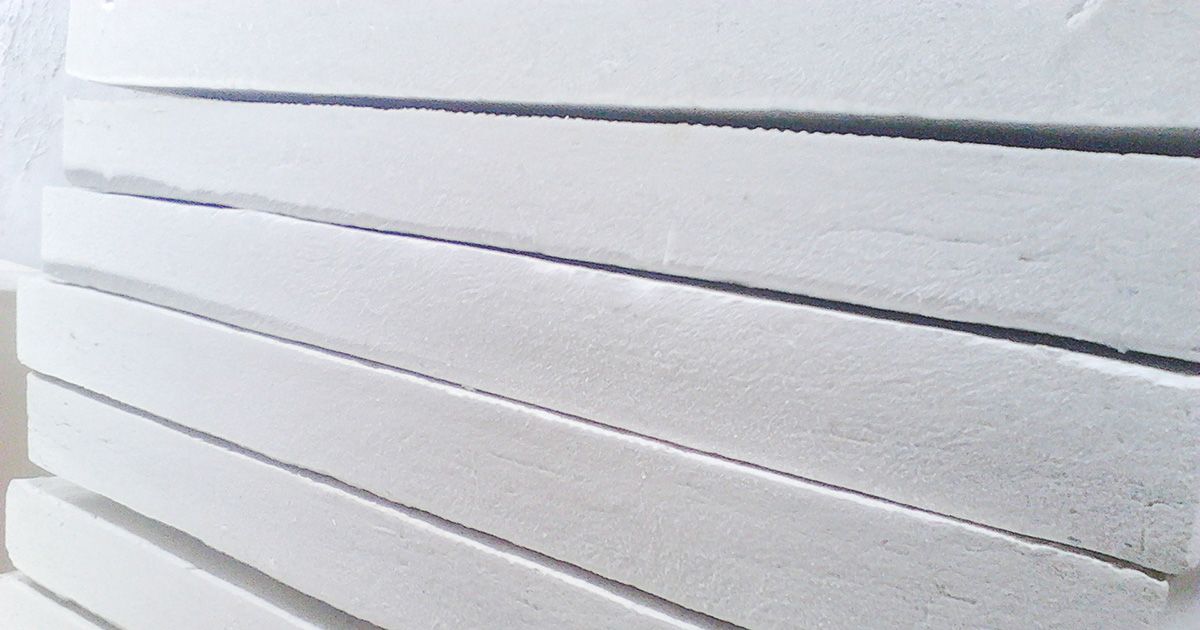
Polycrystalline mullite fiber (PCW) modules are the highest-temperature solution in the alumina-silica fiber family, engineered for furnace linings that run continuously at 1500-1600 °C. For buyers comparing a polycrystalline fiber module supplier, the product itself is only half the decision - manufacturing control, anchor engineering, and quality documentation decide whether the lining survives a decade of thermal cycling or fails inside two years.
This guide walks through what the fiber actually is, the specifications that matter, and the verification steps that separate a capable supplier from a trading company reselling someone else's blanket.
What Are Polycrystalline Mullite Fiber Modules
Polycrystalline mullite fiber is produced by a sol-gel process rather than conventional melt-spinning. A high-purity precursor (typically 72-80 % Al2O3 and 20-28 % SiO2) is fiberized, dried, and heat-treated so the final fiber consists of fine mullite (3Al2O3·2SiO2) and alumina crystals with a controlled diameter of roughly 4-6 µm.
Because no organic binder is added, the fiber stays crystalline at temperature instead of devitrifying like standard refractory ceramic fiber (RCF). That single difference is why PCW works where RCF tops out:
| Property | Standard RCF module | Polycrystalline module |
|---|---|---|
| Continuous service | 1100-1430 °C | 1500-1600 °C |
| Binder | Present (burns out) | None |
| Structure at temp | Devitrifies / shrinks | Stays crystalline |
| Linear shrinkage @ 1500 °C | Higher | < 1 % |
A module is a pre-compressed block of PCW blanket - folded into a concertina or stacked from cut strips - with an integrated anchor system. On site it is fixed to the furnace shell and expands to form a seamless, joint-free hot face.
Key Specifications to Request
When you ask a polycrystalline fiber module supplier for a quotation, the following numbers should appear on the data sheet - not "high quality" prose.
- Alumina content - specify >= 72 % Al2O3 (mullite-grade). Request a mill test certificate per batch.
- Classification / continuous temperature - 1600 °C class for most linings; confirm the recommended continuous limit (typically 1500-1600 °C) under your furnace atmosphere.
- Module density - folded PCW modules commonly run 160-240 kg/m3. Higher density improves erosion resistance but adds shell load.
- Dimensional tolerance - module face 300 x 300 mm is standard; thickness 150-300 mm. Confirm cutting tolerance for your stacking pattern.
- Thermal conductivity - expect ~0.25 W/(m·K) at 1000 °C and 0.34-0.45 W/(m·K) at 1200-1400 °C depending on density.
- Shot (slag) content - quality PCW carries <= 1 % non-fibrous inclusions.
How to Evaluate the Supplier
The word "supplier" implies a manufacturing partner, not a catalogue reseller. Use these checks before issuing a purchase order.
1. Fiber purity and traceability
A credible PCW module manufacturer controls the sol-gel line in-house. Ask for the Al2O3/SiO2 ratio and a third-party chemical analysis. Inconsistent composition is the fastest route to premature shrinkage.
2. Anchor system engineering
Anchors transfer the lining load to the shell. Options include stud-welded, through-wall, and split anchors in stainless steel grades 304, 310, or 316, or ceramic hardware for aggressive atmospheres. The supplier should recommend anchor type from your shell temperature and corrosion profile - and supply shear test data.
3. Standards and certifications
Look for ASTM C1786 (standard specification for preformed thermal insulation modules) and EN 1094 references for the fiber product, backed by ISO 9001, CE, and SGS documentation. Certifications are only useful if the supplier can show the valid scope.
4. OEM and export capability
For distributors and EPC contractors, confirm private-label and custom-dimension support, seaworthy export packaging, and documented lead times. A supplier exporting to 60+ countries will already have the packing and paperwork discipline your project needs.
5. Quality assurance per batch
Request compression-recovery data (modules are shipped compressed 30-50 % and must recover > 90 % after installation) and thermal-cycling test reports. Batch-level QA separates a factory from a trader.
Typical Applications
Polycrystalline mullite fiber modules are specified wherever the hot face exceeds the RCF limit:
- Ceramic and technical-ceramic kilns
- Petrochemical ethylene crackers and reformers
- Steel reheating and forging furnaces
- Glass furnace crowns and regenerator roofs
- Incinerators and hazardous-waste linings
- Laboratory and aerospace heat-treatment furnaces
For a deeper look at the rigid form, see our polycrystalline mullite fiberboard or the ceramic fiber module range, and the full material overview on the ceramic fiber insulation hub.
Installation and Anchoring
Modules are installed at 4-6 pieces per m2 depending on anchor spacing. Proper stud welding and a running-bond layout minimize joint gaps; a reliable supplier provides layout drawings and, where needed, on-site training. Expansion joints are formed with ceramic fiber paper inserts. Vacuum-lift anchors are preferred on furnace roofs to prevent drop-out.
Standards and Compliance
- ASTM C1786 - preformed thermal insulation modules
- EN 1094 - ceramic fiber insulating products
- ISO 9001 / CE / SGS - quality and conformity documentation
All Rosetexwool PCW modules are manufactured under an ISO 9001 system, with CE and SGS supporting documents available per order, and are suitable for export to more than 60 countries.
Why Specify Rosetexwool
With manufacturing heritage since 1982, Rosetexwool supplies polycrystalline mullite fiber modules with verified Al2O3 content, engineered anchor packages, and batch-level quality reports. Our technical team assists with lining design, module layout, and anchor selection so the specification matches the real furnace atmosphere - not a generic datasheet.
Request a quotation with your furnace drawing and service temperature, and we will return a module schedule with densities, anchor grades, and lead time.
Frequently asked
What temperature can polycrystalline fiber modules withstand? +
Polycrystalline mullite (PCW) modules are rated for continuous service at 1500-1600 °C, with short-term excursions up to 1700-1800 °C. The exact continuous limit depends on the furnace atmosphere and the module density specified.
How do polycrystalline modules differ from standard ceramic fiber modules? +
Standard refractory ceramic fiber (RCF) modules are rated 1100-1430 °C and contain an organic binder that burns out on first heat-up. PCW modules use a sol-gel mullite fiber with no binder, stay crystalline at temperature, and show less than 1 % linear shrinkage at 1500 °C.
How do I choose a reliable polycrystalline fiber module supplier? +
Verify four things: (1) in-house sol-gel fiber production with a mill test certificate for Al2O3 content; (2) engineered anchor systems (304/310/316 stainless or ceramic) matched to your shell; (3) ASTM C1786 / EN 1094 references plus ISO 9001, CE, and SGS documentation; (4) batch-level QA reports including compression recovery and thermal-cycling data.
Which standards apply to polycrystalline fiber modules? +
Modules are covered by ASTM C1786 (preformed thermal insulation modules) and the fiber product by EN 1094. Quality systems are evidenced through ISO 9001, with CE and SGS supporting documents available per order.
Can polycrystalline modules be customized for my furnace? +
Yes. Module dimensions, thickness, density, anchor type, and compression ratio can all be configured from your furnace drawing. Many suppliers also offer private-label and export packaging for distributors and EPC contractors.
Request a quote
Interested in our insulation solutions? Send us your requirements and our team responds within one business day.