
Nuclear Power Plant Insulation: Materials, Standards and Selection
Nuclear power plant insulation as a system decision: duty zones, candidate materials, stainless steel compatibility, passive fire protection and a practical selection matrix.
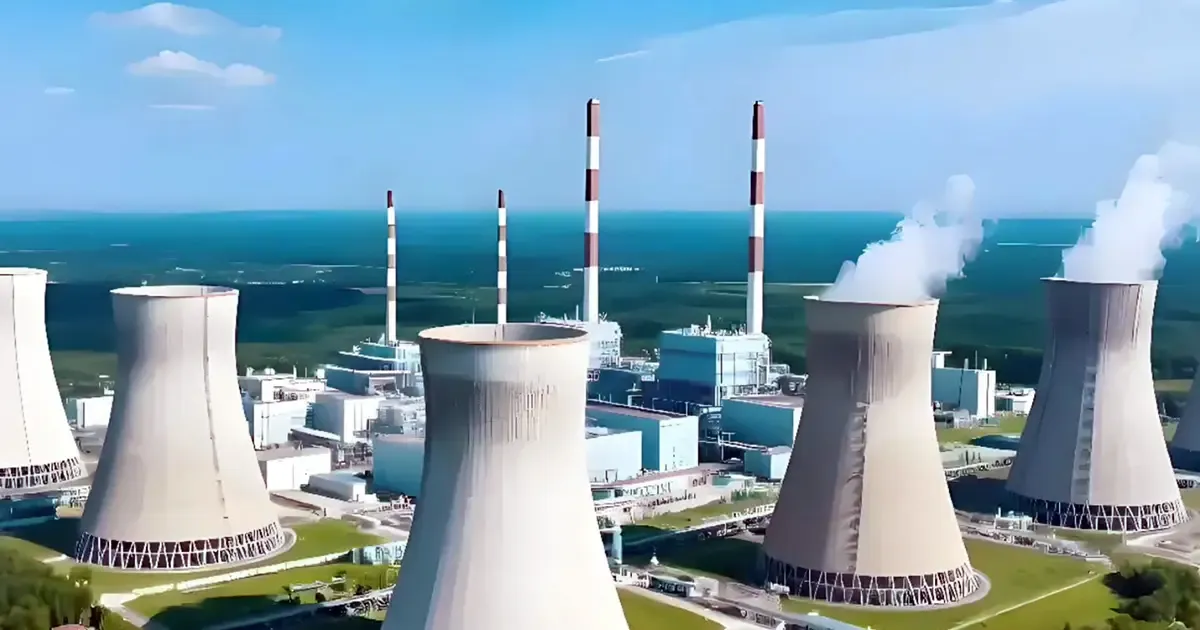
Insulation inside a nuclear power plant is not one product category. It is a family of systems that reduce heat loss from hot circuits, protect personnel from hot surfaces, limit fire loads, control condensation on chilled lines and — in the reactor island — can even carry safety-related functions. An international standard for primary-circuit insulation in pressurized water reactors, ISO 23466, explicitly ties insulation performance to heat-loss control, mitigation of overheating events, radiation-protection and the operating environment. That framing sets nuclear plant insulation apart from ordinary industrial work: the material is only one layer of a system whose joints, jacketing, fasteners and fire barriers are qualified together.
This guide covers civil, static-equipment insulation: the reactor island and its steam generators, the conventional turbine island, and the balance of plant. Aerospace and defense applications are treated separately in our aerospace and nuclear insulation overview.
Why Nuclear Insulation Is a System Decision, Not a Product Choice
Three questions decide almost everything in nuclear insulation, and none of them is "which material has the lowest k-value":
- Safety classification and qualification. Not every insulation item inside the plant is safety-grade, but any insulation that belongs to a safety-classified system inherits that system's qualification requirements — environmental, seismic and quality-assurance. A material datasheet alone can never substitute for that qualification chain.
- Fire zoning. Nuclear fire codes require fire loads to be kept as low as reasonably achievable, favor non-combustible materials, and separate redundant safety trains by fire areas or fire cells. Penetrations, cable trays and fire-barrier interfaces turn the insulation package into part of the fire design, not an accessory to it.
- Contamination and maintainability. Insulation in contaminated areas must be encapsulated, removable, traceable and disposable under the plant's radiation-protection program. A product that cannot be removed and reinstalled without destroying itself will be replaced with something else — or worse, left damaged.
Temperature and Duty Zones Across the Plant
A pressurized water reactor plant spans three distinct thermal worlds, and material selection follows the zone rather than the label "nuclear":
| Zone | Typical duty | Dominant insulation approach |
|---|---|---|
| Reactor island primary circuit | ~310 °C pressurized water; high safety class; frequent maintenance on valves and flanges | Reflective metallic insulation panels and engineered mineral systems; removable packages |
| Main steam and feedwater | ~230–290 °C large-bore piping and turbines | Mineral wool and calcium silicate with stainless jacketing |
| Balance of plant, chilled and service water | Ambient to moderate; condensation control | Fibrous insulation with vapor barriers, closed-cell products where appropriate |
The reactor island is the special case. Reflective metallic multilayer insulation — polished stainless panels that reflect radiation rather than resist conduction — has long been the preferred approach around the reactor pressure vessel, steam generators and primary pumps, because it survives vibration, is fully removable for inspection and adds no loose fibers to a controlled environment. ISO 23466 formalizes the performance expectations for exactly this application.
Material Candidates and Where Each Fits
The workhorse materials of conventional industry remain the workhorses of the conventional island, subject to project specifications:
- Stone wool (rock wool) for turbine casings, main steam and hot piping up to about 650 °C. Its non-combustibility, acoustic performance and preformability make it the default for the turbine hall — see our rock wool board and rock wool pipe sections.
- Calcium silicate for high-temperature large-diameter lines and equipment where compressive strength and flat surfaces matter, serviceable to 1100 °C — the same family as our calcium silicate pipe sections.
- Glass wool for moderate-temperature service roughly in the -120 to 400 °C window and for suspended-deck and acoustic duties; the family is profiled in our glass wool blanket page.
- Ceramic fiber as hot-face backing and in tight high-temperature spaces (typical continuous service 1100–1430 °C depending on grade), used with strict controls on fiber release — see ceramic fiber board.
- Aerogel blanket and microporous board as thin-function-layer options for valves, flanges and space-limited hardware, where their premium price is offset by thickness and removable-jacket benefits.
- Expanded perlite and cellular glass for specific equipment and cold-service niches, including cryogenic auxiliaries.
What disqualifies a material is rarely its k-value. It is the answers to the chemistry, qualification and maintainability questions below.
The Chemistry Gate: Stainless Steel Compatibility
Much of a nuclear plant's pressure boundary and jacketing is austenitic stainless steel, and the classic failure mode of hot-system insulation is external stress-corrosion cracking caused by soluble chlorides and other leachable ions migrating through wet insulation to the metal surface.
The established control is ASTM C795, which requires insulation destined for austenitic stainless steel to pass stress-corrosion testing per ASTM C692 and to meet chemical limits established through ASTM C871 extraction analysis. Comparable international specifications exist in other markets. In practice, plant procurement goes further than the material certificate:
- Chloride and other soluble-ion limits are verified batch by batch, with water quality in manufacturing controlled at the source.
- Storage, weather protection and installation hygiene are specified — insulation is kept dry, segregated from chlorinated cleaning agents and salt-laden air, and inspected before boxing in.
- Packaging and installation sequencing aim to keep the as-delivered ion content intact all the way to the finished installation, a discipline reflected in installation-practice guides such as ASTM C929.
Industry practice commonly treats a total chloride content on the order of <10 mg/kg as the working benchmark for wet-system compatibility, alongside limits on fluorides, silicates and sodium — always confirmed against the project specification.
Passive Fire Protection and Non-Combustibility
Fire protection in nuclear plants leans on the same physics as everywhere else but with stricter governance. Frameworks such as the IAEA design safety requirements and national performance-based fire codes (for example NFPA 805 for light-water plants) push designers toward non-combustible materials, minimal fire loads and protected separation of redundant safety trains.
For insulation selection this means:
- Specify by Euroclass or equivalent system rating, not by marketing labels. Our explainers on A1 non-combustible insulation systems and the A1 vs A2 vs B fire rating comparison walk through the classification logic.
- Judge the system, not the fiber. Binders, stitching threads, adhesives, facings and jacketing each contribute to fire load and smoke. A blanket whose core is non-combustible can still drag an organic facing into a fire zone.
- Treat insulation-to-fire-barrier interfaces as design items. A published regulator incident report once described a diesel-generator exhaust fire that started when silicone sealant migrated through a gap between insulation cladding and a penetration seal onto the hot insulation itself. No single material was defective — the interface was. Every insulation modification that crosses a wall, floor or fire damper deserves a fresh fire-interface review.
Radiation, Contamination and Maintainability
Organic materials — foams, elastomers, adhesives, coatings — are radiation-sensitive: their polymers can undergo chain scission or crosslinking that embrittles them over time. Electrical-equipment qualification frameworks such as IEC/IEEE 60780-323 formalize how combined thermal, radiation and aging environments are tested, and the same philosophy guides insulation components with organic content when they sit in radiated zones. Inorganic mineral insulation is far less sensitive, but binders and facings still need project-level evaluation.
Contamination drives the practical work:
- Insulation in contaminated zones is pre-encapsulated where possible and finished with washable, decontaminable jacketing.
- Removable insulation jackets are specified for valves, flanges and instrumentation that need routine access — a removable package pays back on every maintenance outage.
- Removed insulation is segregated, monitored and disposed under the plant's waste-classification program; insulation waste from radiological areas never mixes with construction debris.
Standards Map for Nuclear Plant Insulation
No single certificate makes a product "nuclear grade." The credible answer is a stack of applicable documents:
| Layer | Documents | What they govern |
|---|---|---|
| Safety framework | IAEA SSR-2/1; national regulations | Defense in depth, internal hazards, fire zoning philosophy |
| Plant fire code | NFPA 805 or national equivalents | Performance-based fire protection |
| Primary-circuit insulation | ISO 23466 | PWR primary-system insulation functions and design expectations |
| Materials chemistry | ASTM C795 / C692 / C871 / C929 | Stainless steel compatibility and ion control |
| Product standards | ASTM C533 (calcium silicate), ASTM C592 / EN 14303 (mineral wool), ASTM C547 (pipe) | Product-level requirements |
| Environmental qualification | IEC/IEEE 60780-323 | Combined aging environments for safety-related equipment |
"Compliant with ASTM/ISO/IEC" is always a fragment: it covers only the scope of that document. The project specification — safety class, fire area, qualification envelope, maintenance concept — decides whether a specific product, in a specific assembly, at a specific location, is acceptable.
A Practical Selection Matrix
| Duty | Sensible starting point | Do not assume |
|---|---|---|
| Reactor vessel and primary loops | Reflective metallic insulation systems | Fiber blankets can be swapped in freely |
| Steam generators, primary valves | Engineered removable packages | One jacket design fits every valve |
| Main steam and feedwater piping | Stone wool or calcium silicate, stainless jacketing | Ambient k-values rank high-temperature behavior |
| Turbine hall acoustic + thermal | Stone wool systems | Acoustic and fire acceptance are the same test |
| Valves and flanges needing access | Removable jackets, aerogel or microporous cores | Dismantled bulk insulation reinstalls itself |
| Chilled and service water | Fibrous insulation with vapor barriers or closed-cell products | Hydrophobic means vapor-tight |
| Fire-zone interfaces | Qualified firestop systems plus non-combustible insulation | A material rating covers the penetration |
For thickness and economic-selection logic in conventional power stations, our power plant insulation materials and thickness guide transfers directly to the turbine island; the plant-level application view lives in our nuclear power applications page.
What to Ask a Supplier Before You Buy
A disciplined nuclear-insulation RFQ asks for evidence, not slogans:
- Chemistry documentation: leachable chloride, fluoride, silicate and sodium per the relevant test methods, batch-traceable, with manufacturing water-quality controls stated.
- System-level fire data for the full assembly — core, facing, stitching, jacketing — not the core alone.
- Qualification boundaries: which standards are covered, at what scope, and what the project must qualify additionally.
- Maintainability package: removable-jacket designs, reusability data, installation clearances and reinstall procedures for valves and flanges.
- Contamination controls: encapsulation options, cleanability of outer surfaces, packaging that survives site logistics.
- Traceability: batch certificates, change control and the ability to reproduce the same product years later during refit cycles.
Suppliers who can answer these five lines precisely are also the ones most likely to hold tolerances across a plant life measured in decades — and in nuclear insulation, lifecycle discipline is worth more than any single datasheet number.
Frequently asked
What insulation materials are used in nuclear power plants? +
Conventional islands typically use stone wool on turbine and hot piping up to about 650 °C, calcium silicate on high-temperature equipment to 1100 °C, glass wool in the -120 to 400 °C range, and reflective metallic insulation around the reactor vessel and primary circuit. Aerogel blankets and microporous boards serve thin-function-layer roles on valves and space-limited hardware.
What does nuclear grade insulation actually mean? +
There is no universal certificate called nuclear grade. It describes a material-plus-assembly that has completed the project qualification required for its location: chemical compatibility, fire performance, environmental and seismic qualification where applicable, quality-assurance traceability and maintainability under the plant's radiation-protection program.
Why is stainless steel compatibility critical for nuclear insulation? +
Austenitic stainless piping and jacketing are vulnerable to external stress-corrosion cracking driven by leachable chlorides migrating through wet insulation. Specifications such as ASTM C795 require stress-corrosion testing (ASTM C692) and chemical limits per ASTM C871, with working benchmarks around 10 mg/kg total chloride, verified batch by batch and protected by clean storage and installation practices.
Can building-grade rock wool or glass wool be used inside the nuclear island? +
Not by default. A building product may share chemistry with a nuclear-qualified one, but qualification is decided at project level: fire-area classification, ion-control documentation, binder and facing content, contamination handling and quality-assurance records. Non-combustibility alone never qualifies an insulation for a safety-related location.
What standards govern nuclear power plant insulation? +
The framework includes IAEA SSR-2/1 for plant safety, NFPA 805 or national equivalents for fire protection, ISO 23466 for pressurized-water-reactor primary-circuit insulation, the ASTM C795/C692/C871/C929 series for stainless steel compatibility, product standards such as ASTM C533 and EN 14303, and IEC/IEEE 60780-323 for environmental qualification of safety-related equipment.
How are removable insulation jackets used in nuclear plants? +
Valves, flanges and instrumentation need routine access, so engineered removable packages with metallic outer jackets are specified instead of bulk insulation that would be destroyed at each outage. Well-designed jackets specify reusability, edge sealing, fastener retention and surface-temperature limits, and they are qualified as assemblies rather than as bare material.
Request a quote
Interested in our insulation solutions? Send us your requirements and our team responds within one business day.