
Glass Wool Board Applications: Rigid Board Selection Guide
An application-driven guide to rigid glass wool board: building envelope, HVAC ductwork and industrial equipment duties, with density, thickness and facing selection tables.
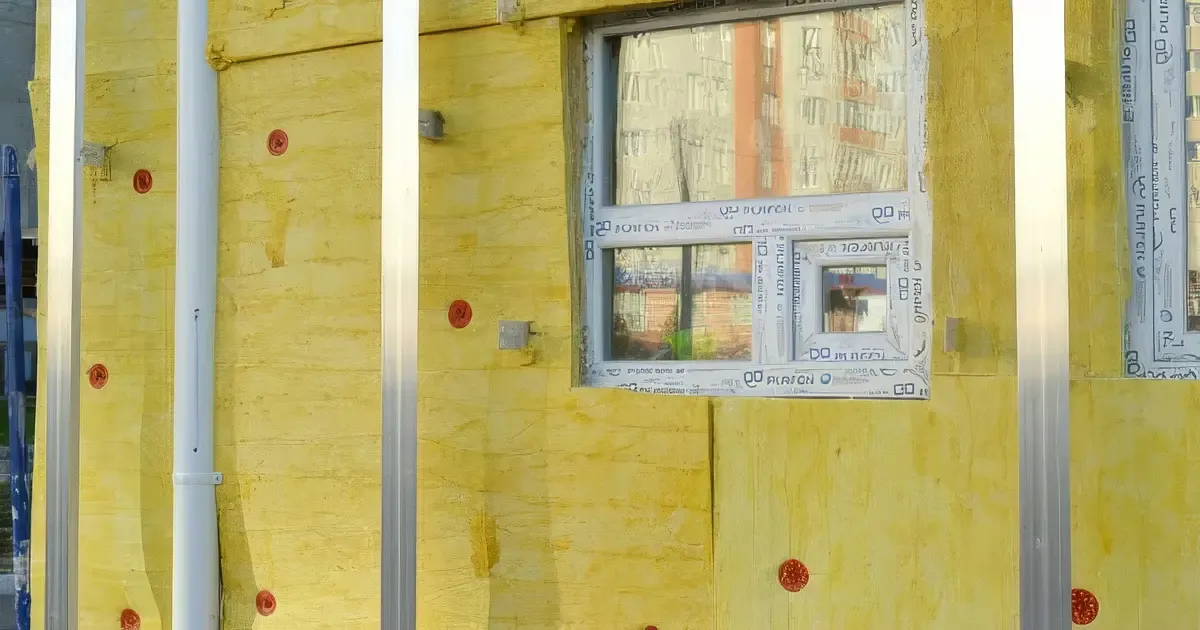
Where Rigid Board Earns Its Place
Glass wool board is made from the same melt-spun glass fibre as blanket and roll, bonded into a flat, self-supporting panel. That single change in form factor decides most application choices: board holds its shape inside a framed cavity, takes fixing pressure without collapsing, and gives a flat, clean surface for bonded facings. Blanket and roll, by contrast, drape over irregular geometry and win on large uninterrupted areas where speed of coverage matters more than dimensional stability.
In practice, glass wool board is the right call when at least one of these is true. The insulation must stay flat and dimensionally stable in service. It sits inside a framed cavity or behind a finish panel. It needs a bonded facing — foil, tissue or film — for vapour control or appearance. Or it must survive light mechanical load during installation and maintenance. When none of those apply, a flexible form is usually the cheaper answer. Our glass wool board vs blanket vs batt guide sets out the three forms side by side on load, geometry, temperature and fixing.
Standard supply covers a density range of 24–100 kg/m³ in rigid board form, 100 % non-asbestos, backed by ISO 9001, ASTM C518, REACH and RoHS documentation. The full range sits on our glass wool board product page. For the fibre itself and how the board is formed, see how centrifugal glass wool is made.
If you need the flexible form instead — draped over ductwork, rolled across an attic, or wrapped around large-diameter tanks — our glass wool blanket specifications and buying guide covers that side of the range. Where the duty calls for a heavier, higher-temperature rigid board, rock wool board is the usual alternative, and the two materials are compared in detail in our glass wool vs rock wool comparison.
Building Envelope Applications
Building work is where rigid board sees the highest volume, and it is where density selection matters most. The pattern is consistent: pick density for how the board is held and handled, then pick thickness for the thermal target.
- External walls (ventilated facade, cavity wall, curtain-wall spandrel). Board is friction-fitted between studs or fixed to the substrate behind a rainscreen. Medium density — roughly 48–64 kg/m³ — is the common choice: stiff enough to stay put without slumping over time, light enough not to load the fixing system. Thickness typically runs 50–100 mm depending on the target U-value. On a ventilated facade a reflective foil facing also cuts solar radiant gain into the cavity, which in a cooling-dominated climate is often worth more than the same money spent on extra board thickness.
- Roofs and metal decks. Board sits over or under the deck, often in two layers with staggered joints to break thermal bridges. Higher density, 64–100 kg/m³, is used where the roof takes foot traffic during maintenance. Because a roof deck moves, specify water repellency of at least 98 % and an elastic recovery of at least 90 % so the board tolerates small movements without opening joints.
- Internal partitions and floors. Here the driver is acoustic, not thermal. Board fitted in stud cavities or beneath a floating floor cuts both airborne and impact noise. Where a decorative acoustic finish is needed, the rock wool acoustic panels range covers dedicated treatments.
- Cold storage and refrigerated rooms. Board with an impermeable facing handles low-temperature envelope work, with every joint taped so the vapour barrier stays continuous around the whole envelope.
| Building application | Density (kg/m³) | Typical thickness | Facing | Additional check |
|---|---|---|---|---|
| External wall cavity | 48–64 | 50–100 mm | Unfaced or tissue-faced | Compressive strength ≥ 25 kPa |
| Ventilated facade | 48–80 | 60–120 mm | Black tissue or unfaced | Reflective facing for solar gain |
| Roof / metal deck | 64–100 | 50–150 mm | Unfaced or bitumen-compatible | Water repellency ≥ 98 %, elastic recovery ≥ 90 % |
| Internal partition | 32–48 | 50–75 mm | Unfaced | Air gap retained behind board |
| Cold store envelope | 48–80 | 80–150 mm | Foil or PVC vapour barrier | Barrier continuous, joints taped |
HVAC and Ductwork Applications
Ductwork is the second large application family, and it is the one where facing selection is decisive rather than optional.
- External duct insulation. Board is wrapped and pinned around rectangular duct, then finished with a foil or FSK facing. That facing is not decoration — it is the vapour barrier that stops warm, humid air from reaching a cold duct surface and condensing inside the insulation.
- Duct liner. Fitted inside the duct, board acts as an acoustic absorber that cuts fan and airflow noise. A medium-density board with a tough black tissue facing resists the airstream, and all cut edges are sealed to stop fibre erosion.
- AHU and plenum casing. Board lines casing panels to deliver thermal and acoustic performance together, which is usually why it is specified over a plain thermal liner.
Condensation is the failure mode to design against on any chilled-water or cold supply-air system. Where moisture exposure is a genuine risk, our note on whether glass wool blanket is waterproof sets out what the material does and does not tolerate once wet.
Industrial Equipment and Enclosed Systems
Rigid board suits flat and gently curved industrial surfaces, where it is usually cut to fit a frame rather than draped:
- Equipment casing and panel infill. Cut board fills framed panels on tanks, vessels, precipitator casings and machinery enclosures.
- Flat and large-radius surfaces. Board is used where the radius is large enough for the panel to lie without cracking. Below roughly 300–400 mm radius, a flexible or preformed form fits better and avoids a spring-back gap at the joints.
- Acoustic enclosures. Perforated facing over board inside an enclosure absorbs machinery noise at source instead of letting it into the workspace.
- Hot equipment up to the binder limit. With metal cladding over the top, board handles continuous hot duty to roughly 230 °C, provided the density is high enough — 64–96 kg/m³ — to resist vibration and cladding fixings.
For pipe insulation, board is not the usual answer. Preformed pipe sections match the bore correctly and hold their geometry around the circumference; board is used on pipework mainly as flat inserts at pipe supports and as cladding on boxed-in headers. Our industrial pipe insulation materials guide covers that selection properly.
On fire performance, unfaced glass wool is non-combustible, while the classification of a faced product depends on the facing. Full detail sits in our dedicated article, is glass wool fireproof. The spec-side reading for rigid board — density classes, lambda, compressive strength and facings — is covered in glass wool insulation board: rigid board selection & spec.
Selecting Density, Thickness and Facing
Three variables, three different jobs. Keeping them separate prevents most specification errors we see in enquiries.
| Selection driver | Variable to change | Practical guidance |
|---|---|---|
| Thermal performance | Thickness | Set the target U-value first, then read thickness off it — not the other way round |
| Strength and handling | Density | 24–32 kg/m³ for friction-fit cavities; 48–80 kg/m³ where board is fixed and handled; 80–100 kg/m³ where it carries load |
| Acoustic absorption | Density + facing | Open or tissue facing absorbs; a sealed foil facing reflects sound back into the space |
| Vapour and moisture control | Facing | Foil or FSK on chilled systems; black tissue on duct liner; unfaced where the board stays dry |
Why Higher Density Is Not Always Better
Density drives thermal performance, acoustic performance and strength in three different directions, so there is no single best figure — only a best band for the duty.
- Thermal performance peaks in the middle. Across roughly 24–64 kg/m³ the fibre structure holds enough still air to keep conductivity low without creating continuous solid conduction paths. Below about 24 kg/m³ the air pores grow large enough for internal convection to start, and conductivity rises. Above about 64 kg/m³ the fibre pack becomes dense enough that solid conduction through the glass itself begins to dominate, and conductivity rises again.
- Acoustic absorption peaks lower still. The most useful absorption band is roughly 32–48 kg/m³. Denser board raises flow resistivity to the point where sound is reflected at the surface instead of entering the panel, so absorption falls off even as the board gets mechanically stronger.
- Compressive strength only ever rises with density. Typical figures are around 20 kPa at 24 kg/m³, 40 kPa at 48 kg/m³ and 80 kPa at 96 kg/m³, measured to ASTM C165. This is the one property where buying more density always buys you more.
- Cost rises with density, roughly 8–12 % for every additional 20 kg/m³.
The practical rule: buy density for strength and handling, and buy thickness for thermal performance. Paying for density to chase a lower U-value is the most common way to overspend on this material.
Thermal Conductivity and Temperature
For room-temperature design work, declared conductivity for rigid board normally falls in the 0.032–0.044 W/m·K band. Conductivity is not a constant — it rises with mean temperature — so hot-duty figures must be read at the actual operating mean rather than at ambient. If you are insulating a hot surface, state the mean temperature with your enquiry; the declared ambient figure will understate real heat loss.
Where sound control is the primary duty, the usual starting point is 32–48 kg/m³ at 50–100 mm, with the facing chosen for absorption rather than vapour sealing. Low-frequency control depends far more on thickness and on the cavity behind the board than on density, so adding density to fix a low-frequency problem rarely pays off.
Standard resin-bonded board is rated for continuous service to roughly 230 °C. Above that the binder, not the glass, becomes the limiting factor — the glass fibre itself tolerates far more, but the continuous rating is set by what holds the panel together. A high-temperature bonded grade should be requested at enquiry stage rather than discovered on site.
Specification by Application: HVAC and Industrial
The building table above covers the envelope. The table below covers the mechanical and industrial duties, where the governing constraint is usually temperature, vibration or facing durability rather than a U-value target.
| Application | Density (kg/m³) | Thickness | Facing | Governing check |
|---|---|---|---|---|
| External duct insulation | 32–48 | 30–50 mm | Foil or FSK, all joints taped | Vapour barrier continuity |
| Duct liner (acoustic) | 48–64 | 25–50 mm | Black tissue, edges sealed | Airstream erosion resistance |
| AHU and plenum casing | 48–64 | 40–80 mm | Tissue or foil | Thermal and acoustic combined |
| Equipment casing / panel infill | 64–96 | 50–100 mm | Unfaced or tissue | Vibration and handling load |
| Acoustic enclosure | 48–64 | 50–100 mm | Perforated facing over board | Absorption at source |
| Hot equipment to 230 °C | 64–96 | 50–120 mm | Unfaced, under metal cladding | Continuous temperature rating |
Installation and Fixing Methods
Board performance on site is mostly a fixing question. The failure modes that show up repeatedly are the same four:
- Compressed board. Over-tightening banding, or forcing an oversized panel into a cavity, crushes the fibre and raises thermal conductivity. Cut to fit — never compress to fit.
- Open joints. Butt joints must be tight, and on multi-layer work staggered between layers. A gap is a thermal bridge on hot work and a condensation path on cold work.
- Broken vapour barrier. Every facing joint and every penetration must be taped or sealed. One unsealed seam on a chilled line can wet an entire run.
- Unprotected edges. Cut edges on duct liner and exposed board should be sealed or covered to stop fibre release and edge erosion over time.
Common fixing methods are impaling pins with self-locking washers on duct and sheet-metal surfaces, adhesive on clean masonry and board-on-board work, and banding or wire on large equipment. Facings are taped after fixing, and the whole assembly is weatherproofed wherever it sits outdoors.
Three Details That Decide Long-Term Performance
- Grade the density on multi-layer work. On thick or hot build-ups, fit a lower-density inner layer — around 32 kg/m³ — against the substrate and a higher-density outer layer at around 64 kg/m³, with joints staggered between layers. The inner layer does the insulating; the outer layer takes the handling load and gives cladding fixings something solid to bite into. Staggering removes the straight-through path that a single aligned joint leaves behind.
- Leave an air gap where sound matters. In stud partitions and acoustic enclosures, a 50–100 mm air gap behind the board improves low-frequency absorption substantially — more than any realistic increase in board density. Do not pack the cavity tight to the structural face if low-frequency control is the goal.
- Protect the installer, then the board. Glass wool fibre is mechanically irritating. Cut and fit with gloves, long sleeves and eye protection, and add respiratory protection wherever cutting generates dust in an enclosed space. Board that is cut cleanly and sealed at the edges also sheds less fibre in service.
Specification Checklist for Enquiries
A clean enquiry gets a clean quote. Have these eight items ready before you send it:
- Application — external wall, roof, duct external, duct liner, equipment casing, or cold store
- Density required, or the load the board has to carry
- Board thickness and the target U-value or R-value
- Facing type, or the vapour-control requirement
- Maximum continuous service temperature, and the mean temperature if it is a hot duty
- Standard the project is certified to — ASTM C612, EN 13162 or GB/T 13350 — so test reports can be matched to the destination market
- Panel dimensions and any tolerance limits
- Quantity, destination port, and whether acoustic performance is specified
Frequently asked
What is glass wool board used for? +
Rigid glass wool board is used across four main application families: building envelope work (external walls, ventilated facades, roofs, internal partitions and cold stores), HVAC ductwork (external duct insulation, duct liner and air-handling unit casings), industrial equipment and enclosures (panel infill, acoustic enclosures and cladding on flat or large-radius surfaces), and cold-service work where a taped vapour barrier is required. Within pipework it has a narrower role — preformed pipe sections are the correct form for the pipe itself, while board is used as flat inserts at pipe supports and as cladding on boxed-in headers.
What density glass wool board should I choose? +
Match density to how the board is held and handled rather than to thermal performance. Use 24–32 kg/m³ for friction-fit cavities where the board carries no load, 48–80 kg/m³ where it is fixed and handled during installation, and 80–100 kg/m³ where it must carry load or take maintenance traffic. Thermal performance peaks in the 24–64 kg/m³ band and acoustic absorption peaks around 32–48 kg/m³, so specifying above roughly 64 kg/m³ buys strength, not insulation. Compressive strength rises throughout, at roughly 20 kPa at 24 kg/m³, 40 kPa at 48 kg/m³ and 80 kPa at 96 kg/m³.
Is glass wool board suitable for HVAC ductwork? +
Yes, in two distinct roles. As external duct insulation, board is wrapped and pinned around rectangular duct and finished with a foil or FSK facing that acts as the vapour barrier — without a continuous sealed facing, warm humid air reaches the cold duct surface and condenses inside the insulation. As duct liner, board is fitted inside the duct to absorb fan and airflow noise, using a medium-density board with a tough black tissue facing that resists the airstream, with all cut edges sealed against fibre erosion.
What thickness of glass wool board do I need? +
Work backwards from the thermal target rather than picking a round number. Set the required U-value or R-value from your energy code, then read the thickness off the board's declared conductivity — remembering that conductivity rises with mean temperature, so a hot-duty figure will be higher than the ambient one. Typical thicknesses are 50–100 mm for external walls, 50–150 mm for roofs, 30–50 mm for external duct insulation and 50–120 mm for hot equipment. Where low-frequency noise is the problem, extra thickness does more than extra density.
Can glass wool board be used outdoors? +
Yes, but the board itself is not a weathering layer and must always be protected. Outdoors the assembly needs a continuous vapour barrier on the warm side and a weatherproof cladding or rainscreen over the top. On roofs, specify water repellency of at least 98 % and elastic recovery of at least 90 % so the board tolerates deck movement without opening joints. Unfaced board left exposed to rain will absorb water, lose thermal performance and, on cold service, drive corrosion under the insulation.
How is glass wool board fixed in place? +
Method follows substrate. Impaling pins with self-locking washers are standard on ductwork and sheet-metal surfaces. Adhesive works on clean masonry and for board-on-board second layers. Banding or wire secures board to large equipment. On thick or hot build-ups, use two layers with graded density — around 32 kg/m³ inner and 64 kg/m³ outer — and stagger the joints between layers. Cut to fit rather than compressing to fit, and seal every facing joint afterwards.
What is the maximum service temperature of glass wool board? +
Standard resin-bonded glass wool board is rated for continuous service to roughly 230 °C. Above that temperature the organic binder, not the glass fibre, becomes the limiting factor — the fibre itself tolerates considerably more, but the continuous rating is set by what holds the panel together. For duties above 230 °C, request a high-temperature bonded grade at enquiry stage. On pipework above roughly 400 °C, rock wool or a calcium silicate build-up is the usual answer rather than glass wool.
Which density and thickness should I use where sound control is the main goal? +
Start at 32–48 kg/m³ with 50–100 mm thickness. Absorption peaks in that band: denser board raises flow resistivity until sound reflects off the surface instead of entering the panel, so absorption falls even though the board is stronger. Low-frequency noise responds much better to extra thickness and to a 50–100 mm air gap behind the board than to a density increase, so if the complaint is a low rumble, spend the budget on depth and cavity rather than on a heavier panel. A sealed foil facing will reflect sound back into the room, so choose an open or tissue facing when absorption is the aim.
Can glass wool board be used on high-temperature pipework? +
Up to roughly 230 °C the material is fine, but form matters more than temperature. Preformed pipe sections match the bore and hold their shape around the circumference, which board cannot do on small diameters, so board on pipework is normally limited to flat inserts at pipe supports and cladding on boxed-in headers. Above 230 °C, or anywhere the board must carry more than about 60 kPa, specify a high-temperature bonded grade or move to rock wool board. Above roughly 400 °C the usual specification is rock wool or a calcium silicate and aerogel composite build-up.
Why is two-layer insulation with staggered joints recommended? +
Because a single layer leaves a straight path for heat at every joint. Two layers let you stagger the joints so no gap runs through the full thickness, and let you grade the density — a lower-density inner layer does the insulating while a higher-density outer layer takes the handling load and gives cladding fixings something solid to bite into. The result is a lower effective conductivity than the same total thickness in one layer, and a build-up that survives maintenance traffic without crushing.
Request a quote
Interested in our insulation solutions? Send us your requirements and our team responds within one business day.