
Ceramic Fiber Rope: Sealing & Gasketing Applications
Ceramic fiber rope is a flexible, asbestos-free solution for high-temperature seals, expansion joints and gaskets. Compare types, reinforcements, installation rules and industry applications.
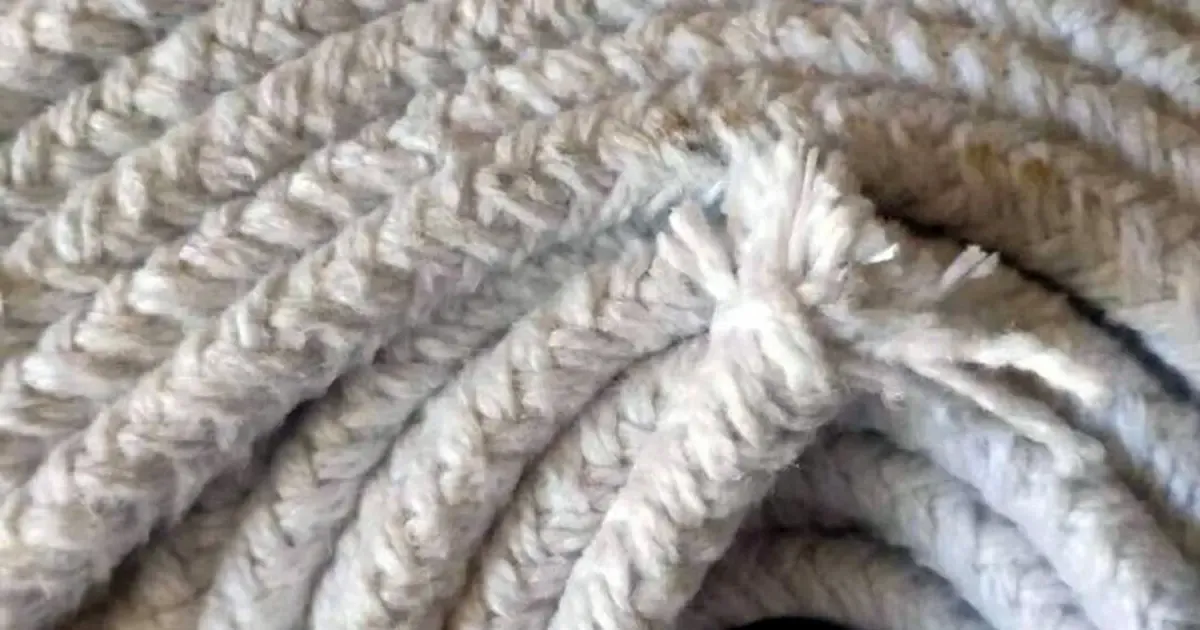
Ceramic fiber rope has become the default flexible sealing material for industrial equipment operating above the practical limit of rubbers and compressed-fiber sheets. It handles continuous temperatures that would destroy most organic seals, remains chemically stable in many process environments, and contains no asbestos — a combination that has made it the replacement of choice for legacy asbestos rope in furnaces, boilers, kilns and engine compartments.
This article explains what ceramic fiber rope is, how the different constructions and reinforcements affect performance, how it should be installed, and where it delivers the strongest results across cement, power generation, marine, chemical and metals-processing plants.
1. What Is Ceramic Fiber Rope?
Ceramic fiber rope is a flexible cord or braid made from aluminosilicate ceramic fibers, usually combined with a reinforcement yarn. Ceramic fiber rope is supplied as round braid, square braid, twisted rope, twisted tape or hollow sleeve, and it is used to seal doors, expansion joints, flanges, valve stuffing boxes and other gaps that see high temperature, thermal cycling or limited mechanical movement. For side-by-side form selection, sizing rules and reinforcement temperature limits across rope, tape, cloth and paper, see our ceramic fiber forms buying guide.
The base fiber is the same family found in ceramic fiber bulk and ceramic fiber blanket products, so the rope inherits the same non-combustible, low-conductivity chemistry. The difference is the textile construction, which gives the material conformability and allows it to be stuffed, wrapped or braided into joints.
2. Key Material Properties
Temperature Range
The working limit depends on fiber grade and reinforcement:
| Grade | Continuous Temperature | Short-Term Peak |
|---|---|---|
| Standard aluminosilicate | 1,000 °C | 1,260 °C |
| Zirconia-containing (high purity) | 1,350 °C | 1,430 °C |
This range covers most industrial furnace, boiler and exhaust applications. Above 1,260 °C continuous, advanced products such as polycrystalline mullite or alumina fiber become necessary.
Thermal Conductivity
At 1,000 °C, typical ceramic fiber rope conducts in the range of 0.15–0.18 W/(m·K) — lower than traditional refractory brick and significantly lower than metal gaskets. The low conductivity keeps outer surfaces cooler, reduces heat loss and improves personnel safety.
Chemical Stability
Ceramic fiber rope tolerates most industrial atmospheres:
- pH 4–14 media, excluding strong alkalis such as sodium or potassium hydroxide and strong acids such as hydrofluoric or phosphoric acid.
- Oil, water vapor and many hydrocarbons.
- Intermittent contact with molten aluminum and zinc in well-designed seals.
For severely corrosive environments, zirconia-containing grades or stainless-steel-reinforced constructions are normally specified.
Mechanical Properties
The textile construction determines the balance between sealability and elasticity:
- Round and square braided ropes are dense (typically 550–700 kg/m³), with higher compressive strength and lower recovery. They suit static seals up to about 0.6 MPa.
- Twisted ropes and tapes are lighter (380–500 kg/m³) and more elastic, making them ideal for expansion joints and doors that move during heating and cooling.
- Hollow sleeve rope is the lightest construction (around 300 kg/m³) and is often used for cable and pipe wrapping where both fire protection and thermal insulation are needed.
Typical tensile strength is ≥0.8 MPa. Ropes above 50 mm diameter are usually reinforced with metal wire or high-temperature glass yarn to prevent stretching or structural collapse in service.
Health and Environmental Notes
Ceramic fiber rope is asbestos-free. During the first heat-up, any organic binder or processing aid carbonizes and may produce a short period of light smoke. This is normal and does not indicate failure. Once the organic fraction has burned out, the rope consists only of inorganic ceramic fibers and remains stable and non-irritating under normal handling conditions.
3. Product Types and Constructions
| Type | Cross-Section | Density (kg/m³) | Typical Use |
|---|---|---|---|
| Round braided rope | Circular | 550–700 | Static seals, door seals, stuffing boxes |
| Square braided rope | Square / rectangular | 550–700 | Flange and groove packing |
| Twisted rope / tape | Circular or flat | 380–500 | Expansion joints, frequent thermal movement |
| Hollow sleeve rope | Tubular | ~300 | Cable/pipe fire wrap, high-temperature sleeves |
Reinforcement Options
| Reinforcement | Continuous Temperature | Peak Temperature | Characteristics |
|---|---|---|---|
| Glass fiber yarn | 650–1,000 °C | 1,260 °C | Good electrical insulation, moderate strength |
| Stainless-steel wire | 1,000–1,260 °C | 1,430 °C | High strength, abrasion resistance, higher pressure |
Glass-reinforced ropes are preferred for electrical insulation and moderate-temperature seals. Stainless-steel reinforcement is the choice for high-pressure flanges, large-diameter seals, severe vibration or mechanical handling loads.
4. Installation Guidelines
A ceramic fiber rope seal is only as good as its installation. The following practices are standard across most industrial applications:
- Surface preparation. Remove oil, rust scale, dust and old packing. A clean, dry surface is essential for contact and adhesion.
- Sizing. Select a rope diameter roughly 10–15 % larger than the groove or joint gap so the rope is under light compression when the joint is closed. Common diameters range from 5 mm to 100 mm; coils are normally supplied in 30–100 m lengths.
- Compression allowance. After installation, the rope should be compressed by about 10–15 % of its original diameter. Over-compression crushes the fiber structure and reduces recovery; under-compression leaves a leak path.
- High-temperature sealant. For joints requiring very low leakage, coat the rope or joint faces with a compatible high-temperature sealant before closing. This fills surface imperfections and improves gas-tightness.
- Joint staggering. In multi-turn packing, stagger the cut ends so they do not line up and create a straight leak path.
- First heat-up. Heat slowly to allow organic processing aids to carbonize without pressure buildup. A controlled initial bake is especially important for large furnace doors.
Pressure Rating Guidance
- Low pressure (≤0.6 MPa): dense round or square braided rope.
- Medium to high pressure: stainless-steel-reinforced braided rope.
- Extreme pressure or high-integrity flanges: consider combining rope with a metal gasket or specially engineered high-density ceramic rope designed for the application.
Special-Service Recommendations
- Thermal cycling: use twisted or three-dimensionally braided constructions with better recovery.
- Vibration: choose dense round or square braid and increase the number of packing rings.
- Corrosive atmospheres: specify zirconia-containing fiber with stainless-steel reinforcement.
5. Industry Applications
Cement Industry
Cement kilns, preheaters and coolers are classic ceramic fiber rope applications in cement plants. The rope seals rotary-kiln feed and discharge ends, tertiary-air ducts and cooler partition walls. Reported field benefits include lower shell temperatures, reduced heat consumption and longer seal life than legacy asbestos rope. Zirconia grades are often chosen where alkali vapor is present.
Power Generation
In coal, biomass and waste-to-energy boilers, ceramic fiber rope seals inspection doors, soot-blower openings and high-temperature flange joints. It replaces asbestos rope and some metal-jacketed gaskets where conformability is needed. Because it is non-combustible, it also contributes to fire-safety compliance in turbine enclosures and ductwork.
For broader thermal insulation in power plants, see power generation applications.
Marine and Offshore
Shipboard exhaust systems, engine compartments and incinerators use ceramic fiber rope for high-temperature sealing and fire containment. Marine specifications often require resistance to salt-laden air and vibration, so stainless-steel-reinforced grades are common. The material satisfies the non-combustible requirements of IMO SOLAS and similar naval standards when qualified to the correct grade.
Marine thermal-management context is covered in our marine and offshore applications page.
Chemical and Petrochemical
Reformers, crackers, furnaces and high-temperature reactor flanges use ceramic fiber rope where temperatures exceed the limits of graphite or PTFE packings. The rope tolerates many process vapors and allows thermal movement in cycling units. In petrochemical plants it is often paired with ceramic fiber blanket and board systems for complete high-temperature envelopes.
See petrochemical applications for related insulation system guidance.
Metals Processing
Aluminum holding furnaces, die-casting machines and molten-metal transfer systems use ceramic fiber rope to seal lids, launder covers and door frames. The material withstands intermittent splashing by molten aluminum and zinc and accommodates the thermal growth of steel shells. High-purity zirconia grades are preferred where metal contact is frequent.
6. Comparison with Traditional Sealing Materials
| Property | Ceramic Fiber Rope | Asbestos Rope | Rubber Gasket | Metal Gasket |
|---|---|---|---|---|
| Continuous temperature | 650–1,430 °C | 600–800 °C | 200–400 °C | 500–1,200 °C |
| Thermal conductivity at 1,000 °C | 0.15–0.18 W/(m·K) | 0.20–0.25 | — | 0.4–0.5 |
| Tensile strength | ≥0.8 MPa | 0.3–0.6 MPa | 2.0–3.0 MPa | 200–300 MPa |
| Chemical resistance | Good | Moderate | Limited | Good |
| Asbestos-free | Yes | No | Yes | Yes |
| Service life | Long | Moderate | Short | Long |
| Installation flexibility | High | Moderate | High | Moderate |
Ceramic fiber rope does not match the tensile strength of a metal gasket or the room-temperature sealability of rubber, but it occupies a unique position: it is flexible, installable on-site, thermally stable and asbestos-free across the temperature range where most organic and compressed-fiber seals fail.
7. Limitations and Future Trends
Current Limitations
- First heat-up smoke. Organic processing aids must burn out; users should expect a brief smoke period during initial commissioning.
- Strong acid / alkali attack. Not suitable for hydrofluoric acid, phosphoric acid or concentrated caustic service without specialist grades.
- Initial cost. Higher purchase price than commodity asbestos-replacement sheets, although longer service life usually offsets the difference.
Technology Trends
- 3D braided structures. New braiding patterns improve density uniformity and reduce surface dusting, with better retention of tensile strength after thermal cycling.
- Rare-earth stabilization. Zirconia and yttria additions push usable temperatures higher and improve fiber crystallization resistance.
- Specialized formulations. Anti-seawater, low-binder and radiation-resistant grades are expanding the addressable market.
- Digital design. AI-assisted textile engineering is shortening the development cycle for application-specific rope constructions.
Flat sealing faces often use tape instead of round cord; the ceramic fiber tape page gives the woven specifications.
8. Conclusion
Ceramic fiber rope is a practical, asbestos-free sealing solution for joints that see high temperature, thermal cycling and limited mechanical movement. The right rope is chosen by matching the fiber grade, reinforcement and braid construction to the temperature, pressure and chemical environment. When installed with proper compression and, where needed, a compatible high-temperature sealant, it delivers long service life and lower heat loss than legacy materials.
Rosewool supplies ceramic fiber rope, ceramic fiber bulk, blanket and related high-temperature insulation products, manufactured under ISO 9001, CE and SGS certifications from a supply base established in 1982. For help selecting the right rope diameter, fiber grade and reinforcement for your furnace, boiler or engine application, contact our technical team.
For related reading, see our overview of ceramic fiber bulk grades and uses and our insulation glossary covering A1, ceramic fiber and microporous materials.
Explore flexible aerogel and microporous insulation options in our aerogel insulation guide.
Frequently asked
What is ceramic fiber rope used for? +
Ceramic fiber rope is used as a flexible high-temperature seal for furnace doors, expansion joints, flanges, valve stuffing boxes, kiln seals and exhaust systems. It replaces asbestos rope in applications up to 1,260 °C, or up to 1,430 °C for short-term peaks with zirconia grades.
What temperature can ceramic fiber rope withstand? +
Standard aluminosilicate ceramic fiber rope is rated for continuous use up to 1,000 °C and short-term exposure to 1,260 °C. Zirconia-containing grades can operate continuously at up to 1,350 °C and reach 1,430 °C for short periods.
Should I choose glass fiber or stainless-steel reinforcement? +
Choose glass-fiber reinforcement for moderate temperatures (up to ~1,000 °C) and where electrical insulation matters. Choose stainless-steel wire reinforcement for higher temperatures, higher pressure, mechanical abrasion, large diameters or severe vibration.
How do you install ceramic fiber rope for sealing? +
Clean the joint surface, select a rope diameter 10–15 % larger than the gap, compress it by 10–15 % when closing the joint, and stagger cut ends in multi-turn packing. For gas-tight joints, apply a compatible high-temperature sealant and perform a slow first heat-up to burn out organic binders.
Is ceramic fiber rope a safe replacement for asbestos? +
Yes. Ceramic fiber rope contains no asbestos. It is non-combustible and chemically stable in most industrial environments. During first heat-up, organic processing aids may carbonize and produce brief smoke; this is normal and ceases once the rope is fully conditioned.
Request a quote
Interested in our insulation solutions? Send us your requirements and our team responds within one business day.