
Rosetexwool at LDES 2026: Insulation for Long-Duration Energy Storage
Rosetexwool exhibits rock wool, calcium silicate, ceramic fiber and aerogel insulation at LDES 2026 in Xi'an, 16-18 September, linking material choice to molten salt heat storage and battery safety.
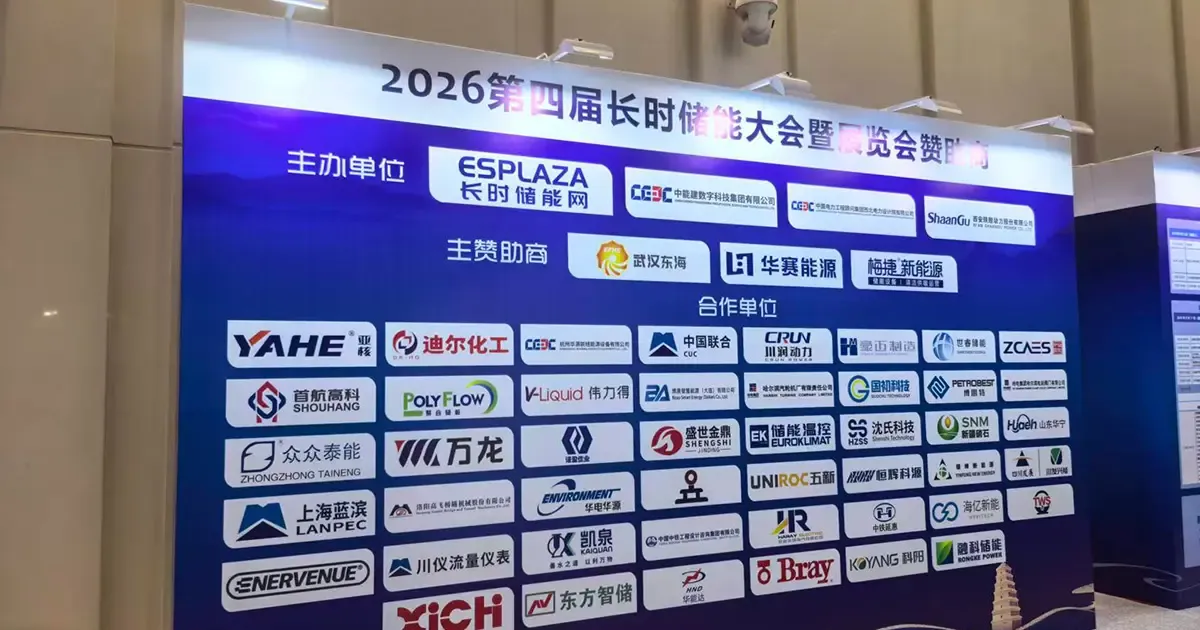
Xi'an, 16 September 2026 — Rosetexwool Insulation Refractory Co., Ltd. is exhibiting this week at LDES 2026, the 4th Long-Duration Energy Storage Conference and Exhibition, held from 16 to 18 September 2026 at the Xi'an International Convention and Exhibition Center. At booth B3, the company presents its rock wool, calcium silicate, ceramic fiber and nano-aerogel insulation lines to project developers, EPC contractors and design institutes working on long-duration energy storage.
About LDES 2026
LDES 2026 runs under the theme "Reshaping the energy storage landscape, strengthening the energy foundation". The event is organised by a leading Chinese long-duration energy storage industry platform together with state-owned power engineering partners, and brings together more than 1,200 delegates, 600 organisations, 80+ exhibitors, 3,000+ professional visitors and 70+ speakers.
The conference covers the full range of long-duration storage routes across three parallel tracks:
- Long-duration physical storage — compressed air, liquid air, carbon dioxide, heat pump and gravity storage
- Long-duration electrochemical storage — flow batteries and long-duration lithium systems
- Thermal energy storage — molten salt, solid and water heat storage, phase change and seasonal heat storage
As the market moves from today's mainstream 4-hour systems toward longer durations, thermal energy storage and hybrid physical storage are scaling quickly — and every one of these routes is, at its core, an insulation problem.
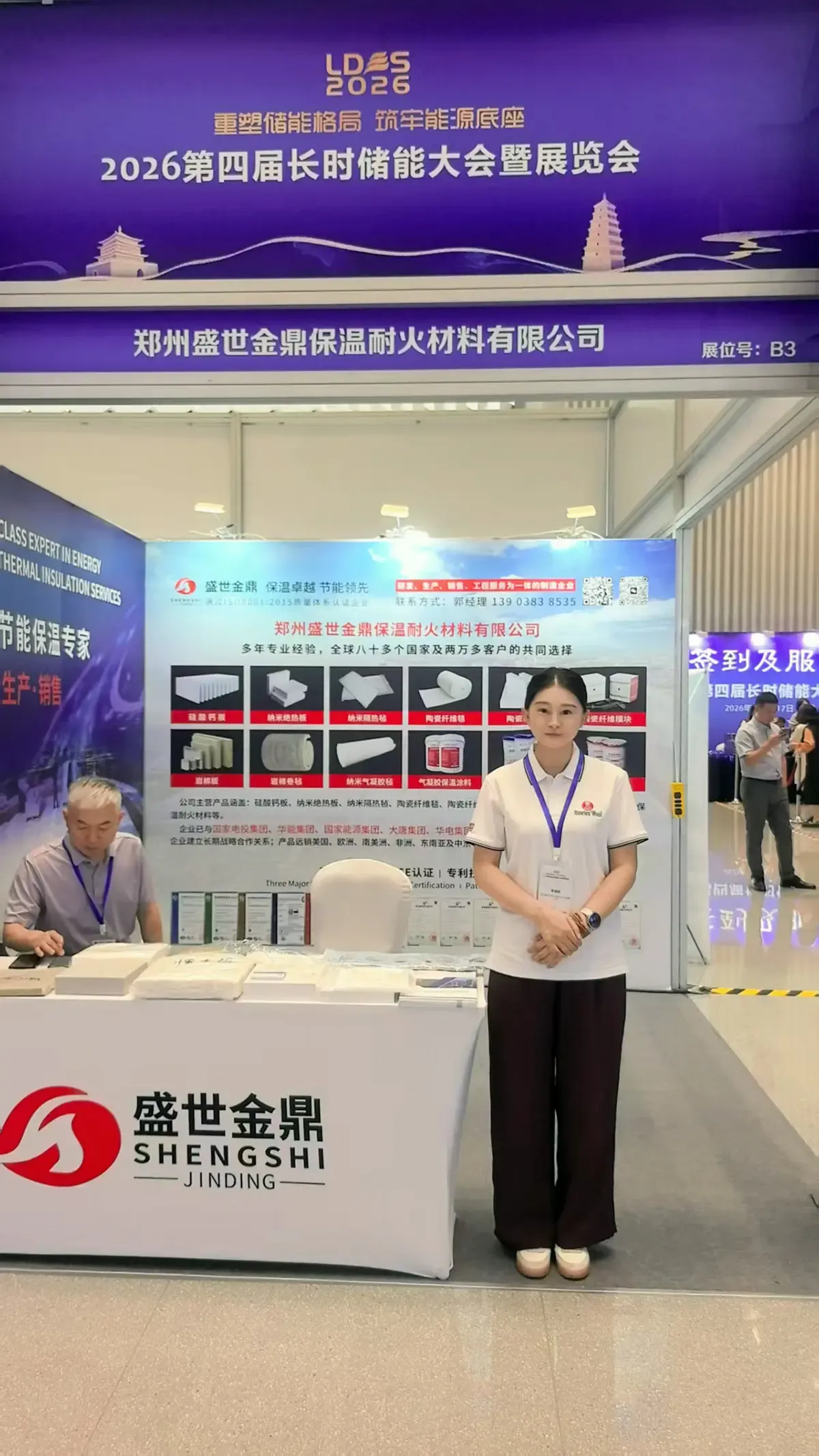
What we are presenting at booth B3
The booth showcases the four material families Rosewool supplies to energy storage and industrial customers in more than 60 countries:
- Rock wool boards and blankets — non-combustible mineral wool insulation for thermal energy storage vessels, plant rooms and battery storage containers
- Calcium silicate boards — rigid, high-strength insulation for molten salt tank bases and hot surfaces that also carry mechanical load
- Ceramic fiber blankets, papers and modules — refractory insulation for high-temperature equipment above the range of conventional mineral wool
- Nano insulation boards, aerogel blankets and aerogel coatings — thin-build insulation where installation space around tanks and pipework is limited
Visitors can review datasheets, certification documents and sample products at the booth, and discuss project-specific requirements with the export team.
Insulation across long-duration storage routes
Molten salt thermal energy storage. Two-tank molten salt systems operate at up to about 565 °C. Tank side walls, foundations and interconnecting pipework need insulation that holds shell temperatures down, limits standby heat loss and stays dimensionally stable through thousands of daily charge-discharge cycles. Combining calcium silicate at load-bearing locations with rock wool boards and blankets across large flat surfaces is a proven specification pattern. The same layered logic applies to industrial applications across power generation.
Compressed air and heat storage. Above-ground thermal stores, heat exchangers and pressure vessels in advanced compressed air systems run at similar or higher temperatures, where ceramic fiber products and aerogel blankets provide the service temperature and thin-build performance conventional materials cannot reach.
Battery energy storage safety. For electrochemical storage containers, the insulation role shifts from heat retention to fire protection. Non-combustible rock wool with an A1 fire rating is used in container walls, ceilings and fire barriers between battery bays, slowing fire spread and protecting adjacent equipment. For a deeper comparison of reaction-to-fire classes, see our guide to A1 vs A2 vs B fire ratings.
Selecting insulation for thermal energy storage
Material selection for storage applications follows the same engineering order as any high-temperature project: service temperature first, then thermal conductivity at the real operating temperature rather than at room temperature, then dimensional stability across thermal cycles, moisture behaviour and mechanical strength. Our reference on insulation wool temperature ratings sets out the first filter in detail. As a rough map, rock wool serves to about 650 °C, calcium silicate to about 1,000 °C, ceramic fiber products up to 1,430 °C, and aerogel blankets cover roughly 650 °C with a fraction of the thickness.
Continuing the conversation
The exhibition runs until 18 September. The Rosetexwool export team welcomes visitors at booth B3 throughout the conference. Customers who cannot attend this week can reach the team through our product pages or request quotations for custom-cut insulation packages for molten salt, compressed air and battery storage projects.
With in-house production of rock wool, calcium silicate, ceramic fiber and nano insulation products, Rosetexwool has supported thermal insulation projects since 1982 and exports to more than 60 countries under ISO 9001, CE and SGS certification. The company also supplies the building envelope market with the same non-combustible product families.
Related Reading
Frequently asked
When and where is LDES 2026 held? +
LDES 2026, the 4th Long-Duration Energy Storage Conference and Exhibition, runs from 16 to 18 September 2026 at the Xi'an International Convention and Exhibition Center. The event brings together delegates from grid operators, power generators, project investors, design institutes, EPC contractors and equipment suppliers across the long-duration storage industry.
What is Rosetexwool presenting at the exhibition? +
The booth presents four insulation families used in energy storage and industrial projects: rock wool boards and blankets, calcium silicate boards, ceramic fiber blankets, papers and modules, and nano insulation products including aerogel blankets and coatings. Visitors can review datasheets, certification documents and samples, and discuss project-specific requirements with the export team.
Which insulation suits molten salt thermal energy storage tanks? +
Two-tank molten salt systems operate at up to about 565 °C, so the first filter is service temperature. Calcium silicate is typically used at load-bearing locations such as tank foundations because it combines high-temperature capability with compressive strength, while rock wool boards and blankets cover large side-wall and roof areas. Thin-build aerogel blankets are used where space around pipework is limited.
Is rock wool suitable for battery energy storage containers? +
Yes, where the requirement is fire protection rather than heat retention. Non-combustible rock wool with an A1 reaction-to-fire classification is used in container walls, ceilings and fire barriers between battery bays. The complete assembly has to be assessed, because fire performance depends on the system, fixings and junctions as well as the insulation itself.
Can Rosetexwool supply custom insulation packages for energy storage projects? +
Yes. Rosetexwool produces rock wool, calcium silicate, ceramic fiber and nano insulation products in-house and supports cut-to-size boards, custom shapes and complete insulation packages for molten salt, compressed air and battery storage projects. The company has supplied thermal insulation since 1982 and exports to more than 60 countries under ISO 9001, CE and SGS certification.
Request a quote
Interested in our insulation solutions? Send us your requirements and our team responds within one business day.