
Aerospace & Nuclear Insulation: Materials for Extreme Environments
Aerospace and nuclear insulation materials — aerogel composites, porous ceramics, nuclear-grade ceramic fibre, and BPE / HDPE shielding for extreme environments.
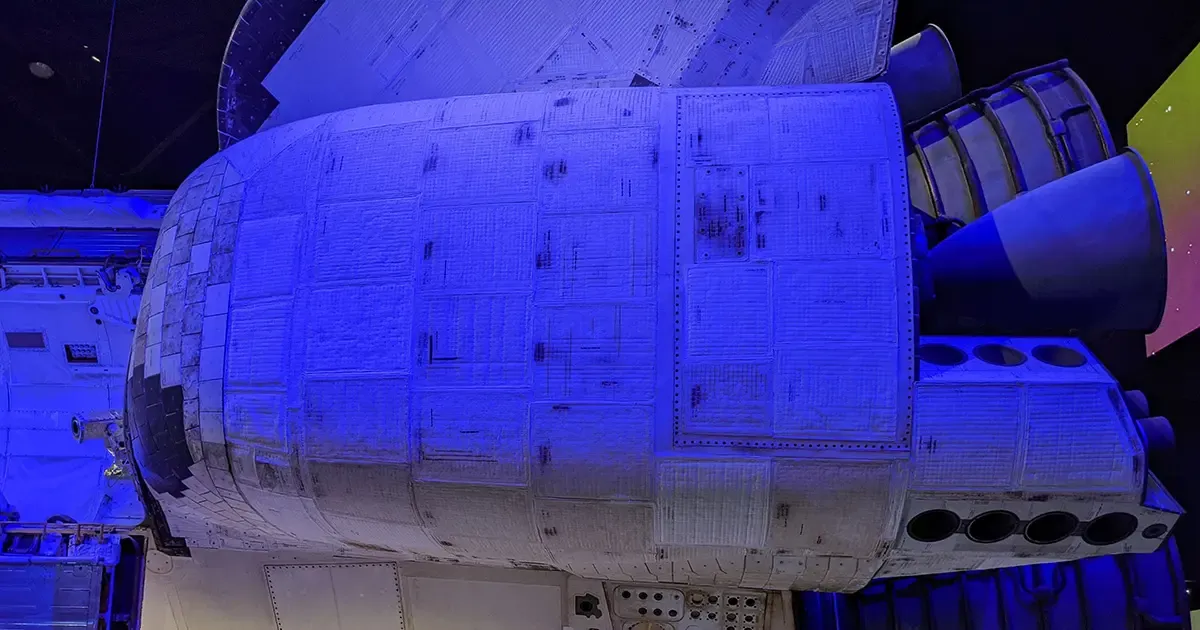
Industrial insulation materials and aerospace & nuclear insulation share the same goal — slowing heat flow — but the two extremes raise the bar to a different universe. Aerospace hardware has to survive re-entry surface temperatures above 3000 °C and shadow-side cold down to -196 °C, while staying extremely lightweight (densities below 0.2 g/cm³) and passing strict vacuum outgassing tests. Nuclear plant insulation must hold dimensional and thermal stability under combined high temperature, high pressure (typically 300–700 °C, >15 MPa) and intense neutron + gamma radiation (10⁶–10⁸ Gy), while in many cases pulling double duty as a radiation shield. For how satellites handle the same extremes purely in vacuum, read our satellite and spacecraft thermal insulation guide.
This guide maps the materials used for both applications side-by-side, lines up the performance constraints that drive the choices, and gives a selection matrix a procurement or design engineer can actually use. For general industrial pipe and equipment insulation, see our industrial pipe insulation materials guide. For cryogenic pipe work that overlaps with the -196 °C end of the aerospace/nuclear range, see our cryogenic pipe insulation guide.
Scope note. This article is about extreme-environment thermal and radiation performance. General fire protection for defense platforms is covered separately in our aerospace and defense thermal insulation materials page; naval fire protection is covered in our marine fire insulation standards page. Both are referenced here only as complementary reading — they are not the subject.
Why aerospace and nuclear insulation are not "industrial-plus"
Three physical conditions separate these regimes from ordinary industrial insulation: rapid thermal cycling, vacuum or radiation-coupled environments, and zero-tolerance for weight (aerospace) or for activation / degradation over decades (nuclear). Each forces material choices that simply do not exist in petrochemical, cement, or power-plant insulation catalogs.
A useful way to frame the difference is by asking what failure looks like. On a satellite, a few extra kilograms of insulation mass directly raises launch cost by roughly $10,000 per kilogram; on a reactor primary loop, a 5% drop in thermal performance over ten years can push a safety-related component past its qualified envelope. Those two failure costs drive very different material solutions.
The table below summarises the four constraints that govern almost every selection decision in both sectors:
| Constraint | Aerospace limit | Nuclear limit | Industrial reference |
|---|---|---|---|
| Service temperature | -200 °C to +3000 °C (gradient inside one vehicle) | -196 °C to +1400 °C | -50 °C to +650 °C |
| Density | typically < 0.2 g/cm³ for hot structure; < 0.3 g/cm³ for engine | usually > 100 kg/m³ for primary-loop insulation; 1.5–12 g/cm³ for shielding structures | 24–200 kg/m³ |
| Outgassing / radiolysis | TML ≤ 5 %, CVCM ≤ 1 % (ASTM E595) | H₂ emission < 1 µg/cm²·day; performance decay < 5 % / 10 yr | not qualified |
| Certification | DO-160G, NASA materials specs, equivalent national outgassing standards | ASME BPVC Section III (Div. 1, 2, 3, 5), ASME NQA-1, ISO 19443 | national fire-classification and insulation-efficiency standards |
Each constraint is unpacked in its own section below.
The aerospace thermal-environment spectrum
Four thermal environments dominate spacecraft and launch-vehicle design, and they are different enough that one material rarely covers all four:
- Re-entry and rocket-engine plumes. Surface temperatures reach 1500–3000 °C for tens of seconds. Heat-flux density is extreme and convective cooling is essentially absent, so the insulation must carry the entire thermal load through its own heat capacity plus front-face ablation or re-radiation. Carbon-based aerogel composites (density 0.12–0.2 g/cm³, λ 0.044–0.06 W/(m·K)) and reusable high-temperature blankets made from porous oxide ceramics (mullite, magnesium-aluminate spinel) are the workhorses.
- Deep-space cold-soak. In shadowed regions of a Mars orbiter or lunar lander, equilibrium temperature can drop to about -196 °C. The requirement here is stable low thermal conductivity rather than high temperature resistance — silica aerogel (λ ≤ 0.020 W/(m·K) at 25 °C) is the standard.
- Orbital thermal cycling. LEO spacecraft see ±100 °C swings in minutes as they pass in and out of sunlight. The insulation must survive thousands of these cycles without micro-cracking or delamination — that rules out most rigid ceramic boards unless they are properly cushioned.
- Internal fire protection. Crew or payload bays still need fire barriers, typically 3–5 mm flexible composite blankets with a tensile strength around 10 MPa and elongation around 150 % so they can wrap irregular geometry.
Across all four environments, the same property shows up: outgassing. Total mass loss (TML) must stay under 5 % and collected volatile condensable materials (CVCM) under 1 % per ASTM E595, with additional project-level limits on water vapour recovery. This is why aerospace grades of familiar materials — silica aerogel, polyimide films, ceramic-fibre textiles — look superficially similar to industrial grades but cost an order of magnitude more per kilogram.
The nuclear-environment spectrum
Nuclear plant insulation is governed by three overlapping extremes: thermal, mechanical, and radiation. Each component on the primary loop, in the containment, or in the spent-fuel pool sees a different combination.
- Primary loop steam and feedwater piping. 300–700 °C surface, high pressure, sustained gamma + neutron flux. The classical choice is microporous calcium silicate (density 100–200 kg/m³, λ 0.044–0.06 W/(m·K)) wrapped with a ceramic-fibre blanket; modern plants increasingly replace that with rare-earth-doped aerogel composites that cut thickness in half while adding neutron-shielding performance.
- Reactor vessel and steam-generator enclosures. Shielding plus insulation in one layer: boron-containing polyethylene (BPE) at 0.92–1.2 g/cm³ absorbs thermal neutrons efficiently (≥ 95 % in standard formulations) and is paired with HDPE composites loaded with Sm₂O₃-B₄C or PbWO₄-B₄C when gamma shielding is also needed. Fifteen centimetres of such composite can deliver > 97 % neutron shielding and > 72 % gamma shielding simultaneously.
- Containment penetrations and cable rooms. Where weight matters more than temperature, glass foam (closed-cell, A-class non-combustible, near-zero water absorption) remains the default. Service range -196 °C to +650 °C, density 220–300 kg/m³.
- Generation-IV high-temperature reactors. Components run near 1400 °C under irradiation. Only a narrow class of materials qualifies; tungsten-carbide / high-entropy-alloy composites (WC-HEA, density 8–12 g/cm³, compressive strength ~34 MPa) are emerging as structural-insulation hybrids.
The radiation constraint deserves a separate table because it is what most often disqualifies otherwise excellent industrial insulation:
| Material | Service under γ + n flux | Typical dose limit | Why it survives |
|---|---|---|---|
| Calcium silicate | acceptable in primary loop | ~10⁶ Gy | inorganic crystalline phase, low hydrogen content |
| Ceramic-fibre blanket | acceptable | ~10⁷ Gy | aluminosilicate glass is radiation-tolerant |
| Rare-earth aerogel composite | qualified for primary loop | > 10⁸ Gy | oxide matrix, no organic binder |
| HDPE-based composites | containment & storage only | ~10⁵ Gy | hydrogen-rich, radiolysis limits lifetime |
| Steel / WC-HEA structural shielding | reactor internals | > 10⁸ Gy | metallic bonding, no organic phase |
Material families used in both sectors
Looking at the two regimes together, five material families cover roughly 90 % of qualified selections. They are presented in order of typical use temperature:
- Silica aerogel composites. Operating window -200 °C to +1200 °C, λ 0.012–0.020 W/(m·K), density 0.087–0.15 g/cm³. Satellite electronics enclosures, cryogenic fuel tanks, and increasingly nuclear primary-loop retrofits.
- Carbon-based aerogel composites. Operating window -200 °C to >3000 °C, density 0.12–0.2 g/cm³, λ 0.044–0.06 W/(m·K). Re-entry thermal protection, rocket-engine nozzle vicinity, hypersonic leading edges.
- Porous oxide ceramic insulators. Mullite and magnesium-aluminate spinel fibre boards and tiles, porosity >80 %, density 0.2–0.5 g/cm³. Reusable thermal protection, deep-space thermal control, certain high-temperature reactor components.
- Polyimide films and flexible high-temperature composites. Transparent polyimide films (solar transmittance >0.8) for solar array and optical-window protection; flexible fire-insulation composites (10 MPa tensile, ~150 % elongation) for internal compartment fire barriers.
- Boron-containing HDPE composites. BPE, Sm₂O₃-B₄C/HDPE, PbWO₄-B₄C/HDPE. Density 0.92–1.2 g/cm³; combine neutron shielding with low thermal conductivity. Reactor containment, fuel-storage containers, cable-penetration shielding.
For nuclear-grade piping above 650 °C, calcium silicate and ceramic-fibre blanket stacks remain the workhorse combination, while for cryogenic piping and storage the relevant grade of foam glass is usually combined with an aerogel layer where space is tight. Our nano aerogel insulation blanket is the industrial-bench counterpart of the aerospace aerogel grade.
Nuclear-Grade Ceramic Fiber: Radiation Tolerance and Low Activation
Alumina-silica ceramic fibre blanket, board and module formats are the default high-temperature workhorse for nuclear primary and secondary loop insulation above roughly 650 °C, where calcium silicate alone cannot carry the temperature. Their case in nuclear service rests on four properties that general industrial grades do not have to demonstrate:
- Radiation tolerance. Continuous high-energy neutron and gamma exposure degrades organic binders and many polymer-based insulations, but ceramic fibres are inorganic and dimensionally stable. Higher-alumina compositions (typically ≥45 % Al₂O₃) tolerate cumulative dose better than low-alumina or glassy formulations, which is why nuclear-qualified grades specify an alumina floor rather than a generic fibre.
- Low activation. The long-term radioactive inventory of an insulation system is dominated by trace neutron-absorbing elements. Boron-free or ultra-low-boron formulations avoid the B-10 (n,α) reaction that would otherwise create activated lithium and helium; sodium and potassium are held to low levels for the same reason. The objective is a system whose induced activity decays quickly enough to keep maintenance exposure and waste classification manageable.
- Chemical compatibility. In pressurized-water and other loop chemistries the fibre must not release leachable halides or corrode austenitic stainless steel. Nuclear-qualified ceramic fibre is specified for low chloride and fluoride content and verified against the relevant loop-water chemistry limits.
- Fire and post-accident behaviour. Beyond steady-state insulation, the material must survive a loss-of-coolant event without adding to the iodine-hydrogen hazard: low smoke, low toxicity, and no halogen-bearing decomposition products. That is the same fire-blocking discipline applied to aerospace and defense thermal systems, where ceramic fibre is also the high-temperature workhorse.
Continuous hot-face service for these grades sits in the 1000–1200 °C band, with classification temperatures up to 1260–1430 °C for high-alumina and zirconia-containing grades; as with all ceramic fibre, the continuous rating is held 100–200 °C below the classification temperature. For reactor components that need structural load-bearing at even higher flux and irradiation, silicon-carbide-fibre-reinforced silicon carbide (SiC/SiC) composites — a low-activation ceramic with proven irradiation tolerance — are the emerging class, though they are a structural composite rather than a bulk insulation.
Certification pathways: DO-160 vs ASME BPVC
The qualification routes for the two industries are deliberately different. Aerospace insulations are certified under environmental test standards such as RTCA DO-160G (temperature, altitude, humidity, vibration, shock — 18 test sections) plus project-specific NASA material specifications and ASTM E595 outgassing per equivalent national standards. The test programme is short but very wide; failure modes are dominated by thermal cycling, vibration and outgassing.
Nuclear-grade insulations are qualified under ASME BPVC Section III (with Divisions 1, 2, 3 and 5 covering different component classes) and the nuclear-quality-assurance programme ASME NQA-1, with ISO 19443 as the international equivalent. The test programme is narrow but very long: irradiations last months, ageing tests run for 40-year design lifetimes, and every supplier must be part of a documented chain of quality control with full traceability to raw material lots. This is why the same chemistry sold into aerospace and into nuclear often costs a different order of magnitude even when the underlying material is identical.
| Aspect | Aerospace (DO-160 / NASA) | Nuclear (ASME BPVC III / NQA-1) |
|---|---|---|
| Test horizon | weeks to a few months | years to decades |
| Primary failure modes | thermal cycling, outgassing, vibration | irradiation ageing, thermal ageing, corrosion |
| Documentation focus | per-batch traceability to formula | per-component traceability with 40-year records |
| Acceptance philosophy | pass/fail on a small set of standard tests | qualified + surveilled throughout service life |
Selection matrix by application
The matrix below maps the most common qualification cases to the material family that is normally selected. It is not exhaustive; project-specific qualification always overrides generic recommendations.
| Application | Service temperature | Dominant constraint | Typical choice |
|---|---|---|---|
| Satellite electronics enclosure | -50 °C to +150 °C | outgassing, mass | silica aerogel blanket |
| Rocket-engine nozzle vicinity | up to +3000 °C | heat-flux, ablation | carbon aerogel composite |
| Deep-space thermal control | -200 °C to +1400 °C | thermal cycling | porous oxide ceramic tile |
| Crew / payload fire barrier | -50 °C to +300 °C | fire, flexibility | flexible ceramic-fibre composite |
| Reactor primary loop | +300 °C to +700 °C | γ + n flux, ageing | calcium silicate + ceramic-fibre wrap, or rare-earth aerogel composite |
| Containment penetration | < +300 °C | neutron + γ shielding | Sm₂O₃-B₄C / HDPE composite |
| Spent-fuel storage | < +300 °C | long-term shielding | BPE or PbWO₄-B₄C / HDPE |
| Generation-IV high-temperature structure | up to +1400 °C | γ + n flux + temperature | WC-HEA composite |
For procurement, three questions decide the answer in most cases: (1) what is the maximum and minimum service temperature and how fast does the temperature cycle, (2) is vacuum or radiation present and at what dose rate, and (3) what weight, space or geometry constraints apply. If the answers are uncertain, the safer default in aerospace is the silica aerogel family, and in nuclear it is calcium silicate or BPE depending on whether shielding is required.
Boundary with general industrial insulation
It is worth being explicit about what this guide does not cover. Petrochemical, cement, power-generation and HVAC insulation — which is what most procurement teams are familiar with — lives in a much narrower window: typically -50 °C to +650 °C, no vacuum, no sustained radiation, no launch-cost penalty per gram. The materials are calcium silicate, rock wool, glass wool, ceramic fibre boards, elastomeric foam, and (more recently) aerogel-enhanced industrial blankets. Our industrial pipe insulation materials page is the entry point for that universe; this article is its upstream cousin for the two extremes where ordinary industrial insulation is either illegal, ineffective or both. For the catalogue view of the high-temperature non-combustible form most often listed in the selection matrix, see our ceramic-fibre blanket product page; the broader aerospace and defence programme context is on our aerospace and defense applications page.
See our nuclear power insulation applications for reactor auxiliary and containment insulation systems.
Explore flexible aerogel and microporous insulation options in our aerogel insulation guide.
For the component-level view — keeping sensors, probes and avionics inside a controlled gradient — continue with our aerospace sensor and avionics insulation guide; for the engine side — nozzles, throats and regeneratively cooled hot walls — our propulsion thermal management materials guide completes the three-part aerospace series this article sits at the top of.
For the civil plant-side view — duty zones, stainless-steel chemistry gates and fire zoning — see our nuclear power plant insulation guide.
Frequently asked
Are aerogel composites approved for nuclear primary-loop piping? +
Yes, in retrofits and in some Generation-III+ designs. Qualification is done case-by-case under ASME BPVC Section III Division 1 with extended ageing testing, because the operating temperature window is similar to a high-pressure steam line.
What is the minimum density currently achievable for an aerospace-grade insulator? +
About 0.087 g/cm³ for pure silica aerogel monoliths; densities in the 0.12–0.2 g/cm³ range are more common for reinforced aerogel blankets that can be handled and installed on a vehicle.
How is outgassing measured and what are the limits? +
The standard test is ASTM E595 (also implemented as an equivalent national standard): samples are held at 125 °C under high vacuum for 24 hours, then total mass loss must be ≤ 5 %, collected volatile condensable materials ≤ 1 %, and recovered water vapour ≤ 0.1 %. Some programmes impose stricter project limits.
Does boron-containing polyethylene actually shield neutrons? +
Yes. A 15 cm thickness of standard BPE or Sm₂O₃-B₄C/HDPE composite absorbs over 97 % of thermal neutrons from a ²⁵²Cf source, and simultaneously contributes roughly 72 % gamma shielding for the Sm₂O₃ formulation.
Why is the thermal-shock limit quoted as ΔT > 1000 °C/s for some materials? +
Because re-entry and rocket-engine exposure can impose heating rates of that order on the insulation surface. The material has to survive the gradient without cracking or delaminating, which is verified with flame-shock or laser-shock tests at progressively higher heat flux.
How long should a nuclear-grade insulation system last? +
The qualified design life of nuclear-safety-related insulation is typically 40 years, with performance decay below 5 % over that period. This is verified by accelerated ageing tests under combined temperature and irradiation.
What is the cheapest way to upgrade an existing nuclear primary loop to better insulation? +
In most plants the cheapest improvement is to retrofit the existing calcium silicate layer with an inner sleeve of rare-earth aerogel composite, which roughly halves the required thickness and lowers the outer surface temperature by 30–40 °C at the same pipe temperature.
Does this article overlap with the aerospace-defense fire-protection page? +
They are complementary. Aerospace-defense fire protection covers fire-resistance and impact scenarios in military platforms, while this article covers extreme thermal environments and radiation shielding. The two subjects meet only on internal compartment fire-barrier materials.
Can industrial aerogel blankets be used in aerospace applications? +
No. Industrial aerogel blankets are not qualified under DO-160 or NASA material specifications, and they are not covered by the same outgassing documentation. Using one in a flight article invalidates the qualification chain.
Where should a buyer start when the specification is uncertain? +
Identify the dominant constraint — temperature, dose rate, or mass — and pick the matching row from the selection matrix above. The material families in this guide then narrow to one or two candidates; project qualification and supplier audit complete the selection.
Is ceramic fiber suitable for nuclear primary-loop insulation? +
Yes, for the high-temperature sections. Above roughly 650 °C, where calcium silicate alone cannot carry the load, alumina-silica ceramic fibre blanket and module stacks are the standard workhorse for nuclear primary and secondary loops. Nuclear-qualified grades are specified for radiation tolerance (higher alumina), low activation (boron-free, low sodium and potassium), low chloride and fluoride to protect stainless steel, and low-smoke, low-toxicity behaviour under a loss-of-coolant event. Continuous hot-face service runs in the 1000–1200 °C band, with classification temperatures up to 1260–1430 °C for high-alumina and zirconia grades.
Request a quote
Interested in our insulation solutions? Send us your requirements and our team responds within one business day.