
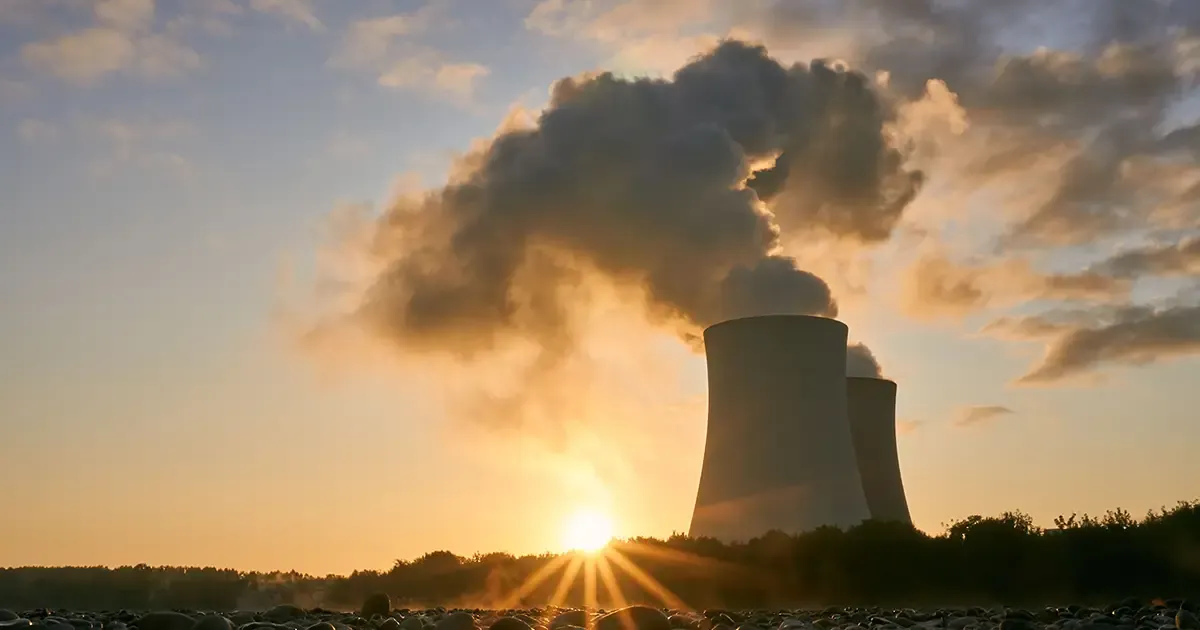
Nuclear Power
Radiation- and high-temperature-resistant insulation for nuclear power — auxiliary piping, fire compartments, waste storage and valve seals using calcium silicate and ceramic fiber.
Nuclear power plants demand insulation that is both high-temperature capable and radiation tolerant, while meeting strict fire-safety codes. Material selection favors dense, stable products that keep their integrity under thermal and radioactive load, and ceramic-fiber seals that survive valve cycling without degradation.
Material Comparison
| Material | Best fit | Service temp | Key advantage |
|---|---|---|---|
| Calcium silicate | Auxiliary piping, compartments, waste | up to 1000 °C | Radiation + heat resistant, structural |
| Ceramic fiber | Valve seals, equipment, fire doors | 1100–1430 °C | High-temp, flexible seal |
Application Scenarios
Nuclear Power Application Scenarios
- Reactor auxiliary piping — calcium silicate insulation withstands high temperature and radiation.
- Plant fire compartments — calcium silicate fills high-strength fire divisions.
- Radioactive waste storage containers — calcium silicate layers limit temperature rise of containment.
- Reactor valve seals — ceramic fiber gaskets resist heat and radiation under cycling.
- Nuclear equipment insulation — ceramic fiber on steam generators, main pumps and high-temp equipment.
- Nuclear fire doors — ceramic fiber cores with excellent high-temperature performance.
Related Articles
Standards & Compliance
Nuclear-Grade Insulation Standards
Nuclear facilities add a layer of requirements that ordinary industrial insulation does not face: any material in a containment or safety-related area must protect evacuation routes and equipment with low smoke and no toxic halogen release during a fire, and must hold its integrity under thermal and radiation load. The certifications that matter are fire-safety and clean-combustion, not just temperature.
- EN 13501-1, Class A1 / A2-s1,d0 — mineral wool classed A1 non-combustible, or A2 with the lowest smoke (s1) and no flaming droplets (d0). The s1,d0 rating is what keeps escape routes clear.
- ASTM E84 (Class A) and ASTM E662 — surface-burning characteristics and smoke-density measurement; nuclear specifications frequently call for low smoke-density values.
- Low-smoke, halogen-free — a defining requirement for containment insulation so that a fire does not release corrosive or toxic halogens into the plant.
- Mineral fiber specifications — ASTM C553 and ASTM C592 cover mineral-fiber insulation for high-temperature piping and equipment, the forms most used in nuclear auxiliary systems.
Nuclear projects also impose stricter quality programs, including ISO 9001 with nuclear-quality extensions and project-specific seismic and environmental qualification. We supply documented, A1 non-combustible mineral wool and confirm the additional qualification steps per project specification.
Material Selection Guide
How to Select Nuclear Insulation
- Start from the safety classification. Safety-related and containment areas dictate non-combustible, low-smoke, halogen-free materials before temperature is even considered.
- Match the operating temperature. Calcium silicate covers auxiliary piping and compartments up to about 1000 °C; ceramic fiber carries valve seals, equipment and fire-door cores up to 1430 °C.
- Plan for radiation and aging. Specify dense, stable products that keep their integrity under long-term thermal and radioactive load without sloughing.
- Confirm smoke and toxicity limits. Verify the s1,d0 or equivalent low-smoke rating for any material inside containment.
- Close the qualification loop. Align with the plant’s quality program, seismic requirements and environmental qualification before release.
See our calcium silicate board and ceramic fiber blanket for the forms specified into nuclear auxiliary and fire-protection systems.
Related Applications
Nuclear facilities demand non-combustible, low-smoke, and radiation-tolerant insulation. Related high-reliability applications:
- Power generation insulation for turbine, boiler, and steam-cycle systems
- Aerospace and defense insulation for extreme-environment thermal control
- Petrochemical insulation for continuous-duty process lines
- Pipe insulation for reactor auxiliary and process piping
Why Rosetexwool
Key Benefits
Why Nuclear Power operations choose Rosetexwool insulation solutions.
Radiation & Heat Resistance
Calcium silicate and ceramic fiber withstand high temperature and radiation in reactor auxiliary systems and valve seals.
Containment Safety
Fire-rated partitions, doors and bulkheads protect nuclear facilities and waste-storage containers.
Waste Storage Stability
Insulation on waste containers prevents temperature rise of radioactive material and maintains safety margins.
Long Service Life
Durable, stable materials reduce inspection and replacement frequency in nuclear plants.
Support
Frequently asked questions
Which insulation suits reactor auxiliary piping? +
Calcium silicate and ceramic fiber rated for high temperature and radiation environments in auxiliary lines and reactor valve seals.
Can you insulate nuclear waste containers? +
Yes. Thermal insulation layers on storage containers help maintain stable temperatures and safety margins.
Do you provide nuclear-grade fire doors? +
We supply high-temperature insulation for nuclear plant fire doors and partition systems; final nuclear qualification is confirmed per project specifications.
What fire-safety rating does nuclear insulation need? +
Materials in containment and safety-related areas are specified A1 non-combustible (EN 13501-1) with the lowest smoke and no flaming droplets (s1,d0), and low-smoke, halogen-free behavior under ASTM E84 and ASTM E662. The priority is keeping escape routes and equipment clear during a fire.
Are your insulation materials low-smoke and halogen-free? +
Yes. Our mineral wool insulation used for nuclear applications is non-combustible and formulated to be low-smoke and halogen-free, which is the defining requirement for containment insulation so that a fire does not release corrosive or toxic halogens into the plant.
Ready to start? Tell us your specs — we'll quote within 24 hours.
Get pricing
Request a quote for Nuclear Power solutions
Tell us about your nuclear power project requirements — our team responds within one business day.