
Satellite & Spacecraft Thermal Insulation Materials Guide
Satellite and spacecraft thermal insulation explained from the in-orbit perspective: MLI, silica aerogel blankets, quartz and ceramic fibers, outgassing gates and temperature-zone selection.
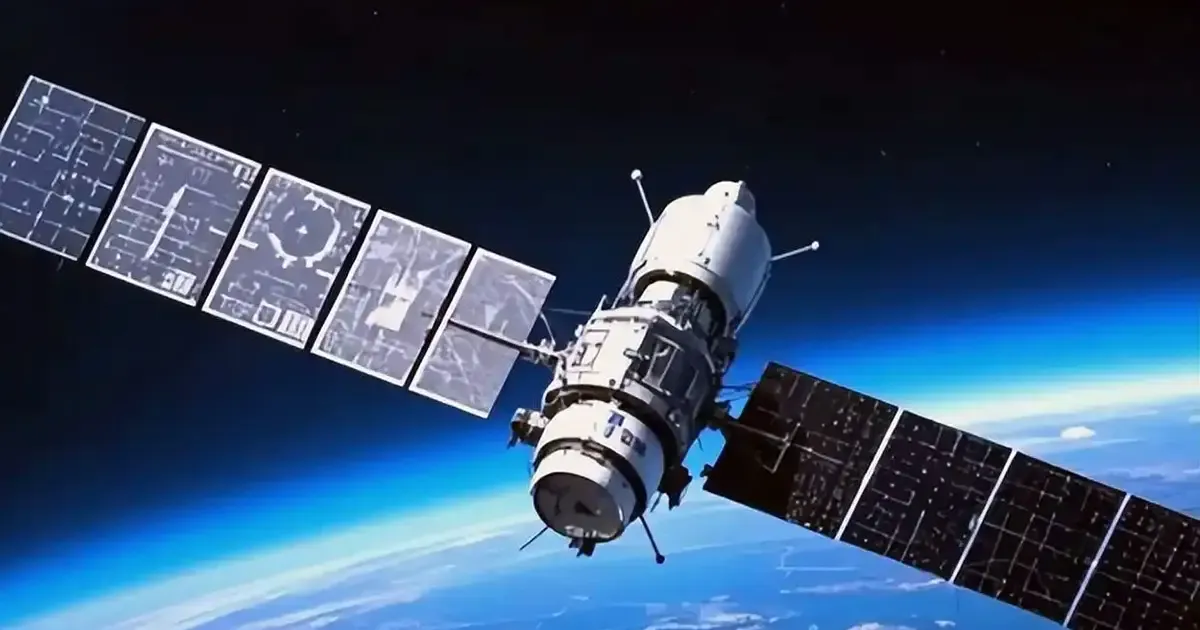
On Earth, insulation design starts with convection and ends with a fire rating. In orbit, the same word describes a different engineering problem. A satellite in low Earth orbit completes one full sunlit-to-eclipsed cycle roughly every 90 minutes; its outer surfaces swing between hot and cold extremes while the sun delivers about 1361 W/m² at the top of the atmosphere. There is no air to carry heat, so radiation and solid conduction dominate — and a material that performs well in atmospheric conditions can fail in vacuum for reasons that never appear on a standard datasheet.
This guide examines spacecraft thermal insulation from the in-orbit and payload perspective: how heat actually moves in vacuum, which material families are used — multilayer insulation (MLI), silica aerogel blankets, high-purity quartz and ceramic fibers, foams and phase-change materials — how outgassing and particle contamination gate every choice, and how selection changes across temperature zones. Launch vehicles and atmospheric re-entry heat shields are a separate discipline; see our aerospace and defense thermal insulation guide for that side of the problem.
Why Spacecraft Thermal Insulation Is a Different Engineering Problem
Industrial insulation on the ground is optimized for three things: thermal resistance per unit thickness, fire classification and installed cost. Spacecraft thermal design balances a different set of variables entirely:
- Extreme thermal cycling. Low-orbit spacecraft cross between full solar heating and deep-space cold every 90 minutes or so, tens of thousands of times per mission year. Every seam, stitch and joint experiences fatigue that a static test never reveals.
- No convection. Vacuum removes gas convection almost completely, which sounds like a gift — but it makes radiative exchange the dominant leak path, and radiation scales with the fourth power of absolute temperature.
- Surface properties matter as much as bulk conductivity. Solar absorptance and hemispherical emittance of outer surfaces set equilibrium temperatures. A coating that degrades under ultraviolet exposure can shift a spacecraft's thermal balance more than any insulation choice.
- Space environmental loads are design variables, not footnotes. Atomic oxygen erodes polymer films at orbital velocity; ultraviolet darkens binders; charged particles build up charge; micrometeoroids puncture blankets and release fibers; launch acoustics and acceleration determine anchoring and stitching.
The practical consequence: spacecraft thermal insulation is never a single material decision. It is an architecture of reflective screens, spacers, nanoporous blankets, coatings, thermal interfaces and heaters, tuned to the mission profile.
How Heat Moves in Vacuum: Radiation, Solid Paths and Residual Gas
Heat leakage through any spacecraft insulation stack flows through three parallel channels:
- Radiation between layers, scaling with T⁴. Reflective screens with low emittance (typically 0.02–0.05 for metallized films) block this path — this is the entire principle of MLI.
- Solid conduction through fibers, stitching threads, standoffs, adhesives, sensor leads and mounting hardware. These discrete contacts often dominate real-world performance spread; installation technique can change apparent conductivity more than layer count does.
- Residual gas conduction. At micron-to-millimeter layer spacing, gas conduction falls with pressure through the Knudsen regime — the smaller the gap, the sooner the gas molecules stop colliding with each other and transfer heat only to surfaces.
Two engineering warnings follow. First, a bare conductivity number such as 0.02 W/(m·K) is meaningless without boundary temperatures, vacuum level, layer density and installation method — published values spanning 10⁻⁵ W/(m·K) in laboratory high-vacuum cryogenic tests to two orders of magnitude worse in flight-like assemblies are all "correct" within their own conditions. Second, nanoporous materials do not suppress radiation. Silica aerogel's nanopores sit below the mean free path of air molecules, cutting gas conduction brilliantly at ambient pressure — but at elevated temperature its infrared window opens, and radiative transfer climbs unless opacifiers such as silicon carbide, titania or zirconia are compounded in, or reflective screens are added.
Multilayer Insulation (MLI): The Workhorse of Orbital Thermal Control
MLI is a stack of many low-emittance screens separated by low-conductivity spacers — typically 10 to 30 or more layers of aluminized polymer film (polyester for cryogenic service, polyimide where higher temperatures or radiation resistance are required), separated by polyester netting or discrete standoffs. In high vacuum with cryogenic boundary conditions, effective thermal conductivity reaches the 10⁻⁵ W/(m·K) class — orders of magnitude better than any bulk blanket.
The catch is that MLI performance is an assembly property, not a material property:
- Layer density has an optimum; over-compression creates solid heat bridges, under-compression wastes packaging volume.
- Seams, edges and penetrations leak radiatively in two dimensions; a blanket wrapped around a cylinder behaves differently than the flat panel test.
- Venting matters: blankets must outgas trapped air during launch ascent, so flight MLI is perforated or edge-vented — and every perforation is a small thermal leak.
- Grounding and stitching add discrete conductive paths and particle-release points that must be managed.
This is why serious programs qualify installed blanket assemblies with calorimetric testing rather than trusting screen material datasheets.
Aerogel Blankets: Nanoporous Insulation for Cryogenic and Flexible Zones
Silica aerogel is the standout nanoporous bulk insulation. At typical densities of 50–200 kg/m³ it delivers 0.012–0.030 W/(m·K) at ambient pressure and room temperature — and lower still under vacuum. Its flexible composite form (aerogel encapsulated in a fibrous batting matrix) solves aerogel's native brittleness and dusting, giving a conformable blanket that can be cut, wrapped around valves and tubes, and compressed without catastrophic performance loss — see our nano aerogel insulation blanket for the product form.
Where aerogel earns its place on a spacecraft or in space-adjacent hardware:
- Cryogenic tankage and lines, as a robust, venting-friendly complement or alternative to MLI on complex geometry.
- Large day–night temperature swings on planetary surfaces — one publicly documented Mars rover program used two grades of silica aerogel, including an approximately 12 mm hot-case panel that kept back-face temperatures below 110 °C against a roughly 1200 °C mission environment, and a low-density grade for surface nights near −130 °C.
- Flexible wrap around feed horns, battery compartments and plumbing where rigid boards cannot conform.
Limits to respect: pure silica aerogel begins to degrade around 700 °C, and flexible aerogel blankets are graded for continuous service at or below about 650 °C; high-temperature grades need opacifiers to hold radiative transfer down. Handle with gloves and sealed edges to control dust. A detailed comparison with conventional materials is in our aerogel vs traditional insulation analysis, and high-temperature positioning against ceramic fiber is covered in aerogel vs ceramic fiber.
High-Purity Ceramic and Quartz Fibers for Hot Zones
Where service temperatures exceed aerogel's ceiling, fibrous ceramics take over — and purity, fiber diameter and phase stability matter more than the word "ceramic":
- High-purity quartz fiber (>99% silica) stays flexible and chemically stable to roughly 1050 °C continuous service before slow devitrification embrittles it; it is the standard candidate for hot-side MLI spacers and flexible hot-zone wraps.
- Alumina and mullite fibers serve the 1000–1400 °C class with good chemical stability and lower thermal expansion; mullite's phase stability makes it preferred where long soak times are expected.
- Polycrystalline mullite fiber products extend beyond 1600 °C with crystalline phase stability from the first heat-up — no binder burnout, minimal shrinkage. Our polycrystalline mullite fiberboard exists precisely for this ultra-high-temperature niche.
- Zirconia-based fibers push higher still and block infrared strongly, at the cost of brittleness and batch-consistency challenges.
Every oxide fiber family shares one aging mechanism: at high temperature they crystallize, shrink and shed dust. Specifiers should require temperature-dependent conductivity, shrinkage data after soak, and purity certificates — alkali and impurity content drive both volatility and devitrification. Thin ceramic fiber paper is the form most often specified as hot-side MLI interlayer or as dielectric insulation in compact avionics boxes, while ceramic fiber blanket covers larger hot-surface wraps.
Selection by Temperature Zone: A Practical Map
| Zone | Typical boundary | Preferred materials | Key watch-outs |
|---|---|---|---|
| Cryogenic tanks, cold optics | Cold face 20–100 K | MLI with aluminized screens and net spacers; aerogel blanket on complex geometry | Venting time during ascent; support-structure heat bridges; cold-flow of seals |
| Equipment, battery and avionics compartments | −65 to +120 °C | MLI enclosure, aerogel patches, polymer foams, phase-change buffering, thermal interface pads | Outgassing of polymers; TIM pump-out; heater sizing |
| Hot structures, engine-adjacent zones | 400–1000 °C | Quartz/alumina fiber paper and blankets, opacified aerogel, metal-foil radiation screens | Fiber crystallization; shrinkage after soak; dust near valves |
| Entry and re-entry surfaces | >1000 °C transient | Dedicated ablative and reusable TPS systems | Out of scope here — see the aerospace and defense guide |
The zones are not independent: a propellant tank assembly may use MLI plus aerogel on lines plus heat-traced supports, all inside one thermal model. Interface hardware — standoffs, tie rods, sensor leads — is where most designs leak, so thermal anchoring and low-conductivity supports deserve as much attention as the insulation itself.
Outgassing, Contamination and Particle Control: The Gate Tests
The test that decides whether any material may fly near optics or cryogenic surfaces is ASTM E595: a 24-hour exposure at 125 °C under high vacuum with a 25 °C collector plate, reporting total mass loss (TML), collected volatile condensable materials (CVCM) and water vapor regained (WVR). The widely used acceptance screen is TML below 1.0% and CVCM below 0.1%.
This is where ordinary soda-lime and alkali glass wool fails out of the candidate pool — not primarily because of its 450–550 °C temperature ceiling, but because:
- alkali oxides in the glass can volatilize and deposit on cold surfaces;
- organic binders, lubricants and surface treatments generate condensables;
- brittle fiber breakage releases persistent particles that migrate to optics, connectors and solar cells.
Even high-purity quartz fiber products must pass the same screens — plus particle-release, thermal-cycling fuzzing and contamination witness-plate verification — before they are accepted around sensitive payloads. In practice this drives the whole supply chain: clean-room cutting, sealed or heat-set blanket edges, no exposed loose powders anywhere near an optical path, and packaging that preserves cleanliness through integration.
Lessons From Flown Missions
Public mission data teaches the same lesson from different angles — match the material to the mission phase:
- A Titan probe mission documented by ESA carried MLI through cruise; the entry heating vaporized it almost instantly, and a 20 mm porous tile layer behind the front shield did the structural protection. MLI is vacuum radiative insulation, not an entry shield — conflating the two is the most common conceptual error.
- Mars rover programs have publicly reported dual-grade silica aerogel service: a hot-case panel roughly 12 mm thick holding back-face temperature below 110 °C, and a low-density grade surviving surface nights near −130 °C — the same material family across a 1300 °C span, differentiated by density and opacification.
- Long-duration exposure experiments show organic binders darkening under ultraviolet while atomic oxygen simultaneously erodes surfaces — sometimes partially "cleaning" them. The lesson: thermal-optical properties must be recorded at both beginning and end of life, never assumed constant.
- Densified, coated fibrous silica has even served as reusable re-entry tile material in shuttle-era programs — but that is a structural thermal-protection application with its own qualification regime, firmly in the launch and re-entry domain.
What Buyers Should Ask for When Sourcing Space-Adjacent Insulation
Flight-grade qualification is always program-led, and no industrial supplier's catalogue number substitutes for it. But thermal vacuum chambers, solar simulation rigs, qualification units, clean-room test hardware and cryogenic ground systems all need real insulation materials — and this is where a capable industrial manufacturer adds value. A sourcing checklist that survives engineering review:
- Temperature-dependent thermal conductivity, with direction (through-thickness vs in-plane) and test conditions stated.
- Density and thickness tolerances, plus compression set data for blanket forms.
- Outgassing certificates per ASTM E595 (or equivalent), batch-traceable.
- Particle-release and edge-sealing options — heat-set, taped or sewn-and-sealed.
- Purity certificates: alkali and impurity content for any fiber product destined for hot vacuum service.
- Custom die-cut or machined shapes, clean packaging and shelf-life data.
- Manufacturing certifications — ISO 9001, CE and SGS — and export experience for qualification hardware.
Our portfolio covers the families this guide describes: flexible nano aerogel insulation blanket and nano insulation board for cryogenic-to-moderate zones, ceramic fiber paper, blanket and board for hot zones, and polycrystalline mullite fiberboard beyond 1600 °C. Manufacturing since 1982 with ISO 9001, CE and SGS certification, we supply engineering support and custom shapes for space-adjacent, qualification and ground-test programs across more than 60 countries. For the launch and re-entry side of aerospace insulation, continue with our aerospace and defense thermal insulation materials guide or our aerospace and nuclear extreme-environment insulation discussion; for broader low-temperature design, see the cryogenic insulation applications overview.
Frequently asked
What is multilayer insulation (MLI) and why does it only work in vacuum? +
MLI is a stack of many low-emittance metallized films separated by low-conductivity spacers. It works by blocking radiative heat transfer between screens, so its outstanding effective conductivity — down to the 10⁻⁵ W/(m·K) class — requires high vacuum. At atmospheric pressure, residual gas conduction between layers destroys the performance and MLI behaves far worse than bulk blankets.
Can aerogel insulation be used on satellites and spacecraft? +
Yes — flexible silica aerogel blankets are used for cryogenic lines and tanks, battery compartments and planetary-surface thermal swings. Publicly documented Mars rover missions used two grades of silica aerogel, including a 12 mm hot-case panel holding back-face temperature below 110 °C. Limits: continuous service is typically rated at or below about 650 °C for flexible blankets, and flight use requires outgassing and particle-release qualification per ASTM E595.
Why isn't ordinary glass wool suitable for spacecraft? +
Three reasons independent of its 450–550 °C temperature ceiling: alkali oxides in soda-lime glass can volatilize in vacuum and deposit on cold optics; organic binders and surface treatments fail outgassing screens (TML below 1.0% and CVCM below 0.1% is the common acceptance criterion); and brittle fiber breakage releases particles that contaminate optical surfaces, connectors and solar cells. Only high-purity quartz fiber products that pass full screening are considered.
What is ASTM E595 outgassing testing? +
ASTM E595 measures a material's vacuum outgassing behavior: a 24-hour exposure at 125 °C under high vacuum with a 25 °C collector plate. It reports total mass loss (TML), collected volatile condensable materials (CVCM) and water vapor regained (WVR). The widely used acceptance screen for spaceflight-adjacent materials is TML below 1.0% and CVCM below 0.1%.
Which insulation materials handle the hottest spacecraft zones? +
Above the aerogel ceiling (about 650 °C for flexible blankets), high-purity quartz fiber serves to roughly 1050 °C before devitrification, alumina and mullite fibers cover the 1000–1400 °C class, and polycrystalline mullite fiber products extend beyond 1600 °C with phase stability. Entry and re-entry surfaces beyond that use dedicated ablative thermal-protection systems, which are a separate discipline.
What data should I request from a supplier for space-adjacent insulation? +
At minimum: temperature-dependent thermal conductivity with direction and test conditions, density and compression tolerances, batch-traceable ASTM E595 outgassing certificates, particle-release and edge-sealing options, purity certificates for hot vacuum service, custom-shape capability, clean packaging with shelf-life data, and manufacturing certifications such as ISO 9001, CE and SGS.
Request a quote
Interested in our insulation solutions? Send us your requirements and our team responds within one business day.