
Offshore Fire Insulation: Materials & IMO / MODU Standards Guide
Offshore fire insulation guide: SOLAS/FTP Code ratings, A-60 vs H-60 hydrocarbon curves, ISO 13702, and how to select rock wool, ceramic fibre or calcium silicate for platforms and FPSOs.
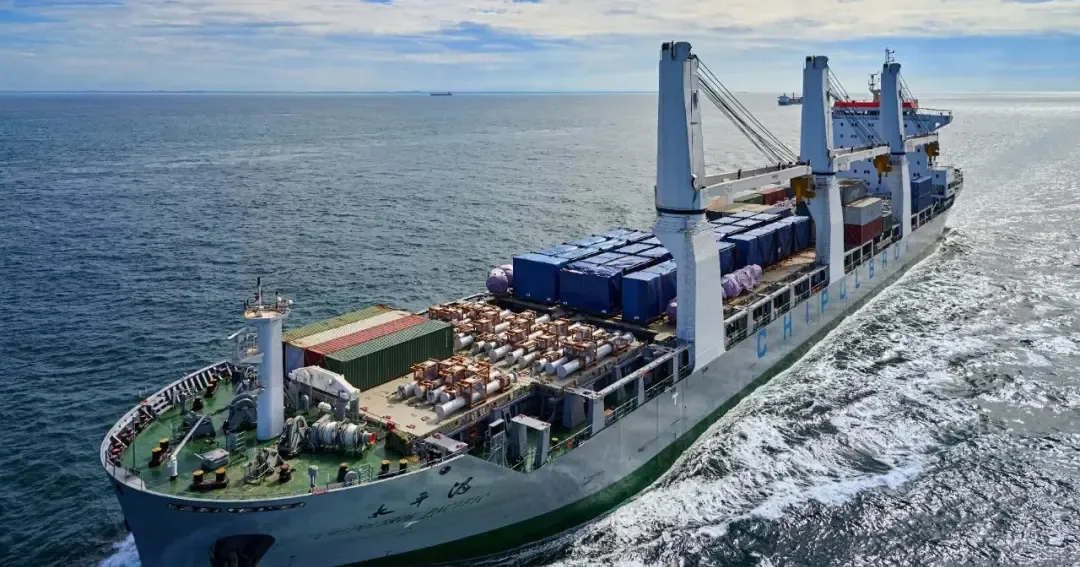
Offshore fire insulation has to do two jobs at once: hold process temperatures, and stop a fire from spreading between the spaces of a platform, FPSO or floating production unit. Unlike land-based plant insulation, offshore installations sit in a salt-laden, high-vibration environment where every kilogram of material affects ballast and payload, evacuation routes are short, and a fire in a process module can escalate to an explosion within minutes. That is why offshore fire insulation carries its own rulebook: SOLAS Chapter II-2, the IMO FTP Code, the MODU Code, and the A-60 / H-60 class system — with ISO 13702 setting the fire- and explosion-control framework for production facilities.
This guide explains what those standards mean for fixed and floating offshore installations, how four common insulation materials compare, and how to choose the right system for each area of a platform or FPSO. For the A-60 / J-30 / J-15 class breakdown itself, see our companion article Offshore Platform Fire Division Grades Explained; for the broader passive-fire-protection toolkit, see Offshore Passive Fire Protection on Platforms.
What Makes Offshore Fire Insulation Different?
Four factors separate offshore work from a typical onshore plant project:
- Weight. Every extra kilogram of insulation on a platform or FPSO reduces payload or increases ballast and fuel burn. Lightweight materials with high temperature ratings are preferred wherever they can still meet the fire class.
- Corrosion. Salt air, condensation and process leaks attack fixings, jackets and the steel beneath. Materials that absorb water without drying lose thermal performance and accelerate corrosion under insulation (CUI) — a top lifecycle cost driver offshore.
- Vibration and movement. Topside machinery, compressors and offshore waves transmit constant motion. Rigid boards can crack; fibrous blankets can settle. Offshore specifications therefore favour systems engineered for movement and settlement.
- Escape and escalation. On a platform, crew evacuation is measured in minutes and a fire near a process module can trigger an explosion. Fire divisions are designed to contain a fire long enough for evacuation and to stop flame and smoke reaching accommodation and muster areas.
SOLAS, the FTP Code and the MODU Code
Offshore fire insulation sits at the intersection of three rule sets:
- SOLAS Chapter II-2 sets the A- and B-class fire-division requirements for ships and, by adoption, for many fixed offshore structures and mobile offshore units.
- The IMO FTP Code (Fire Test Procedures Code) defines how a division, door, deck or material is fire-tested — including the cellulosic fire curve (Part 3) and the hydrocarbon fire curve (Part 11).
- The MODU Code (Code for the Construction and Equipment of Mobile Offshore Drilling Units) applies the A/H-class system to mobile units and is widely referenced for floating production systems; fixed offshore production installations are instead governed by SOLAS-aligned national rules and by ISO 13702.
ISO 13702:2024 (NS-EN ISO 13702:2024) specifies the objectives and functional requirements for controlling fires and explosions on offshore production installations. It applies to fixed offshore structures and floating systems for production, storage and offloading (such as FPSOs), and explicitly covers passive fire protection: structural fire resistance, compartmentation and fire-stopping. For owners and engineers, ISO 13702 is the document that turns "insulate the platform" into a set of performance requirements across design, operation, inspection and maintenance.
A-Class vs H-Class Fire Divisions
Both A- and H-class divisions are built from non-combustible materials and must block smoke and flame for the test duration, but they are tested on different fire curves:
- A-class divisions are tested under the cellulosic (standard) fire curve in FTP Code Part 3. A-60 means the unexposed face stays within the temperature limits for 60 minutes: average rise ≤ 140 °C, any single point (including joints) ≤ 180 °C above ambient.
- H-class divisions are tested under the hydrocarbon fire curve in FTP Code Part 11, which simulates an oil- or gas-fuelled fire. The furnace reaches about 1000 °C within 10 minutes and sustains roughly 1100 °C — far more severe than the cellulosic curve's 945 °C peak at 60 minutes. H-60 still uses the same unexposed-face temperature limits (average ≤ 140 °C, single point ≤ 180 °C) but demands 120 minutes of integrity against the hydrocarbon curve, with 60 minutes of insulation performance.
In plain terms: A-60 is the benchmark for general offshore boundaries and accommodation; H-60 is specified where a division faces a credible hydrocarbon fire — well-zone boundaries, process-module interfaces and hazardous-area enclosures on platforms and FPSOs.
The MODU Code Fire-Integrity Tables
The MODU Code (and aligned classification rules) prescribe minimum fire-integrity ratings for bulkheads and decks separating different space types. A few representative requirements:
- A bulkhead between a control station and a Category-A machinery space must be A-60.
- A bulkhead between a corridor and a Category-A machinery space must be A-60.
- Boundaries of superstructures facing the drilling or process area on a MODU are rated H-60 within 30 m of the rotary table and A-60 elsewhere.
The practical rule for specifiers: the rating belongs to the whole tested assembly (insulation, substrate, fixings, joints and penetrations), not to a single material.
Material Comparison for Offshore Fire Insulation
Four materials dominate offshore fire insulation. Each is non-combustible; they differ in temperature rating, weight, water behaviour and handling.
| Material | Continuous service temp | Typical offshore use | Key offshore note |
|---|---|---|---|
| Rock wool (mineral wool) | up to ~650 °C | Pipe sections, equipment, HVAC, accommodation linings | Light, non-combustible, hydrophobic grades resist CUI |
| Ceramic fibre | up to ~1100–1430 °C | High-temperature process, exhaust, turbine enclosures | For the hottest topside duties and H-class-adjacent zones |
| Calcium silicate | up to ~1100 °C (rigid) | Rigid boards, equipment, load-bearing enclosures | Dimensionally stable, resists mechanical abuse |
| Glass wool | up to ~400 °C | HVAC, acoustic, non-hot accommodation spaces | Light and acoustic; not for hot process lines |
Why not one material everywhere?
Weight, temperature and exposure decide. A 650 °C rock-wool pipe section is ideal on a seawater-cooled utility line but wrong on a 900 °C exhaust. A rigid calcium-silicate board suits a load-bearing equipment enclosure; a flexible ceramic-fibre blanket suits an irregular high-temperature flange. Offshore projects therefore mix materials by zone, and the fire class is proven at the assembly level for each combination.
Where Each Material Fits on Offshore Platforms and FPSOs
Machinery and Process Areas
Category-A machinery spaces, compressor modules and process skids need fire divisions that meet A-60 (or H-60 facing hydrocarbon hazards). Rock-wool or ceramic-fibre systems are used for the division infill, with rigid boards where impact or load is expected and blankets where flexibility is needed. High-temperature process lines and exhausts lean on ceramic fibre; utility and HVAC lines use rock wool.
Accommodation and Living Quarters
Offshore living quarters, corridors, control rooms and muster areas are protected by A-60 (occasionally H-60) boundaries. Light rock-wool or glass-wool linings handle the acoustic and thermal load inside those spaces, while the division itself carries the fire rating. Non-combustible linings and close-fitting draught stops limit fire spread behind ceilings and panels.
Piping Systems
Offshore pipe insulation must satisfy both the process temperature and the fire division it passes through. Pre-formed rock-wool or calcium-silicate sections are standard on process and utility lines; penetrations through A-60/H-60 bulkheads need fire-stopped, tested collar or seal systems so the division's rating is not broken at the pipe.
Platforms, FPSOs and LNG Storage
FPSOs, FLNG units and LNG storage terminals combine hydrocarbon process areas with permanent crew accommodation. Here H-60 hydrocarbon-curve ratings are common near process zones, while A-60 protects the boundary to living quarters. Cryogenic LNG lines need low-temperature insulation (see cryogenic pipe insulation) kept well separated from hot-fire divisions.
Selection Framework for Offshore Projects
A practical sequence for specifying offshore fire insulation:
- Fix the rating first. Confirm whether each division needs A-0/A-15/A-30/A-60 or H-60 from SOLAS/MODU/ISO 13702 and the space-adjacency tables.
- Match the fire curve. If a hydrocarbon hazard exists, specify H-60 (FTP Code Part 11); otherwise A-60 (FTP Code Part 3) usually covers it.
- Match the service temperature. Pick rock wool up to ~650 °C, ceramic fibre or calcium silicate for hotter duties.
- Engineer for CUI and weight. Specify hydrophobic, dimensionally stable products and a coating/jacket system aligned with NORSOK M-501 for the splash and topside zones.
- Prove the assembly. Demand the system-level fire-test certificate (A-60/H-60) for the exact build-up — board, substrate, fixings, joints and penetrations — not just a material datasheet.
- Document for survey. Keep type-approval and marine-equipment fire-test evidence ready for classification and authority review.
Offshore vs Onshore: Same Material, Different Specification
A rock-wool blanket rated for an onshore boiler house is not automatically fit for a platform. Four offshore-specific demands change the specification:
- Weight budget. Topside weight is priced; insulation is specified to the lightest system that still meets the fire class and service temperature.
- CUI regime. Continuous salt spray, condensation and process leaks make corrosion-under-insulation the dominant lifetime cost offshore, so hydrophobic products and compatible cladding are specified by default.
- Explosion, not just fire. ISO 13702 and the MODU Code design for fire and explosion; divisions near process areas face hydrocarbon curves and blast, not only a standard fire.
- Survey and isolation. Remote location and short maintenance windows mean failures are expensive; systems are chosen for inspectability and long intervals.
Certifications Buyers Should Ask For
Offshore fire-insulation purchases should be backed by evidence, not claims:
- Fire-test reports to IMO FTP Code Part 3 (cellulosic, A-class) and/or Part 11 (hydrocarbon, H-class) for the actual assembly.
- Non-combustibility to ISO 1182 / EN 13501-1 class A1, and low smoke/spread where relevant (EN 13501-1 s1, d0).
- Type approval and marine-equipment certification where the unit is SOLAS/MODU governed.
- Product certificates covering the exact form (board, blanket, pipe section) and density you are buying.
Ask for the assembly certificate, not a single-material datasheet — the rating is proven for the whole build-up.
Coatings, CUI and the NORSOK M-501 Link
Offshore fire insulation does not live alone. The steel it protects and the jacket that covers it sit in the harshest corrosion environment in industry. NORSOK M-501 (edition 2022, the Norwegian offshore coating standard) sets surface-preparation and protective-coating requirements for offshore structures, including passive-fire-protection coating systems and splash-zone protection. For specifiers this means: the insulation system, its cladding and the underlying steel coating must be specified together, with hydrophobic insulation and compatible jackets chosen to suppress corrosion under insulation across a 20–30 year design life.
Installation, Sealing and Maintenance Notes
- Continuity over heroics. A fire division is only as good as its joints; gaps, unsealed penetrations and missing draught stops are the usual failure points found at survey.
- Fire-stop every penetration. Pipes, cables and ducts through A-60/H-60 boundaries need tested fire-stop systems.
- Control CUI. Keep insulation dry in storage and installation; use hydrophobic products in wet and splash zones.
- Inspect on a schedule. Offshore fire insulation is typically inspected at planned maintenance shutdowns and after any modification; damaged jackets, wet insulation or displaced sections are recorded and remediated before the next survey.
Related Reading
- Offshore Platform Fire Division Grades: A-60 / J-30 / J-15 Explained
- Offshore Passive Fire Protection on Platforms
- What Is Calcium Silicate (Calsil) Insulation?
- Cryogenic Pipe Insulation Guide
- Rock Wool Blanket
- Ceramic Fibre Blanket
- Calcium Silicate Insulation Board
- Marine & Offshore Application
For a deeper dive into forms, temperature ratings, and application guides, see our ceramic fiber insulation hub.
Frequently asked
What is the difference between A-60 and H-60 fire insulation? +
A-60 is tested against the standard cellulosic (building) fire curve under IMO FTP Code Part 3 and must keep the unexposed side within temperature limits for 60 minutes. H-60 is tested against the hydrocarbon fire curve under FTP Code Part 11, which reaches about 1000 °C within 10 minutes and demands 120 minutes of integrity — used where a division faces a credible oil- or gas-fuelled fire on a platform or FPSO. Both share the same unexposed-face limits (average rise ≤ 140 °C, any point ≤ 180 °C). A product proven for A-60 is not automatically accepted for H-60.
Which insulation is best for offshore machinery and process areas? +
Rock wool blanket is the most common choice for offshore machinery-space bulkheads, casings and utility lines because it is non-combustible, hydrophobic and salt-resistant, and it provides acoustic damping. Ceramic fibre blanket is preferred for surfaces above ~650 °C, such as exhaust and process stacks. The division rating, however, is proven at the assembly level, not by the blanket alone.
Why does offshore insulation need IMO FTP Code approval? +
SOLAS and the MODU Code require that materials used in fire-rated offshore divisions be tested under the IMO FTP Code. The code defines non-combustibility, smoke and toxicity limits, and surface-flammability tests. Without FTP Code evidence, a material generally cannot be used in A-class or H-class offshore fire divisions, and classification authorities will not accept it at survey.
Is rock wool suitable for offshore platforms? +
Yes. Rock wool blanket is widely used on offshore platforms and FPSOs for A-60 and H-60 bulkheads, deckheads and machinery enclosures. Its natural water repellency and corrosion resistance suit salt-laden offshore air, provided it is installed with approved fixings and metal jacketing and specified as part of a tested assembly.
How often should offshore fire insulation be inspected? +
Visually inspect fire-rated divisions at least annually. In high-vibration machinery and process areas, inspect every six months and after any modification. Check for damaged jacketing, sagging blankets, detached pins, corroded fasteners and failed penetration seals — these are the usual findings at offshore survey.
What is the MODU Code and does it apply to fixed platforms? +
The MODU Code (Code for the Construction and Equipment of Mobile Offshore Drilling Units) sets fire-division and safety requirements for mobile units such as drilling rigs and floating production systems. Fixed offshore production installations are instead governed by SOLAS-aligned national rules together with ISO 13702, but the A/H-class system and FTP Code fire tests are common to both, so the same material families and test evidence apply.
What does ISO 13702 require for offshore passive fire protection? +
ISO 13702:2024 specifies the objectives and functional requirements for controlling fires and explosions on offshore production installations. It applies to fixed structures and floating systems (FPSOs) and explicitly covers passive fire protection: structural fire resistance, compartmentation and fire-stopping. In practice it turns 'protect the platform' into performance requirements spanning design, operation, inspection and maintenance.
Why do offshore projects specify H-60 hydrocarbon-curve ratings near process areas? +
A fire fed by escaping oil or gas follows the hydrocarbon curve, which is far more severe than a standard cellulosic fire — about 1000 °C within 10 minutes and roughly 1100 °C sustained, versus a 945 °C peak at 60 minutes. Near well zones, process modules and hazardous-area enclosures, divisions are therefore rated H-60 (120 minutes of integrity against that curve) so they contain a hydrocarbon fire long enough for crew evacuation and escalation control.
Request a quote
Interested in our insulation solutions? Send us your requirements and our team responds within one business day.