
Cellular Glass vs Calcium Silicate Insulation: Selection Guide
Cellular glass vs calcium silicate compared: temperature limits, water absorption, compressive strength, buried and cryogenic service, cost, and a step-by-step selection checklist.
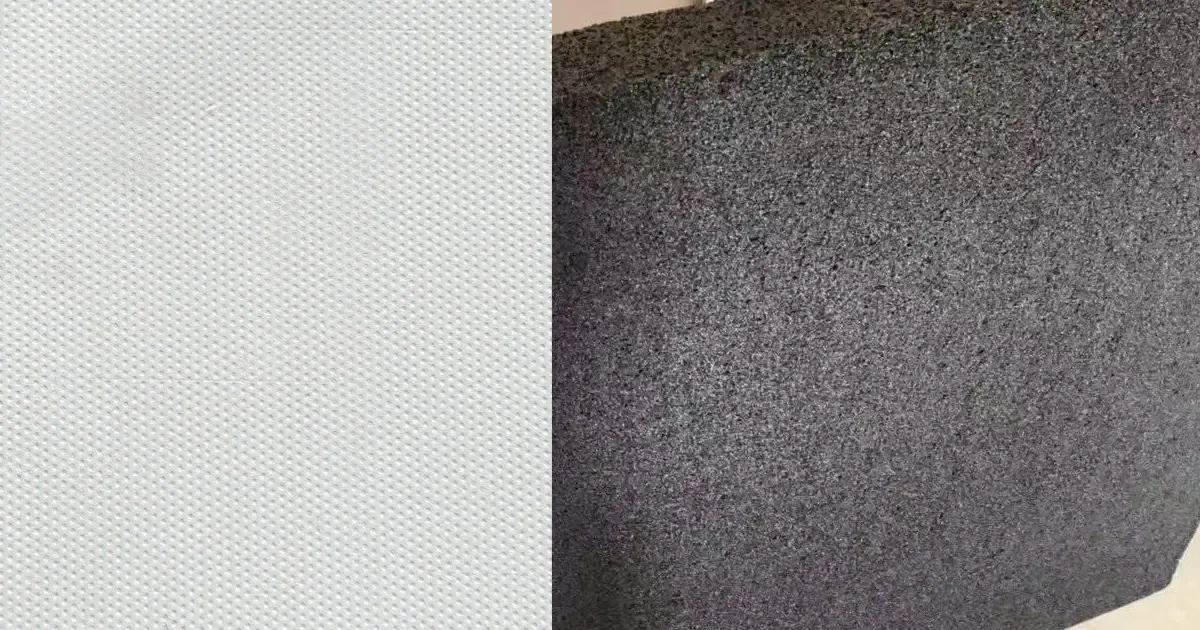
Executive summary: cellular glass wins wet and buried duty; calcium silicate wins high-heat duty
For international industrial projects, the choice between cellular glass and calcium silicate is rarely decided by thermal conductivity alone. Cellular glass is the stronger default where liquid water, groundwater, hydrostatic pressure, freeze–thaw, corrosion-under-insulation (CUI) risk or load-bearing cold service controls the specification. Its closed-cell glass structure is essentially non-wicking and impermeable to liquid water and water vapor. Select grades are reported with volume water absorption not greater than 0.5%, thermal conductivity around 0.039–0.062 W/m·K, density around 120–240 kg/m³ and compressive strength around 350–2400 kPa, depending on density and test definition . These are representative values, not product guarantees.
Calcium silicate is the stronger default for hot process, steam, boiler, furnace-backing and refractory-support applications. ASTM C533 is written for surfaces from 27 to 927 °C unless otherwise agreed; European specification EN 14306 covers approximately −170 to +1100 °C for factory-made calcium silicate . The common industrial family generally tops out around 650 °C, while around 1100 °C is a high-temperature-grade capability that must be demonstrated by the selected product.
For the comparison phrase “foam glass vs calcium silicate”, the defensible summary is therefore: cellular glass is generally better for underground, direct-burial, wet and many cryogenic applications; calcium silicate is generally better for high-temperature industrial service. For the question “is foam glass better for underground”, the answer is yes in continuously wet, waterlogged or high-CUI-risk conditions, provided structural design, joint treatment and support details are suitable. Cellular glass is not automatically better for a buried hot pipe operating above its service limit, and calcium silicate should not be assumed to remain effective when left unprotected in standing water.
Temperature boundaries are the clearest decision rule. General cellular glass is conventionally specified to about 427 °C, with some published grades extending to about 480 °C . Generic calcium silicate commonly reaches about 650 °C; high-temperature grades can be qualified to about 1100 °C . At the cold end, both material families can serve deep cryogenic duty to around −200 °C in qualified systems, but cellular glass is normally the preferred rigid, load-bearing cryogenic insulation because water cannot enter and accumulate in its cells . Cellular glass is also rigid and brittle. Cost must therefore be evaluated as installed cost, not purchase price per cubic meter, because cutting, joint sealing, beddings, expansion provision, crane or forklift handling, and the consequences of a brittle break all affect the result.
Material definitions and the data-comparison method
Both materials are inorganic and rigid, but their pore structures create opposite moisture behaviors. Cellular glass is a rigid, predominantly closed-cell foam made from glass and a foaming agent. Its sealed glass cells give the family its defining resistance to liquid water, water vapor and wicking. Calcium silicate is a rigid, usually fiber-reinforced hydrated calcium silicate product (see the calcium silicate insulation hub for grade-level data). It can resist occasional wetting and may recover after drying, but it is not a closed-cell waterproof material.
“Foam glass” is used in this article only as a generic description. It is not a brand name and must not be used as a substitute for a manufacturer’s grade. No manufacturer, brand or model is recommended in this article, and no claimed performance figure should be transferred from one data sheet to another.
The comparison must also distinguish material family, product grade and project system:
| Comparison level | What it can show | What it cannot show |
|---|---|---|
| Material family | Typical chemistry, pore structure and generic performance boundaries | Certified performance of a named product |
| Product grade | Density, test-temperature k, declared strength, declared temperature limit and fire classification | Suitability for every pipe support, joint, jacket and site condition |
| Project system | Jacket continuity, sealant compatibility, support geometry, drainage, corrosion coating and installation workmanship | Long-term performance from the insulation block alone |
The most defensible specification table therefore has three columns: typical value, qualification and design-confirm row. A representative “low” or “high” number is not an allowance. An engineer still needs the applicable data sheet, project temperature, relevant test standard, specimen density and compressive-deflection definition.
Featured-snippet-ready comparison table
Cellular glass and calcium silicate overlap in many respects, but their extremes move in opposite directions: cellular glass towards sealed, wet-duty rigidity and calcium silicate towards high-heat capability. For how rigid boards fit the wider insulation landscape, see insulation boards: types and selection. The figures below are not a universal product data sheet. They are representative ranges collected from public standards and product literature. A purchaser should select the actual grade, then confirm the relevant value with the supplier’s written declaration.
| Parameter | Cellular glass | Calcium silicate | What to confirm for design |
|---|---|---|---|
| Thermal conductivity k | 0.039–0.062 W/m·K typical published range | 0.050–0.085 W/m·K typical published range; 0.062 W/m·K at 100 °C is a common reference | Mean temperature, test method, thickness, dry state and temperature curve |
| Typical density | 120–240 kg/m³ representative range | 170–300 kg/m³ representative range | Product grade, tolerance and finished block mass |
| Compressive strength | 350–2400 kPa representative range | 400–5500 kPa representative range | ASTM C165 or regional equivalent; 10% deformation, load at failure, area and orientation |
| Continuous upper temperature | About 427 °C general benchmark; about 480 °C for some published grades | About 650 °C common industrial family; up to about 1100 °C for selected high-temperature grades | Manufacturer’s listed maximum, liner or refractory arrangement and cyclic service |
| Lower temperature | About −268 °C representative published range | About −170 °C in the EN 14306 scope | Cryogenic grade, system joints, vapor management and thermal contraction |
| Water absorption | Low; published industrial values commonly ≤0.5% by volume | Absorbs and can retain water; values are grade and test dependent | Test method, immersion duration and whether the system is sealed or jacketed |
| Moisture and vapor behavior | Closed-cell, non-wicking, essentially impermeable to liquid water and water vapor | Porous; can absorb, transport and retain moisture | Groundwater level, flooding history, jacketing and drying capability |
| Cell and vapor structure | Predominantly closed cells; negligible water-vapor transmission for the block | Open/micro-porous structure | Whether the comparison is for the block, the installed joint or the whole system |
| EN 13501-1 Euroclass | A1 is possible for qualified products; project declaration required | A1 is possible for qualified products; project declaration required | Exact product DoP, substrate, thickness, edge and fixing conditions |
| Typical working state | Rigid and brittle | Rigid and relatively brittle, but high-strength grades are common | Impact resistance, shipping, cutting, fit-up and breakage allowance |
The table is intended to answer the comparison question directly: neither material wins every category. Cellular glass’s moisture immunity is the decisive advantage in wet and buried duty. Calcium silicate’s high-temperature envelope is the decisive advantage in hot industrial duty.
Thermal conductivity, temperature curve and thickness selection
A single k-value cannot determine insulation thickness because conductivity rises with temperature. Cellular glass product data commonly reports values between about 0.039 and 0.062 W/m·K, but those values are associated with different mean temperatures and product densities. A calcium silicate system may be described by a reference of around 0.062 W/m·K at 100 °C, while a higher-temperature published grade can approach about 0.085 W/m·K at 400 °C . The correct method is to use the manufacturer’s k-versus-temperature curve at the insulation mean temperature, then calculate cylindrical pipe heat transfer (the full procedure is in how to calculate insulation thickness). For hot lines, this is usually followed by a surface-temperature, energy, economic-thickness or personnel-protection check.
Density is an engineering lever rather than a quality score. Lower-density cellular glass can give lower conductivity, while higher-density grades provide more compressive capacity. Calcium silicate follows the same general rule, with heavier high-temperature blocks commonly delivering greater structural performance. The comparison should therefore begin with the actual service load, not the lowest k. If a higher-density grade is selected only to support pipe-shoe loads, the design must account for its higher thermal conductivity and mass.
Cellular glass’s conductivity does not change simply because the block is “waterproof”. Water must actually enter and wet a comparative material before a conductivity penalty appears. In a dry, climate-controlled plant room, the installed-system difference between the two materials may be smaller than the difference in moisture durability. In a tidal zone, flooded trench, leaking roof or cyclically wet pipe rack, cellular glass reduces a key failure mode: insulation that stays wet, loses thermal performance and holds water against steel.
Service-temperature boundaries are the first selection filter
The safest first question is not “which material insulates better”, but “which material remains stable at the hot-face temperature?” Cellular glass is covered by ASTM C552 for surfaces from −268 to 427 °C, and the general Chinese industrial standard gives the same −268 to 427 °C envelope . Some suppliers publish grades to 480 °C, but that is a grade statement rather than a licence to use every block at 480 °C .
ASTM C533 is specified for calcium silicate surfaces from 27 to 927 °C unless the manufacturer and purchaser agree otherwise . EN 14306, the European specification for factory-made calcium silicate thermal insulation, has a working range of about −170 to +1100 °C . Those numbers define a product family and specification envelope; they do not constitute a 1100 °C guarantee for a generic board selected from a warehouse shelf.
For the target query “calcium silicate vs foam glass temperature”, the recommended answer is:
| Service range | Cellular glass | Calcium silicate | Selection conclusion |
|---|---|---|---|
| Deep cryogenic to around −200 °C | Qualified grades commonly cover the range; cellular glass is a strong rigid option | EN 14306 scope begins around −170 °C; cryogenic systems must be graded | Verify the exact grade and thermal-contraction system |
| 0 to about 427 °C | General cellular glass is within its conventional envelope | Usually well within capability | Choose on moisture, load and system cost |
| About 430–650 °C | Only special cellular-glass grades may be considered, and only with written limits | Common high-temperature family performs strongly | Calcium silicate is generally preferred |
| About 650–1100 °C | Outside the normal cellular-glass envelope | Requires a verified high-temperature calcium silicate grade | Use a qualified high-temperature calcium silicate product |
| Above about 1100 °C | Not the domain of either general material | Requires a specifically engineered high-temperature system | Obtain refractory design from the selected supplier |
The table also answers the broader engineering question: calcium silicate is not selected merely because it is cheaper, nor cellular glass merely because it is closed-cell. Calcium silicate is selected when the verified hot-face temperature and required strength place the system in the high-heat regime.
Buried, direct-burial and underground piping
For continuously wet underground service, cellular glass is usually the better insulation choice because its closed cells cannot become a saturated thermal and corrosion reservoir. Water may still enter through poor joints, damaged jackets, open pipe supports or incomplete sealing. Cellular glass reduces the consequence of that ingress at the insulation-block level, but it does not eliminate the need for a corrosion-management system.
Cellular glass’s value in this environment comes from three linked properties: independent sealed cells, negligible wicking and extremely low water-vapor transmission. It does not absorb bulk water in the way an open porous board can. After a cladding puncture, water is more likely to pass through joints and escape than to be stored inside the cellular glass. This characteristic directly reduces the CUI mechanism in which saturated insulation holds an electrolyte against carbon steel or another susceptible alloy.
Calcium silicate is not intrinsically disqualified underground, but it should not be left to endure long-term immersion without a verified protection strategy. It can absorb water, retain it and take longer to dry. Its thermal conductivity can therefore rise while wet, and the retained moisture can promote corrosion on susceptible substrates. If a project uses calcium silicate below grade, it should provide a continuous outer jacket or membrane, a watertight joint system, reliable drainage and inspection access. Project conditions should also include a drying path and a maintenance assumption.
Direct-burial design must not stop at the insulation block. At minimum, the following items require confirmation:
| Design element | Cellular glass direct burial | Calcium silicate direct burial |
|---|---|---|
| Outer protection | Watertight jacket or approved direct-burial arrangement | Continuous jacket or membrane is essential |
| Joints and terminations | Compatible mastics, sealants and joint design | Sealed joints, no standing-water assumption |
| Groundwater and flooding | Still requires drainage and water-management review | Requires the same review, plus drying provisions |
| Pipe supports and shoes | Load distribution and local crushing checks | Load distribution and local crushing checks |
| Corrosion coating | Mandatory substrate and coating assessment | Mandatory substrate and coating assessment |
| Inspection | Plan for accessible checks and repair | Plan for accessible checks and repair |
A buried line in a coastal, high-water-table or flood-prone site should therefore start with cellular glass (see industrial piping insulation) unless the operating temperature, structural layout or supplier qualification rules it out. A buried steam line can still use calcium silicate where the temperature exceeds the qualified cellular-glass limit, but the specification must treat the outer enclosure as a structural waterproofing system rather than an optional finishing layer.
Cryogenic, LNG and deep-cold service
Both material families can extend to about −200 °C in qualified applications, but cellular glass is normally the preferred rigid insulation for LNG and load-bearing cryogenic systems. Its closed-cell structure remains impermeable to liquid water and water vapor, so condensed moisture cannot fill the cells. It also provides rigid load distribution for tank bases and supports. A representative published low-density grade reports 0.043 W/m·K at 10 °C, 0.8 MPa average compressive strength, ≤0.5% volume absorption and a −268 to +480 °C range .
LNG tank-bottom insulation is a clear example. The base must support tank dead load, operating load and sometimes construction loads while retaining thermal resistance at about −162 °C service. Cellular glass blocks can provide a rigid, low-moisture, load-bearing layer, but the engineering system still requires grout or bedding, joint treatment, vapor management and load distribution. The blocks alone do not create a tank-base design.
Cellular glass is also suitable for cold pipe racks, ethylene and LNG piping, cold tanks, valve pits and chilled process systems when water-jacket integrity is uncertain. Its brittleness remains a constraint during handling and around thermal movement. Calcium silicate can also be used cryogenically in qualified grades, but it requires more attention to moisture protection and system sealing.
“Better at −200 °C” is a system statement, not a universal property claim. Cellular glass is generally better where a rigid block must also remain dry and carry load. A multilayer cryogenic system, however, may combine several materials, including cellular glass, perlite, aerogel and vacuum or powder-filled annuli. Material selection for an LNG tank cannot be reduced to a single block product. Tank geometry, boil-off requirements, outer-shell temperature, thermal contraction, seismic loads and installation method all control the final specification.
Fire performance and the EN 13501-1 classification trap
Both materials can achieve A1, but an A1 block does not make an entire installed wall, roof or enclosure A1 without system verification. EN 13501-1 classifies construction products and building elements using reaction-to-fire tests. Class A1 is based on criteria including non-combustibility and gross heat of combustion. The class is product- and system-specific; it is not granted to a generic material name .
Cellular glass and calcium silicate are both inorganic. This gives each family a strong baseline for non-combustibility. A supplier may declare A1 for a particular thickness, density, facing, edge and fixing configuration. The project must use that exact declaration. Stainless banding, aluminum jacketing, mastic, sealant, adhesive, weather barrier and penetrations can change the construction that is actually tested.
EN 13501-1 also includes smoke and droplet or particle classifications for relevant products. A full specification should therefore state the smoke class and dripping class where required by the end-use standard, not merely the A1 letter class. Where the insulation supports a fire-resistance rating, the relevant system test must cover the complete assembly.
| Fire question | Correct answer |
|---|---|
| Is cellular glass always Euroclass A1? | No. A1 is a product- and system-dependent classification. |
| Is calcium silicate always Euroclass A1? | No. A1 is a product- and system-dependent classification. |
| Does an A1 block make a plant-room wall A1? | Not automatically. The full wall or ceiling system must be verified. |
| Can either material support hydrocarbon-fire protection? | It may form part of a qualified assembly, but the assembly must be tested. |
For the featured-snippet opportunity, the direct answer is: cellular glass and calcium silicate can both be A1 when qualified, but the project must use the actual product’s EN 13501-1 declaration, including any smoke and dripping suffix, and verify the complete installed system.
Compressive load, pipe supports and structural compatibility
Both materials can carry load, but cellular glass should not be specified as strong merely because it is rigid. Published cellular-glass grades show average compressive strengths from about 0.5 to 2.4 MPa, corresponding to 500–2400 kPa, across densities from about 120 to 220 kg/m³ . Those values come from different grades and test protocols. A designer should not interpolate between them or use the highest published number as the allowable job value.
The engineering comparison should be made at the same deflection criterion. A common reporting basis is compressive stress at 10% deformation, but some data sheets report ultimate compressive strength. The two values cannot be compared directly. The project should define the permissible long-term deformation, then request the load-deformation curve, failure mode and duration for the actual block.
| Structural issue | Cellular glass | Calcium silicate |
|---|---|---|
| Pipe supports and shoes | Usable in appropriate load-rated grades; avoid point loads and fit bedding | Frequently selected for high-load and hot supports in appropriate grades |
| Tank bases | Strong rigid option for selected cryogenic load paths | May also be used where qualified; compare exact grade |
| Walkways | Usable only with suitable cover and load design | Usable only with suitable cover and load design |
| Brittleness | High; protect edges and avoid impact | Rigid; heavy high-strength grades are not immune to breakage |
| Point loads | Require bedding, full bearing and compatible joint treatment | Require bedding, full bearing and compatible joint treatment |
Cellular glass’s real structural advantage is the combination of compressive capacity, closed-cell dryness and low moisture uptake. Its weakness is fragility under impact, poor local point-load acceptance and the cost of precision fitting. Calcium silicate’s structural advantage is its wide range of high-strength, high-temperature grades. Its weakness is that a cracked or waterlogged board can lose both insulation value and corrosion protection.
ASTM C552 and ASTM C533 remain material specifications rather than complete structural designs . The pipe shoe, support geometry, allowable insulation stress, safety factor, gasket or bearing material, expansion gap and inspection interval still belong to the project design.
Cost, weight, installation and maintenance
Material price alone will mislead the decision because cellular glass and calcium silicate create different installation, support and failure-cost profiles. Cellular glass is usually more expensive per unit volume than general calcium silicate, but that comparison ignores several factors:
- cellular glass’s moisture immunity may reduce CUI repair frequency;
- a dry system may preserve design thermal performance longer;
- less corrosion risk can reduce scaffolding, coating repair and production downtime;
- but cutting, joint sealing, expansion provision and brittle-break allowance can increase installation cost;
- and heavy high-strength calcium silicate may increase support steel, handling equipment and crew labour.
The preferred commercial comparison is total installed cost over the inspection interval, including energy loss, support steel, cladding, labour, breakage, water management and the expected cost of failure. A project in a dry, accessible, indoor boiler bay may reasonably prioritise calcium silicate. A project in a flooded underground utility trench may find cellular glass less expensive over the lifecycle even if its initial purchase price is higher.
Weight differences also reverse direction by grade. Lightweight cellular glass can be around 120–160 kg/m³, but high-load grades can reach around 240 kg/m³. Calcium silicate can be similar or heavier in high-strength grades. The relevant figure is not the family name but the selected density and the total volume installed. Lift plans, pipe-support loads, seismic mass and roof or platform live-load allowances must all be checked.
Installation methods are similar in outline but different in execution. Both materials are fabricated with saws, knives or hot wires into curved pipe segments, blocks and fabricated fittings. Both require staggered joints, proper identification of expansion joints, clean surfaces and compatible adhesives or cements. Neither should be forced over badly fitted pipes. Both require a jacketing and sealing system for most industrial applications.
The main differences are:
| Installation factor | Cellular glass | Calcium silicate |
|---|---|---|
| Cutting and fit-up | Required; dust and breakage control needed | Required; heavier pieces can be harder to handle |
| Joint sealing | Often specified to maintain the closed-cell benefit | Required to control moisture ingress and retain performance |
| Expansion | Must accommodate thermal movement and joint treatment | Must accommodate thermal movement and joint treatment |
| Moisture sensitivity | Lower block sensitivity, but cladding and joints still matter | Higher system sensitivity because the block can absorb water |
| Repair | Brittle breakage and re-sealing must be planned | Wet, cracked or crushed sections may require replacement and drying |
Neither material should be glued into a system with an unqualified adhesive. Compatibility should be confirmed for the operating temperature, substrate, thermal expansion and any chemical exposure.
Decision matrix by sector
The best material is determined by the failure mode that matters most, not by a generic ranking. The following matrix is a starting filter. It does not replace thermal calculation, supplier qualification or local statutory requirements.
| Sector or application | First preference | Conditional alternative | Decisive reason |
|---|---|---|---|
| Underground hot or cold piping | Cellular glass where its temperature limit is adequate | Calcium silicate only with a verified waterproof system and drying plan | Cellular glass removes the saturated-insulation failure mode |
| Direct-burial cold service | Cellular glass | Another qualified cryogenic system | Closed cells, compressive capacity and low vapor transmission |
| LNG and cryogenic tanks | Cellular glass for load-bearing bases and rigid cold zones | Multilayer systems including perlite, aerogel or vacuum solutions | Rigidity, dryness and load distribution |
| Chilled water and CUI-prone pipe racks | Cellular glass where system economics justify it | Calcium silicate with continuous cladding and inspection access | Cellular glass does not store water in its cells |
| Refinery and petrochemical hot piping | Calcium silicate for the common high-temperature envelope | Cellular glass only in a qualified medium-temperature grade | Calcium silicate covers the broad hot-process range |
| Steam, boiler and power-plant hot pipework | Calcium silicate | Other high-temperature insulation where graded | Established hot-service capability |
| Furnace and kiln hot-face or backing | High-temperature calcium silicate or refractory system | Cellular glass not for normal above-range duty | High-temperature grade is required; 1100 °C is grade-dependent |
| Pipe supports and load points | Verify the selected load-rated grade of either material | Composite or metallic load inserts where required | The complete shoe and load path must be designed |
| Roof and protective screed or deck applications | Depends on traffic, water exposure and system test | Cellular glass can suit protected inverted or buried arrangements | Block performance and system weatherproofing must both be verified |
| Offshore, marine and coastal structures | Cellular glass is attractive for wet CUI control | Calcium silicate may suit indoor or protected high-heat areas | Salt spray, rainwater and limited inspection increase moisture risk |
Application-by-application guidance
Petrochemical facilities should split the specification by temperature and moisture risk instead of choosing one material for every line (see petrochemical insulation). Hot process and steam lines usually favour calcium silicate because the common family reaches about 650 °C, while select grades can be qualified to around 1100 °C . Below-grade transfer pipes, sub-drain lines, cooling-water systems, flare lines in wet zones, pipe-rack sections exposed to washdown and any line with a history of CUI are stronger candidates for cellular glass.
This approach prevents two common errors. The first is to select cellular glass for every cold line without checking its temperature limit. The second is to select calcium silicate for every hot line without providing a jacket, drainage and maintenance strategy. A dual-specification approach is often more rational.
Power plants should use calcium silicate for the high-heat envelope but consider cellular glass for below-grade or persistently wet secondary systems (see power-generation insulation). Boilers, steam headers, high-energy piping, turbine exhaust and regeneration equipment can exceed the normal cellular-glass operating range. Calcium silicate is appropriate when its grade, shrinkage, chemical compatibility and jacket are verified. Cellular glass may be appropriate for buried condensate return lines, culverts, wet intakes and protected tank bases. In a combined-cycle plant, this may result in three or four different insulation specifications rather than one site-wide default.
Roof and protective-surface applications require system verification rather than a block-only choice. Cellular glass can work in protected inverted-roof or buried thermal-layer systems because it does not absorb water and will not lose insulating capacity through cell saturation. If a roof assembly includes a traffic surface, pavers, drainage layer and waterproof membrane, the complete build-up must be tested for the local loading and drainage regime. Calcium silicate may serve a protected high-temperature plant deck or equipment surround, but it should not be assumed to remain dry in an open roof environment.
High-temperature furnaces and process heaters should default to calcium silicate or a refractory system. The decision depends on hot-face temperature, lining arrangement, thermal shock, gas chemistry and mechanical loading. The comparison is not simply “cellular glass versus calcium silicate” because a furnace may need a hot-face refractory, insulation behind it, anchoring and an outer casing. General cellular glass’s normal 427 °C limit makes it unsuitable as a default furnace material .
Corrosion, chemical compatibility and durability
Cellular glass reduces CUI risk but does not eliminate the corrosion hazard. Steel still needs an appropriate coating or corrosion-management system. Chloride exposure, acidic condensates, caustic conditions, thermal cycling and alloy sensitivity must be assessed. The insulation must also be checked for leachable halides or silicate content where it contacts austenitic stainless steel or another sensitive alloy.
The relevant comparison is the condition of the metal surface after years of service, not whether the insulation block can absorb water. Cellular glass lowers the probability that an incidental leak becomes a permanently wet annulus. It does not stop a leak, neutralize an electrolyte or repair a damaged coating. Its non-wicking character is therefore a risk-reduction feature, not a substitute for corrosion engineering.
Calcium silicate’s alkaline character can be useful in selected steel environments, but alkalinity does not overcome prolonged saturation on carbon steel. Its water absorption can extend drying time, and retained water can support corrosion. The protective strategy should include coating selection, cladding-slope and drainage design, sealed terminations, periodic inspection and a plan for opening the system after leaks or flooding.
Cellular glass is chemically resistant as a glass-based material, but chemical resistance does not mean universal compatibility. Acidic condensates, strong alkalis and hydrofluoric acid environments require specific verification. High-temperature chemical exposure may also affect jointing compounds, sealants and metallic jacketing before it affects the block itself.
Standards, verification and specification wording
Standards define material scopes; they do not select the project product. ASTM C552 covers cellular glass thermal insulation for surfaces between −268 and 427 °C . ASTM C533 covers calcium silicate block and pipe insulation for surfaces between 27 and 927 °C unless otherwise agreed . EN 14306 specifies factory-made calcium silicate products for building equipment and industrial installations over about −170 to +1100 °C .
These references help the specifier define the envelope, but a purchasing specification should still list:
- exact grade and density;
- declared k-value and mean temperature;
- upper and lower service temperatures;
- declared compressive strength and test definition;
- water-absorption limit and test;
- product fire classification and DoP;
- dimensional tolerances;
- batch traceability;
- chemical-compatibility limits;
- approved jointing, adhesive and jacketing systems;
- handling, storage and installation requirements;
- quality-control documentation;
- and the permitted substitution process.
The “or equal” clause is particularly hazardous for cellular glass and calcium silicate. Two products can share a family name while differing in density, pore structure, temperature limit, strength definition and vapor behavior. A specification should require that any proposed substitute demonstrate the same declared values under the same test methods and be approved before delivery.
Next-step engineering selection checklist
The final decision should be made in a fixed order: safety and temperature first, moisture and load second, then system cost. Use the following sequence before issuing a purchase specification.
- Record the maximum and minimum operating temperatures, including startup, shutdown, upset, steam-out and solar or ambient conditions.
- Confirm the substrate alloy, coating system, corrosion risk and required inspection frequency.
- Verify the actual product’s upper temperature. If it exceeds about 427 °C, cellular glass is normally ruled out unless a specifically qualified grade is documented.
- If the hot face exceeds the qualified cellular-glass limit, direct the specification towards calcium silicate or a refractory system.
- Classify the environment as dry, intermittently wet, continuously wet, flooded, below grade or coastal.
- If standing water or CUI history is likely, prefer cellular glass and require a full moisture-management system.
- For direct burial, require a groundwater study, drainage design, jacket or membrane continuity, cathodic-protection review where applicable and an inspection plan.
- Calculate the load path at pipe supports, tank bases, shoes, anchors and traffic areas.
- Obtain the load-deformation curve and compressive-deflection definition for each candidate grade.
- Use the manufacturer’s k-versus-temperature curve to calculate heat loss, surface temperature and thickness.
- Confirm dimensional stability, thermal expansion, joint design and the behavior of any sealant or adhesive at the service temperature.
- Confirm fire classification using the actual product DoP and, where required, the tested assembly rather than the block alone.
- Confirm chemical compatibility for the insulation, joint compounds, jacket and substrate.
- Compare installed cost, including delivery, handling, supports, jacketing, labour, breakage, drying provisions and expected repair cycles.
- Require batch documentation, on-site inspection and a repair procedure for damaged insulation before final acceptance.
Conclusion: select the failure mode before selecting the material
Cellular glass and calcium silicate are not interchangeable versions of the same product. Cellular glass is the stronger choice for underground, direct-burial, flooded, CUI-prone and many rigid cryogenic applications because its closed cells do not absorb water. It is not the automatic choice above about 427 °C, and its brittleness must be managed through handling, jointing and load distribution.
Calcium silicate is the stronger choice for the broad high-temperature industrial range, with common grades to about 650 °C and selected high-temperature grades to about 1100 °C. Its structural range is wide, but it must be protected from long-term wetting when used underground or in exposed applications.
The correct specification sequence is therefore clear: first verify the hot-face temperature and material limit; then evaluate the wetting mechanism and structural load; and only then compare thermal performance and installed cost. That order prevents a low k-value, brand name or single price line from overriding the conditions that actually control service life.
Related comparisons and reading: for other calcium-silicate matchups see calcium silicate vs rock wool and calcium silicate vs ceramic fiber board; for pipe-level specification see calcium silicate pipe insulation; for the full material landscape see types of thermal insulation materials; and for lifecycle cost context see aerogel insulation cost and price.
Frequently asked
Is cellular glass better for underground? +
Yes for continuously wet, waterlogged, flooded or high-CUI-risk conditions, subject to its qualified temperature limit and proper system design. Its closed-cell structure does not absorb bulk water. It still requires suitable jacketing, joint sealing, drainage and corrosion coating.
Is cellular glass always waterproof? +
The block is closed-cell and essentially impermeable, but an installed system is not automatically waterproof. Water can enter through failed joints, unsealed supports, damaged cladding and penetrations. Cellular glass limits internal saturation; it does not repair an open joint.
Can calcium silicate be buried directly? +
It can be used below grade only where the design includes a continuous outer protective system, sealed joints, drainage or a verified drying strategy, and an assumption that the material may become wet. It should not be left unprotected in long-term immersion.
Which material has the higher temperature limit? +
Calcium silicate. General cellular glass is conventionally limited to about 427 °C, with some published grades up to about 480 °C. Common calcium silicate reaches about 650 °C, while selected high-temperature grades can reach about 1100 °C. The 1100 °C value is grade-specific.
Which material has the lowest thermal conductivity? +
At comparable low-temperature points, published cellular-glass values can be slightly lower, but conductivity rises with temperature. At hot mean temperatures, a high-temperature calcium silicate grade may have higher k. The correct comparison uses each product’s temperature-dependent curve.
Which material is stronger? +
Both can be strong, and neither should be selected from family averages. Published values range from about 350 to 2400 kPa for cellular glass and from about 400 to 5500 kPa for calcium silicate, depending on grade and test definition. The comparison must use the same compressive-deflection criterion.
Is cellular glass fireproof or A1? +
Neither term is unconditional. Qualified cellular-glass products may achieve A1, but the project must use the product’s EN 13501-1 declaration. An A1 block does not automatically make an entire pipe, wall or roof assembly A1.
Is calcium silicate fireproof or A1? +
Qualified calcium silicate products may achieve A1, but the actual declaration depends on the product, thickness, substrate and fixing system. The full assembly must be verified where a system rating is required.
Which material is cheaper? +
Material unit price is not sufficient. Cellular glass is often more expensive per volume, but can reduce moisture-related repair costs. Calcium silicate can be heavier and more expensive to handle, but may be better suited to high-heat applications. The comparison should use installed cost over the inspection interval.
Which material is best for LNG? +
Cellular glass is a strong rigid, load-bearing cryogenic choice, particularly for tank bases and cold pipe supports. The final LNG tank design may use multiple materials and should be verified for boil-off performance, load distribution, vapour barriers, thermal contraction and joint detailing.
Can either material replace a refractory lining? +
Not automatically. Furnace and high-temperature refractory decisions depend on hot-face temperature, chemistry, abrasion, thermal shock and the full lining system. High-temperature calcium silicate may be used in selected hot-service assemblies, but above about 650 °C the grade and full system must be qualified.
Does density affect both strength and thermal performance? +
Yes. Denser grades generally offer higher compressive strength and may have higher thermal conductivity. The correct grade balances load requirement, thermal performance, weight, thickness and cost.
Request a quote
Interested in our insulation solutions? Send us your requirements and our team responds within one business day.