
Insulation Boards: Types & Selection (Mineral, Ceramic, Ca-Sil)
Insulation boards compared: rock wool, glass wool, calcium silicate, ceramic fiber and nano boards by max temperature, density, R-value and fire class, plus a selection framework.
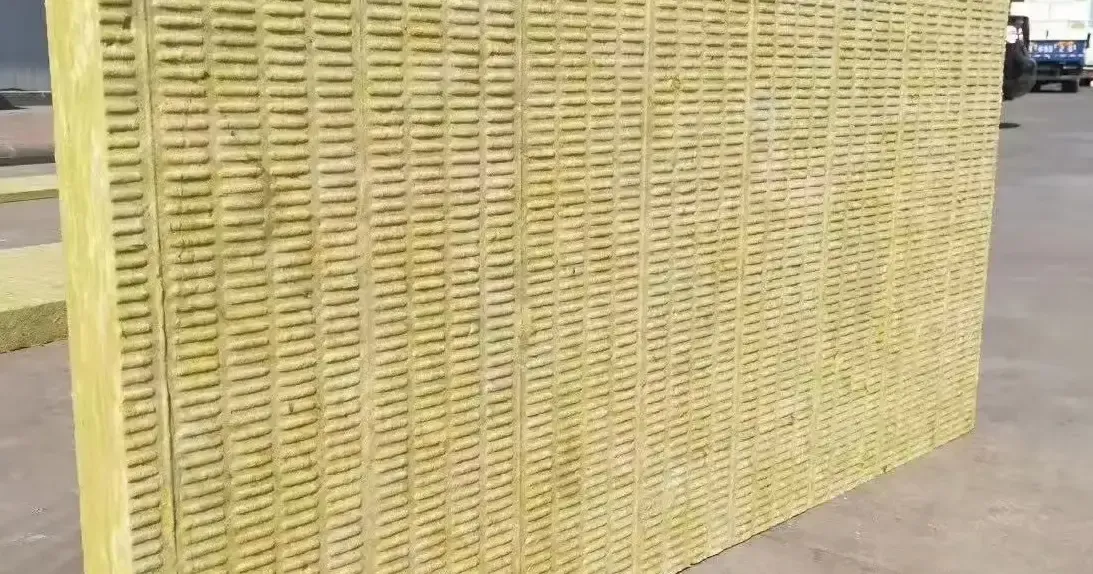
An insulation board is a rigid, pre-formed sheet of thermal insulation cut or pressed to a defined thickness and density - usually supplied in panels from 25 mm to 100 mm thick. Unlike loose-fill, blanket, or spray forms, a board holds its shape, carries light loads, and presents a clean, flat surface against a steel shell, casing, or duct. That rigidity is exactly why board selection is decided first by material, not by thickness: the material sets the temperature ceiling, the fire class, and whether the board can take a footfall or a bracket.
This guide compares the five board types that dominate industrial and commercial spec sheets - rock (mineral) wool board, glass wool board, calcium silicate board, ceramic fiber board, and nano / microporous board - and gives a selection framework engineers can apply to a real takeoff.
The Five Board Types at a Glance
| Board type | Max continuous service | Typical density | Thermal conductivity (approx.) | Fire classification |
|---|---|---|---|---|
| Rock (mineral) wool board | up to 650 °C | 100-160 kg/m3 | ~0.040 W/m·K at 25 °C mean | A1 non-combustible |
| Glass wool board | -120 °C to 400 °C | 40-100 kg/m3 | ~0.035-0.040 W/m·K at 25 °C mean | A1 / A2 non-combustible |
| Calcium silicate board | up to 1100 °C | 200-280 kg/m3 | ~0.050-0.065 W/m·K at 25 °C mean | A1 non-combustible |
| Ceramic fiber board | 1100-1430 °C by grade | 250-400 kg/m3 | ~0.08-0.12 W/m·K at 600 °C | Non-combustible refractory |
| Nano / microporous board | up to 1000 °C | 250-350 kg/m3 | ~0.022-0.028 W/m·K at 25 °C mean | A1 non-combustible |
The conductivity figures are indicative. Always confirm against the specific product's tested value at your mean service temperature, because conductivity rises with temperature for every material on this list.
Rock (Mineral) Wool Board
Rock wool board is produced by bonding basalt-rock fiber into a rigid slab. It is the workhorse for equipment and ducts operating up to 650 °C, and it combines non-combustible A1 fire performance with useful compressive resistance for walk-on casings and light supports. Typical uses: boiler and steam-line casings, duct wrap, equipment enclosures, fire-rated partitions, and flat-roof or wall boards in buildings.
Strengths: broadly the cheapest rigid inorganic board, handles abuse and vibration, easy to cut and fasten. Limits: limited above 650 °C, and it is heavier than fiberglass for the same thermal class. For product detail see the rock wool board page.
Glass Wool Board
Glass wool board is a lighter, lower-temperature rigid board made from bonded glass fibers. With a service range of about -120 °C to 400 °C and densities around 40-100 kg/m3, it is the preferred rigid board for HVAC, cold and cryogenic-side applications, and interior building acoustics where weight and cost matter more than high-temperature rating. It is also a common choice where a thin, stable panel is needed below 400 °C without the mass of mineral wool.
Strengths: low weight, good acoustic performance, economical, stable across a wide sub-ambient to moderate range. Limits: not for hot process equipment. More on the glass wool board page.
Calcium Silicate Board
Calcium silicate board is a hydraulically pressed, high-density rigid board rated up to 1100 °C. It is the material of choice where a board must stay dimensionally stable, take compressive load, and resist physical abuse - boiler casings, furnace back-up linings, expansion joints, and high-temperature pipe supports. Its density (200-280 kg/m3) gives it compressive strength far above fibrous boards, which is why it is often specified where brackets, walkways, or stacking loads are present.
Strengths: rigid and abuse-resistant, non-combustible, stable at temperatures that disqualify mineral wool. Limits: lower thermal efficiency per millimeter than ceramic fiber or nano board at the same thickness, and heavier to handle. See calcium silicate insulation board and the high-density calcium silicate board for grade options. For the refractory comparison see our guide on calcium silicate vs ceramic fiber board.
Ceramic Fiber Board
Ceramic fiber board is a refractory board made from alumina-silica fiber, rated from 1100 °C up to about 1430 °C depending on purity grade. It has very low heat storage and excellent thermal-shock resistance, which makes it the standard backup or hot-face lining board inside furnaces, kilns, reformers, and incinerators. Because it is light and low-mass, it also shortens furnace heat-up and cool-down cycles.
Strengths: highest practical service temperature of the five, very low thermal mass, shock-resistant. Limits: lower compressive strength than calcium silicate, and it is more expensive per square meter. Fiber-handling precautions apply at installation. Product options are on the ceramic fiber board page.
Nano / Microporous Board
Nano or microporous board uses engineered nano-particles and opacifiers to suppress all three heat-transfer modes, achieving the lowest conductivity of any rigid high-temperature board - roughly 0.022-0.028 W/m·K - at thicknesses a fraction of conventional boards. Rated up to about 1000 °C, it is selected where space is severely constrained: furnace linings, kiln cars, valve and flange boxes, and retrofits where 20-30 mm must replace 60-90 mm of fibrous board. It is the premium option and is usually justified by space or weight limits rather than by cost alone. See the nano insulation board page.
How to Select: A Temperature-First Framework
Boards fail for one reason - the wrong material for the service condition. Apply these steps in order:
- Fix the temperature ceiling. Pick the highest continuous and occasional peak temperature. Anything above 650 °C eliminates rock and glass wool; above 1100 °C leaves ceramic fiber or nano board; up to 1100 °C with load-bearing needs points to calcium silicate.
- Check the load. Walk-on casings, supports, and stacked boards need compressive strength - lean calcium silicate or high-density calcium silicate. Pure thermal backup with no load can use ceramic fiber or nano board.
- Confirm the fire and smoke requirement. For A1 non-combustible enclosures, rock wool, glass wool, calcium silicate, and nano boards qualify; ceramic fiber is non-combustible refractory but is specified by its temperature grade.
- Account for moisture and sub-ambient use. Below ambient, select vapor-retarded systems; glass wool board and suitable facings cover -120 °C to 400 °C ranges.
- Size the thickness by required R-value, not habit. Use the target thermal resistance and the board's tested conductivity at mean temperature. Equivalent-R thickness is simply R x k.
- Price the whole assembly. A cheaper, thicker board may cost more once cladding, supports, and labor are counted; a thinner nano board can win on installed cost where space is tight.
A Same-Resistance Thickness Check
To compare fairly, compute the thickness needed for one target resistance. At an indicative R of 2.0 m2·K/W (≈ R-11 imperial):
| Board type | Approx. thickness for R-2.0 |
|---|---|
| Rock wool board (k 0.040) | ~80 mm |
| Glass wool board (k 0.037) | ~74 mm |
| Calcium silicate board (k 0.055) | ~110 mm |
| Ceramic fiber board (k 0.090 at 600 °C) | ~180 mm at temperature |
| Nano / microporous board (k 0.025) | ~50 mm |
The table shows why high-temperature boards look "worse" on thickness - their conductivity is quoted at hot mean temperatures, not at 25 °C. Always compare at the same mean temperature.
Board vs Panel vs Tile: Don't Mix the Forms
This guide covers board by material. If you need help choosing between board, panel, tile, and sheet forms, see our insulation board and panel forms comparison, which handles dimensions, edge treatment, and fixing methods rather than material selection.
Specification Checklist
Before release for procurement, confirm:
- Maximum continuous and peak service temperature, with a margin above design.
- Required thermal resistance and the conductivity value at the mean service temperature.
- Compressive strength needed for walk-on, supports, or stacking.
- Fire classification and any smoke-toxicity or regulatory limits.
- Moisture, vapor, and sub-ambient requirements, including facing.
- Dimensional tolerance, sheet size, and edge profile for the joint design.
- Chemical compatibility with the process side and any cleaning regime.
- Fixing method: adhesive, mechanical, or strapping, matched to board density.
Key Takeaways
- Rock and glass wool boards cover up to 650 °C and -120 °C to 400 °C respectively and are the economical A1 non-combustible choices for utility and HVAC service.
- Calcium silicate board extends rigid, abuse-resistant service to 1100 °C and is the load-bearing high-temperature board.
- Ceramic fiber board is the refractory option from 1100 °C to about 1430 °C, with very low thermal mass.
- Nano / microporous board delivers the thinnest high-temperature solution, justified by space or weight limits rather than price.
- Select by temperature ceiling first, then load, fire, and moisture - and size thickness by required resistance at the service mean temperature.
Browse the full range of rigid boards across our rock wool, glass wool, calcium silicate, ceramic fiber, and nano product pages, or read more insulation selection guides on the Rosetexwool blog.
Frequently asked
What are the main types of insulation boards? +
The five board types that dominate industrial and commercial spec sheets are rock (mineral) wool board, glass wool board, calcium silicate board, ceramic fiber board, and nano or microporous board. They differ mainly by temperature ceiling, density, compressive strength and fire class, so material selection comes before thickness.
Which insulation board handles the highest temperature? +
Ceramic fiber board leads, rated from about 1100 °C up to roughly 1430 °C by grade, followed by nano or microporous board at up to about 1000 °C and calcium silicate board at up to 1100 °C. Rock wool board tops out near 650 °C and glass wool board around 400 °C, so neither qualifies for furnace or high-temperature process linings.
Calcium silicate board or rock wool board for a boiler casing? +
For boiler casings operating above 650 °C or where the board must carry load, calcium silicate board is the correct choice because it is rigid, compressive, and rated to 1100 °C. Rock wool board suits utility and equipment insulation up to 650 °C where cost and ease of fixing matter more than high-temperature rating.
Is rock wool board fireproof? +
Rock wool board is classified A1 non-combustible and performs well in fire-rated assemblies, but it has a service limit near 650 °C. It resists fire and contributes to compartmentation, yet it is not a refractory lining for furnace-hot surfaces - that is ceramic fiber or calcium silicate territory.
How do I choose insulation board thickness? +
Size thickness by the required thermal resistance, not by habit. Use the target R-value and the board's conductivity tested at the mean service temperature: thickness equals R multiplied by k. Compare boards at the same mean temperature, because high-temperature boards quote conductivity at hot conditions and look thicker than they are at 25 °C.
Can ceramic fiber board be used below 650 °C? +
Yes, but it is usually over-specified and more expensive there. Below 650 °C, rock wool or glass wool board delivers the needed performance at lower cost. Reserve ceramic fiber board for service above the mineral-wool limit or where very low heat storage and thermal-shock resistance are required.
Which board has the highest compressive strength? +
Calcium silicate board, especially high-density grades, has the highest compressive strength of the common rigid boards and is specified where walk-on casings, supports, or stacked boards impose loads. Rock wool board is next; ceramic fiber and nano boards are lighter and rely on backup support rather than carrying point loads.
Request a quote
Interested in our insulation solutions? Send us your requirements and our team responds within one business day.