
Insulation Board & Panel Forms: Board, Panel, Tile and Sheet Compared
Board, panel, tile and sheet are form words, not material words. This guide fixes each term, then compares the five insulation board families by temperature, density and cost.
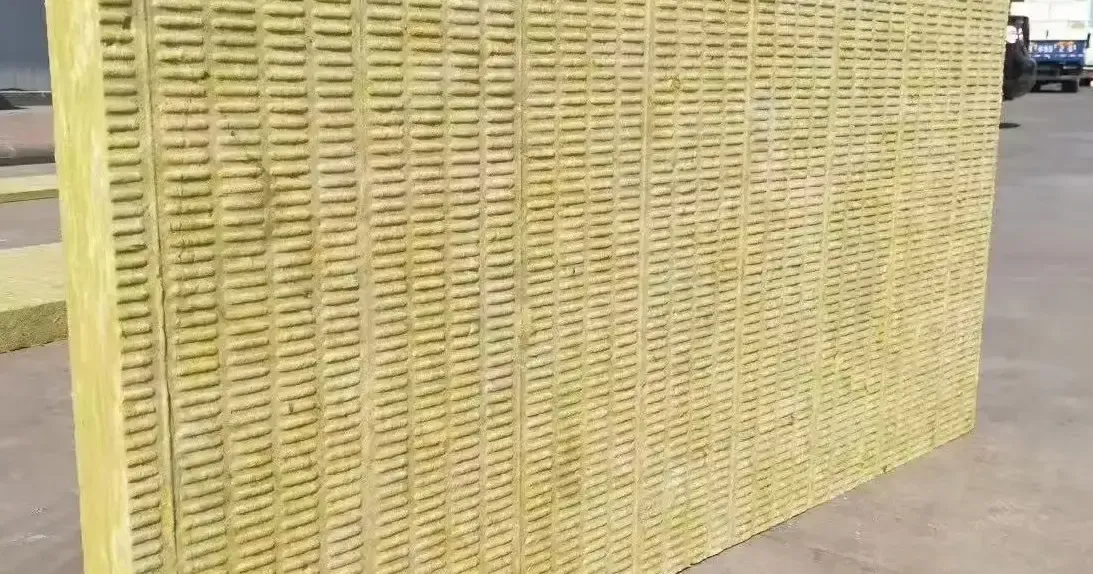
Quick answer: Board, panel, tile and sheet are form words, not material words. In industrial insulation, board is the default term for an insulation board: a rigid, self-supporting flat slab from roughly 12 mm to 150 mm thick, and it is the safest word to use in an enquiry when nothing else has been specified. Panel implies a larger format or a composite assembly such as a sandwich panel or a vacuum insulation panel. Tile belongs almost exclusively to insulating firebrick and masonry linings. Sheet describes anything thin enough — usually under 12 mm — that it will not stand on its own, such as ceramic fiber paper or a light glass wool facing.
Procurement teams lose weeks to this vocabulary. A drawing that says "insulation panel" can come back quoted as a board, as a metal-faced sandwich assembly, or as a vacuum panel, and the three differ in price by an order of magnitude. This guide fixes each form term the way the industrial insulation trade actually uses them, then places the five insulation board families — calcium silicate, rock wool, glass wool, ceramic fiber and the nano-porous group — against the temperature, density and cost decisions that drive a real specification. The range runs from commodity building board to high temperature insulation panels for furnace linings, and the vocabulary changes as you move along it.
Why Form Terms Decide What You Actually Receive
Form words carry three pieces of information that material words do not: how the product is made, how it is installed, and how it is priced.
A vacuum-formed ceramic fiber board is produced on a suction mould from a fibre slurry, dried and cut to size, which is why it arrives rigid and machinable. The same fibre in blanket form is needled into a roll and sold by the square metre at a fraction of the price. Ask for the wrong form and you will either pay for rigidity you do not need or receive a product that cannot carry its own weight in the position you planned.
Form also sets the price basis. Board and tile are quoted by area at a stated thickness, sometimes by piece count. Thermal insulation sheet and paper are frequently quoted by the roll or by weight. Sandwich panels are quoted by area but priced as a system, because the facing is part of the cost. When two quotations look wildly different for what appears to be the same product, the form word is the first thing to check. Form is the first line of any insulation board specification; material and grade follow it.
Board: The Default Rigid Form
Board is the single most useful word in industrial insulation procurement. It means a rigid or semi-rigid flat slab with enough stiffness to be handled, cut, drilled and fixed without a backing substrate.
Typical thickness runs from 12 mm to 100 mm for most materials, with calcium silicate reaching 150 mm in layered back-up insulation and high temperature insulation panels available from about 6 mm. Common formats are 600 × 1200 mm, 1000 × 1200 mm and 1200 × 2400 mm, with 600 × 900 mm usual for vacuum-formed ceramic fibre products. Densities span a wide range because the word says nothing about material: 24 kg/m³ for a light glass wool board, 280 kg/m³ for a standard calcium silicate board, 320 kg/m³ for a vacuum-formed ceramic fiber board.
Because board is machinable, it is the form specified where the insulation has to accept fixings — anchors, studs, thermocouple penetrations, or a bolted hot-face. It is also the form chosen when the insulation is part of a structural build-up rather than a wrap: boiler casings, furnace back-up layers, fire-rated partitions and equipment bases.
If nothing else has been agreed, "board" is the word to put on the insulation board enquiry.
Panel: Larger, Composite or System-Built
Panel overlaps with board, and in some product families the two are used interchangeably. The difference is emphasis: panel suggests a larger format, a composite build-up, or a product that is installed as a system rather than as a piece of material.
Three cases make the distinction worth keeping:
- Sandwich panel — a rock wool or mineral wool core bonded between two metal faces, used for building envelopes, cold stores and industrial partitions. This is the most common industrial use of the word, and rock wool sandwich panel is a fixed trade term.
- Duct panel — glass wool board supplied with a factory-bonded facing for HVAC ductwork, cut and folded into a duct on site.
- Vacuum insulation panel — a flat evacuated core sealed in a barrier film. The industry always says panel here, never board, and the reason is structural: the product is a sealed system that fails if punctured, not a piece of material.
Where a supplier uses panel and board as synonyms for the same insulation board, the format and fixing detail on the data sheet will tell you which behaviour to expect.
Tile and Sheet: The Two Edge Cases
Tile is the least useful of the four words and the most frequently misused. In practice it describes small rectangular units laid course by course, which means insulating firebrick — the 230 × 114 × 65 mm format is the standard reference — and the refractory tiles used to line flues, burners and hearths. If a buyer contacts an insulation tiles manufacturer asking for calcium silicate tile or ceramic fiber tile, the answer will almost always come back quoted as board, because that is what the material is sold as. Reserving tile for genuine masonry units avoids a round of clarification on every enquiry.
Sheet is the thin end of the insulation board range, and thermal insulation sheet is sold very differently from board. A sheet is semi-flexible to flexible, typically under 12 mm, and usually cut from a roll or a felt rather than formed as a discrete slab. Ceramic fiber paper and ceramic fiber sheet are effectively the same product at 1–6 mm, used for gaskets, parting layers and expansion joints. Most thermal insulation sheet suppliers quote by the roll or by weight rather than by the square metre. Thin glass wool sheet turns up as facings and acoustic liners. Calcium silicate is occasionally called sheet below 6 mm, though more than nine times out of ten it is still sold as board.
The practical boundary between the two words: below about 6 mm, or anything that cannot stand on edge, is a sheet. Above 12 mm with self-supporting stiffness, it is an insulation board by any trade definition. Between 6 and 12 mm, use whatever the data sheet says.
The Four Forms at a Glance
| Form | Core characteristic | Thickness range | Self-supporting | Typical use |
|---|---|---|---|---|
| Board | Rigid flat slab, machinable | 12–150 mm | Yes | Furnace back-up, boiler casing, fire board, equipment bases |
| Panel | Large format or composite assembly | 20–200 mm | Yes | Sandwich panel, duct panel, vacuum insulation panel |
| Tile | Small masonry unit | 25–75 mm | Yes | Insulating firebrick linings, hearths, flues |
| Sheet | Thin, semi-flexible, cut from rolls | 1–12 mm | No | Gaskets, parting layers, facings, acoustic liners |
Calcium Silicate: Rigid Back-Up to 1000 °C
Calcium silicate board is the rigid workhorse of the 650–1000 °C band. It is non-asbestos, light grey to white, supplied at 220–400 kg/m³ in insulation grades, and it carries compressive strength an order of magnitude above any fibre board — which is why it sits behind refractory linings and under boiler casings rather than competing with them.
Thermal conductivity sits near 0.06 W/(m·K) at ambient and rises with mean temperature, as it does for every insulation material. In practice, calcium silicate thermal insulation is specified by continuous service temperature first — 650 °C for general industrial work, 1000 °C where the lining runs hotter — and only then by thickness. The properties that actually drive specification are dimensional stability at temperature, low shrinkage, and the ability to be cut and drilled on site without friable edges. Calcium silicate thermal insulation is also the usual answer where a fire-rated board is needed in an industrial setting, because it is non-combustible and holds its shape under direct flame far better than a fibre product.
The limitations of calcium silicate thermal insulation are equally clear. It absorbs water and loses strength when saturated, so outdoor and below-grade work needs a weather barrier designed in from the start. And it is heavy relative to other insulation board families, which matters on large vertical surfaces. For the full property set and grade-by-grade figures, see our high density calcium silicate board guide; the product range is on calcium silicate insulation board.
Rock Wool and Stone Wool: Boards, Slabs and Sandwich Panels
Rock wool — also sold as stone wool and, in European documentation, as mineral wool board or slab — covers the 40–200 kg/m³ density range with thermal conductivity around 0.034–0.040 W/(m·K) at ambient. In board form, rock wool thermal insulation is supplied as slab or board, and thermal grades normally start at 80 kg/m³ and run to 200 kg/m³ where compressive strength or acoustic performance is specified.
Rock wool thermal insulation is continuous-rated to about 650 °C on industrial grades, with lower-rated building grades at 250 °C and below. Below 250 °C, rock wool thermal insulation competes directly with glass wool on price per square metre and wins where fire performance or compressive strength is part of the specification. It is the default choice for exterior wall insulation, roof decks, industrial ovens, and any application where fire performance and acoustic absorption are wanted from the same layer. Non-combustibility to A1 means it also does duty as a fire break in curtain walling and service risers.
In panel form, rock wool becomes the core of a sandwich panel: a bonded assembly with metal faces that is installed as a building envelope element rather than as insulation. That changes the specification entirely — core density, facing gauge, panel length and fixing detail all matter, and the acoustic and fire performance of the assembly is tested as a system.
Glass Wool Board for HVAC and Building Envelopes
Glass wool board is the lightest of the five families and the cheapest per square metre at a given thickness. Standard board densities run from 24 to 48 kg/m³, with high-density acoustic grades reaching about 100 kg/m³. Thermal conductivity is around 0.030–0.035 W/(m·K) at ambient, so on pure thermal performance at low temperature it beats the heavier fibre boards.
The limit is temperature. Most glass wool boards run 250 °C continuous on the standard grade and 538 °C continuous on high-temperature grades, with peak exposures 100–200 °C above those figures for short periods. Above that, the binder is the constraint, not the glass. Within its band, glass wool board dominates HVAC: duct board and duct panel, ceiling board, suspended acoustic ceilings, and foil-faced boards for plant rooms.
Because glass wool board is semi-rigid, it is normally supported in a framework or bonded to a substrate rather than spanning on its own. Where the same project needs a rigid self-supporting board for a warmer line, rock wool or calcium silicate takes over. Our rigid glass wool board selection guide covers the density and facing decisions in detail; the product line is at glass wool board.
High Temperature Insulation Panels: Ceramic Fiber and Beyond
Above roughly 1000 °C, the choice narrows to ceramic fiber board and its higher-temperature relatives. A high temperature ceramic fiber board is vacuum-formed from aluminosilicate fibre with an inorganic binder, typically at 280–320 kg/m³, and graded by classification temperature: 1260 °C standard, 1400 °C high-purity, 1450 °C zirconia-bearing. Continuous service sits below the classification figure, and the gap between the two is where most specification mistakes are made.
Thermal conductivity near ambient is roughly 0.08–0.12 W/(m·K) and rises with mean temperature, so a ceramic fiber board is not a high-efficiency insulator at low temperature — it is specified because nothing else survives. Where thermal shock is the governing risk, a high temperature ceramic fiber board also outperforms every rigid alternative, because the fibre structure absorbs the movement that cracks a dense refractory board. Where it is used: furnace hot face and back-up layers, door linings, launder and trough covers, heat shields, and any place where thermal shock resistance matters more than the conductivity figure.
High temperature insulation panels also cover the polycrystalline and mullite grades that extend the range to 1600 °C and beyond, at considerably higher cost, and the bio-soluble fibre boards used where worker exposure limits rule out conventional refractory ceramic fibre. Our polycrystalline mullite board guide covers the top of that range. For the thin end of the same family — paper, sheet and gasket material — see the ceramic fiber rope, tape, cloth and paper buying guide. Vacuum-formed board is stocked on ceramic fiber board.
Microporous Board, Aerogel Board and Vacuum Insulation Panels
The nano-porous group exists to solve thickness problems, and it is priced accordingly.
Microporous insulation board reaches 0.020–0.025 W/(m·K) at ambient — below still air, because the pore structure is finer than the mean free path of the gas molecules inside it. Service temperatures run to 900–1200 °C at 200–350 kg/m³. It is the standard answer where a furnace lining has to be thinner than conventional board allows, and it appears in appliance and foundry work far more often than its cost would suggest.
Aerogel board takes the same logic into the 600–650 °C band in rigid form, with thermal insulation sheet grades down to a few millimetres, alongside the flexible aerogel blanket that dominates pipe work. Thin aerogel board is common in transportation, battery enclosures and equipment skids where every millimetre counts.
Vacuum insulation panel is the extreme case: 0.004–0.007 W/(m·K), five to ten times better than a conventional board, in 10–30 mm. The trade is fragility and life. A puncture destroys the vacuum instantly, panels cannot be cut on site, and barrier permeation means performance declines over a service life generally quoted at 20–25 years. VIP is the right answer for refrigerated containers, cold-chain packaging and space-constrained building retrofits, and the wrong answer for anything that will be drilled, walked on or maintained without protection.
Cross-Material Comparison: Conductivity, Density, Temperature, Cost
| Property | Calcium silicate board | Rock wool board | Glass wool board | Microporous board | Ceramic fiber board |
|---|---|---|---|---|---|
| Density kg/m³ | 220–400 | 40–200 | 24–100 | 200–350 | 160–600 |
| Thermal conductivity, ambient W/(m·K) | ~0.06 | 0.034–0.040 | 0.030–0.035 | 0.020–0.025 | 0.08–0.12 |
| Maximum service temperature °C | 650–1000 | up to 650 | 250 standard, 538 high-temperature | 900–1200 | 1050–1450 by grade |
| Compressive strength | High, MPa range | Low to moderate | Low | Moderate | Moderate |
| Water behaviour | Absorbs, loses strength when wet | Hydrophobic when treated | Hydrophobic when treated | Needs a facing | Absorbs, can shrink |
| Reaction to fire | A1 non-combustible | A1 non-combustible | A1 non-combustible | A1 non-combustible | A1 non-combustible |
| Relative cost | Medium | Low | Lowest | High | Medium to high |
These are typical industry values for comparison only; the data sheet for the specific grade governs any purchase.
Selecting by Temperature, Budget and Available Space
Temperature is the first filter in insulation board selection, because it rules materials out rather than ranking them.
| Service band | First choice | Also works | Wrong choice |
|---|---|---|---|
| Up to 250 °C | Glass wool board | Rock wool board | Ceramic fiber (over-specified), calcium silicate (overweight) |
| 250–450 °C | Rock wool board at the high-temperature grade | High-temperature glass wool | Microporous (cost) |
| 450–650 °C | Rock wool board at 650 °C grade, or calcium silicate board | Calcium silicate board | Glass wool (over temperature) |
| 650–1000 °C | Calcium silicate board, with ceramic fiber board on the hot face | Microporous board for thin sections | Rock wool, glass wool |
| 1000–1400 °C | High temperature ceramic fiber board at 1260–1400 °C grade | Polycrystalline board | Calcium silicate (at its limit) |
| Above 1400 °C | Zirconia-bearing or polycrystalline grades | Alumina fiber board | Everything else |
Budget narrows the result within each band: glass wool and rock wool for building and HVAC work, calcium silicate and rock wool for industrial plant up to 650 °C, a high temperature ceramic fiber board with a calcium silicate back-up layer above 1000 °C, and the nano-porous group only where the thickness saving pays for itself in space, weight or energy. Above 1000 °C the answer is always a high temperature insulation panel of one kind or another — ceramic fiber board, or its polycrystalline and mullite relatives at the top of the range.
Available space can reverse the whole insulation board analysis. Where the available thickness is 20 mm or less, conventional board cannot meet the duty at all and a vacuum insulation panel or aerogel product is the only option. Between 20 and 50 mm, microporous board typically saves a third of the thickness of a conventional build-up. Above 100 mm, the cheap low-temperature boards win on economics every time.
What an Insulation Board Supplier Needs From Your Enquiry
The supplier directory approach is less useful than it looks, because insulation board supply is localised and lead times dominate. What actually shortens the quotation cycle is a complete specification in the first email. Every item below changes the price:
- Material and grade — including the classification temperature for high temperature insulation panels, and whether a non-asbestos grade is required for calcium silicate
- Density — quoted in kg/m³, not "standard" or "high density"
- Thickness and tolerance — and whether the thickness quoted for the insulation board is nominal or minimum
- Board size and edge profile — square cut, tongued and grooved, or shiplap
- Facing — foil, glass tissue or unfaced, and whether thermal insulation sheet grades need a bonded facing on both sides
- Service conditions — continuous temperature, peak temperature, cycling frequency, and any mechanical load
- Standards — the test method the figures must be quoted against, such as ASTM C533 for calcium silicate or EN 14306 for high-temperature boards
- Quantity and packing — area or piece count, pallet configuration, and whether export packing is needed
- Certification — ISO 9001 quality system, plus any project-specific type testing
A rigid thermal panel supplier will ask for the same list plus one more item: whether the board is faced, on which side, and whether the facing has to survive the full service temperature. Two questions separate a serious supplier from a trader: whether they will supply a technical data sheet showing the test method behind each figure, and whether they will hold a production sample for comparison against the delivered lot. Both are cheap to ask and expensive to skip.
Our insulation board range runs from rock wool board through calcium silicate insulation board to ceramic fiber board and nano aerogel blanket, all produced under an ISO 9001 quality system. For the refractory-side comparison of the same two leading high-temperature boards, see refractory board selection.
Form first, material second, grade third. That order gets a quotation back in days instead of weeks, and it gets a board that fits the position you designed for.
Frequently asked
Is board the same as panel in insulation? +
Not quite, and the difference matters at quotation stage. Board is a rigid, self-supporting flat slab, typically 12–150 mm thick, that is handled as a piece of material. Panel implies a larger format or a composite assembly installed as a system — a rock wool sandwich panel with metal faces, a glass wool duct panel, or a vacuum insulation panel, which is always called a panel because it is a sealed evacuated unit. Some suppliers use the two words interchangeably for the same product; when they do, the fixing detail and format on the data sheet tell you which behaviour to expect.
When should insulation tile be used instead of board? +
Only for genuine masonry units. Tile describes small rectangular blocks laid course by course, which in practice means insulating firebrick in the 230 × 114 × 65 mm format, plus refractory tiles for hearths, flues and burner blocks. Calcium silicate, ceramic fiber, rock wool and glass wool are sold as board, and asking a supplier for those materials in tile form simply adds a round of clarification. Ceramic fiber in particular is never called tile in industrial trade usage.
What thickness separates sheet from board? +
The practical boundary is behaviour rather than a fixed number. Below about 6 mm, or any product that will not stand on edge, is a sheet — ceramic fiber paper at 1–6 mm is the classic example, used for gaskets and parting layers. Above 12 mm with enough stiffness to be self-supporting is a board. Between 6 and 12 mm the two words overlap and the data sheet governs. The same rule separates sheet from panel on the thin end of the nano-porous products.
Which insulation board handles the highest temperature? +
Among the common families, ceramic fiber board — rated by classification temperature at 1260 °C, 1400 °C and 1450 °C — with continuous service below those figures. Above roughly 1400 °C the specification moves to zirconia-bearing grades, polycrystalline mullite board and alumina fiber board, which reach 1600 °C and beyond at a considerably higher cost. Microporous board covers 900–1200 °C where thickness is limited, while calcium silicate tops out around 1000 °C and rock wool around 650 °C.
What exactly is a rock wool sandwich panel? +
A factory-bonded assembly with a rock wool core between two metal faces, installed as a building envelope element rather than as insulation that is then clad. It carries its own fire and acoustic performance as a tested system, which is why the specification covers core density, facing gauge, panel length and fixing detail rather than just the insulation thickness. Sandwich panel is the single most common industrial use of the word panel, and it is a distinct product from rock wool board supplied loose.
How long does a vacuum insulation panel last? +
A service life of 20–25 years is typically quoted, and it is governed by barrier permeation rather than by the core material: as gas slowly enters through the barrier film, conductivity rises from around 0.004–0.007 W/(m·K) towards that of a conventional board. Mechanical damage ends the life instantly, because a puncture destroys the vacuum. Panels cannot be cut or drilled on site, so any penetration has to be designed in and the panel sized accordingly — which is why VIP suits cold-chain packaging and refrigerated containers far better than maintained plant.
What should an enquiry for insulation board always specify? +
Material and grade, density in kg/m³, thickness with tolerance, board size and edge profile, facing, service conditions including continuous and peak temperature plus cycling, the test standard the figures must be quoted against, quantity and packing, and the certification required. Each of those changes the price, and a missing density or test method is the most common reason two quotations cannot be compared. Ask as well whether the supplier will provide a data sheet showing the test method behind each figure and hold a production sample for comparison against the delivered lot.
Request a quote
Interested in our insulation solutions? Send us your requirements and our team responds within one business day.