
Aerogel vs Polyurethane Foam Insulation: Industrial Selection Guide for Blankets, Boards and Spray PU
Aerogel vs polyurethane foam insulation compared: conductivity, thickness, temperature limits, fire class, moisture and cost per RSI, with a decision tree and procurement checklist.
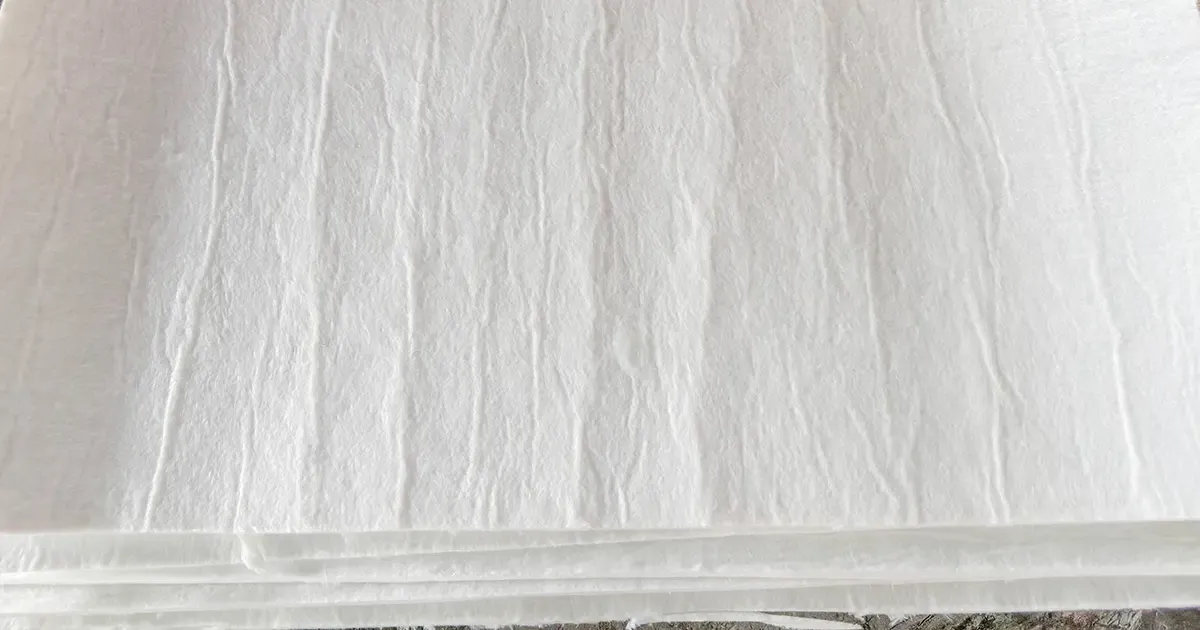
For industrial buyers, the relevant question is not which material has the lowest laboratory lambda, but which insulated system delivers the required thermal resistance, service temperature, fire package, moisture resilience and installed cost within the project's real constraints. The answer changes by form:
- A 10 mm flexible silica aerogel blanket can realistically sit near 0.015-0.020 W/m·K at about 25 °C, so it can provide roughly 1.5-2.1 times the RSI of a 10 mm PUR layer when the comparison uses the same temperature and ageing basis. That makes it compelling for tight pipe racks, valve sets, offshore modules, retrofits and weight-sensitive platforms — see our nano aerogel insulation blanket.
- A rigid glass-fibre-reinforced aerogel board is a different product. One documented 250-300 kg/m³ grade declares 0.021 W/m·K at 25 °C — only modestly below a certified PUR board at 0.022 W/m·K — and its conductivity rises with temperature. Its advantage lies in high-temperature capability and a rigid, dimensionally stable panel, not an automatic 3x thermal win.
- PUR is the stronger commercial default where seamless enclosure, compressive strength, fast area coverage or a certified, cost-efficient board matters. A certified PUR board can carry a declared lambda of 0.022 W/m·K, while an aged spray-PU system can be declared at 0.027-0.028 W/m·K after the EN 14315 ageing basis. High-density spray PU can also act as an air-sealing, adhesive monolithic layer.
The temperature boundary is decisive. PUR's continuous envelope is generally bounded near 100-120 °C for the products reviewed; some PIR formulations tolerate intermittent excursions around 140-150 °C, but PIR is excluded from the present thermal comparison. Above roughly 120 °C continuous, move to a verified high-temperature aerogel composite, mineral-fibre or ceramic system. A 650 °C rating is a product-grade claim, not a property of every silica blanket: the same reinforcement chemistry, binder, organic needling fibres, facings and test report determine both temperature and Euroclass.
Fire is a system property. PUR and PUR-modified foams are organic and combustible. Even a spray system with 90% or more closed cells can be EN 13501-1 Class E; factory PUR boards in the sampled certificates appear at Class F. Acceptable use therefore depends on facing, joint detailing, fire stops, clearance, potential ignition sources and the approved assembly. Silica-aerogel blankets may test A1 or A2 in particular compositions, but one published flexible product reports C-s1,d0. Do not specify "non-combustible" from a marketing sheet alone.
Moisture follows the same system logic. Closed-cell PUR and spray PU are strong against bulk water and can serve as vapour retarders, but they are not licences to omit drainage, joint sealing or climate-appropriate drying paths. Aerogel blankets are frequently hydrophobic, yet most are fibrous and open enough that a damaged jacket can wick or transmit water. Hydrophobicity reduces liquid uptake; it does not make the assembly waterproof or eliminate corrosion-under-insulation (CUI) risk — a theme we also cover in our petrochemical application guide.
On a per-RSI basis, aerogel is most competitive when thickness, weight, access, rework or CUI exposure dominates. On a per-cubic-metre basis, the opposite can be true in wide, uninterrupted, ambient-temperature enclosures: spray PU or PUR board may use more volume but need fewer interfaces and less custom labour. Absolute prices are deliberately omitted here — they are market-, region-, specification- and contract-specific. For a cost framework anchored to thickness and R-value, see our aerogel insulation cost and price analysis.
Quick Comparison: Four Products on the Performance-Constructability Frontier
The full product families sit in our aerogel insulation hub. The table below compares the four forms buyers actually meet in an RFQ:
| Selection axis | Flexible aerogel blanket | Rigid aerogel composite board | PUR rigid board | Spray-applied PU |
|---|---|---|---|---|
| Typical industrial form | Roll/wrap; silica aerogel plus glass or polymer fibre carrier | Pressed/impregnated panel; glass-fibre mat or inorganic reinforcement | Factory-cut closed-cell foam board, often faced | Two-component, heated, in-situ rigid foam |
| Representative 25 °C lambda | 0.015-0.020 W/m·K for the better industrial grades; product-specific | 0.021 W/m·K in one documented 10 mm glass-mat grade; 0.041 at 600 °C in that same grade | 0.022 W/m·K certified declaration; thickness- and temperature-dependent versions exist | Initial sample 0.021; EN 14315 aged declaration 0.027-0.028 |
| Direction / geometry | Wraps complex and curved surfaces; 1-D flat comparison is only an approximation on pipes | Flat or gently curved rigid surfaces; poor conformability | Planar, kerfed, or prefabricated shapes; good compressive handling | Self-conforming to irregular substrates; seamless if spray parameters are controlled |
| Continuous temperature boundary | Grade-dependent; verify the exact composite, not "aerogel" generally | Documented 650 °C claim for one glass-fibre grade; other grades differ | Typically about 100-120 °C for continuous PUR duty | The sampled system is -30 to +100 °C; do not generalise to all formulations |
| Fire posture | Silica matrix helps, but organic fibres/facings can change class; demand the assembly report | Request a Euroclass/non-combustibility report for the supplied SKU | Organic foam; sampled certificate is Euroclass F; fire package is project-specific | Organic foam; sampled system EN 13501-1 E, 90% or more closed cells |
| Moisture behaviour | Usually hydrophobic, often vapour-permeable; needs jacket/cladding against bulk water | Hydrophobic matrix claim in sampled product; joints and edges remain paths | Closed-cell, low absorption; facing/joints still matter | Closed-cell, can be an air/vapour retarder; permeance depends on thickness and formulation |
| Installation labour | Cut, wrap, band, seal; fast on small convoluted assets | Cut, support and clad like a thin rigid liner | Saw, fit, fasten, seal; efficient on large regular planes | Crew, equipment and substrate prep dependent; very fast on large irregular planes |
| Best commercial fit | Hot/cold pipe racks, valves, vessels, offshore, space-critical retrofits | High-temp flat equipment, furnace/heat-exchanger liners, aviation thermal panels | Roofs, walls, cold stores, prefabricated panels, compressive industrial enclosures | Airtight roof/deck linings, tanks, irregular structures, continuous sprayed planes |
Note: these are not a universal ranking. Values are drawn from dated product declarations and must be normalised for mean temperature, orientation, thickness, density, ageing and test method before appearing in a design. A 10 mm blanket compared with a 100 mm foam assembly is a comparison of layers, not of "aerogel" and "foam" as abstract categories.
Thermal Conductivity and RSI: Real at the Thin End, but Only on a Declared Basis
The only defensible thermal comparison begins with the tested system, not the material name. Apparent thermal conductivity changes with mean temperature, through-thickness gradient, density, blowing agent, cell or fibre structure, compression, moisture and ageing. ASTM C1728 itself warns that flexible-aerogel transmission properties vary with temperature, gradient, moisture, thickness and shape, and that specification values need not represent installed performance. For context against other materials, see our aerogel vs fiberglass comparison and the broader aerogel vs traditional insulation thickness and cost analysis.
| Sample used for comparison | Declared conductivity | Stated basis / caveat | Correct design use |
|---|---|---|---|
| Flexible aerogel blanket | 0.015 W/m·K | Supplier sheet's nominal low-end 25 °C figure; representative of thin, high-performance grades, not every blanket | Space-critical 1-D screening; demand the project TDS and mean-temperature curve |
| Flexible aerogel blanket | 0.018 W/m·K | Another flexible grade's published value | A more conservative commercial starting point |
| Rigid aerogel composite board | 0.021 W/m·K at 25 °C | Glass-needle-mat reinforced board, 250-300 kg/m³; 0.023 at 100 °C, 0.041 at 600 °C | High-temp planes; do not apply the 25 °C number across the whole gradient |
| PUR rigid board | 0.022 W/m·K declared | Certified declaration; associated 30 mm RSI = 1.35 m²·K/W, 160 mm = 7.40 | Factory board with declared thickness/ageing basis |
| Spray PUR | 0.021 W/m·K initial; 0.027-0.028 aged | EN 12667 initial and EN 14315 aged declarations for one system | Spray-foam energy model must use the aged design lambda |
| Spray PUR system | 0.028 W/m·K or less | Maximum conductivity declaration; EN 13501-1 E; 90% or more closed cells | Upper bound for feasibility and risk-case modelling |
The PUR board and spray PU samples therefore cannot be compared as "both 0.022-0.028" without stating ageing. The spray system's initial EN 12667 figure is attractive; its declared EN 14315 aged value is the more conservative basis for a multi-year envelope design. Conversely, an aerogel blanket's room-temperature highlight is not a licence to ignore conductivity growth at high mean temperature, or the effect of compression in a banded pipe wrap.
Same RSI, Same Flat Basis: Thickness Is Proportional to Lambda
For a flat, homogeneous layer with no significant joints, thermal bridging or curvature effects: RSI = d / λ, so the required thickness d = RSI × λ. Holding RSI constant, the thickness ratio is simply the lambda ratio: d(aerogel) / d(PUR) = λ(aerogel) / λ(PUR).
| To match the same flat-layer RSI as a 0.022 W/m·K PUR board | Lambda used | Thickness required relative to the PUR board |
|---|---|---|
| A 0.015 flexible blanket | 0.015 | 0.68x |
| A 0.021 rigid aerogel board | 0.021 | 0.95x |
| An aged 0.028 spray PU | 0.028 | 1.27x |
The commercial implication is narrower than the headline: a thin flexible blanket can replace a noticeably thicker foam layer in a space-critical run. A rigid aerogel panel may be specified for temperature, stiffness, weight or fire reasons even where its 25 °C thermal thickness saving over PUR is small. Spray PU can require more thickness than a high-performance blanket for the same RSI, yet still win on installed cost where it eliminates cutting, fitting and sealing labour.
Pipe Geometry Changes the Answer: Use Mean Radius, Not a Flat Blanket Ratio
For a hollow cylinder with inner radius r_i, outer radius r_o and length L: RSI(pipe) = ln(r_o / r_i) / (2 x pi x L x λ), and r_o = r_i x e^(2 x pi x L x λ x RSI).
Worked example, illustrative only: a 168.3 mm OD pipe is taken as r_i = 84.15 mm and L = 1 m, with a required pipe RSI of 0.50 m²·K/W.
| Material | Lambda used (W/m·K) | Required outer radius | Insulation thickness on the 168.3 mm OD |
|---|---|---|---|
| Flexible aerogel blanket | 0.015 | 99.0 mm | 14.8 mm |
| Rigid aerogel composite | 0.021 | 107.5 mm | 23.3 mm |
| PUR board | 0.022 | 109.0 mm | 24.8 mm |
| Aged spray PU | 0.028 | 122.8 mm | 38.6 mm |
The thickness ranking matches the flat case because the logarithmic term is monotonic. But the absolute thicknesses, surface temperature, jacket area, band loads and volume are not. Doubling the required RSI more than doubles the outer diameter and cladding area; a small lambda advantage therefore becomes increasingly valuable on congested racks. This calculation says nothing by itself about outer surface temperature, touch safety, condensation, wind, solar gain or fire exposure — those require the full steady-state or transient system model.
The procurement meaning: ask for a pipe-segment TDS or test configuration, not only a flat-panel lambda. ASTM C1728 requires pipe-configuration testing for relevant flexible grades and specifically notes that flat and pipe results may differ. For spray PU, density variation, pass thickness, substrate temperature and mixing ratio become part of the thermal deliverable.
Temperature: Above Roughly 120 °C Continuous, PUR Loses
PUR is an ambient-to-moderately-elevated-temperature organic foam; aerogel is a family whose temperature limit is inherited from its reinforcements and binders. The spray-PU data used here gives a service range of -30 to +100 °C for the finished foam, with 90% or more closed cells and 300-310 kPa compressive strength. The certified PUR board carries a declared 0.022 W/m·K but does not become a high-temperature product merely because the certificate exists; the same certificate reports dimensional-stability testing at 70 °C and 90% RH, consistent with a building and envelope basis rather than continuous steam duty.
The practical continuous boundary used in this guide:
| Regime | Preferred default | Why, and what must be verified |
|---|---|---|
| Below about 100 °C continuous | PUR board or spray PU can be primary candidates | Confirm exact SKU, ageing, substrate compatibility, fire and vapour assembly |
| About 100-120 °C continuous | Treat PUR as conditional, not automatic | Obtain the manufacturer's written continuous-service approval, thermal-ageing data and dimensional-stability report; otherwise select a high-temp composite |
| Above about 120 °C continuous | Do not default to PUR | Use a high-temperature-rated aerogel composite, mineral or ceramic fibre, or an engineered refractory system |
| Short or intermittent spikes near 140-150 °C | Sometimes PIR or a special PUR, outside this guide's primary scope | "Intermittent" must be defined as dwell time, frequency, surface vs core temperature and restart cycle; get a project-specific letter |
The 650 °C figure must be handled carefully. One documented rigid board is made from glass-fibre needle felt impregnated with sol-gel and supercritically dried; its manufacturer states continuous 650 °C, density 250-300 kg/m³, 0.021 W/m·K at 25 °C and 0.041 W/m·K at 600 °C. That is credible evidence for that grade. It is not proof that a 3-10 mm flexible silica blanket with polymer stitching, a foil scrim or an organic binder can survive 650 °C.
Other public blanket ranges show the same split. A supplier overview lists flexible blankets at 0.022-0.057 W/m·K from 25-600 °C with maximum use at 650 °C, while a separate low-temperature cryogenic felt specifies -196 °C to room temperature at 0.015 W/m·K or less. The selection rule is simple: the temperature claim travels with the SKU, reinforcement and test report — not with the word "aerogel".
If the asset operates above 120 °C continuously, the thermal-thinness advantage of a low-lambda PUR sample is irrelevant. Require a time-temperature approval and a thermal-conductivity curve to at least the design temperature. If the asset cycles, also require thermal-shock, linear-change, compressive-creep and fastener/jacket testing.
Fire: PU Stays Combustible; Aerogel Stays Grade-Specific
Neither a closed cell nor a hydrophobic claim is a fire rating. EN 13501-1 classifies reaction to fire using test methods plus smoke and droplet indices. Published fire research describes A1 as essentially non-combustible with no contribution to fire growth, A2 as not easily ignited and not making a significant fuel contribution, and classes through E as carrying increasing combustibility risk; F indicates failure of the small-flame criterion in the cited system.
| Material/system | Evidence in this review | What it does not prove |
|---|---|---|
| Spray PUR | EN 13501-1 Class E; EN 14315-1 system; 90% or more closed cells | Closed cells do not make it non-combustible; E is not an assembly-level fire barrier |
| Certified PUR board | Euroclass F in the sampled certificate | F is the product's classification in that certificate; it cannot be offset by a generic "foam is self-extinguishing" statement |
| Flexible aerogel blanket | Published sheet reports C-s1,d0 for one grade; another vendor asserts A1 for a blanket family | A silica matrix does not guarantee A1 for every stitch-bonded, polymer-fibre or foil-faced variant |
| Rigid aerogel board | Manufacturer claims A1 for its 650 °C grade | Euroclass equivalence must be established through the actual EN ISO 1182 / EN 13501 test report, not by translation of a domestic label |
A PUR system can still be used responsibly. The engineering response is to specify the complete fire package: compatible facing or intumescent coating where required; tested joints and terminations; fire stops at compartment boundaries; protection from radiant and external flame exposure; distance from flaring, hot work and ignition sources; and an assembly listing that the authority having jurisdiction accepts. A spray foam that bonds seamlessly is not automatically a fire-rated monolith — the sampled system's Class E declaration makes that distinction explicit.
For aerogel, "inorganic" is a good starting point, not the end of the conversation. Organic needling fibres, stitching, binders, facings and jacketing can affect ignitability, flame spread, smoke and dripping. Request:
- the full EN 13501-1 report number, specimen build-up and s/d suffix;
- EN ISO 1182 non-combustibility or the applicable national equivalent;
- total heat release and smoke data if the asset is offshore, transit, tunnel, nuclear, battery or occupied space;
- aged and wet-condition fire behaviour where the specification demands it.
Standards also limit what a buyer can infer. EN 13165 covers factory-made building PU boards and states that it does not determine fitness for a particular end use or cover industrial equipment; EN 14315-1 covers in-situ building spray PUR/PIR and excludes industrial installations. ASTM C591 covers unfaced preformed rigid cellular polyisocyanurate, explicitly warns that PUR-modified materials can perform differently, and requires manufacturer-purchaser agreement on specific temperature limits. These are material and product specifications — not a waiver of project fire and process safety engineering.
Moisture and CUI: Closed-Cell PU Controls Diffusion; Aerogel Still Needs a Jacket
PUR wins on air leakage and bulk-water resistance; aerogel wins only conditionally on keeping the insulation layer drier. The sampled high-density spray PUR has 90% or more closed cells, a water-vapour resistance factor of 80 or more, EN 1609 short-term absorption of 0.20 kg/m² or less, and bonds to many clean, dry substrates. The other spray datasheet declares under 0.20 kg/m² by EN 1609 and a density above 35 kg/m³. These are useful indicators of a closed-cell foam system, not proof that water cannot enter through cracks, penetrations, improper passes or failed terminations.
That continuity is a double-edged sword. A thick, continuous closed-cell layer can function as both air barrier and Class II vapour retarder in building assemblies, but it also reduces drying capacity. Technical guidance cautions that closed-cell spray foam around 50 mm can sit at or below 1 perm and recommends project hygrothermal analysis rather than assuming more vapour resistance is always better. For industrial equipment the concern is different: a jacket breach can pool water against metal, and the foam/jacket interface still needs inspection.
Aerogel blankets are often marketed as hydrophobic and CUI-friendly because silica and glass-fibre composites do not wick like some fibrous insulations. The cited cryogenic blanket claims 98% or more hydrophobicity and is intended for LNG and liquid-nitrogen service, while industry CUI guidance stresses that moisture still enters through leaks, condensation, damaged jackets, thermal cycling and poor sealing. Aerogel can slow moisture retention, but it does not replace a vapour retarder, metal jacket, sealant strategy or coating system on the underlying steel.
| Moisture question | PUR board / spray PU | Aerogel blanket / rigid panel | Design response |
|---|---|---|---|
| Bulk liquid ingress | Closed cells resist penetration, but joints and cracks remain paths | Hydrophobic fibres resist wetting; seams and jacket breaches still penetrate | Sloped jacket, sealed joints, drainage and maintenance access |
| Water vapour diffusion | High closed-cell resistance; assembly may dry slowly | Often more vapour-open in blanket form | Locate vapour control and drying direction for the climate and fluid temperature |
| Cryogenic condensation/icing | PU is a proven cold-insulation family; must specify a low-temp grade | Thin, flexible cryo grades can follow complex cold geometry | Use cold-face vapour barrier, thermal-contraction and ice-load details |
| CUI | Not immune; trapped water at breaches is harmful | Hydrophobic matrix helps but is not a guarantee | Coat steel in the CUI range, inspect, repair jacket, use a compatible aerogel system |
Selection implication: choose closed-cell PU when the dominant requirement is an air-tight, vapour-retarding monolithic envelope with a validated drying strategy. Choose a hydrophobic aerogel blanket when the dominant requirement is conformance to complex assets, thin build-up and a drier insulation layer — but only inside a clad, sealed and inspectable system.
Mechanics, Installation and Durability: Spray PU Removes Seams; Aerogel Removes Bulk
The best material on paper can lose after seams, density variation and rework are counted. PUR boards are fast on large flat planes: cut, fit, mechanically fix or adhere, tape and seal, then clad. Their rigidity supplies compression resistance and dimensional control, but kerfs, joints and penetrations create thermal bridges and labour. The sampled PUR certificate reports a compressive strength of 150 kPa and dimensional stability at 70 °C and 90% RH — useful indicators for a board system, not guarantees for every installed roof.
Spray PU is the opposite trade. It can self-adhere to concrete, steel, wood and other prepared surfaces, bridge irregularities and remove many seams. Manufacturers still require clean, dry, rust-free metal and warn that adhesion cannot be guaranteed across all substrates and primers. Improper mix ratio, excessive single-pass thickness, substrate temperature or equipment heat can cause exotherm, poor cell structure, odour, dimensional problems and fire risk during application. That is why "spray foam" must appear in an aerogel comparison as a process system, not merely a foam with a lambda.
Flexible aerogel blankets are easy to cut and wrap on valves, flanges, elbows and congested racks, and their thinness reduces leverage on bands and supports. But they rely on good wrapping tension, overlap, banding, termination and jacket integrity. A rigid aerogel composite trades conformability for stiffness and a flat surface; the documented 10 mm rigid grade is explicitly not a curved-pipe product despite being marketed for some pipeline thermal protection, and its value is in planes, liners and equipment where a rigid thin panel is constructable.
Durability evidence must remain experiment-specific. A 2017 accelerated study exposed three commercial aerogel composite blankets, XPS and a blown PUR foam to 65.6 °C at 90%, 60% and 30% RH and to 32.2 °C at 90% RH, measuring conductivity weekly for five weeks. PUR and two of the three aerogel blankets showed meaningful humidity sensitivity, and behaviour varied by aerogel manufacture. This refutes both "PUR is unaffected by moisture" and "aerogel never ages".
| Constructability factor | Aerogel blanket | Rigid aerogel board | PUR board | Spray PU |
|---|---|---|---|---|
| Complex elbows/valves | High | Low to moderate | Low unless prefab segments | High |
| Large flat deck/roof | Moderate; many seams | Good if panel layout suits | High | Very high if access and spraying suit |
| Dimensional stiffness | Low | High | High | Develops in situ; substrate and adhesion critical |
| Rework/access | Cut away and rewrap | Remove panel/jacket | Remove board/jacket | Cut out monolithic foam; harder to reverse |
| Weight/volume pressure | Strong: thin and light per RSI | Light panel, but denser than foam by volume | Light board; thicker for same RSI | Low part count, but thickness drives foam volume |
| Process sensitivity | Cutting dust, seam quality, compression | Edge breakage, support | Cutting dust, joint sealing | Mix, temperature, pass thickness, ventilation, cure |
Selection implication: spray PU's installed advantage is largest where continuity and coverage dominate; aerogel's installed advantage is largest where the geometry is convoluted or the allowable envelope is thin. Board products win where prefabrication, compression and a predictable flat build-up matter.
Cost: Compare per RSI and per Cubic Metre, Then Add the System Around Them
Material price per cubic metre is not the decision metric, and neither is the thinnest layer by itself. Let C_m be delivered material cost per m³, C_i installed cost per m² of finished system, and λ_d the design conductivity. For a flat layer of thickness d: cost per RSI per m² = (C_m x d + C_i) / (d / λ_d) = λ_d x (C_m + C_i / d).
This equation explains the apparent contradiction in procurement. Aerogel may carry a higher C_m but a much smaller d, so the C_m x d term can fall. PUR may have lower C_m but a larger d; however, if its installed cost C_i is much lower because boards are fast to fit, or spray PU eliminates joints, the total cost per RSI can reverse.
Numerical illustration, ratios only — no currency or absolute prices. Assume the design uses the flat-layer sample lambdas and a common 1.00 m² footprint, with thicknesses scaled to a target RSI of 1.00 m²·K/W:
| Material | Design lambda (W/m·K) | Thickness for RSI 1.00 | Volume per m² of wall or pipe-run footprint | Relative material-volume term |
|---|---|---|---|---|
| Flexible aerogel blanket | 0.015 | 15 mm | 0.015 m³ | 0.68x |
| Rigid aerogel board | 0.021 | 21 mm | 0.021 m³ | 0.95x |
| PUR board | 0.022 | 22 mm | 0.022 m³ | 1.00x |
| Aged spray PU | 0.028 | 28 mm | 0.028 m³ | 1.27x |
Note: relative to the PUR board volume in this illustrative, equal-RSI, flat-layer case. If a project pays only for foam volume, the flexible aerogel layer uses 32% less volume than the PUR board and 46% less than the aged spray PU layer. But the commercial question is the bracket around installation:
| Scenario | Likely per-RSI winner | Why the apparent thermal disadvantage can disappear |
|---|---|---|
| Wide, flat, ambient-temp roof with simple penetrations | PUR board or spray PU | Low cost per m² installed; few bends; compressive and air-sealing value; aerogel's thinness has little spatial value |
| Pipe rack with 30 elbows, valves and limited clearance | Flexible aerogel blanket | Less profile, easier wrap, lower jacket and standoff volume, fewer multilayer interfaces |
| Offshore module with weight and space penalties | Aerogel blanket or panel | Savings in steel, supports, cladding and access can outweigh higher material unit cost; validate with the platform's weight KPI |
| Retrofit behind existing finishes | Aerogel or spray PU | Aerogel slips into a thin cavity; spray PU fills voids, but removal and vapour/drying must be priced |
| Cold store with large planar surfaces | PUR board or qualified PU system | Established board supply, vapour control and cladding logistics can beat a premium blanket |
| LNG valve set, frequent inspection | Cryogenic aerogel blanket | Conformance, low profile and reusable detailing can outperform a thick rigid PU box-out |
| High-temp flat panel above 120 °C | Rigid high-temp aerogel composite | PUR is no longer a comparable candidate on thermal duty alone |
The correct RFQ question is: what is the total installed cost per declared RSI, including substrate prep, fixings, vapour control, jacket, penetrations, access, waste, QA, removal and recertification? Not: what is the cubic-metre price? Absolute prices are deliberately excluded here because they would obscure the actual procurement variables.
Application Fit: Specify the System That Removes the Dominant Project Risk
| Application | Preferred starting point | Conditions that flip the choice | Hard limits / procurement proof needed |
|---|---|---|---|
| Hot pipeline, steam, congested rack | Flexible aerogel blanket | Large straight runs with low space value may favour prefab PUR segments | Continuous temperature, lambda-vs-temperature curve, compression under bands, CUI/jacket, pipe-config test |
| Pipe elbows, valves, flanges | Flexible aerogel blanket | Simple, infrequently accessed large diameters may suit PUR shapes | Bend radius, overlap and seam detail, maintenance removal, fire assembly |
| Building roof / metal deck | PUR board or spray PU | Heritage or thermal-bridge strip or weight limit may call for thin aerogel | Aged lambda, wind uplift, adhesion pull-off, vapour path, fire and local code |
| Wall cavity / irregular substrate | Spray PU for continuity; aerogel strip for thin detailing | Open cavity and fire/smoke rules may rule out foam | Air leakage, permeance, off-gassing, thickness QA, EN 13501 assembly report |
| Cold store / frozen enclosure | PUR board or qualified spray PU | Complex cold valves, LNG or extreme space constraint favours cryo aerogel | Low-temp dimensional stability, vapour barrier, lambda at cold mean, ice load, joint detail |
| LNG / cryogenic tanks and lines | Cryogenic-rated aerogel blanket is strong on complex assets; PU remains common for large simple geometries | Large planar tanks with a mature PU supply chain may be economical | -162 °C approval, thermal contraction, boil-off and energy test, vapour barrier, impact and cycling data |
| Industrial furnace, heat exchanger, flat high-temp liner | Rigid high-temp aerogel composite | Cyclic severe-abrade zones may need ceramic or reinforced lining | Continuous temperature, lambda to design temperature, linear change, compression creep, thermal shock, SKU fire report |
| Aerospace thermal panel | Rigid aerogel composite or specialty blanket | External fire or ablative zones need purpose-built ceramic systems | Coupon testing, outgassing, vibration, mass, technology readiness and vehicle fire/smoke certification |
| Offshore / harsh weight-sensitive module | Usually aerogel blanket, case by case | Spray PU may win on seamless decks if fire and coating integration pass | Weighted life-cycle cost, salt and spray, fire, CUI, drop impact, removal and rework |
Two notes prevent overreach. "LNG" is not automatically an aerogel win: PU cold-insulation systems are established, and a project may optimise for vapour continuity, cost and repair infrastructure. Likewise, "aerospace" is not one temperature grade — a 650 °C continuous industrial panel cannot be substituted into an aerospace vehicle without programme-specific fire, outgassing, vibration and mass qualifications. For the cold chain in particular, see our cryogenic insulation application guide.
Decision Tree: Choose the Regime First, Then the Form
- Is the continuous service temperature above about 120 °C? If yes, eliminate general-purpose PUR. Require a high-temperature aerogel composite or another rated refractory system, and verify the exact SKU to at least the design temperature. If no, continue.
- Is the geometry convoluted — elbows, valves, vessels, tight racks, frequent inspection? If yes, a flexible aerogel blanket is the leading candidate; compare with prefab PUR shapes only if space and weight have low value. If no, continue.
- Is the dominant requirement an airtight, monolithic, quickly sprayed plane with good compressive and adhesive behaviour? If yes, spray PU is a leading candidate, subject to substrate prep, fire class, vapour-drying analysis and applicator QA. If no, continue.
- Is the project a large, regular, cold or ambient envelope where board logistics, compressive strength and facing integration dominate? If yes, PUR board is generally the efficient baseline; use aerogel only if profile or weight justifies the premium. If no, continue.
- Is the asset cryogenic, with complex valves or a severe weight and space penalty? If yes, a qualified cryogenic aerogel blanket with full cold-face vapour and jacket design. Otherwise a PU board or specialty cold-foam system may be the lower-total-cost route.
- Is fire the governing constraint? For PU, stop at the assembly fire package and authority approval; do not infer safety from closed cells. For aerogel, demand the EN 13501-1 or non-combustibility report for the exact faced product, not the silica chemistry alone.
Procurement Checklist: Turn Marketing Claims into Contractually Usable Data
| Parameter | Insulation supplier must provide | Why it matters |
|---|---|---|
| Product identity | SKU, batch, form, reinforcement, binder, facings, foil/scrim and density | "Aerogel" and "PUR" are families, not single products |
| Thermal basis | Lambda at declared mean temperature; method (C177, C518, C1114, C335 or EN 12667/12939); specimen orientation and thickness | Enables same-basis comparison and prevents mixing flat and pipe results |
| Aged design lambda | EN 14315 or project-equivalent ageing report for spray and foam; thermal history for boards | Initial lab lambda overstates long-term foam performance |
| Thermal curve | Lambda at hot and cold design temperatures, not only 25 °C | Aerogel lambda rises with temperature; PU cold-store and hot-face duties differ |
| RSI deliverable | Declared RSI by actual thickness, including seams and bridging allowance | Prevents a material lambda from being mistaken for an installed RSI |
| Temperature | Continuous max, spike max, duration and frequency, cold limit, gradient | Separates a 100 °C PUR system from a 650 °C claimed panel |
| Fire | EN 13501-1 report: class plus s/d, specimen build-up, ageing; applicable national test if required | Euroclass is assembly- and report-specific |
| Moisture | Closed-cell content, water absorption, mu value, hydrostatic/vapour test, hydrophobicity method | Air barrier, vapour retarder and "waterproof" are different claims |
| Mechanical | Compressive strength and creep, tensile, flex, vibration mass loss, dimensional change | Determines support, traffic, cycling and offshore duty |
| Corrosion/CUI | Chloride, fluoride and leachable ions, steel corrosion test, jacket and coating compatibility | Critical for process pipe and offshore steel |
| Installation | Approved substrate prep, mix and spray window, minimum and maximum pass, cure, band and jacket detail, cutting and dust controls | Spray and thin blankets are process-sensitive |
| Durability | Ageing at temperature and RH, thermal cycling, freeze/thaw, UV if exposed, repair method | A marketing "20 years" is not a substitute for a project ageing plan |
| Quality evidence | Lot traceability, third-party certificate, installer accreditation, site pull-off and density checks | Foam density and adhesion can vary on the day of application |
Design-condition questions for the owner and engineer:
- What are the fluid, inner-surface and expected mean insulation temperatures, including start-up, shutdown and excursions?
- Is the governing constraint RSI, surface temperature, touch safety, condensation control, weight, clearance or access?
- Which code and authority having jurisdiction apply to fire, offshore, cryogenic, food, pharma, LNG or aerospace use?
- Is the assembly required to be an air barrier, vapour retarder, drainage plane, acoustic element or fire barrier — and are those functions tested together?
- What are the maintenance consequences of cutting out spray foam versus rewrapping a blanket?
- Will the aerogel or PU system sit inside a metal jacket, membrane, fire coating or intumescent layer, and who certifies the combined build-up?
- What does "installed cost per RSI" include in the bid: cladding, fasteners, waste, access, QA, removal and recertification?
Final Buying Verdict
Buy flexible aerogel blanket when thickness, complex geometry, weight, high temperature or CUI exposure is the primary cost driver. Its strongest case is not a universal lambda claim but the system consequence of needing far less radial build-up on pipes and valves, fewer heavy box-outs, and a conformable layer that can be inspected and rewrapped. Even then, specify the exact reinforced grade, keep the 25 °C figure separate from high-temperature conductivity, and protect the system with a proper jacket.
Buy PUR board or spray PU when the project rewards continuity, compressive strength, fast area coverage and a mature supply chain more than a minimal profile. PUR board is the rational baseline for many planar ambient and cold envelopes; spray PU can be the most constructable option on irregular decks and tanks because it removes seams and air-leakage paths. Its organic combustibility, process sensitivity and vapour-retarding behaviour must be designed — not marketed — away.
Treat rigid aerogel composite as a high-performance panel, not a thinner PUR clone. At 25 °C, the documented grade's lambda is close to a certified PUR board. Its business case is built on continuous high-temperature capability, stiffness, low profile and weight in a defined grade — not on assuming every rigid aerogel board is 0.015 W/m·K or automatically non-combustible.
The procurement winner is the system that hits the required RSI at the verified service temperature, passes the applicable fire and moisture regime, can be installed and inspected safely, and does so at the lowest total installed cost per RSI for that asset. In that framework, aerogel and PUR are complements with a narrow overlap — not a single-metric race.
Frequently asked
Is aerogel better than polyurethane foam insulation? +
Not universally. Aerogel wins where thickness, weight, complex geometry, temperature above 120 °C or CUI exposure dominates; polyurethane foam wins on cost per square metre, compressive strength, fast area coverage and air-sealing. The deciding metric is total installed cost per RSI, not the lowest lambda.
How much thinner is aerogel than polyurethane foam? +
At 25 °C on a flat, equal-RSI basis, a 0.015 W/m·K flexible aerogel blanket needs about 0.68x the thickness of a 0.022 W/m·K PUR board, while an aged 0.028 W/m·K spray PU needs about 1.27x. On pipes, use the logarithmic mean-radius formula — absolute thicknesses grow faster than the flat-layer ratio suggests.
Can polyurethane foam be used at high temperature like aerogel? +
No. PUR's continuous envelope is generally bounded near 100-120 °C, with some PIR formulations tolerating intermittent spikes around 140-150 °C. Above roughly 120 °C continuous, specify a high-temperature aerogel composite, mineral or ceramic fibre, verified to the design temperature with a lambda-vs-temperature curve.
Is aerogel blanket non-combustible while polyurethane foam burns? +
Polyurethane foams are organic and combustible — sampled systems test at EN 13501-1 Class E or Euroclass F without a fire package. Aerogel is grade-specific: some compositions test A1 or A2, while one published flexible product reports C-s1,d0. Always demand the EN 13501-1 report for the exact faced product.
Which is cheaper, aerogel or polyurethane foam? +
Polyurethane is cheaper per cubic metre and per square metre on large, flat, ambient-duty surfaces. Aerogel's higher unit cost can be offset where its thinness saves jacketing, steel, supports and access — on congested pipe racks, offshore modules and retrofits. Compare total installed cost per RSI, not cubic-metre price.
Where should I use aerogel versus polyurethane foam? +
Use flexible aerogel blanket for hot and cold pipe racks, valves, vessels, offshore and space-critical retrofits, and cryogenic blankets for LNG service. Use PUR board or spray PU for roofs, walls, cold stores and large regular planes. Above 120 °C continuous, neither general-purpose PU nor unverified aerogel qualifies — use a rated high-temperature composite.
Request a quote
Interested in our insulation solutions? Send us your requirements and our team responds within one business day.