
A-60 Marine Insulation: How It Works + Thickness Guide
Understand SOLAS A-60 marine insulation: fire ratings, temperature limits, typical steel-mineral-wool construction, thickness guidance by ship location, and IMO FTP Code certification.
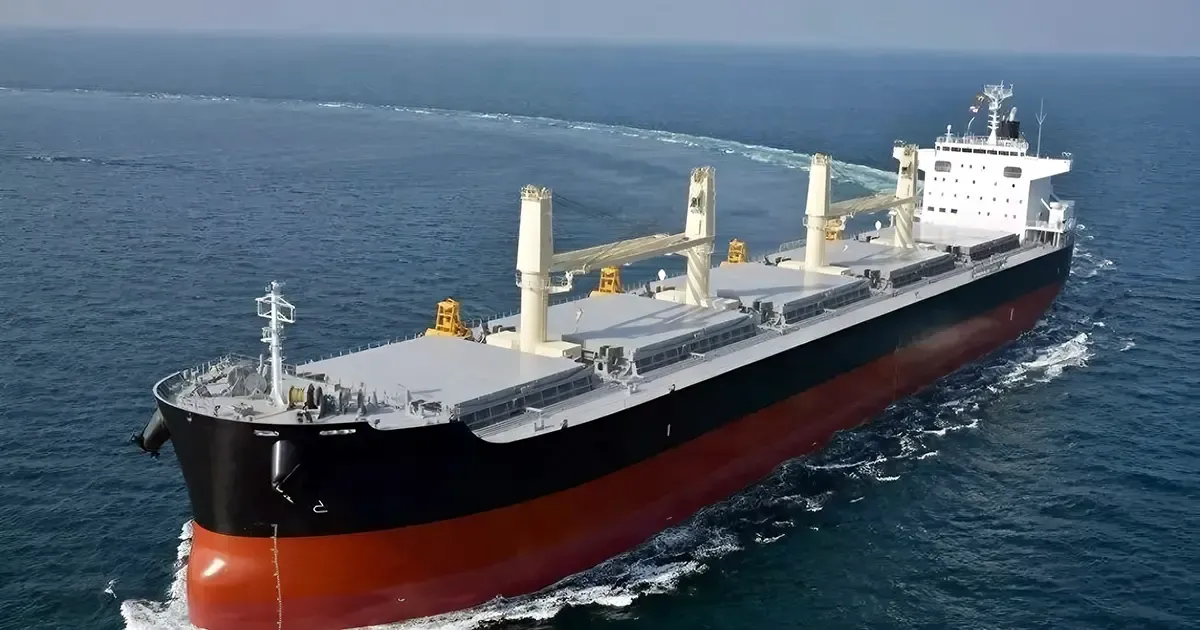
A-60 is the fire rating that ship designers, builders, and classification societies talk about most. It defines a bulkhead, deck, or enclosure that must stop flames and smoke for 60 minutes while keeping the unexposed side within safe temperature limits. The insulation behind that rating is what makes it work.
This guide explains what A-60 marine insulation is, how it works, and how thickness is selected for different shipboard locations. It is written for naval architects, marine engineers, shipyards, and procurement teams who need to specify fire-rated insulation that passes class approval.
What A-60 Means Under SOLAS
A-60 is a fire-resistance class defined by the International Maritime Organization (IMO) Safety of Life at Sea (SOLAS) Convention and tested under the IMO Fire Test Procedures (FTP) Code.
The letter "A" means the division is made of steel or equivalent material and is capable of preventing the passage of smoke and flame for the rated time. The number is the minutes of fire resistance:
| Class | Fire resistance | Insulation value | Typical use |
|---|---|---|---|
| A-60 | 60 minutes | Yes | Engine room boundaries, accommodation corridors, control stations, fuel-tank boundaries |
| A-30 | 30 minutes | Yes | Decks and bulkheads separating lower-risk spaces |
| A-15 | 15 minutes | Yes | Secondary partitions, galley boundaries |
| A-0 | 0 minutes | No | Non-insulated steel divisions that only need integrity |
For A-60, A-30, and A-15 divisions, the FTP Code requires that the average temperature rise on the unexposed side does not exceed 140 °C above the initial temperature, and any single point does not exceed 180 °C. That temperature control is the insulation's job.
How A-60 Insulation Works
An A-60 rated assembly works through three mechanisms that work together during a fire.
Integrity — stopping flame and smoke
The division must prevent flames and hot gases from passing through for the full 60 minutes. That depends on:
- Steel plating — usually 4.5 mm or thicker on steel ships, providing the primary barrier.
- Mineral wool or ceramic fibre insulation — fills the cavity and blocks heat transfer.
- Fire-resistant cladding — aluminium or galvanized steel sheets that protect the insulation and hold it in place.
- Seals and penetration systems — certified fire stops at joints, cable transits, pipe penetrations, and damper openings.
Without proper sealing at penetrations, even the best insulation layer will fail the integrity criterion.
Insulation — limiting temperature rise
The insulation layer slows heat transfer from the fire-exposed steel to the unexposed side. Mineral wool is the most common core material because it combines low thermal conductivity with a high melting point. Typical marine-grade rock wool has:
- Thermal conductivity around 0.035–0.040 W/m·K at room temperature
- Service temperature up to approximately 650–750 °C
- A1 non-combustible classification under EN 13501-1
- Melting point above 1000 °C
In a hydrocarbon fire or very high-temperature zone, ceramic fibre or a composite system may be used instead of, or in addition to, rock wool.
Structural stability — staying in place
The assembly must not collapse or displace during the fire. Stability comes from:
- Mechanical fixing — stainless-steel pins, washers, and support rings spaced according to the approved drawing.
- Steel framing — stiffeners and frames that resist deformation under thermal load.
- Density and compression — higher-density boards or blankets are used where vibration, impact, or airflow could displace the insulation.
Typical A-60 Construction
A standard A-60 bulkhead or deck on a merchant vessel usually consists of:
- Fire-exposed steel plate — 4.5 mm minimum on steel ships.
- Insulation layer — rock wool board or blanket, density 80–150 kg/m³, held by pins and clips.
- Vapour-barrier or facing — aluminium foil or glass tissue where moisture control is needed.
- Outer cladding — 0.5–1.0 mm aluminium or galvanized steel sheet, mechanically fixed.
The total thickness of the insulation depends on the fire rating, the location, the density of the wool, and the tested system. Shipyards do not design A-60 thickness from first principles for each project — they use systems that have already been type-approved by a classification society.
A-60 Thickness Guide by Ship Location
The table below shows typical thickness ranges used in approved marine insulation systems. These are indicative; the actual thickness must come from an approved system drawing for the specific vessel and class society.
| Location | Typical insulation | Density | Notes |
|---|---|---|---|
| A-60 deck | 50–60 mm rock wool board | 100–140 kg/m³ | Supports foot traffic and deck loads; often clad with steel or aluminium |
| A-60 bulkhead | 40–60 mm rock wool board/blanket | 80–120 kg/m³ | Single layer or staggered double layer for joints |
| Engine room boundary | 60–120 mm rock wool or composite | 120–180 kg/m³ | Higher heat load; may use ceramic fibre at hot spots |
| Fuel tank boundary | 80–150 mm rock wool or composite | 120–180 kg/m³ | Additional safety margin due to fuel risk |
| Ventilation duct through A-60 division | 30–50 mm rock wool wrap | 80–120 kg/m³ | Insulation extends 450 mm each side of the division; fire damper required |
| Pipe insulation (A-60 rated) | 40–60 mm rock wool section | 100–150 kg/m³ | With stainless-steel jacket; often used on exhaust and hot-water lines |
Decks
A-60 decks must carry personnel and sometimes equipment, so the insulation is usually a rigid rock wool board rather than a flexible blanket. Density is higher to resist compression, and the top surface is protected by steel or aluminium cladding.
Bulkheads
A-60 bulkheads separating accommodation from machinery spaces are often built with a single layer of rock wool board fixed to steel stiffeners. At joints between boards, a 50 mm minimum overlap is standard practice. Staggered double-layer systems improve joint performance and are common in high-risk boundaries.
Engine rooms
Engine rooms have the highest heat load and vibration. The boundary insulation is often 60–120 mm thick, sometimes in two layers, and may combine rock wool with ceramic fibre at exhaust casings or turbocharger areas. Steel support framing is heavier, and pins are spaced closer together than in accommodation areas.
Fuel tanks and hazardous boundaries
Where an A-60 division forms the boundary of a fuel tank or other high-risk space, the insulation thickness is usually at the upper end of the range. The density is also higher to improve structural stability under hydrocarbon fire conditions.
Ventilation ducts
When a ventilation duct passes through an A-60 division, the duct itself must be insulated for a length of at least 450 mm on each side of the division. A certified fire damper must also be fitted. This prevents the duct from becoming a chimney that carries fire and smoke between spaces.
Pipe and cable penetrations
Cable and pipe penetrations are among the most common failure points in fire tests. Each penetration must use a certified transit or sealing system:
- Cable transits — intumescent or ablative seals that expand under heat.
- Pipe penetrations — steel sleeves, mineral wool packing, and approved sealant.
- Large ducts — fire-rated collars, dampers, or insulated bulkhead penetrations.
Certification: IMO FTP Code and Class Societies
A-60 insulation cannot simply be bought "off the shelf" and installed. It must be part of a system that has been tested and approved.
IMO FTP Code
The IMO FTP Code, adopted by resolution MSC.307(88), defines how fire-resistance tests are carried out. The main parts relevant to A-60 insulation are:
- Part 1 — Non-combustibility test for insulation materials.
- Part 3 — Fire-resistance tests for A, B, and F class divisions, including the 60-minute standard fire test.
- Part 5 — Surface flammability and smoke-toxicity tests for interior finishes.
A standard A-60 test exposes the sample to the ISO 834 cellulosic time-temperature curve, which reaches approximately 945 °C at 60 minutes. The unexposed side is monitored for temperature rise, and the sample is checked for integrity.
Classification society type approval
After IMO FTP Code testing, marine insulation systems are submitted to class societies for type approval. Common approvals include:
- DNV — DNV-ST-A-053 and related marine rules
- Lloyd's Register (LR) — Marine & Offshore type approval
- Bureau Veritas (BV) — NR216 and related rules
- ABS — Rules for Materials and Welding
- CCS — China Classification Society guidelines
The type-approval certificate specifies the exact product, thickness, density, fixing method, and cladding. Any deviation from the approved drawing invalidates the rating.
A-60 vs H-120: Different Fire Curves
A-60 and H-120 are both fire-resistance ratings, but they are not interchangeable because they use different fire curves.
| Rating | Fire curve | Peak temperature | Typical application |
|---|---|---|---|
| A-60 | ISO 834 cellulosic | ~945 °C at 60 min | Ship accommodation, machinery spaces, cargo ships |
| H-120 | Hydrocarbon (HC) or UL 1709 | ~1100 °C within minutes | Offshore platforms, FPSOs, LNG carriers, hydrocarbon-risk areas |
The hydrocarbon curve heats up much faster than the cellulosic curve. Materials that pass A-60 may not pass H-120 without additional thickness, ceramic-fibre layers, or intumescent coatings. Offshore projects usually specify H-120 or H-60 for hydrocarbon-exposed areas, while merchant ships use A-60.
For more detail on marine fire standards, see our guide to marine fire insulation materials and standards.
Material Selection: Rock Wool, Ceramic Fibre, or Composite?
For most A-60 applications, marine-grade rock wool is the default. It is cost-effective, widely approved, and easy to install.
Ceramic fibre is used where:
- Continuous surface temperatures exceed 650–750 °C
- Hydrocarbon fire ratings such as H-120 are required
- The insulation must be thin but high-performing
Composite systems use layers of rock wool and ceramic fibre to balance cost and performance.
Rosewool supplies marine-grade rock wool blanket and rock wool board for A-60 divisions, as well as ceramic-fibre products for high-temperature and offshore applications. See our marine & offshore application page for an overview of fire-rated insulation solutions for ships and platforms. All materials are supported by ISO 9001 quality management and tested to marine-market standards.
Common Specification Mistakes
- ** Designing from first principles instead of using an approved system.** A-60 thickness must match a tested and class-approved system, not a general heat-loss calculation.
- Ignoring penetrations. Even perfect bulkhead insulation fails if cable or pipe transits are not certified.
- Mixing A-60 and H-120 requirements. Offshore hydrocarbon zones need the hydrocarbon curve, not the cellulosic A-60 curve.
- Using non-marine-grade products. Products sold for building HVAC often lack the density, facing, and certification needed for shipboard fire divisions.
- Omitting the vapour barrier or cladding. The insulation must be protected from mechanical damage, oil, and moisture for the life of the vessel.
A-60 is a fire-resistance rating for an assembly, not a reaction-to-fire class for a material. Where a project also needs the European product classification, see our Euroclass reaction-to-fire classification guide.
Bottom Line
A-60 marine insulation is a system, not a single product. The rating depends on the steel structure, the mineral-wool or ceramic-fibre layer, the cladding, and the sealing of every joint and penetration. Thickness varies by location: around 40–60 mm for accommodation bulkheads and decks, 60–120 mm for engine-room boundaries, and more for high-risk fuel-tank divisions.
Always specify from approved system drawings and class-society type-approval certificates.
Fire-rated divisions are only part of a vessel's insulation schedule. Engine-room pipework, accommodation thermal and acoustic linings, chilled HVAC ducts, cold rooms and LNG cargo systems are sized from heat-loss and condensation calculations rather than fire-test data — our marine insulation thermal and acoustic specifications guide works through those calculations and the thickness tables that follow from them. At Rosewool we supply A-60-grade rock wool board and blanket for marine and offshore projects, with technical support for density, thickness, and certification matching. Contact our team for project-specific recommendations.
Engine-room-specific A-60 boundary build-ups and material choices are covered in our ship engine room & machinery space insulation guide.
For a deeper dive into forms, temperature ratings, and application guides, see our ceramic fiber insulation hub.
Frequently asked
What does A-60 mean in marine insulation? +
A-60 is a SOLAS fire-resistance rating. It means a bulkhead, deck, or enclosure can prevent the passage of flame and smoke for 60 minutes, and the average temperature rise on the unexposed side does not exceed 140 °C with no single point above 180 °C.
What material is used for A-60 insulation? +
A-60 insulation is most commonly made from marine-grade rock wool (mineral wool) board or blanket. In high-temperature or hydrocarbon-fire areas, ceramic fibre or composite rock-wool/ceramic-fibre systems may be used.
How thick is A-60 marine insulation? +
Typical A-60 thickness ranges from 40–60 mm for accommodation bulkheads and decks, 60–120 mm for engine-room boundaries, and 80–150 mm for high-risk fuel-tank divisions. Exact thickness must come from a class-approved system drawing.
What is the difference between A-60 and H-120? +
A-60 is tested against the ISO 834 cellulosic fire curve, reaching about 945 °C at 60 minutes. H-120 is tested against the hydrocarbon fire curve, which heats much faster and reaches about 1100 °C. H-120 is used for offshore platforms and hydrocarbon-risk areas.
What certification does A-60 insulation need? +
A-60 insulation systems must be tested under the IMO FTP Code and approved by a recognised classification society such as DNV, Lloyd's Register, Bureau Veritas, ABS, or CCS. The type-approval certificate specifies the exact product, thickness, density, and installation method.
Can rock wool be used for A-60 divisions? +
Yes. Marine-grade rock wool board or blanket is the standard core insulation for A-60 divisions on most merchant vessels, provided it is part of a class-approved system with the correct density, thickness, cladding, and sealing details.
Request a quote
Interested in our insulation solutions? Send us your requirements and our team responds within one business day.