
Ship Engine Room & Machinery Space Insulation: IMO SOLAS A-60 Guide
How A-60 applies to ship engine rooms and machinery spaces: the 140/180 °C limits, approved insulation materials, type-approval, and specification pitfalls.
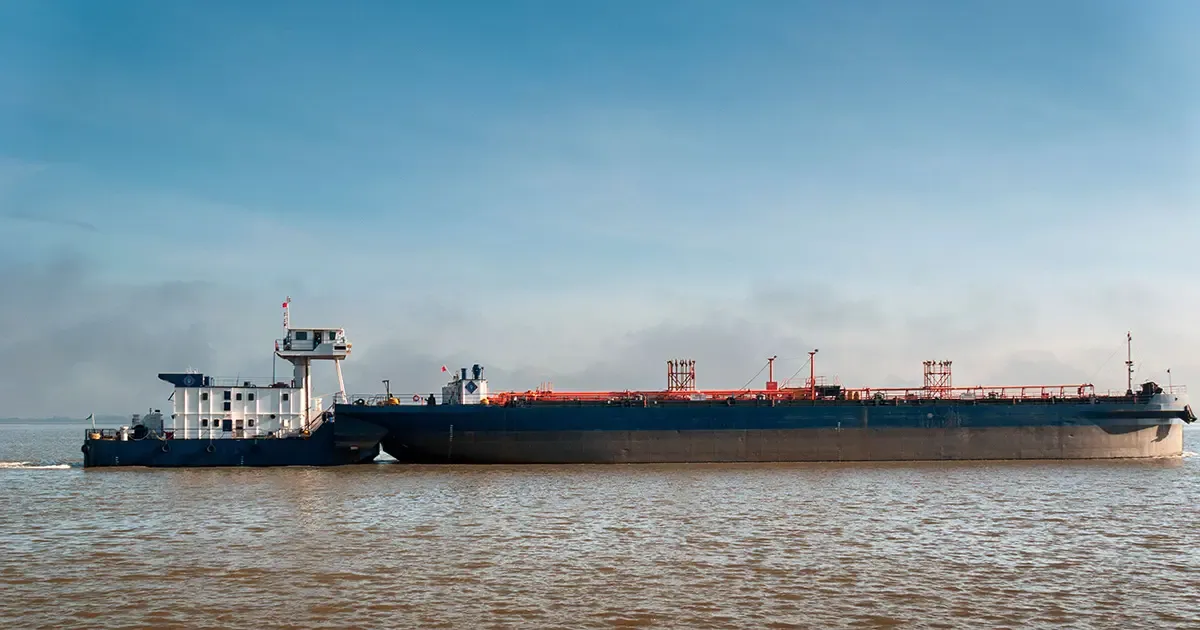
Engine rooms and machinery spaces are the highest fire-risk, highest heat-dissipation zones on any vessel. The boundaries that separate them from accommodation, control stations, and other spaces must hold back fire and heat for a defined period, and for the most demanding boundaries that period is 60 minutes under the A-60 standard. This guide explains what A-60 actually requires for ship engine rooms and machinery spaces, which insulation materials are used and why, and how a compliant system is specified and built.
What A-60 Means for a Machinery Space
Under SOLAS Chapter II-2 Regulation 3.3, a Class A division is a division formed by steel or equivalent material, suitably stiffened, and insulated with approved non-combustible materials so that it can withstand the standard fire test for 60 minutes. For an A-60 division the back (unexposed) face must stay within two limits for the full 60 minutes:
- the average temperature rise must not exceed 140 °C, and
- the temperature rise at any single point — including joints and seams — must not exceed 180 °C.
At the same time the division must prevent the passage of flame and smoke. The key point that specifiers miss is that A-60 is a property of a complete division (a construction), not of any single slab. A mineral wool board is not "an A-60 material"; it becomes part of an A-60 system only when it is incorporated into a type-approved sample construction with defined thickness, density, stiffener coverage, joint arrangement, fixings, and facing. For the full shipboard fire-division system, see our marine fire insulation standards guide.
The Fire It Must Survive — the Standard Time-Temperature Curve
The test follows the IMO standard fire curve, where the furnace temperature rises along the relationship T = 345·log10(8t+1) + 20 °C. The control points are demanding:
| Time | Furnace temperature |
|---|---|
| 5 min | 576 °C |
| 10 min | 679 °C |
| 15 min | 738 °C |
| 30 min | 841 °C |
| 60 min | 945 °C |
This is the cellulose standard fire used for ship structures — not a hydrocarbon jet-fire curve (that is a separate offshore consideration, covered in our offshore marine insulation guide). The hardest part is the first five minutes, when the furnace jumps to 576 °C; the insulation must keep the unexposed face under the 140/180 °C limits across the entire 60 minutes.
Material Options for Engine Room & Machinery Space Boundaries
The table below summarises the materials typically used inside machinery-space boundaries and process systems. Temperature and conductivity figures are continuous-service values; the role in an A-60 system depends on type-approval, not on the material alone.
| Material | Continuous service temp | Thermal conductivity | Role in A-60 / machinery space |
|---|---|---|---|
| Mineral (stone) wool | ≤ 650 °C (melt point > 1000 °C) | ~0.034–0.040 W/(m·K) | Baseline core of most A-60 bulkheads/decks; high-density boards 100–130 kg/m³ |
| Ceramic fiber | 1100–1430 °C | ~0.06–0.12 W/(m·K) @ 600 °C | Exhaust manifolds, mufflers, high-temp flues, penetration seals |
| Flexible aerogel blanket | ~650 °C | 0.018–0.021 W/(m·K) | Space-constrained pipes/valves; thin build-up |
| Microporous insulation | up to 1000–1050 °C | 0.020–0.030 W/(m·K) @ 800 °C | Localised high-temp nodes, LNG fuel-line guards |
| Glass wool | −120 to 400 °C | 0.032–0.038 W/(m·K) | Acoustic lining, A-0 ducts, accommodation — not a standalone A-60 fire layer |
Mineral wool is the workhorse: it is the approved core of the large majority of A-60 bulkheads and decks, it is naturally non-combustible, marine grades are hydrophobic, and it combines thermal and acoustic performance. Our rock wool blanket product page covers typical density and board formats.
Ceramic fiber earns its place where temperatures exceed what mineral wool can carry continuously — exhaust runs, boiler uptakes, and turbocharger casings. It must be faced with foil or cloth to control fibre release, and its installation is a recognised health-and-safety activity that requires proper controls.
Flexible aerogel blankets deliver the same insulation in a fraction of the thickness, which is valuable in crowded machinery spaces, but they must be combined with an inorganic reinforcement to pass non-combustibility, and the whole composite must be type-approved. Our aerogel insulation overview explains where thin-build solutions make sense.
Not Just Class A — Surfaces Above 220 °C and Oil-Wetted Risks
A-60 is only part of the story. SOLAS II-2/5.2.1.1 requires that surfaces exceeding 220 °C which may be contacted by leaking flammable liquid must be effectively insulated with non-combustible material. If that insulation is oil-absorbent, or if oil penetration occurs, the surface must be covered with an impervious thin steel plate or equivalent. This is a functional oil-fire-prevention rule, separate from the A-60 division requirement, and it applies to steam lines, hot-oil lines, exhausts, mufflers, boilers, and turbochargers.
For exhaust and flue runs, the usual layering is a high-temperature inner layer (often ceramic fiber) plus a foil or metal facing. Pipe penetrations through A-60 boundaries are not solved by insulating the pipe on both sides — each penetration needs its own approved penetration seal, with the component projecting 500 ± 50 mm beyond the division on both the fire and unexposed sides per the IMO fire-test recommendation A.754(18).
How an Approved A-60 System Is Built
A compliant A-60 boundary is a certified system, not a pile of slabs. The sequence matters:
- Type-approval. The whole assembly — core material, thickness, density, stiffener coverage, joints, pins, washers, and facing — is tested as a sample construction and certified by a recognised classification society or flag-state authority. The certificate locks the thickness, density, and fixing spacing. A significant change (a 5 mm thinner layer, a different pin, a different facing) can invalidate the certificate and must be re-approved.
- Fixing. Insulation is held by welded studs or pins, typically 6–9 per m², with double-layer staggered joints and high-temperature aluminum foil tape at seams to avoid thermal bridges and flame paths.
- Conformity marks. A Wheelmark (MED) is the EU/EEA market conformity mark; whether it applies depends on the flag state. It is not a universal SOLAS certificate, so confirm per project.
- Material vs division tests. Non-combustibility is proven under FTP Code Part 1 (ISO 1182, tested around 750 °C). Smoke and toxicity are Part 2, A/B/F divisions are Part 3, and surface/low-flame-spread materials are Part 5. A material certificate alone does not constitute an A-60 division approval.
For detailed A-60 thickness build-ups by boundary type, our A-60 marine insulation thickness guide works through the numbers.
Choosing by Location Inside the Machinery Space
Different surfaces have different goals, and mixing them up is a common error:
- A-60 bulkheads and decks: an approved mineral-wool or ceramic-fiber A-60 system, matching the certificate exactly.
- Main and auxiliary engine casings: removable non-combustible insulation plus the manufacturer casing; usually not an A-60 target, but must allow maintenance access.
- Boiler, flue, and exhaust: high-temperature refractory fiber or composite plus a metal casing that can be removed for inspection.
- Steam and hot-oil lines: mineral wool as the primary layer; aerogel where space is constrained.
- Fuel-oil lines: protect against touch and oil penetration per the 220 °C rule; add a thin-steel wrap if the insulation is absorbent.
- LNG and low-temperature lines: a dedicated low-temperature design — never substituted with an A-60 or ambient-temperature material.
- Pump rooms: treated under the relevant cargo-code fire table, with ventilation, hazard zoning, and drainage designed in.
Common Specification Mistakes to Avoid
- Calling a slab "A-60 material." Correct wording: a non-combustible material incorporated into an approved A-60 division.
- Treating ISO 834, EN 1364-1, or ASTM E119 reports as A-60 approval. Those are building-fire standards; an A-60 division needs FTP Code Part 3 / A.754(18) evidence.
- Using "classification temperature" as the continuous service temperature for ceramic fiber. Always ask for the definition and the actual continuous rating.
- Insulating the pipe but not the support shoe, valve, or penetration end. Those discontinuities are where systems fail.
- Substituting a thinner aerogel purely for space without re-verifying the whole assembly against the approved construction.
Specifying insulation for a ship engine room or machinery space is a loop that closes only when the regulation, fire-zone plan, type-approval, nominated product, and the classification society's project review all agree. Start from the boundary's required class, choose a material that fits the approved construction, and verify the certificate covers the exact build before anything is installed.
Frequently asked
What temperature rise is allowed for an A-60 division? +
Over the 60-minute standard fire test the unexposed face must not rise more than 140 °C on average, and no single point — including joints — may rise more than 180 °C. The division must also block flame and smoke throughout.
Is rock wool an A-60-rated material? +
Mineral (stone) wool is the approved core of most A-60 bulkheads and decks. On its own it is a non-combustible material proven under FTP Code Part 1; it becomes part of an A-60 division only inside a type-approved construction with defined thickness, density, and fixings.
What is the difference between A-60 and A-0? +
Both resist fire for 60 minutes, but A-0 requires only integrity and non-combustibility, with no limit on back-face temperature rise. A-60 adds the 140 °C average / 180 °C point insulation limit, which is why A-60 is used where heat transfer to the adjacent space must be controlled.
Can aerogel replace mineral wool for A-60? +
Only as part of an approved composite. A flexible aerogel blanket must be combined with an inorganic reinforcement to pass non-combustibility, and the full assembly must carry type-approval — it cannot be substituted piecemeal for a certified mineral-wool system.
What does the 220 °C rule mean for machinery spaces? +
SOLAS II-2/5.2.1.1 requires that surfaces above 220 °C which could be contacted by leaking flammable liquid are effectively insulated with non-combustible material, and covered with an impervious thin steel plate or equivalent if the insulation is oil-absorbent. It is a separate oil-fire-prevention rule from A-60.
Does every project need its own type approval? +
The insulation system needs a valid type-approval that matches the actual construction — thickness, density, stiffeners, joints, fixings, and facing. The classification society then confirms that approval against the specific vessel's plans during project review.
Request a quote
Interested in our insulation solutions? Send us your requirements and our team responds within one business day.