
Mineral Wool vs Spray Foam Insulation: Fire, Heat, Sound & Cost
Mineral wool vs spray polyurethane foam compared: fire classification, high-temperature service, R-value per inch, sound, health and cost, with a decision framework for industrial buyers.
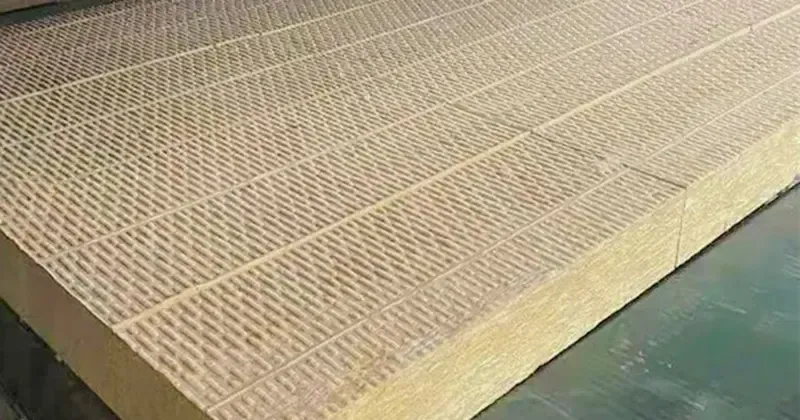
Quick answer: Mineral wool is the stronger baseline for non-combustibility, high-temperature service, fire-rated assemblies, acoustic partitions, and maintainable industrial insulation. Spray polyurethane foam (SPF) can combine insulation, air sealing, and — in the case of closed-cell foam — vapor control in complex building cavities. For pipes, vessels, boilers, furnaces, flues, and high-heat equipment, select a documented rock wool industrial system rather than spray foam.
This guide compares mineral wool — which includes rock wool (stone wool) and glass wool — with spray-applied polyurethane foam and spray polyisocyanurate (polyiso/PIR) foam. It is written for builders, specifiers, contractors, and industrial buyers who need comparable data, application boundaries, and compliant sourcing information.
Important: this article is for preliminary material selection. It does not replace project-specific engineering, energy modeling, fire-risk assessment, industrial hygiene review, or authority having jurisdiction (AHJ) approval.
Why "Mineral Wool vs Spray Foam" Is Not a Winner-Take-All Comparison
"Mineral wool" covers two distinct product families:
- Rock wool / stone wool: usually higher density, higher temperature capability, and stronger fire and industrial performance.
- Glass wool / fiberglass: generally lighter, easier to cut, and cost-effective for dry building cavities and acoustic applications — see our glass wool insulation guide.
"Spray foam" also covers different systems:
- Open-cell spray polyurethane foam (ocSPF): softer, more vapor-open, commonly used in enclosed building cavities.
- Closed-cell spray polyurethane foam (ccSPF): rigid, low-permeance, higher R-value per inch, and often used as an air and vapor control layer.
- Spray polyisocyanurate (polyiso/PIR) foam: a separate spray-applied system that should not inherit the properties of factory-made polyiso boards.
A product's thermal conductivity, R-value, fire classification, service temperature, density, permeability, and sound performance all depend on formulation, thickness, substrate, facing, and test method. A generic "spray foam" number is not enough for specification.
Mineral Wool vs Spray Foam: Head-to-Head Comparison
| Property | Rock wool | Glass wool | Open-cell SPF | Closed-cell SPF / PU | Spray polyiso |
|---|---|---|---|---|---|
| Typical thermal conductivity λ | ~0.036–0.045 W/(m·K) for many building products | ~0.033–0.040 W/(m·K) for selected building products | Not always declared as a single λ | See aged R-value and product test report | See product technical data sheet |
| R-value per inch | ~R-3.9–R-4.8, product-dependent | Product-dependent; do not borrow rock wool values | Open-cell products commonly report about R-4.0 per inch | Aged closed-cell products commonly report about R-7.0 per inch | Polyiso boards commonly report about R-6.0–6.5 per inch; spray systems vary |
| Continuous service temperature | Building-grade products are not rated for industrial service; some industrial wired mats declare 640 °C, and selected product lines recommend up to 650 °C | Generally below rock wool; check the Declaration of Performance | Not a high-temperature insulation | Not a high-temperature insulation | Far below rock wool; check system limits |
| Reaction to fire | Often Euroclass A1 or A2-s1,d0 | Often non-combustible or A1/A2, product-dependent | Organic foam; fire class depends on the tested assembly | Organic foam; fire class depends on the tested assembly | Must be evaluated as a separate system |
| ASTM E84 interpretation | Material and assembly dependent | Material and assembly dependent | A result such as FS 15 / SD 200 applies only to the tested construction | A result such as FS 12 / Class I applies only to the tested construction | Board and spray results are not interchangeable |
| Density | ~40–220 kg/m³ across products | ~16–40 kg/m³ for common building forms | Low-density foam | ~30–60 kg/m³, formulation-dependent | Formulation-dependent |
| Water behavior | Many rock wool products are hydrophobic but vapor-permeable; not for continuous immersion | Manages incidental moisture but is not a waterproofing layer | Absorbs more readily than closed-cell foam | Low liquid uptake and low permeance in representative products | Depends on closed-cell structure and formulation |
| Airtightness | Material alone does not create an air barrier | Material alone does not create an air barrier | Can act as an air barrier at tested thicknesses | Can act as an air barrier at tested thicknesses | Spray system must be tested; board is not automatically an air barrier |
| Acoustics | Strong sound-absorbing and partition-fill option | Strong sound-absorbing and partition-fill option | Can reduce airborne transmission in some cavities | Not principally an acoustic absorber | Not principally an acoustic absorber |
| Typical installation | Cutting, fitting, supports, jacketing | Cutting, fitting, supports, jacketing | Trained two-component spray application | Trained two-component spray application | Trained spray-applied system |
| Primary strengths | Fire, heat, durability, inspectability | Lightweight sound and thermal performance | Air sealing and cavity conformity | High R per inch, air and vapor control | Specific roof and insulation systems |
| Primary limitations | Lower R per inch; needs an air barrier | Lower temperature and load capability | Moisture sensitivity; air sealing still needs QA | Rigid; hidden defects can be hard to detect | Must not be treated as a generic PIR board |
What the Table Does — and Does Not — Prove
The table is a specification-screening tool, not a product guarantee.
- Do not compare an industrial rock wool mat directly with a 50 mm glass wool partition batt and call it an "industry average."
- Do not apply an ASTM E84 result for a 4-inch SPF sample to a different thickness, substrate, or coating system.
- Do not use R-value per inch as the only criterion for high-temperature pipe or furnace insulation.
- Always request the current Technical Data Sheet (TDS), Safety Data Sheet (SDS), Declaration of Performance (DoP), and any applicable third-party certification or approval reports.
Thermal Performance: Spray Foam Wins on R-Value per Inch, Not Automatically on System Performance
Closed-cell SPF often delivers a higher R-value per inch than mineral wool. That can be valuable in shallow cavities, metal panels, tight retrofit details, and projects where space is constrained.
Mineral wool usually requires more thickness for the same nominal R-value. Its advantages are different:
- vapor permeability in suitable grades;
- compatibility with independent air and weather control layers;
- inspectability and replaceability;
- non-combustible mineral fiber behavior in qualifying products;
- dimensional stability and acoustic performance in the correct system.
Design rule: compare whole-wall or whole-roof assemblies — including thermal bridging, air leakage, moisture, fire protection, and constructability — not just R-value per inch. The same logic applies to advanced materials: our aerogel vs fiberglass comparison shows how R-value per inch and installed cost can point in opposite directions.
High-Temperature Pipes, Equipment, and Furnaces: Rock Wool Is the Industrial Baseline
For high-temperature insulation, the first question is not "which material has the best R-value?" but:
What is the maximum service temperature, what documentation supports it, and which industrial insulation standard applies?
| Application | Typical specification direction | Why |
|---|---|---|
| Steam, thermal-oil, and high-temperature process piping | Rock wool pipe sections, mats, or rigid boards with appropriate jacket and supports | Documented high-temperature grades; maintainable industrial system |
| Boilers, pressure vessels, and tanks | High-density rock wool with metal jacketing, expansion provisions, and CUI review | Heat resistance, load and compaction behavior, inspection access |
| Furnace walls, kilns, ducts, and flues | Project-specific rock wool or other high-temperature system | SPF and glass wool are generally not suitable substitutes |
| Mechanical rooms and equipment enclosures | Rock wool or glass wool, selected by temperature and acoustic target | Sound absorption plus controllable fire performance |
| Below-grade walls and unvented roofs | Closed-cell SPF may be considered, but only with full moisture and air-barrier design | Water management and vapor direction remain separate requirements |
Representative technical documentation shows why the two families serve different temperature ranges: some industrial rock wool product lines declare recommended service temperatures up to 650 °C, and certain wired-mat products declare maximum service temperatures of 640 °C with Euroclass A1 classification. These values apply to the specific industrial products tested — they are not a blanket claim for every rock wool, glass wool, or mineral wool item. Spray foams, by contrast, are organic polymer systems whose continuous service temperatures sit far below these levels, which is why they are not specified for steam, thermal-oil, furnace, or flue applications.
For high-temperature projects, request:
- operating and excursion temperatures;
- EN 14303 / EN 14706 documentation where applicable;
- product λ at the relevant mean temperatures;
- jacket, support, and expansion details;
- corrosion-under-insulation (CUI) assessment;
- fire and access/inspection requirements.
For grade selection by density, thickness, and temperature, see our rock wool insulation guide.
Fire Resistance: Non-Combustible Mineral Wool vs Fire-Tested Spray Foam
Euroclass A1 or A2 and a good ASTM E84 result are not interchangeable.
- EN 13501-1 is a classification system for reaction to fire. Euroclass A1 indicates non-combustible performance for the classified product or system.
- ASTM E84 evaluates comparative surface-burning behavior under a specific test method. A "Class I" or low flame-spread result does not turn an organic SPF or polyiso product into a non-combustible material.
Mineral wool is generally the more conservative option where:
- building regulations require non-combustible materials;
- facade and cladding fire strategy demands it;
- fire-rated partitions, shafts, or penetrations are involved;
- industrial equipment operates at high temperature;
- reduced smoke and flame spread is a priority.
However, "rock wool is fire resistant" does not automatically mean a rock wool installation meets every fire assembly requirement. Penetration seals, cavity barriers, joints, fixings, linings, and coverings must all be part of a tested and approved system.
Moisture, Vapor, and Airtightness
Closed-Cell Spray Foam
Closed-cell SPF can serve as both an insulation layer and — when tested and installed correctly — an air and vapor control layer. That can reduce joints and air-leakage paths in complex cavities.
But low permeance is not a license to ignore water:
- bulk water can still enter through cracks, penetrations, or failed interfaces;
- improper vapor direction can trap moisture;
- concealed adhesion loss, shrinkage, or incomplete cure may be difficult to detect.
Mineral Wool
Mineral wool is generally more vapor-open. It works best when the project uses a deliberately located weather-resistive barrier (WRB), air barrier, vapor control layer, and drainage plane.
Rock wool can be hydrophobic, but that does not mean it is waterproof. Glass wool should not be selected for wet or high-temperature industrial conditions merely because it is inexpensive.
Decision rule:
- Need one-step cavity air sealing in a controlled spray-foam assembly? SPF may be appropriate.
- Need fire performance, acoustic performance, drying capacity, and serviceable industrial insulation? Mineral wool is generally the stronger baseline.
Soundproofing: Mineral Wool Is the More Predictable Partition Material
Mineral wool is widely used in walls, floors, ceilings, and mechanical spaces because its fibrous structure converts sound energy into heat through friction.
But two ratings must not be confused:
- NRC (Noise Reduction Coefficient): a material's sound-absorption performance.
- STC (Sound Transmission Class): the sound-isolation performance of a complete wall, floor, or ceiling assembly.
A glass wool product may report NRC ≥ 0.85 in a test, while a complete wall's STC depends on:
- gypsum board layers;
- stud spacing and framing type;
- resilient channels or isolation clips;
- sealants and perimeter details;
- decoupling and mass.
Open-cell SPF can reduce air leakage and provide some absorption, but spray foam alone is not a complete soundproofing system.
Health, Safety, and Environmental Considerations
Is spray foam toxic or safe?
The most significant spray-foam risks occur during installation. SPF is created by mixing reactive components, commonly including polymeric MDI (pMDI) on the A-side and a resin blend on the B-side.
NIOSH field research on roof spray polyurethane foam found that more than half of personal breathing-zone MDI samples exceeded NIOSH's recommended exposure limit of 50 µg/m³. Workers reported nasal congestion, eye irritation, cough, chest tightness, headache, and shortness of breath.
A professional SPF installation should include:
- exclusion of unprotected occupants and non-essential workers;
- isolation of the work area;
- active ventilation and pressure control where appropriate;
- chemical-resistant gloves, coveralls, eye/face protection, and task-appropriate respiratory protection;
- product-specific monitoring, decontamination, and re-entry procedures.
The U.S. EPA states that safe re-entry time depends on product formulation and other factors. There is no universally safe "24-hour rule" for every SPF job. Re-entry should follow the manufacturer's instructions, the SDS, curing status, ventilation, cleaning, and professional assessment.
Fully cured, undisturbed SPF is generally considered relatively inert. That does not eliminate off-gassing or odor concerns, risks from uncured or poorly mixed foam, exposure during cutting, grinding, hot work, renovation, or demolition, or the unknowns around additives, catalysts, surfactants, flame retardants, and residual chemicals.
Is mineral wool safe?
Modern mineral wool is often described as bio-soluble, and many products are asbestos-free. Bio-solubility relates to how certain fibers behave in physiological fluids; it does not mean zero installation risk.
Typical handling controls include:
- a properly fitted particulate respirator selected through a workplace risk assessment;
- gloves, long sleeves, and eye protection;
- cutting in well-ventilated areas;
- containment of loose fibers;
- cleaning methods that do not spread dust into occupied spaces or HVAC systems.
People with asthma, respiratory sensitivity, or skin conditions should seek occupational-health advice before handling mineral wool.
Blowing agents and flame retardants
Some modern closed-cell SPF systems use HFO or water-blown formulations to reduce the climate impact associated with older high-GWP HFC blowing agents. "Low-GWP" or "HFO-blown" does not automatically mean zero environmental impact. Flame retardants such as TCPP may appear in certain SPF formulations; their presence, amount, emissions, and toxicological profile vary by product.
Cost Comparison: Mineral Wool Is Usually Lower Installed, but Must Be Standardized
| Material/system | Published U.S. budget range | What the range typically includes |
|---|---|---|
| Mineral wool | ~USD 0.60–1.50/ft² | Material and basic installation; does not automatically include an air barrier, fire lining, or industrial jacketing |
| Open-cell SPF | ~USD 1.00–2.50/ft² | Mixed project, thickness, and regional installation data |
| Closed-cell SPF | ~USD 2.00–5.00/ft² | Mixed project, thickness, and regional installation data |
These are budget anchoring ranges drawn from public U.S. contractor cost surveys, not fixed prices. Published consumer and contractor data may mix board feet and square feet, different foam thicknesses, attic, wall, and industrial work, old insulation removal, fire and ignition barriers, and travel, access, and scaffolding.
A valid cost comparison should normalize:
- insulated area;
- installed thickness;
- target R-value or U-value;
- air-barrier scope;
- vapor-control scope;
- fire protection;
- removal and disposal;
- access, height, and downtime;
- warranty and inspection requirements.
For a deeper worked example of why material price alone can mislead, see our aerogel insulation cost analysis.
Lifecycle and Maintainability
Mineral wool generally allows easier local inspection and replacement. Industrial rock wool systems can be opened, checked for compression, CUI, and jacket damage, then reinstalled with proper supports.
Spray foam creates a continuous layer, which can reduce air leakage but may hide adhesion loss, shrinkage or curing problems, trapped moisture, and incomplete fill behind obstructions. Repair may require cutting, scraping, and reapplying multiple control layers. That does not make SPF unsuitable; it makes quality control, documentation, and repairability part of the specification.
Decision Framework: Choose by Control Layer, Not Brand
| Project requirement | Better starting point | Condition |
|---|---|---|
| Non-combustible material / Euroclass A1 or A2 | Mineral wool | Confirm product DoP and national acceptance |
| Pipe, boiler, furnace, or flue above normal building temperatures | Rock wool industrial system | Verify service temperature and system approval |
| Fire-rated partition or penetration | Mineral wool-based tested system | The mineral wool alone does not certify the assembly |
| Irregular cavity, air sealing, and shallow space | SPF | Only with qualified installation and compliance review |
| Below-grade or high-humidity building envelope | Closed-cell SPF may be suitable | Must evaluate water source, drainage, and vapor direction |
| Acoustic partition or mechanical room | Rock wool or glass wool | Select by NRC, STC, density, and assembly |
| Low first cost in dry, standard construction | Glass wool or rock wool | Add air-barrier and installation-quality costs |
| Industrial inspection and replacement | Rock wool | Use appropriate supports, jacket, and CUI protection |
Can you combine mineral wool and spray foam?
Yes, but only as a designed assembly. "Flash and batt," hybrid roof systems, and combined fire and air-sealing details require evaluation of vapor drive and condensation risk, thermal bridging, spray-foam thickness and ignition barriers, compatibility of substrates and sealants, and local code acceptance. Do not assume that combining two insulation types automatically produces the sum of their benefits. If you are shortlisting rigid alternatives for high-temperature zones, our insulation board types and selection guide compares mineral, ceramic, calcium silicate, and nano-porous boards.
Specification Checklist for Industrial Buyers
Use this checklist when requesting a high-temperature mineral wool quotation:
- Operating temperature, peak temperature, and temperature cycles
- Pipe diameter, equipment geometry, and surface area
- Target thermal conductivity at the relevant mean temperature
- Required rock wool grade, density, and product standard
- EN 14303 / EN 14706 and EN 13501-1 documentation
- Jacket, cladding, support, and expansion requirements
- Corrosion-under-insulation (CUI) risk assessment
- Access, inspection, and replacement plan
- Fire-rating or penetration-seal requirements
- Project location and delivery schedule
Final Recommendation
Choose spray foam when the project needs a high-performance air barrier, high R-value per inch, or an uninterrupted seal in a complex building cavity — and when the installer can demonstrate code compliance, safety controls, and quality assurance.
Choose mineral wool when the project needs fire performance, sound control, vapor-permeable construction, or an inspectable and serviceable thermal system. For high-temperature pipes, vessels, boilers, furnaces, flues, and industrial equipment, choose a documented rock wool system; glass wool and spray foam should not be treated as automatic substitutes.
Need rock wool or glass wool for high-temperature piping, industrial equipment, fire-rated assemblies, or acoustic projects? Send your temperature range, drawings, area, target specification, and required certificates. Our technical team can help shortlist mineral wool grades, densities, facings, and support and jacketing options — and if you are comparing across material families, start with our rock wool and glass wool guides.
Frequently asked
Is mineral wool better than spray foam insulation? +
Mineral wool is generally better for fire resistance, high-temperature service, sound control, and maintainable industrial insulation. Spray foam can be better where a continuous air barrier, high R-value per inch, or complex-cavity conformity is the priority. Which is better depends on the control layers and the project specification, not on either material in isolation.
Which is cheaper: mineral wool or spray foam? +
Published U.S. contractor cost surveys often place mineral wool around USD 0.60-1.50 per square foot installed, open-cell SPF around USD 1.00-2.50, and closed-cell SPF around USD 2.00-5.00. These are mixed project ranges, not like-for-like quotations. Obtain a local quote based on thickness, area, R-value target, removal, air sealing, fire protection, and finishing.
Is spray foam toxic? +
During installation, reactive chemicals including MDI can cause skin, eye, and respiratory irritation and may cause sensitization or asthma. The U.S. EPA recommends professional installation, work-area isolation, ventilation, PPE, and a product-specific re-entry process. Fully cured, undisturbed foam is generally considered relatively inert, but abnormal odor, cutting, hot work, or renovation requires assessment.
Is mineral wool safe? +
Bio-soluble mineral wool is generally considered safer than older durability fiber types, and quality products are asbestos-free, but installers can still experience mechanical irritation from fibers and dust. Wear appropriate respiratory, hand, eye, and skin protection while cutting and handling, and work in ventilated areas.
Can spray foam be used for high-temperature pipes and furnaces? +
Generally no. Spray polyurethane foam and spray polyiso are organic polymer systems whose continuous service temperatures sit far below industrial rock wool limits - selected rock wool product lines declare 650 °C and certain wired mats declare 640 °C with Euroclass A1. Do not select spray foam for furnaces, high-temperature flues, boilers, or hot process piping.
Which insulation is better for soundproofing? +
Mineral wool is usually the more predictable option for sound-absorbing fills and acoustic partitions because its fibrous structure absorbs sound energy. However, STC depends on the complete wall or floor assembly - board layers, framing, resilient channels, and sealants. Compare tested NRC values with tested STC assemblies, not with each other.
Does mineral wool need a vapor barrier? +
Sometimes. Vapor control depends on climate, assembly, substrate, and indoor humidity. Mineral wool itself is often vapor-open, so a separate vapor control layer may be required and should be positioned according to the project's dew-point and drying strategy. Many rock wool products are hydrophobic, but hydrophobic is not the same as waterproof.
Is spray foam a vapor barrier? +
Closed-cell SPF can act as a vapor retarder or barrier in certain tested products and thicknesses, and can also serve as an air barrier. Open-cell SPF is more vapor-permeable. Always use the tested permeance value from the product data sheet rather than a generic material claim.
How long after spray foam application can I re-enter? +
There is no universal time. The U.S. EPA says safe re-entry depends on product formulation and other curing factors. Follow the manufacturer's instructions and safety data sheet, verify curing, ventilate, clean, and obtain professional confirmation when in doubt - a blanket 24-hour rule is not reliable for every job.
Which insulation lasts longer? +
Mineral wool is not subject to foam-chemistry cure or shrinkage failure modes, and industrial rock wool systems can be opened, inspected, and replaced over the life of the plant. SPF can be durable when installed correctly, but hidden adhesion, shrinkage, moisture, or curing defects are harder to detect. Service life depends on installation quality, exposure, and maintenance.
Request a quote
Interested in our insulation solutions? Send us your requirements and our team responds within one business day.